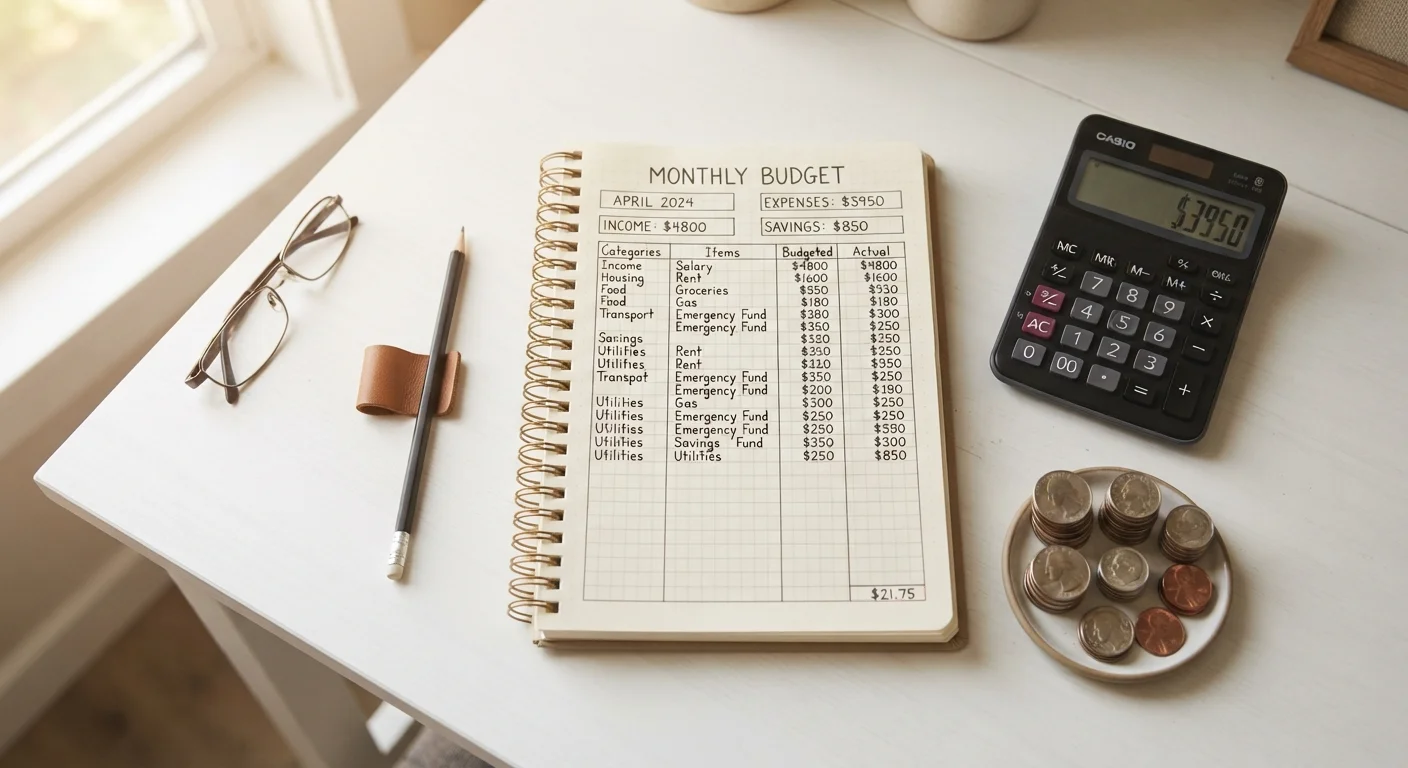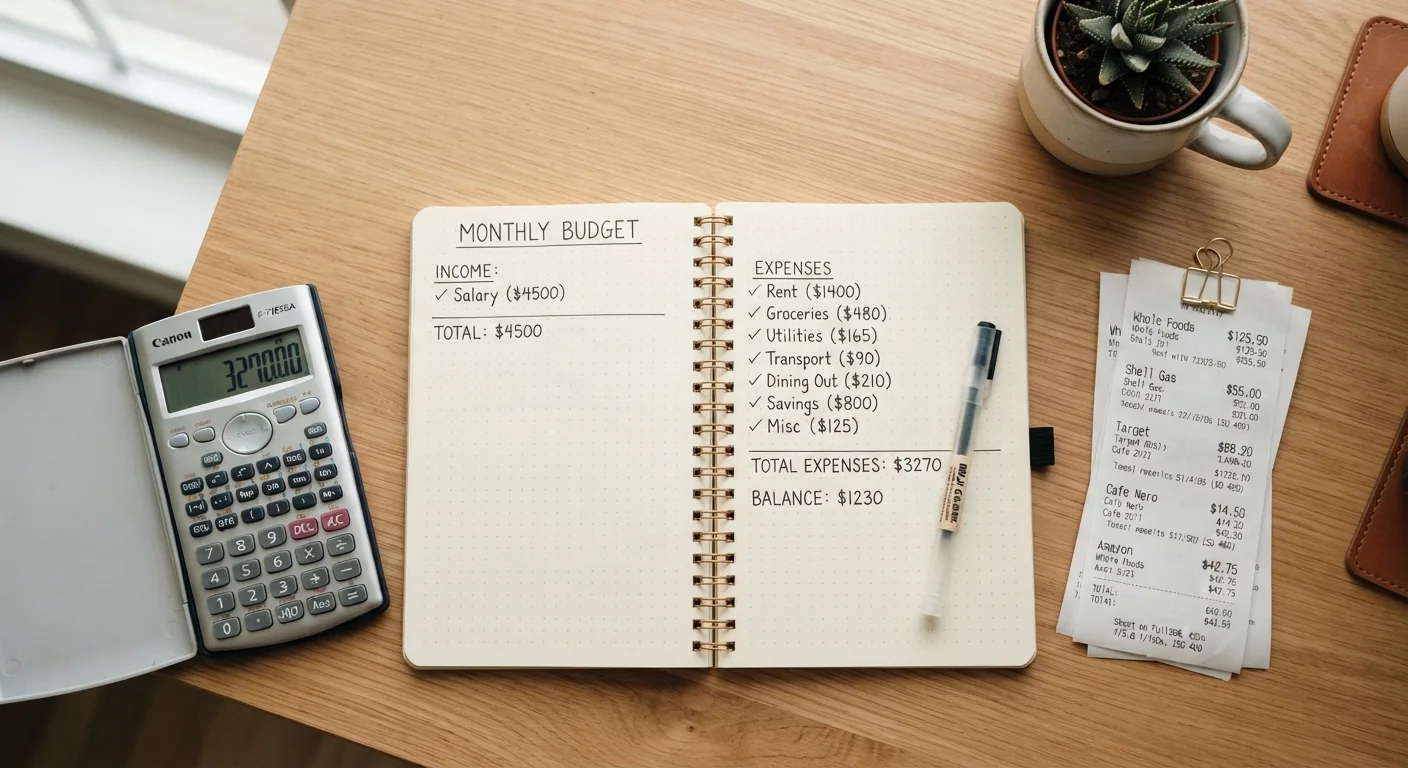
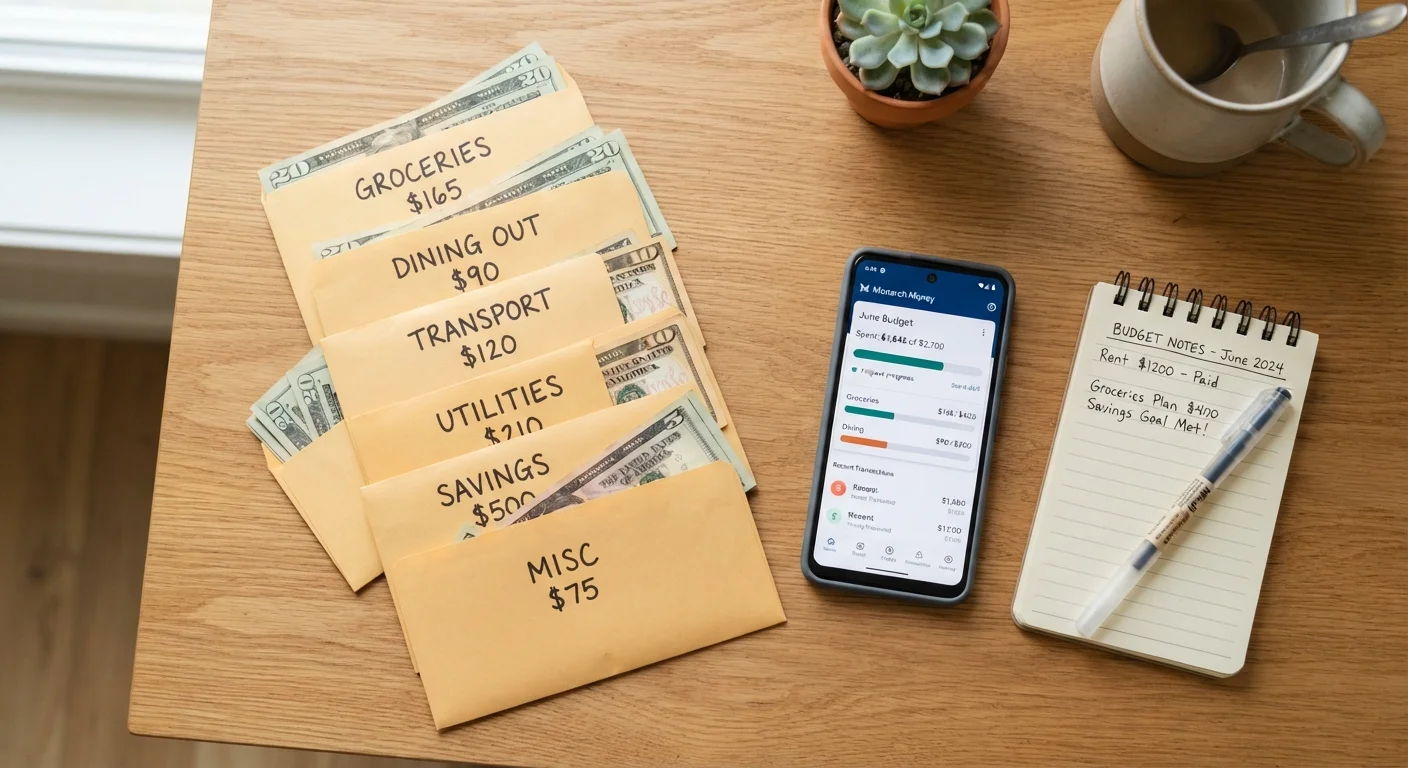
How Each Method Actually Works
Envelope budgeting is a cash-based system popularized decades ago and still widely used today. At the start of each pay period, you withdraw your budgeted cash and divide it into labeled envelopes - one per spending category, such as groceries, gas, or dining out. When an envelope is empty, spending in that category stops until the next cycle. There's no app required, no linked account, and no ambiguity about how much is left.
Digital spending trackers work differently. Most link directly to your bank accounts and credit or debit cards, automatically importing and categorizing each transaction. You set spending targets per category within the app, and the software flags you when you're approaching or exceeding limits. Some apps require manual entry, but the majority lean on automation to reduce friction.
Understanding the mechanics of each matters because the method shapes the behavior. Cash envelopes use friction as a feature - the inconvenience of handling physical money encourages deliberate spending. Digital tools remove friction to lower the barrier of tracking, but that same ease can make it simpler to rationalize overspending. For a broader look at how various budgeting frameworks compare, see this overview of popular budgeting approaches.
Head-to-Head: Key Differences at a Glance
The table below compares both methods across the dimensions that matter most to everyday budgeters.
| Criterion | Envelope Budgeting | Digital Spending Trackers |
|---|---|---|
| Setup effort | Low - cash, envelopes, labels | Low to moderate - app setup, account linking |
| Works with card/online spending | No - cash only by design | Yes - built for card transactions |
| Spending discipline | High - empty envelope stops spending | Variable - depends on user engagement |
| Spending insights and trends | Limited - manual tracking required | Strong - automated reports and history |
| Flexibility mid-month | Low - requires physical cash reallocation | High - adjust limits instantly in app |
| Privacy and data sharing | Full privacy - no accounts linked | Requires sharing financial account access |
| Learning curve | Minimal - intuitive for any age | Low to moderate - varies by app |
One area where digital trackers have a clear structural advantage is card and online spending. The majority of American consumer transactions now happen via debit cards, credit cards, or digital wallets. Cash envelope systems simply weren't designed for this environment, which is a meaningful practical constraint for many households.
Discipline, Flexibility, and Where Each Method Falls Short
Envelope budgeting's greatest strength is behavioral. Research consistently shows that paying with cash tends to feel more "real" than swiping a card - a phenomenon sometimes called the pain of paying. That friction can reduce impulse purchases in ways that a push notification cannot. However, the system breaks down the moment you need to pay a bill online, book travel, or use a credit card to earn rewards. Workarounds exist - such as tracking card purchases manually on paper - but they add complexity that erodes the method's simplicity.
Digital trackers are more flexible by design. You can adjust category budgets mid-month, split transactions, and review spending trends over six or twelve months. The weakness is that seeing numbers on a screen doesn't produce the same behavioral response as running out of cash. Many users find it easy to acknowledge an overspending alert and keep spending anyway. Consistent engagement with the app is essential - passive users often get little benefit.
~70%
Non-cash share of US consumer transactions
According to the Federal Reserve's Diary of Consumer Payment Choice, cash accounted for roughly 18-20% of US consumer transactions in recent years, meaning the vast majority occur via card or digital payment.
1 in 3
Americans with no monthly budget
Various consumer surveys, including those referenced by the FINRA Investor Education Foundation, consistently find that a significant share of US adults do not follow any formal monthly budget.
Both methods also carry tradeoffs worth thinking through carefully. For a candid look at what strict budgeting costs in terms of flexibility and spontaneity, see the honest tradeoffs of strict budgeting.
Choosing What Works - or Combining Both
The most pragmatic approach isn't necessarily picking one method exclusively. Some budgeters use cash envelopes for high-risk categories - typically dining, entertainment, or personal spending - while relying on a digital tracker for fixed bills, subscriptions, and card purchases. This hybrid model captures the behavioral guardrails of physical cash where they're most needed, without abandoning the practicality of digital tools for card-based spending.
If you're starting from scratch, consider where your money tends to leak first. If it's impulsive in-store spending, envelopes may close that gap faster than any app. If you don't know where your money goes at all, a digital tracker's automatic categorization can surface patterns you'd never spot manually. Tracking every dollar methodically is often the clearest first step regardless of which tool you choose.
Security Consideration for App Users
Most digital tracking apps that link to bank accounts use read-only access through third-party data aggregators. They typically cannot move money on your behalf. That said, you are sharing financial credentials or account access with a third party, so review each app's privacy policy, data practices, and security certifications before connecting any account. When in doubt, consult your financial institution.
Whatever method you adopt, the most important factor is consistency over time. Short-term discipline is easier to sustain than many people expect - what separates lasting results is building routines around the system. Budgeting habits that hold up over time can help you build that foundation regardless of which tool you use.
This article is for general informational and educational purposes only and does not constitute personalized financial advice. Consult a qualified financial professional for guidance specific to your circumstances.