Why Care Labels Actually Matter
Every garment sold in the United States is legally required to include a permanent care label - but most of us snip them out or ignore them entirely. That's a costly habit. Washing a wool sweater in hot water or tossing a dry-clean-only blazer in the dryer can cause irreversible shrinkage, color loss, or fabric breakdown after just one cycle.
Think of care labels as the manufacturer's warranty in miniature form. Following them correctly is one of the simplest ways to extend garment life - which directly improves the value you get from every dollar spent. If you've ever used the cost-per-wear formula to evaluate clothing purchases, proper care is exactly how you push that number lower over time.
| Governing body (U.S.) | Federal Trade Commission (FTC) (FTC Care Labeling Rule) |
| Symbol system used | ASTM D5489 (American standard) (ASTM International) |
| Number of core symbol categories | 5 (wash, bleach, dry, iron, professional clean) |
| Temperature dots: one dot | Cold - up to 65°F (30°C) |
| Temperature dots: two dots | Warm - up to 105°F (40°C) |
| Temperature dots: three dots | Hot - up to 120°F (50°C) |
The Five Symbol Categories - Decoded
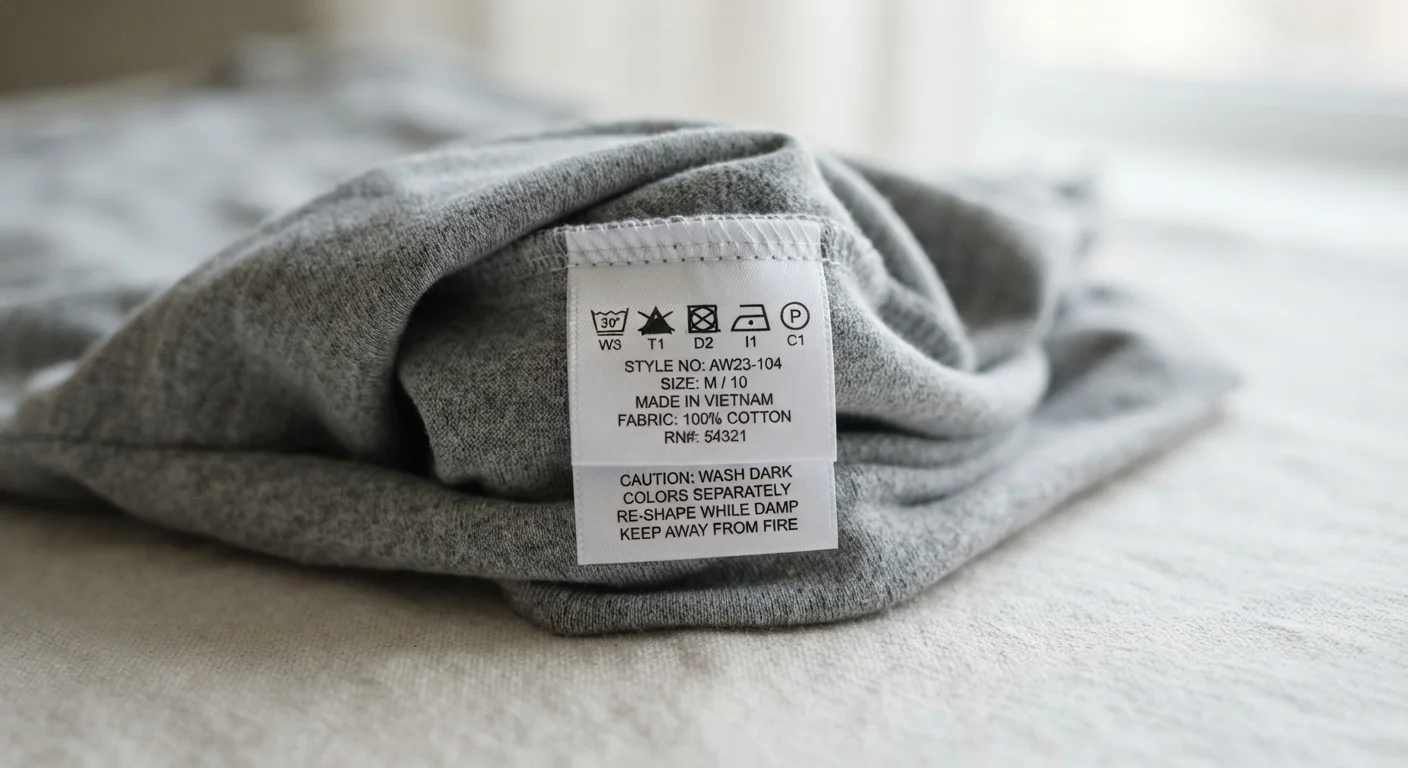
U.S. care labels use a standardized system of five symbol types, each covering a different stage of garment care. Here's what each one means:
Washing (Tub Symbol)
A tub filled with water represents machine or hand washing. Dots inside the tub indicate water temperature - one dot means cold (up to 65°F), two dots mean warm (up to 105°F), and three dots mean hot (up to 120°F). A hand dipping into the tub means hand wash only. An X through the tub means do not wash with water at all.
Bleaching (Triangle Symbol)
An empty triangle means any bleach is safe. Two diagonal lines inside the triangle restrict you to non-chlorine bleach. A filled or X-marked triangle means skip bleach entirely - chlorine or otherwise.
Drying (Square Symbol)
A square with a circle inside represents tumble drying. Dots inside the circle follow the same temperature logic as washing: one dot for low heat, two for medium, three for high. A square with horizontal lines means lay flat to dry. Curved lines inside the square indicate line drying.
Ironing (Iron Symbol)
Dots on the iron symbol again indicate heat level. No dots means you can use any setting. An X through the iron means do not iron - relevant for heat-sensitive synthetics and embellished fabrics.
Professional Cleaning (Circle Symbol)
A plain circle means dry clean. Letters inside the circle (like P or F) tell the dry cleaner which solvents are safe to use - this detail is mainly for the professionals, not for you. An X through the circle means do not dry clean.
Care Label
A permanent label sewn into a garment that provides legally required instructions for washing, drying, ironing, and professional cleaning. In the U.S., the Federal Trade Commission mandates their inclusion on most clothing.
Tumble Dry
Machine drying in a rotating drum with heated or unheated air. Represented by a square with a circle inside on care labels, with dots indicating the appropriate heat level.
Non-Chlorine Bleach
Also called oxygen or color-safe bleach, this is a gentler bleaching agent safe for colors and delicate fabrics that would be damaged by traditional chlorine bleach.
Dry Clean Only
A care instruction indicating the garment should be professionally cleaned using chemical solvents rather than water. Attempting to wash these items at home typically causes shrinkage, distortion, or color loss.
Lay Flat to Dry
A drying method where a garment is spread horizontally on a clean surface to retain its shape during drying. Recommended for knits and loosely structured fabrics that stretch when hung.
Gentle Cycle
A washing machine setting that uses slower agitation and shorter wash times to reduce mechanical stress on fabrics. Suitable for delicate weaves, embellished items, and loosely knit garments.
Common Mistakes (and How to Avoid Them)
Even well-intentioned laundering can damage clothes when a few key habits are skipped.
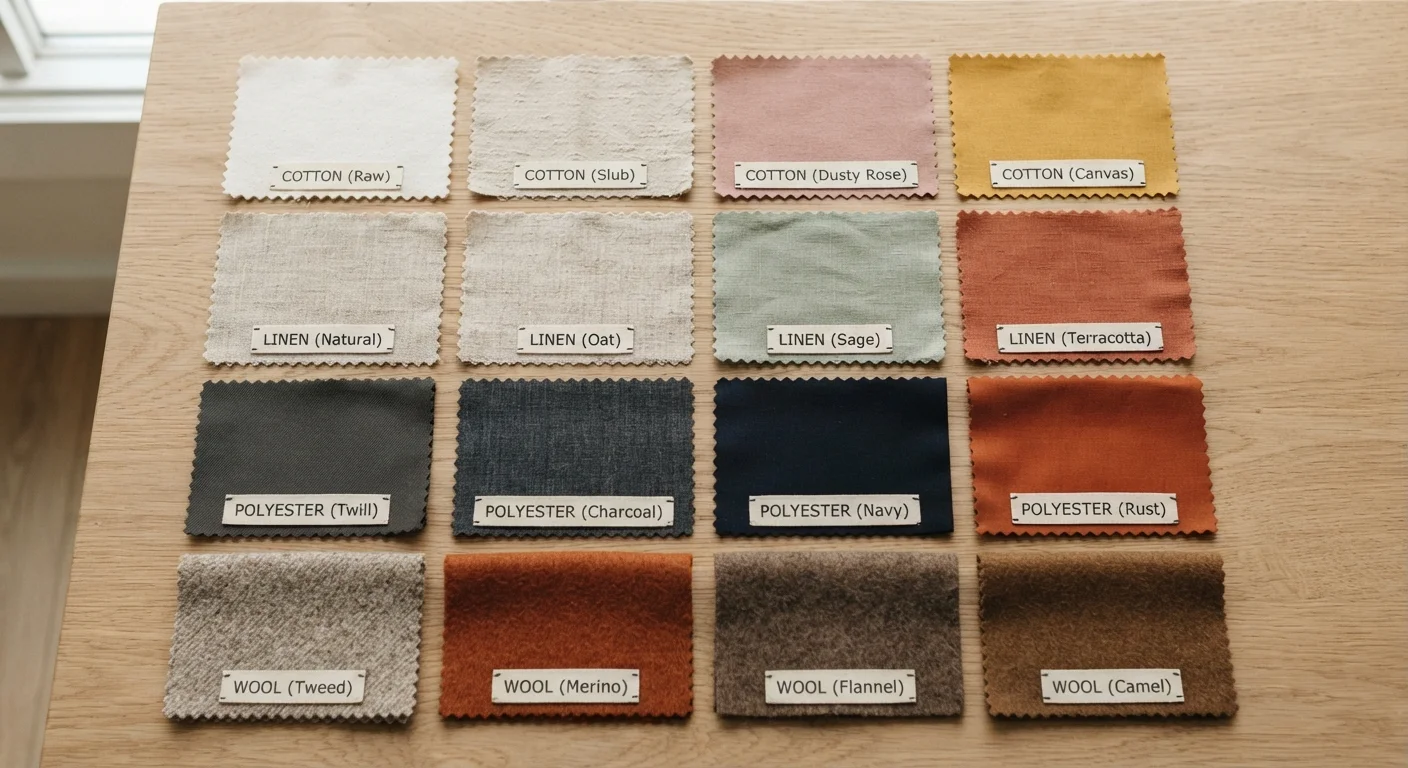
- Ignoring fabric content alongside symbols: Care symbols and fiber content work together. Understanding what fabrics are made of helps you anticipate how they'll behave - rayon wrinkles badly when tumble-dried, for example, even on low heat.
- Overloading the washer: Clothes that can't move freely don't rinse properly, and friction from crowding accelerates fabric wear.
- Using too much detergent: Excess detergent leaves residue that stiffens fibers over time and can cause color fading. Use the minimum effective amount.
- Skipping the gentle cycle out of habit: Many everyday garments labeled "machine wash" still benefit from a gentle or delicate cycle - especially knits, lace, and loosely woven fabrics.
- Storing clothes while damp: Even slight moisture encourages mildew and fabric degradation. Always ensure garments are fully dry before folding or hanging.
Secondhand and Vintage Pieces
Thrifted or vintage garments sometimes lack care labels or carry labels from foreign markets with different symbol standards. When a label uses unfamiliar icons, a quick search for the garment's country-of-origin care symbol chart can clarify meaning. ISO symbols (common in European and Asian markets) are similar to U.S. ASTM symbols but not always identical - the triangle for bleaching is one category where differences appear.
When Labels Are Missing or Faded
Labels sometimes fall off, fade to illegibility, or are cut out by previous owners of secondhand pieces. In those cases, default to the most conservative care option for the fabric type you believe you're working with: cold water, gentle cycle, low or no heat in the dryer, and air drying when in doubt.
You can also cross-reference fabric content (often listed separately from care symbols on the same tag) with general fiber care guidelines. A garment that's 100% cotton can typically handle warmer washes. Anything with spandex or elastic blends needs low heat. Silk and wool almost always prefer cold water and air drying regardless of construction.
When in doubt about a garment you genuinely want to preserve - a vintage find, an investment piece, or a delicate fabric - a professional cleaner can assess the item and advise on safe care methods before you commit to washing it at home.
This article provides general garment care information for educational purposes. Always check individual item labels and consult a professional cleaner for delicate or high-value garments.