Why Protein Costs Matter for Everyday Shoppers
Protein is one of the most essential macronutrients your body needs - it supports muscle maintenance, immune function, enzyme production, and cellular repair. Yet many Americans find that high-protein foods, particularly fresh meats and specialty products, take up a disproportionate share of the grocery budget. The good news is that several highly nutritious protein sources cost far less per gram of protein than most people expect.
This list ranks common, widely available protein foods by their overall nutritional value and approximate cost-efficiency. Prices vary by region and store, so treat relative rankings as general guidance rather than fixed figures. For a broader look at eating well without overspending, see our practical nutrition primer for tight budgets.
This article provides general nutrition information and is not a substitute for personalized advice from a registered dietitian or qualified healthcare provider.
Eggs
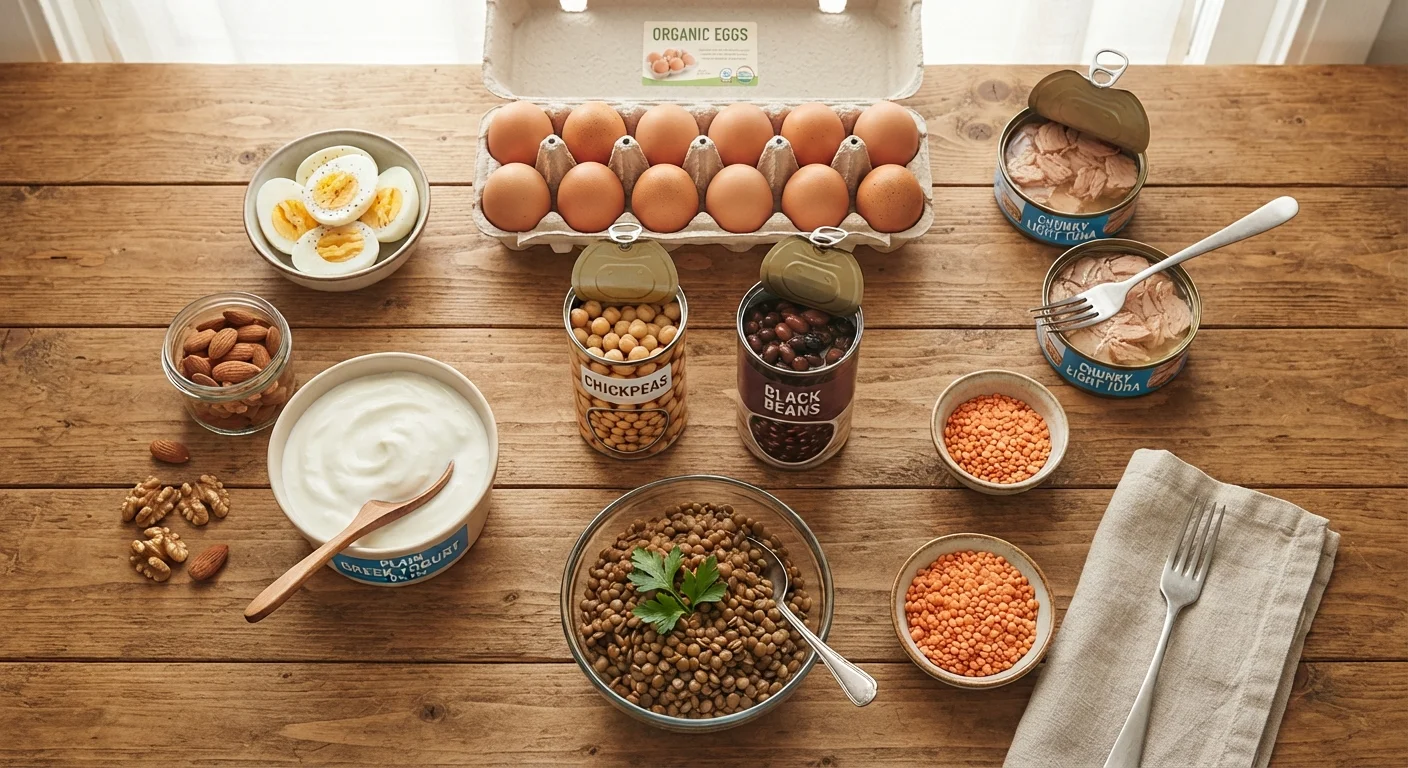
Eggs are widely regarded as one of the most complete and cost-effective protein sources available. A single large egg contains roughly 6 grams of high-quality protein, along with choline, vitamin D, B vitamins, and healthy fats - all in a compact, shelf-stable package that keeps for weeks refrigerated.
What makes eggs particularly valuable is their amino acid profile: they contain all nine essential amino acids in proportions that the body can use efficiently, making them a benchmark protein source in nutrition science. At typical grocery prices, a dozen eggs yields twelve servings of quality protein at a very low per-serving cost.
Eggs provide all nine essential amino acids at one of the lowest per-serving costs of any protein food.
Canned or Dried Lentils
Lentils are among the most nutrient-dense plant proteins available, offering roughly 18 grams of protein per cooked cup along with substantial dietary fiber, folate, iron, and potassium. Dried lentils in particular represent exceptional value - a one-pound bag typically yields many servings and costs just a few dollars.
Unlike many legumes, lentils do not require soaking before cooking, which reduces prep time significantly. One nutritional note: lentils are not a complete protein on their own, meaning they are lower in the amino acid methionine. Pairing them with grains like rice or whole wheat bread over the course of the day helps round out the amino acid profile.
A one-pound bag of dried lentils yields many servings of high-fiber protein for just a few dollars.
Canned Beans (Black, Kidney, Chickpeas)
Canned beans - including black beans, kidney beans, and chickpeas - offer roughly 14-15 grams of protein per cup, plus fiber, iron, magnesium, and folate. The canned format makes them immediately ready to use with no preparation beyond rinsing, which removes much of the added sodium.
Dried beans cost even less per serving than canned, though they require advance soaking and longer cooking. Both forms deliver strong nutritional value. Beans are a cornerstone of budget eating in many cultures precisely because they are filling, versatile, and nutritionally dense. Like lentils, beans are best paired with grains to supply all essential amino acids across the day.
Rinsing canned beans significantly reduces sodium while preserving their protein and fiber content.
Canned Tuna and Sardines
Canned tuna is one of the most concentrated protein sources available at low cost - a standard can provides roughly 20-25 grams of protein for typically under two dollars. It's also a lean protein, meaning relatively low in saturated fat. Sardines packed in water or olive oil offer similar protein levels and add omega-3 fatty acids, calcium (from edible bones), and vitamin D.
One consideration with canned tuna is mercury content. Public health guidance generally suggests that light tuna (skipjack) carries lower mercury levels than albacore, and that intake frequency is worth discussing with a healthcare provider, especially for pregnant individuals, nursing mothers, young children, or those who eat fish very frequently. Sardines are considered a lower-mercury option.
Sardines offer protein, omega-3s, and calcium in one low-cost, low-mercury package.
Plain Greek Yogurt
Plain Greek yogurt typically delivers 15-20 grams of protein per cup, along with calcium, potassium, and beneficial live cultures that support gut health. It is a more versatile ingredient than many people realize - it works as a substitute for sour cream, a base for dressings, or a straightforward high-protein snack or breakfast.
The key qualifier is plain: flavored varieties often contain added sugars that reduce overall nutritional quality without adding meaningful protein. Full-fat, low-fat, and nonfat versions all offer similar protein content, so the choice can depend on broader dietary patterns and personal preference. Store or generic brands often match name-brand nutrition at a noticeably lower price.
Plain Greek yogurt delivers up to 20 grams of protein per cup - often for less than flavored alternatives.
Frozen Edamame
Edamame - young, green soybeans - is one of the few plant proteins that is considered nutritionally complete, meaning it contains all essential amino acids in usable amounts. A half-cup serving provides roughly 8-9 grams of protein, along with fiber, folate, and vitamin K. Frozen edamame is widely available and affordable, and it can be prepared in minutes by steaming or microwaving.
Soybeans and soy-based foods have been studied extensively, and mainstream nutrition bodies consider them safe and beneficial for most people as part of a varied diet. Individuals with specific thyroid conditions or soy allergies should discuss soy consumption with their healthcare provider before making it a dietary staple.
Edamame is one of the few plant proteins that supplies all essential amino acids without pairing.
Putting It All Together
No single food provides every nutrient your body needs, so variety matters even when you're working with a limited budget. Rotating among the proteins on this list - mixing plant and animal sources across the week - helps cover a wider range of amino acids, vitamins, and minerals without extra cost.
Stretch Your Budget Further with Batch Cooking
Cooking large batches of lentils, beans, or eggs at the start of the week makes it far easier to reach daily protein goals without relying on expensive convenience foods. Most cooked legumes keep well in the refrigerator for four to five days and can be incorporated into salads, soups, wraps, or grain bowls with minimal effort.
If you're moving toward more plant-based eating, it's worth understanding the nutritional trade-offs involved. Our article on plant-based eating and its nutritional considerations covers common gaps and how to address them thoughtfully.
Individual protein needs depend on factors like age, body weight, activity level, and any existing health conditions. If you have questions about how much protein is appropriate for your specific situation, consult a registered dietitian or your primary care provider for guidance tailored to you.