What Is a Capsule Wardrobe?
A capsule wardrobe is a compact, intentional collection of clothing where every piece works with multiple others. The goal isn't minimalism for its own sake - it's efficiency. Fewer decisions, less clutter, and more outfit combinations from what you actually own.
The concept has been around since the 1970s, but it resonates especially with budget-conscious shoppers today because it directly pushes back against the pressure to constantly buy new things. Instead of chasing trends, you build a reliable foundation that stays useful across seasons and occasions.
Capsule wardrobe
A small, curated set of clothing items chosen because they work well together, covering a wide range of outfit needs without excess.
Cost per wear
The total price of a clothing item divided by how many times you wear it - a useful way to judge whether something is actually worth buying.
Neutral palette
A color scheme built around whites, greys, blacks, navy, and earth tones that pair easily with almost any other color or pattern.
Wardrobe audit
A deliberate review of everything in your closet to identify what fits, what's worn, and what gaps or duplicates exist.
Silhouette
The overall shape or outline that a garment creates on the body - certain silhouettes remain classic and don't go out of style quickly.
Understanding foundational style principles makes the capsule approach much easier to apply, whatever the size of your closet or budget.
Start With What You Already Own
Before spending a single dollar, take inventory of your current wardrobe. Pull everything out, try pieces on, and honestly assess what fits well, what you actually reach for, and what's been hiding untouched for a year or more.
A thorough wardrobe audit often reveals that the gaps in your closet are smaller than they feel. You may have duplicates eating up space, items with tags still on, or hidden combinations you've never tried. Identify those before writing any shopping list.
Sort what remains into three piles: keep, donate, and repair. Worn hems or missing buttons can be fixed cheaply and extend the life of a good piece considerably.
Try the Hanger Test
Turn all your hangers backward at the start of a month. Each time you wear a piece, flip its hanger the right way around. After 30 days, anything still facing backward is a strong candidate to donate or sell. This gives you honest data about what you actually reach for - without relying on memory.
The Core Pieces Worth Prioritizing
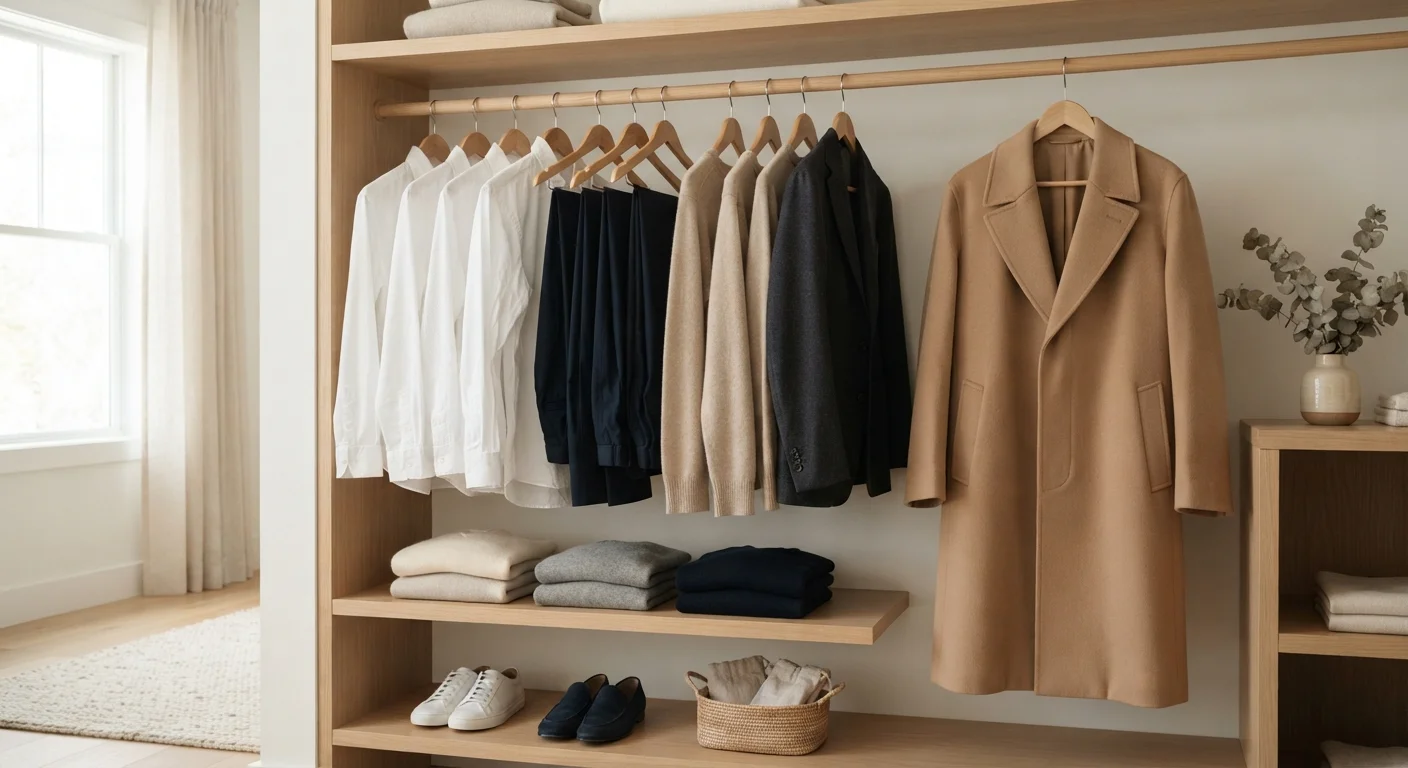
A solid capsule wardrobe typically centers on a handful of category anchors. These aren't specific brands - they're garment types that reliably pull outfit weight:
- Well-fitted trousers or dark jeans - dress up or down depending on what's paired with them
- Plain tees and a button-down shirt - the workhorses of any casual or smart-casual rotation
- A versatile layering piece - a cardigan, blazer, or lightweight jacket that works across temperatures
- One or two dresses or a skirt (if those suit your lifestyle) that transition between contexts
- Comfortable, neutral-toned shoes - a clean sneaker and one slightly dressier option cover the most ground
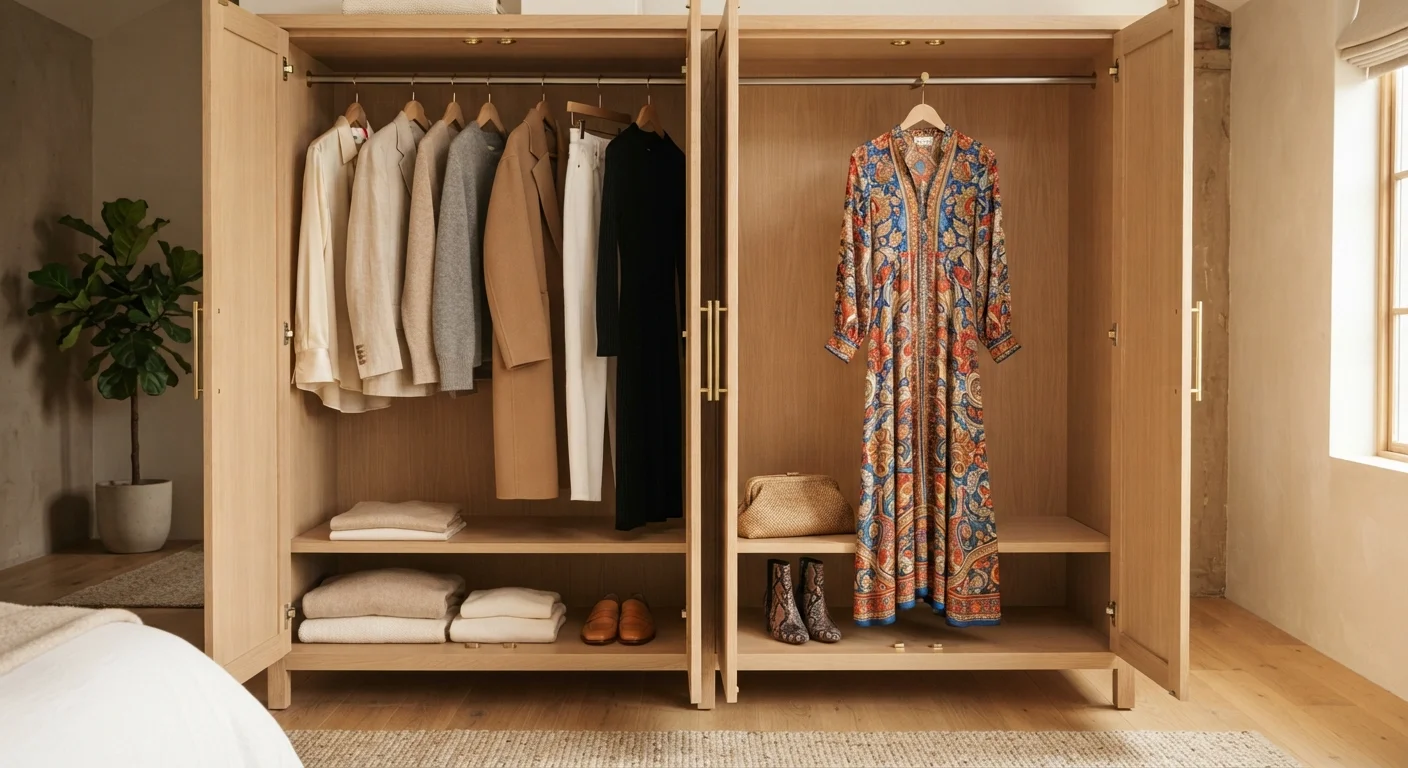
Keep the color palette tight. Neutrals - navy, white, grey, black, camel - create the most combinations per piece. For how neutrals and statement pieces can coexist, a little strategic thinking goes a long way.
Shopping Smart Without Overspending
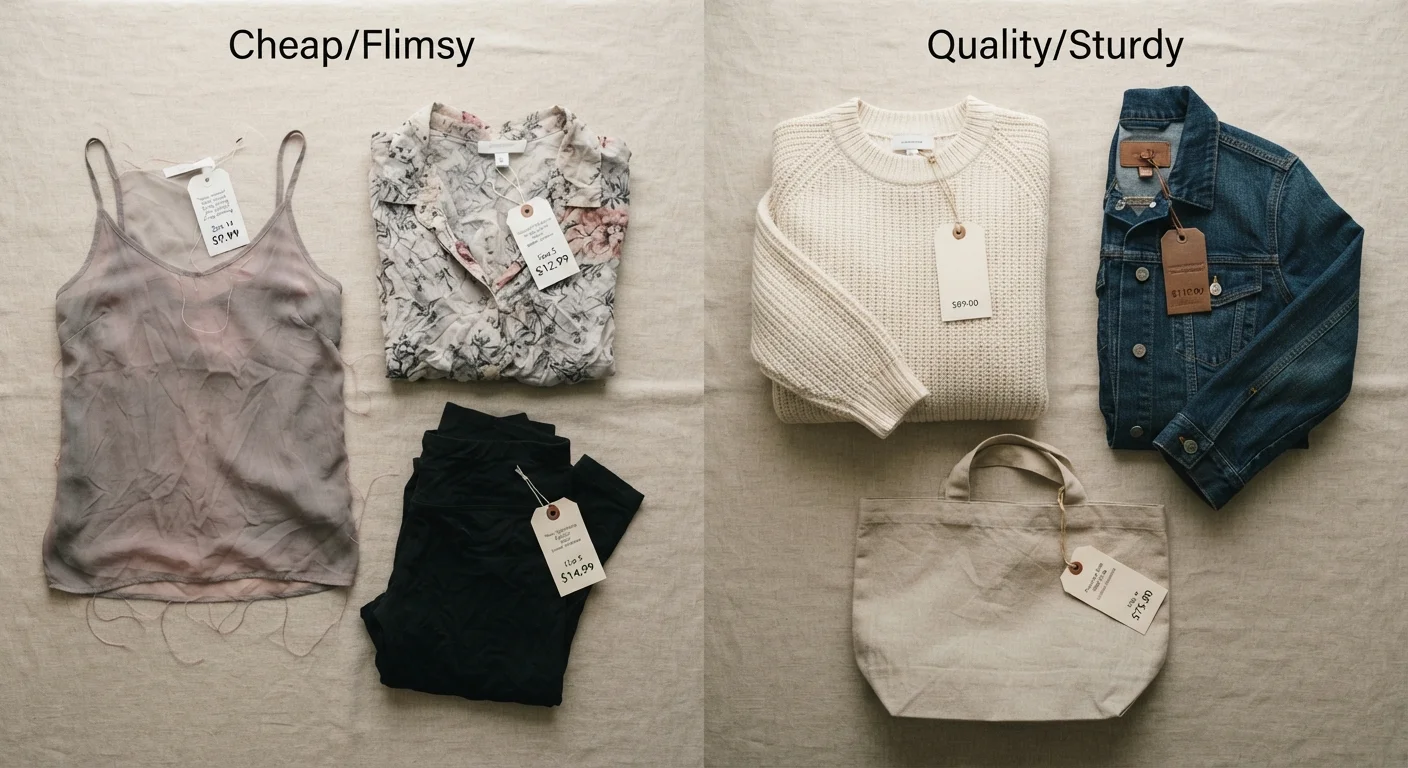
When gaps do exist, resist the urge to fill them with whatever's cheapest at the moment. A very low price tag can signal thin fabric, poor construction, or a fit that won't survive washing - all of which cost more over time. The hidden costs of cheap clothing are real and worth understanding before you shop.
Watch Out for 'Versatile' Impulse Buys
Retailers often label trendy or boldly patterned items as 'wardrobe essentials' to encourage purchases. Before buying anything new, ask yourself: does this work with at least three things I already own? If you have to think too hard about the answer, it's probably not as versatile as advertised.
Practical shopping strategies that help:
- Shop with a specific list. Browsing without a clear need leads to impulse buys that don't integrate with anything you own.
- Check secondhand first. Thrift stores, consignment shops, and resale apps often carry well-made pieces at a fraction of original retail.
- Prioritize fit above all else. An ill-fitting piece from any price point is wasted money. Try on or check return policies carefully.
- Feel the fabric. Lightweight, sheer, or pilling-prone fabric signals a short lifespan regardless of what the label says.
Treating your clothing budget as its own category within a broader spending plan also helps avoid overextension. If you're working on building a personal budget, clothing deserves a deliberate line item rather than an afterthought.
Making Every Piece Work Harder
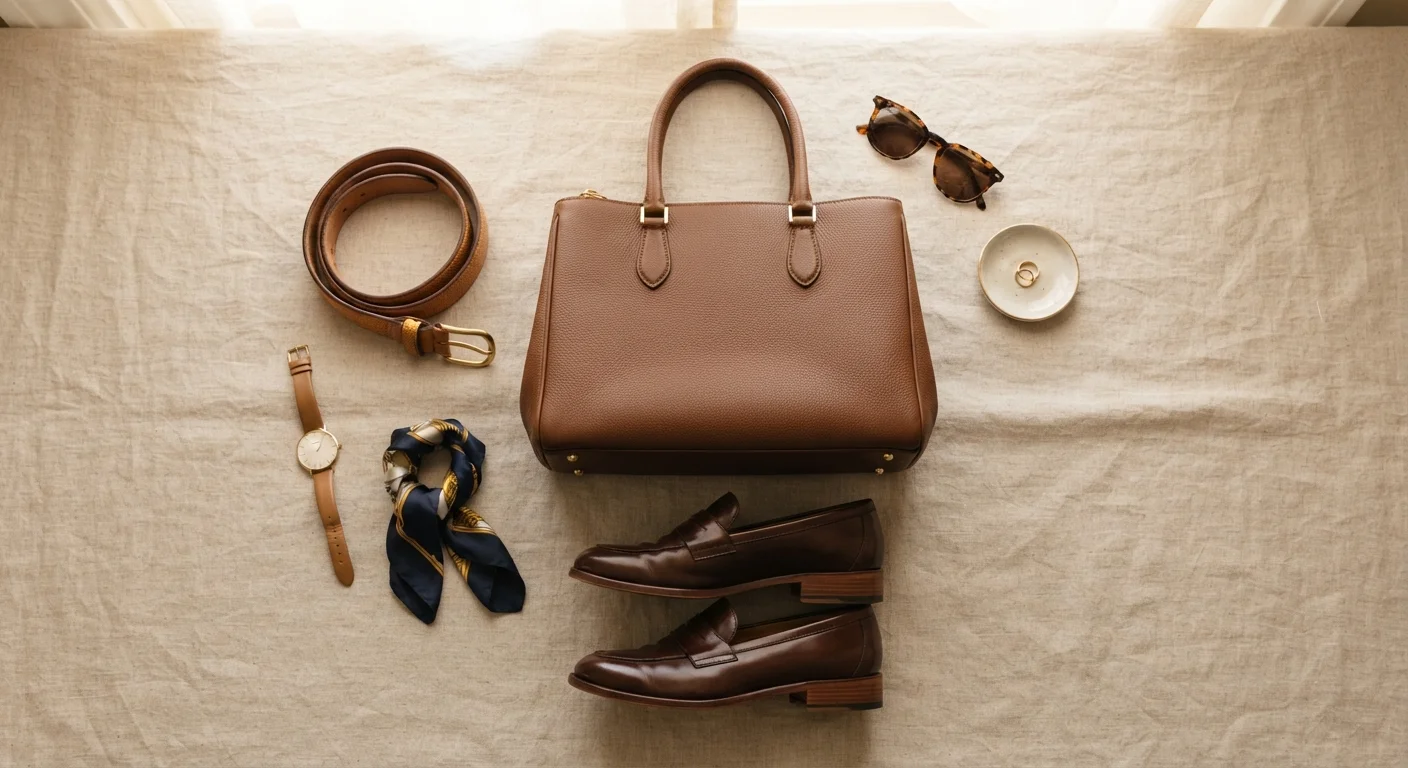
The real power of a capsule wardrobe is in combination, not collection. Once your core pieces are in place, explore how accessories expand what you can do with them. A change of shoes, a different bag, or a single belt can shift the same outfit from casual to polished. Accessories do more outfit work than most people realize - and they're usually far less expensive than new clothing.
Don't overlook pattern mixing either. Once you feel confident with your neutral base, mixing patterns deliberately can add variety and personality without a single new clothing purchase.
Finally, care for what you own. Following garment-care labels, washing in cold water, and air-drying when possible significantly extends the life of any piece. A well-maintained capsule wardrobe built thoughtfully on a tight budget will always outperform a large, neglected one.