Why Pattern Mixing Feels Risky (But Isn't)
Pattern mixing has a reputation for being an advanced style move, but the hesitation usually comes from one thing: not knowing the underlying logic. Once you understand a few simple visual principles, combining prints stops feeling like a gamble and starts feeling like a tool. And it's one of the most budget-friendly styling strategies around, since it creates entirely new looks from pieces you already own.
If you're already working on a lean, versatile closet, this skill multiplies your outfit count significantly. Check out our guide on building a capsule wardrobe on a tight budget for the foundation pieces that make pattern mixing easiest. The goal here isn't to look like you tried hard - it's to look like you understood something most people don't.
What you will need
The Core Rules (and When to Break Them)
A few visual principles explain why some mixed-print outfits look polished while others look chaotic. None of them are absolute laws, but treating them as your starting defaults gives you a reliable framework.
The Scale Rule Is Your Best Friend
If you remember only one principle, make it this: vary the scale of your patterns. Large with small almost always works. When two patterns are the same scale, they compete for attention and the look becomes hard to read. Start with scale variation and the rest gets easier.
Once you've landed on combinations that work, pattern mixing also plugs naturally into a strategic outfit-repeating practice - the same patterned pieces can anchor completely different looks just by switching what they're paired with.
Step-by-Step: How to Mix Patterns
Follow these steps the next time you want to experiment. They work whether you're pulling from a full wardrobe or a minimal one.
Start with a color anchor
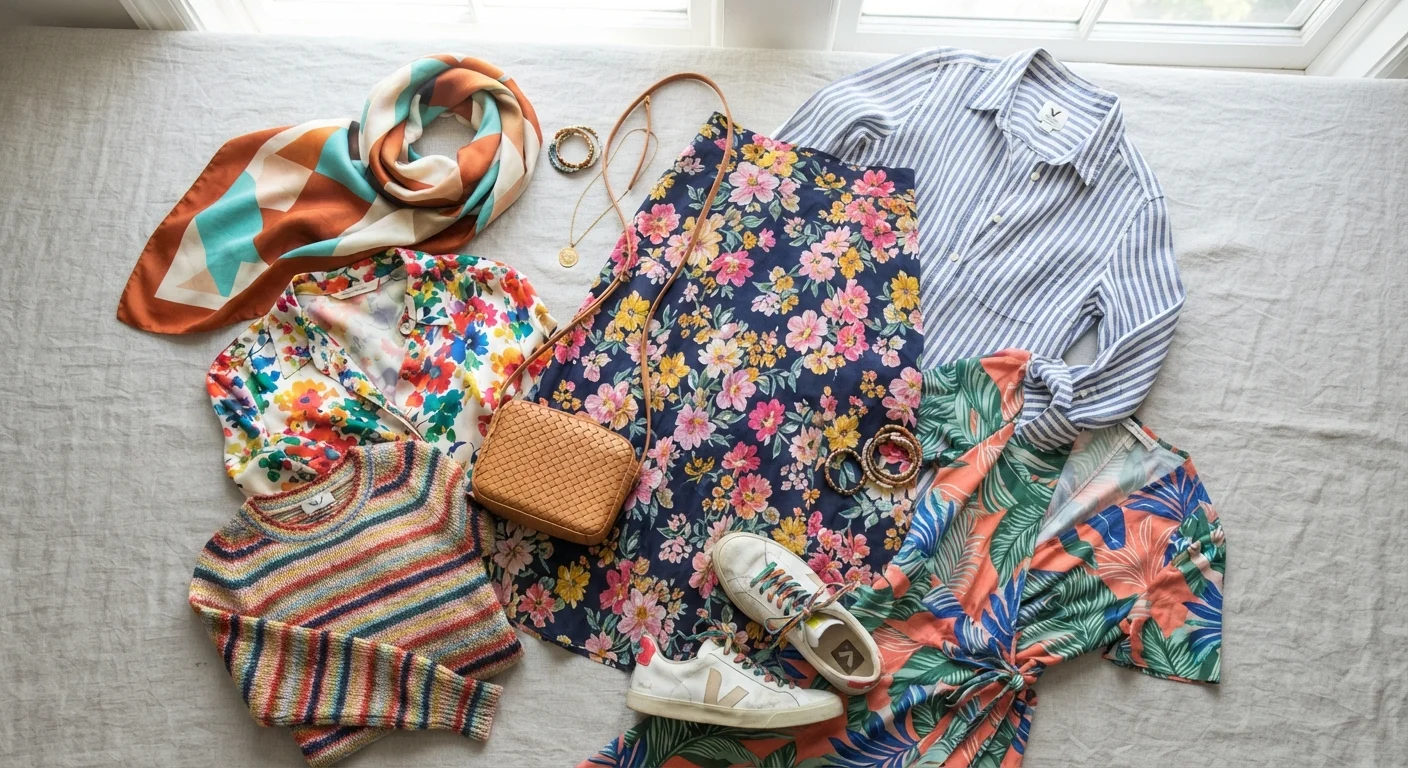
Pick two patterned pieces that share at least one color. The prints don't need to match - they need to converse. A floral with a red bloom paired with red-and-white stripes is connected by that shared red. This single rule solves most pattern-mixing problems before they start.
Vary the scale deliberately
Pair one large or bold pattern with one small or fine-detail pattern. A wide-checked blazer over a thin pinstripe shirt. An oversized floral skirt with a micro-dot blouse. When two patterns compete at the same scale, neither wins - both just create noise. When scales differ, each pattern gets its own visual lane.
Keep pattern types distinct
Geometric patterns (stripes, plaids, grids) and organic patterns (florals, animal print, abstract) naturally contrast each other in a way that reads as deliberate. Mixing two florals or two plaids requires more finesse because the types are similar enough to blur together. When starting out, cross-pattern-type pairings are the most forgiving.
Add a solid to anchor the combination
Introduce at least one solid-colored element - a shoe, jacket, bag, or belt - in a color pulled directly from one of your patterns. This gives the outfit visual breathing room and signals that the pattern pairing was intentional, not accidental. Solid pieces act as the punctuation in a sentence made of prints.
Step back and do a mirror check
Once dressed, stand back from the mirror - literally take a few steps back - and look at the overall silhouette rather than individual pieces. If one area pulls all your attention uncomfortably, try adjusting which pattern leads (put the bolder print on the bottom if you want to downplay the top, or vice versa). The goal is a look where both patterns register without one overwhelming the other.
Don't Buy New Prints Just to Experiment
Pattern mixing is most valuable as a styling tool for what you already own - not a reason to shop. Before purchasing any new patterned piece, audit your closet for existing prints and note what solid colors or other patterns they share. Impulse buys driven by 'this would mix well with something' often sit unworn. For a deeper look at how buying habits quietly drain budgets, see common wardrobe mistakes.
Anchoring the Look with Solids and Accessories
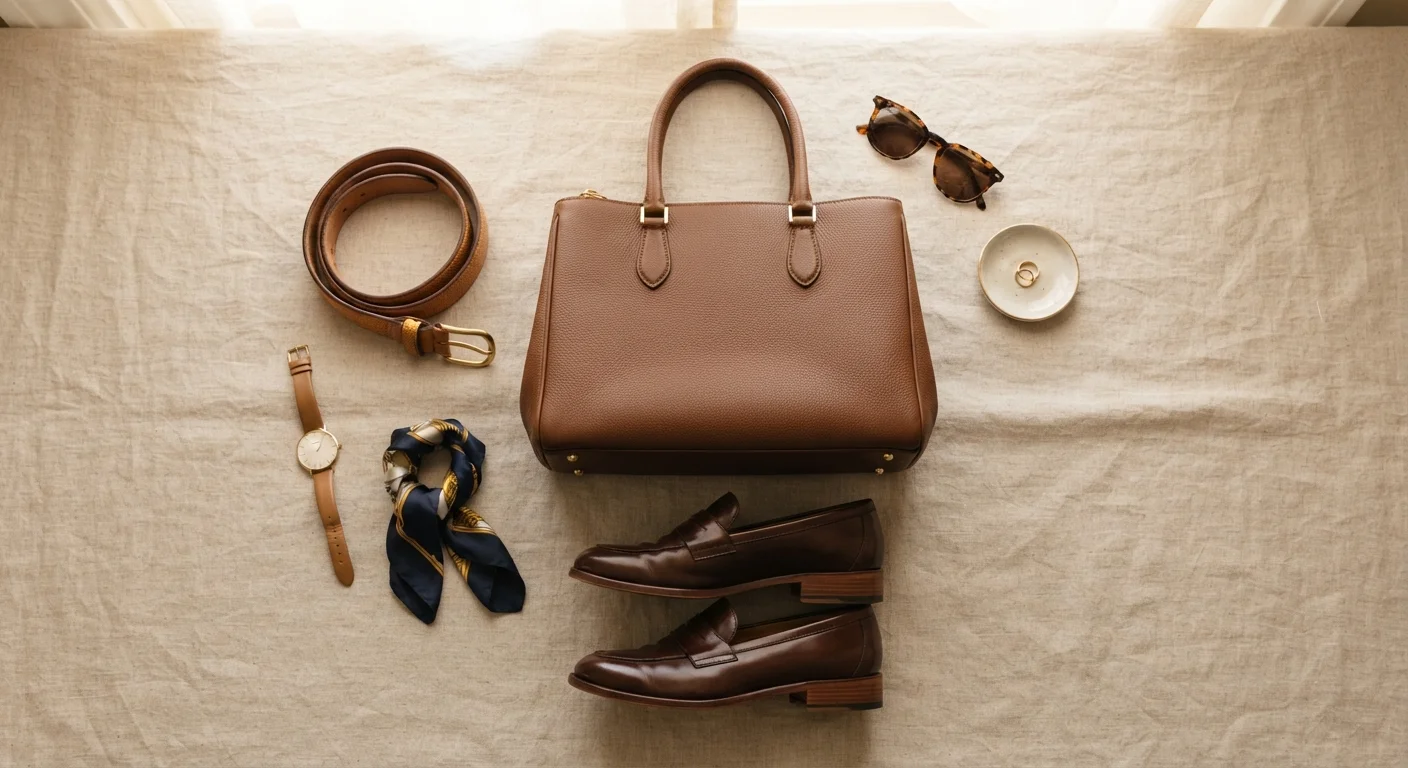
Even the most confident pattern combinations benefit from at least one solid element to give the eye somewhere to rest. This could be a plain belt, solid shoes, or an unprinted bag. Accessories carry more visual weight than most people realize - a single solid-colored accessory can unify two competing prints instantly. For more on how accessories shift overall outfit dynamics, see our piece on shoes, bags, and belts.
It's also worth knowing the difference between a statement print and a neutral print. Neutral patterns - thin stripes, quiet houndstooth, subtle texture - behave more like solids and pair with almost anything. Bold florals, graphic geometrics, and oversized prints are statement patterns that need more careful pairing. Our guide on neutral vs. statement pieces explores this balance in more depth.
Pattern Mixing Shouldn't Require New Purchases
The most effective pattern combinations are usually already hiding in your wardrobe. Before reaching for anything new, spend 15 minutes pulling every patterned piece you own and laying them side by side. Look for shared colors and scale differences. Chances are, you already have two or three combinations worth trying - and discovering them costs nothing.