Why Maintenance Matters More Than You Think
For new drivers, a car can feel like a fixed object - something you fuel up and drive. In reality, it's a system of interconnected components that degrade over time, and how you treat it in the early years shapes how reliable (and costly) it becomes later.
Skipping routine maintenance doesn't just risk breakdowns - it quietly erodes your car's resale value, can void portions of a warranty, and turns small, cheap fixes into expensive repairs. An oil change that costs $50-$80 ignored long enough can lead to engine damage running into thousands of dollars.
Understanding the true financial picture of car ownership helps put maintenance costs in perspective: they're not optional expenses - they're what make ownership predictable rather than chaotic. New drivers who build good habits early spend less money over time and drive more safely.
Owner's manual
The booklet provided with your vehicle that contains factory specifications, maintenance schedules, and operating instructions specific to your car's make, model, and year.
Dipstick
A long, thin metal rod that slides into the engine to let you check oil level and condition without any tools.
Tread depth
The depth of the grooves in your tire that channel water away from the contact patch. Low tread depth reduces grip, especially in wet conditions.
Brake fluid
A hydraulic fluid that transmits the pressure from your brake pedal through the brake lines to activate the brakes at each wheel.
Tire rotation
Moving tires from one position on the vehicle to another (e.g., front to rear) on a regular schedule so they wear down at a more even rate.
Mileage interval
A specific distance milestone (such as 5,000 or 30,000 miles) at which certain maintenance services are recommended by the vehicle manufacturer.
The Five Fluids Every Driver Should Know
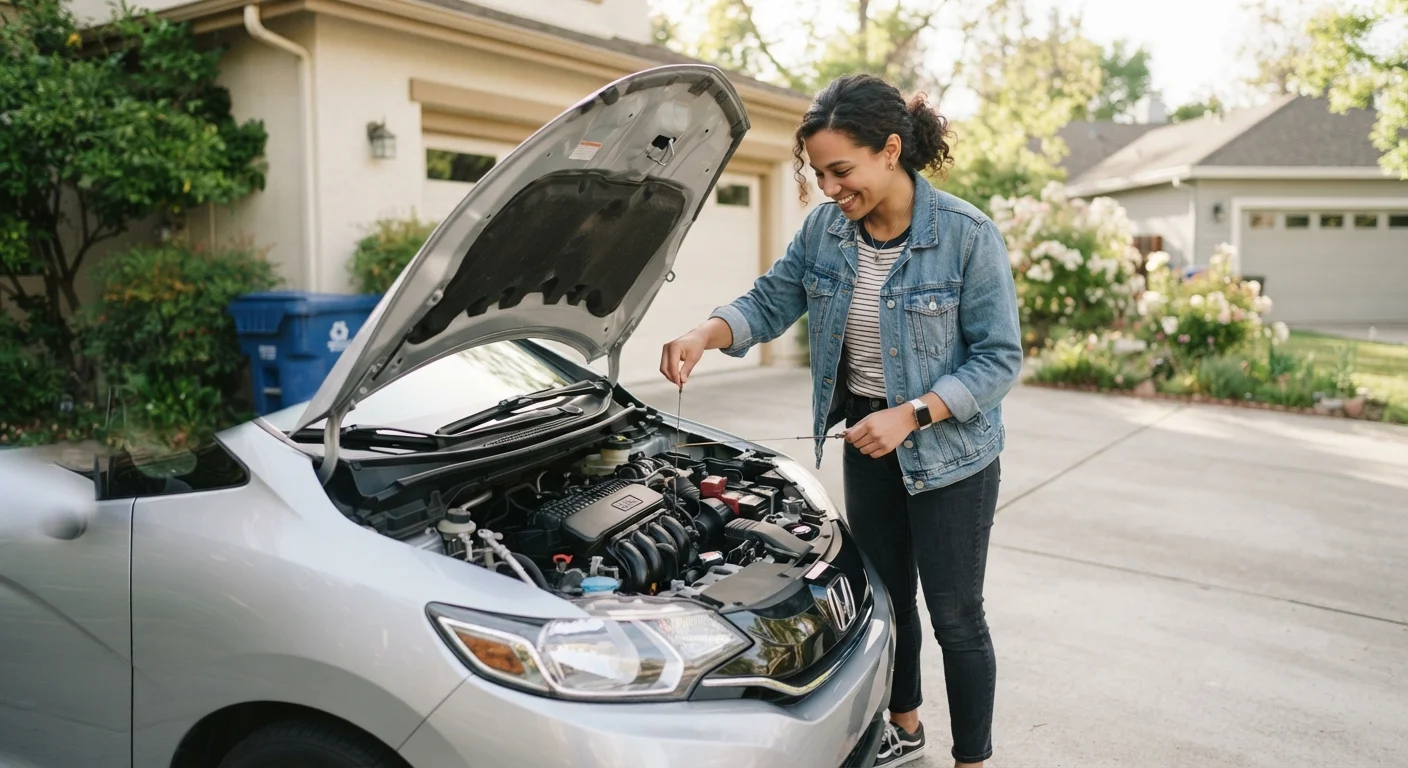
Fluids are the lifeblood of your vehicle. Checking them takes less than five minutes and can prevent failures that sideline your car entirely. Open the hood and familiarize yourself with these five:
- Engine oil - Lubricates moving parts and prevents overheating friction. Check with the dipstick; it should be between the min and max marks and appear amber or light brown. Dark, gritty oil needs changing.
- Coolant (antifreeze) - Keeps your engine from overheating in summer and freezing in winter. Check the reservoir when the engine is cold; never open the radiator cap on a hot engine.
- Brake fluid - Transfers force from your pedal to the brakes. It's in a small reservoir near the firewall. Low levels can indicate a leak - have it checked promptly.
- Transmission fluid - Keeps the gearbox shifting smoothly. Some vehicles have a dipstick for this; others require a mechanic to check it. Consult your manual.
- Windshield washer fluid - The only fluid you can refill yourself confidently at any level. Never substitute water in freezing climates.
Most fluids have clearly marked reservoirs with min/max indicators. Make a habit of checking them monthly, especially on older vehicles.
Make Fluid Checks a Monthly Habit
Pick the first day of each month and spend five minutes checking your key fluids - it takes no special tools and costs nothing. Catching a slow coolant leak or low oil level early is far cheaper than the repair it prevents. Pair it with a quick walk-around to check tire pressure and lights while you're at it.
Tires, Brakes, and Lights: Your Safety Trio
These three systems are directly tied to your ability to avoid accidents. They're also the areas where a small problem can turn dangerous fast.
Tires
Check tire pressure monthly using an inexpensive gauge - correct pressure is listed on the sticker inside the driver's door jamb, not on the tire sidewall. Underinflated tires reduce fuel efficiency, wear unevenly, and increase blowout risk. Rotate tires every 5,000-7,500 miles to promote even wear. For tread depth, the penny test is a reliable field check.
Brakes
Squealing or grinding when braking, a pulsating pedal, or a car that pulls to one side are all signs your brakes need attention. Brake inspection is not a DIY task for beginners - have a qualified mechanic assess pad thickness and rotor condition at least once a year.
Lights
Walk around your car periodically to verify all exterior lights work: headlights, taillights, turn signals, brake lights, and reverse lights. A burned-out brake light is both a safety hazard and a ticket risk. Bulb replacements are often straightforward, but some modern vehicles require a mechanic for certain lamp assemblies.
For guidance on how weather affects these systems, see seasonal car maintenance preparation.
Building a Maintenance Schedule You'll Actually Follow
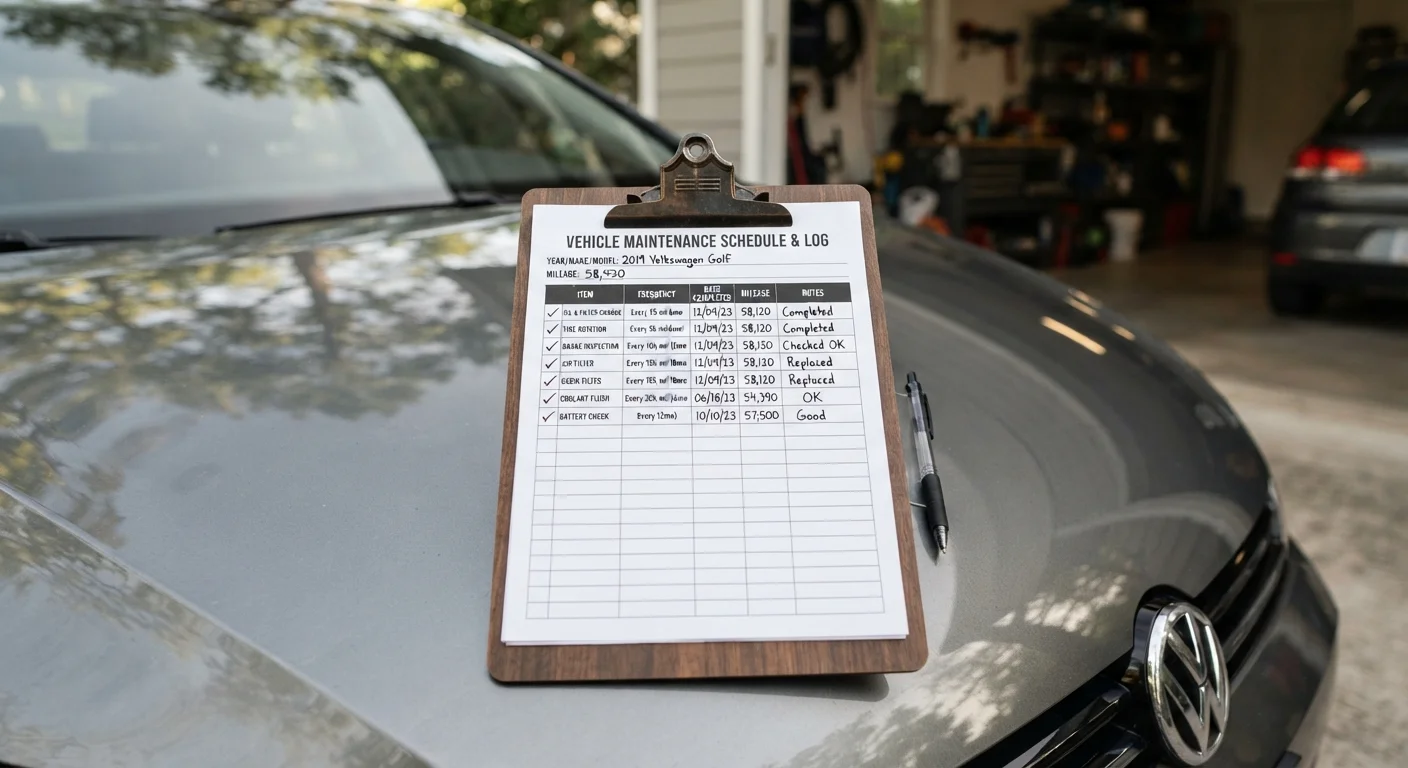
Your owner's manual is the single most useful document that came with your car - it contains a manufacturer-designed maintenance schedule organized by mileage intervals. Common milestones include 5,000; 15,000; 30,000; 60,000; and 90,000 miles, each with specific service tasks.
For a detailed breakdown of what each interval actually involves, our guide to maintenance schedules explains each milestone in plain language.
Practical tips for staying on track:
- Set a phone reminder tied to your odometer every 5,000 miles.
- Keep a simple maintenance log - a notepad in the glove box works fine - recording the date, mileage, and service performed.
- Don't rely on oil-change sticker reminders alone; they may not align with your driving patterns.
- If you bought a used car, have a mechanic perform a full inspection before assuming the previous owner kept up with service.
Used Cars May Have Maintenance Gaps
When you purchase a used vehicle, there's no guarantee the previous owner followed the recommended schedule. A pre-purchase inspection by a trusted mechanic - typically $100-$150 - can reveal what's due or overdue. This is one of the smartest investments a new car owner can make before driving a used vehicle long-term.
When to DIY and When to See a Mechanic
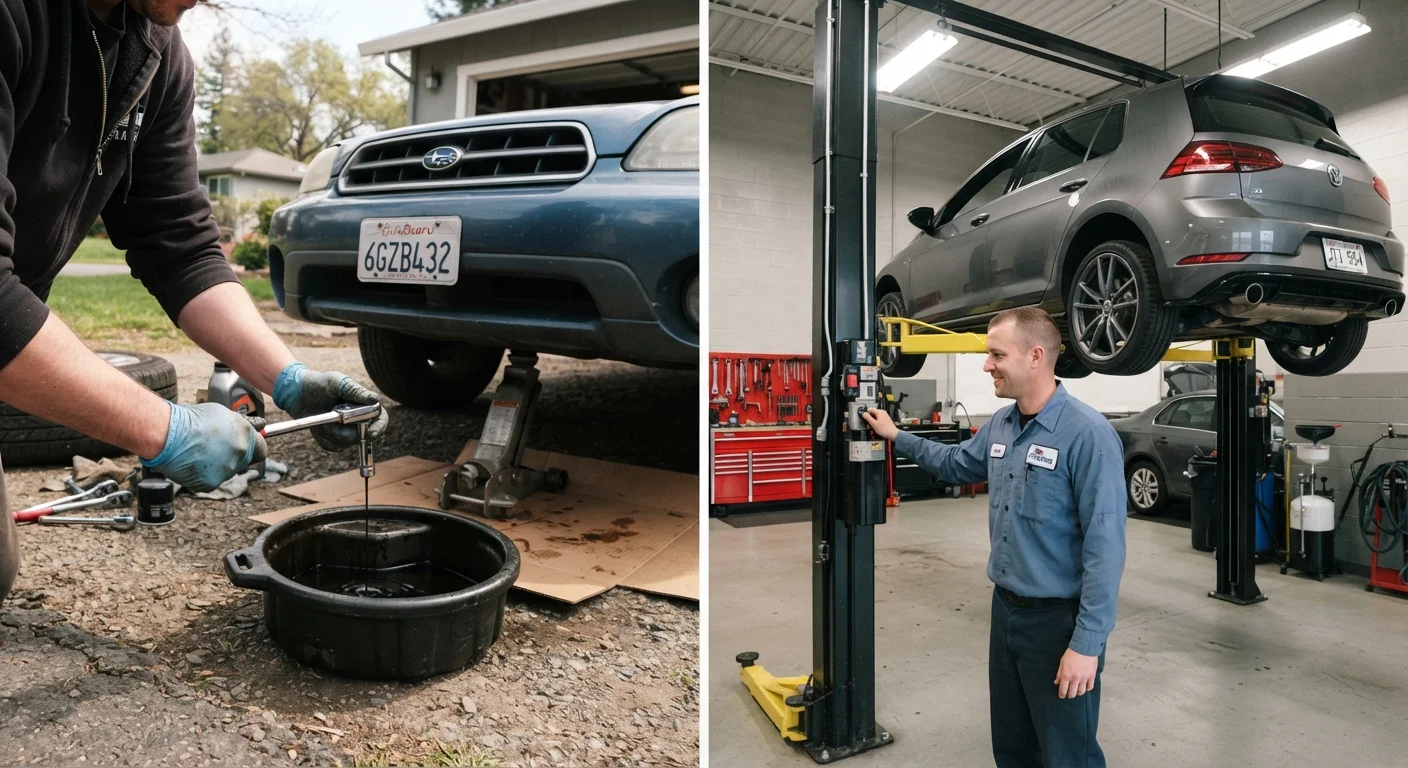
Not every maintenance task requires a shop visit, but some genuinely do - and misjudging which is which can be unsafe or more expensive in the long run.
Generally beginner-friendly: checking and topping off fluids, replacing wiper blades, swapping cabin or engine air filters, inflating tires, replacing bulbs (on most vehicles), and keeping the battery terminals clean.
Leave to a qualified mechanic: brake system work, suspension and steering components, timing belt or chain replacement, anything involving the fuel system, and diagnosing warning lights beyond a simple code scan.
For a full breakdown of trade-offs, our DIY vs. shop guide helps you decide based on your skill level and the specific task. If your car accumulates significant mileage, this high-mileage maintenance guide covers what to watch more closely as vehicles age.
The broader goal is simple: stay curious about your car, check it regularly, and don't ignore warning signs. A little attention up front saves a lot of money and stress down the road.
Don't Ignore Dashboard Warning Lights
A flashing check engine light, oil pressure warning, or temperature gauge in the red are not 'check later' situations - they indicate conditions that can cause immediate or serious engine damage. Pull over safely and have the vehicle diagnosed before driving further. Continuing to drive on a serious warning light can turn a manageable repair into a much larger one.