How They Actually Work
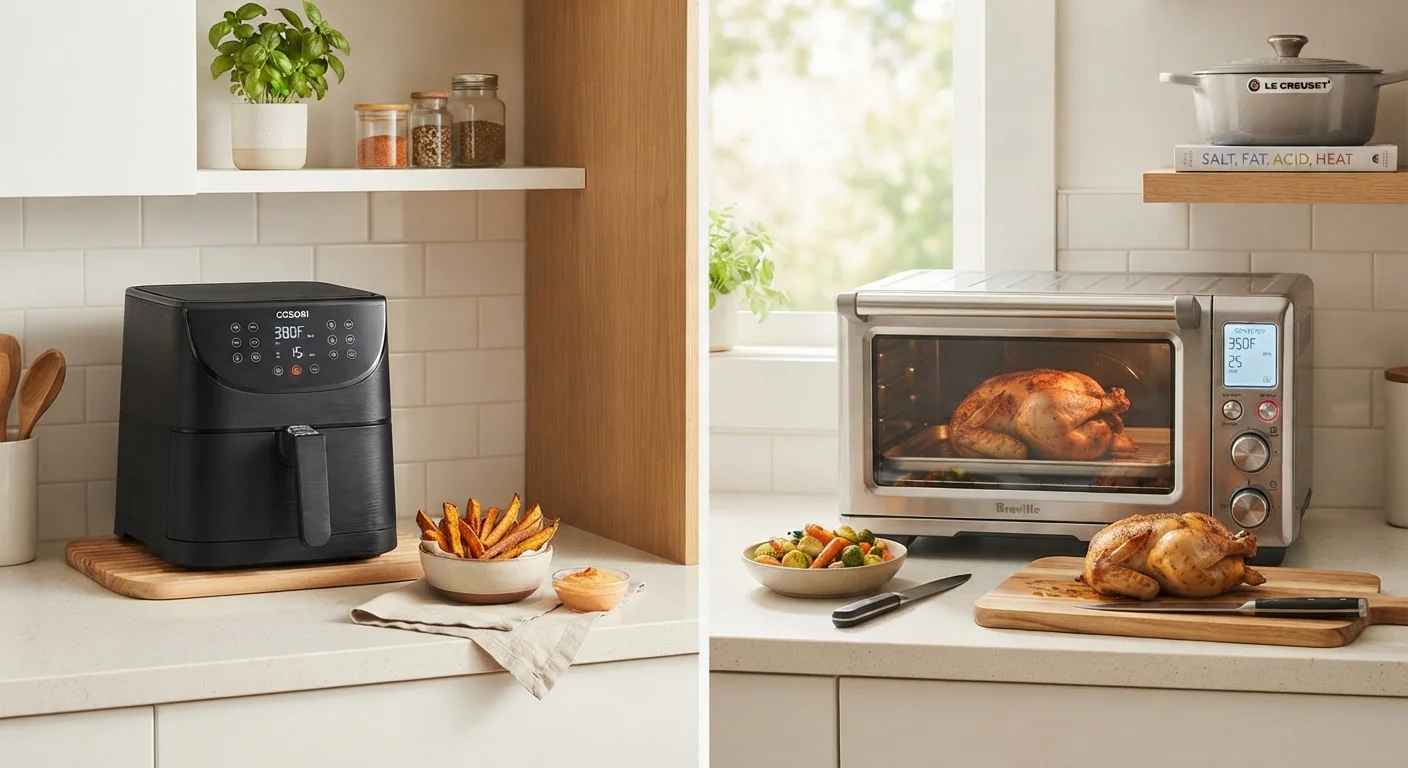
Air fryers and convection ovens share the same core principle: a heating element and a fan work together to circulate hot air around food. This moving air strips away surface moisture faster than a static oven, producing a browned, crisped exterior without submerging food in oil.
The meaningful difference is scale and airflow intensity. An air fryer's cooking chamber is much smaller - typically 2 to 7 quarts - which means the fan drives heat across food at much closer range. That concentrated circulation explains why air fryers can char frozen fries in 12 minutes without preheating for long. A convection oven's chamber is larger, so airflow is more diffuse and gentle, which suits delicate baked goods and large roasts that benefit from slower, more even heating.
For a deeper look at where the two formats overlap and diverge technically, see how air fryers and convection ovens compare in practice.
| Criterion | Air Fryer | Convection Oven |
|---|---|---|
| Capacity | 2-7 quarts (small batches) | 0.6-1.5 cu ft (full trays) |
| Preheat Time | 2-4 minutes | 8-12 minutes |
| Footprint | Compact, easy to store | Larger countertop presence |
| Energy Use Per Session | Lower (shorter cycles) | Higher (larger chamber) |
| Cooking Speed | Faster for small items | Slower, more even heat |
| Best Food Types | Fries, wings, small proteins | Roasts, baked goods, sheet pans |
| Cleanup | Basket is easy to clean | More surfaces to clean |
| Typical Price Range | Generally lower upfront | Wider range, often higher |
Practical Trade-Offs Worth Knowing
Capacity is the most immediate constraint. A 5.5-quart air fryer can handle two chicken breasts or a tray of vegetables - but not a 12-inch pizza or a whole bird. Convection ovens typically range from 0.6 to 1.5 cubic feet of interior space, accommodating standard baking sheets and larger cuts.
Preheat time also differs noticeably. Air fryers reach cooking temperature in two to four minutes; many skip preheat entirely for small items. Countertop convection ovens generally need eight to twelve minutes to stabilize.
~1,500W
Typical air fryer wattage
Most household air fryers draw between 1,200 and 1,700 watts, but run for shorter durations than a full-size oven.
~1,800W
Typical countertop convection oven wattage
Countertop convection ovens commonly range from 1,500 to 1,800 watts and run longer to heat a larger interior chamber.
30-50%
Potential cook-time reduction vs. conventional oven
Convection cooking - in either appliance - can reduce cook times compared to traditional static-heat ovens, per general cooking guidance.
Energy consumption follows a similar pattern. Because air fryers run at full heat for shorter cycles over a smaller interior, they typically consume less electricity per session than running a convection oven for the same meal. This can matter for households watching utility costs.
Cleaning is another practical factor. Most air fryer baskets are dishwasher-safe or quick to rinse. Convection ovens involve racks, trays, and inner walls that collect more grease over time.
If you're building out a full kitchen setup, also consider how your cooktop choice affects overall cooking workflow - induction, electric, and gas cooktops each bring different trade-offs worth understanding before you finalize your setup.
Which One Fits Your Kitchen?
Neither appliance is objectively superior - the right choice depends on how your household actually cooks. If your meals are mostly quick weeknight proteins, reheated leftovers, or snack-sized batches, the air fryer's speed and compact size align with that routine. If you bake regularly, feed four or more people, or want a single appliance that can handle multiple trays simultaneously, a convection oven gives you the capacity to do that.
Some households find that owning both makes sense: an air fryer for speed and everyday use, a convection oven for larger or more involved meals. Whether that's practical depends on your counter space and budget.
Whichever you choose, consistent maintenance extends the appliance's life considerably. Simple care habits can keep small kitchen appliances running well past their typical replacement window.
A Note on Combination Models
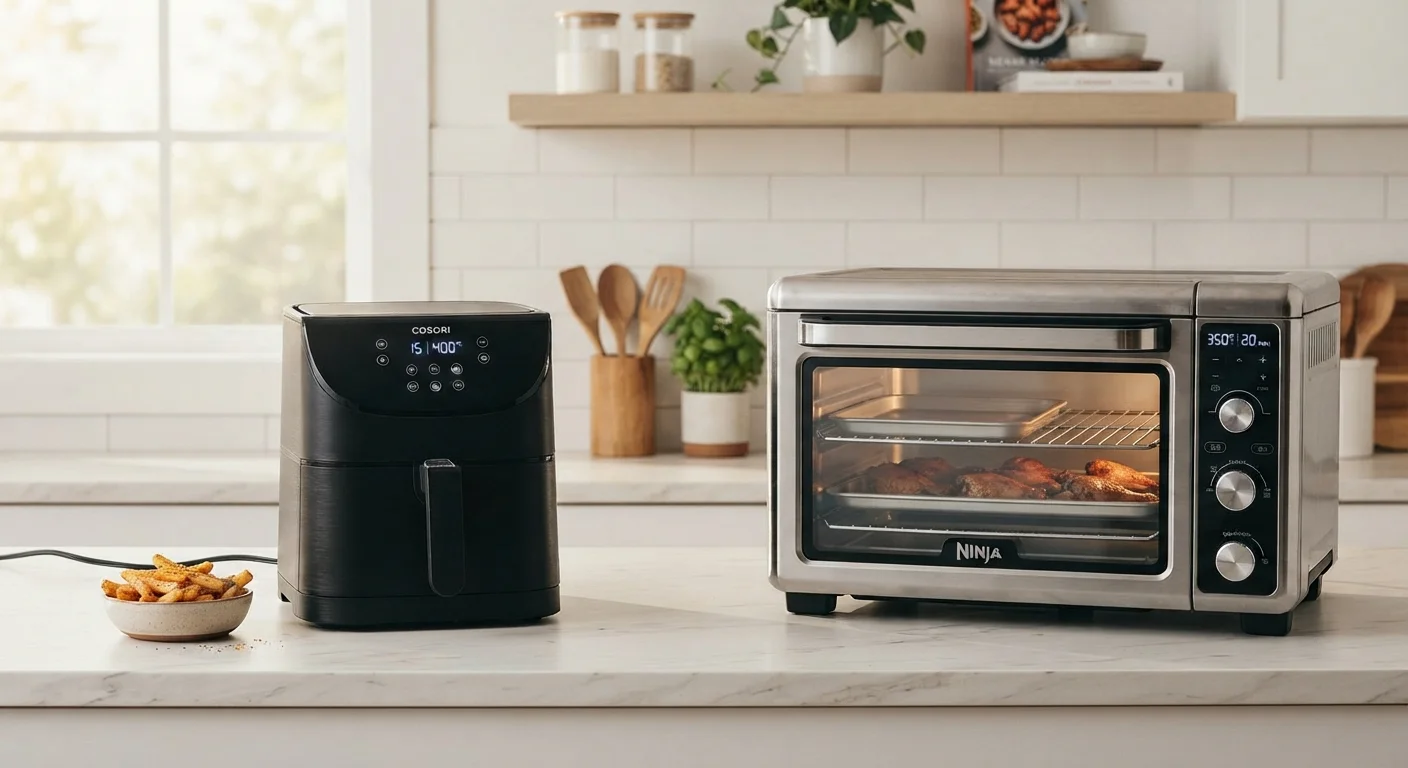
Several manufacturers now produce countertop ovens that include an air fry mode, functioning as both a convection oven and an air fryer in one unit. These can be a practical middle ground for households that want both capabilities but have limited counter space. Trade-offs typically include a larger footprint than a standalone air fryer and a higher price than either appliance bought separately. Evaluate actual interior dimensions and airflow specs rather than relying on marketing labels alone.