The Shared Mechanism - and Where It Ends
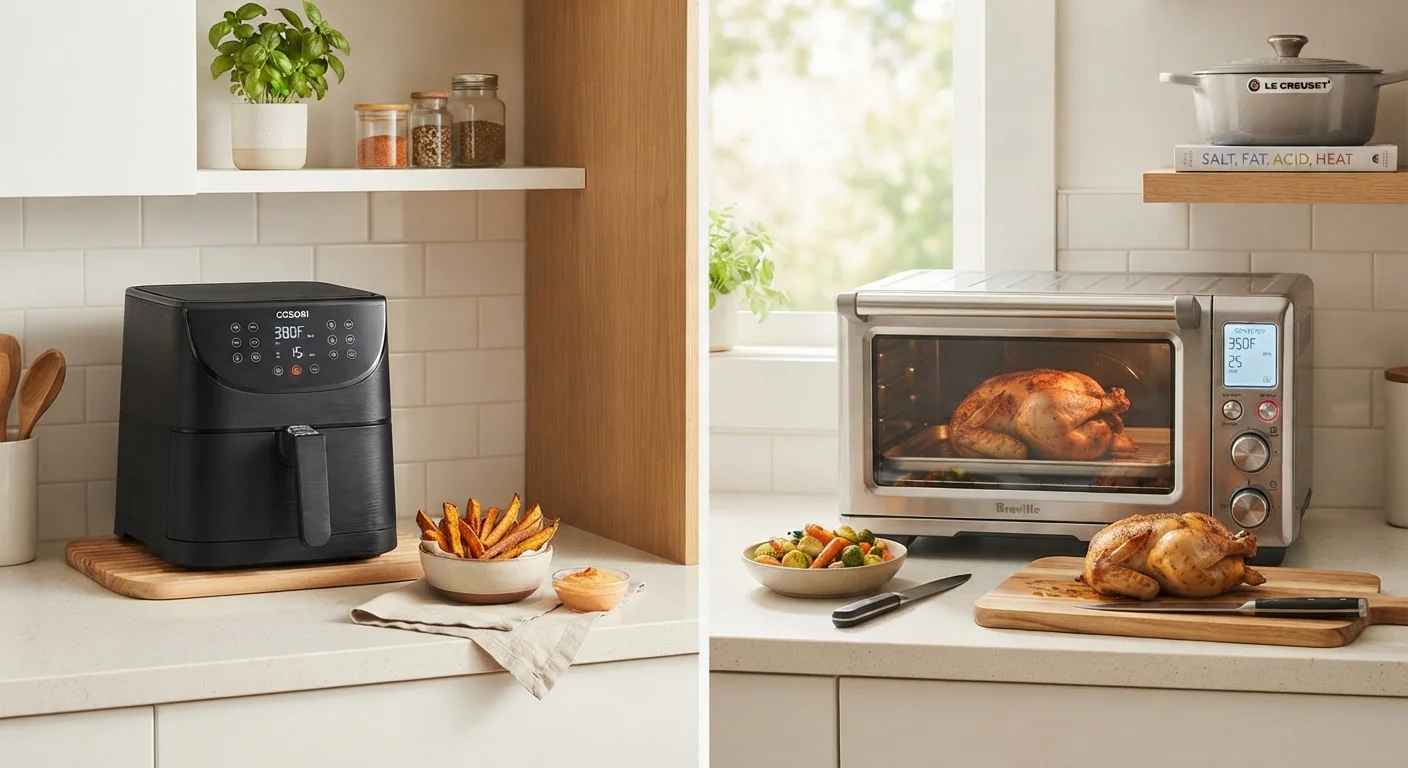
Strip away the branding, and both appliances do the same fundamental thing: a heating element warms air, and a fan circulates that air around the food. This produces faster, more even cooking than a conventional static oven because the moving air continuously strips away the cool moisture layer sitting on the food's surface.
That's where the similarity largely ends. An air fryer compresses this process into a very small, insulated chamber - typically 2 to 7 quarts - and often positions the heating element directly above the food. The confined space means the hot air recirculates rapidly and intensely. A convection oven, whether a full built-in range or a countertop unit, operates across a much larger interior cavity with slower, broader airflow patterns.
The practical result: air fryers generate a crispier exterior finish on foods like chicken wings or cut vegetables more reliably than most standard convection ovens, because the ratio of heating power to air volume is much higher.
| Criterion | Air Fryer | Convection Oven |
|---|---|---|
| Typical capacity | 2-7 quarts | 1-2 cubic feet (countertop); larger built-in |
| Preheat time | 2-5 minutes | 8-15 minutes |
| Crisping performance | High - intense, concentrated airflow | Moderate - broader, gentler airflow |
| Batch cooking suitability | Limited by small cavity | Strong - multiple racks possible |
| Energy per session | Generally lower (shorter run time) | Generally higher (longer preheat + cook) |
| Countertop footprint | Compact to medium | Medium to large |
| Recipe flexibility | More adjustment required | Closer to standard oven recipes |
Speed, Preheat, and Energy Use
Air fryers reach cooking temperature in roughly 2-5 minutes. Most convection ovens, including countertop versions, take 8-15 minutes to fully preheat. For quick weeknight meals, that gap matters more than it might seem on paper.
Energy consumption follows a similar logic. Because air fryers heat a smaller cavity faster and cook food in less total time, they typically draw less energy per cooking session - even if their wattage ratings are similar to or higher than some convection ovens. Shorter total run time generally means lower energy use per meal.
2-5 min
Typical air fryer preheat time
Compared to 8-15 minutes for most countertop convection ovens, according to general appliance specifications.
20-30%
Estimated cook time reduction in air fryers
Recipes adapted from conventional ovens to air fryers often require shorter cooking durations, though results vary by model and food type.
Convection ovens compensate with capacity. If you're roasting a full sheet of vegetables alongside chicken thighs, one oven cycle handles both. An air fryer of typical size forces you to cook in batches, which can erase the time advantage entirely for larger meals.
Recipe Adjustments When Switching Between Them
Standard oven recipes generally transfer to a convection oven by reducing temperature 25°F and checking for doneness earlier. Translating the same recipe into an air fryer often means a further 15-25°F reduction and shortening cook time by another 20-30%, though this varies by the specific model and food type.
The denser, faster heat in an air fryer can overcook the exterior before the interior finishes - a common frustration with thicker cuts of meat or dense baked goods. Convection ovens are generally more forgiving because the airflow is less concentrated.
Testing Your Specific Model Matters
Air fryer performance varies considerably between models even within the same size category - wattage, basket shape, and fan placement all affect results. Convection ovens similarly differ in how aggressively their fans run. Any temperature or time adjustments should be treated as starting points rather than fixed rules. Testing a recipe once at lower intensity before committing to a full meal is a reliable way to calibrate your specific appliance.
If you're deciding between appliances based on what you already cook, consider how often you prepare food in quantities that would fill a standard sheet pan. That single factor tends to be the most reliable predictor of which format actually fits your cooking habits. For a broader look at how cooking tools match different routines, see how slow cookers, Instant Pots, and Dutch ovens compare.
Maintenance, Durability, and Long-Term Value
Air fryers typically have removable baskets or trays that are dishwasher-safe, which makes cleanup straightforward. The non-stick coatings on baskets do wear over time and may need replacement. Convection ovens have more interior surface area to clean, and some models have oven-safe racks but non-removable side walls that require manual wiping.
Both appliance types can last several years with consistent basic care. Simple maintenance habits for small appliances - like keeping heating elements free of grease buildup and storing units in dry conditions - apply equally to both formats and can meaningfully extend operational life.
For households evaluating overall kitchen setups, pairing appliance choices with decisions about cookware and cooktops can reduce redundancy. Cast iron versus stainless steel cookware and cooktop type each affect how well your oven or air fryer integrates into your actual workflow.