What Each Tool Actually Does
Before matching a vessel to your habits, it helps to understand what each one is genuinely designed to do - not what marketing says it can do.
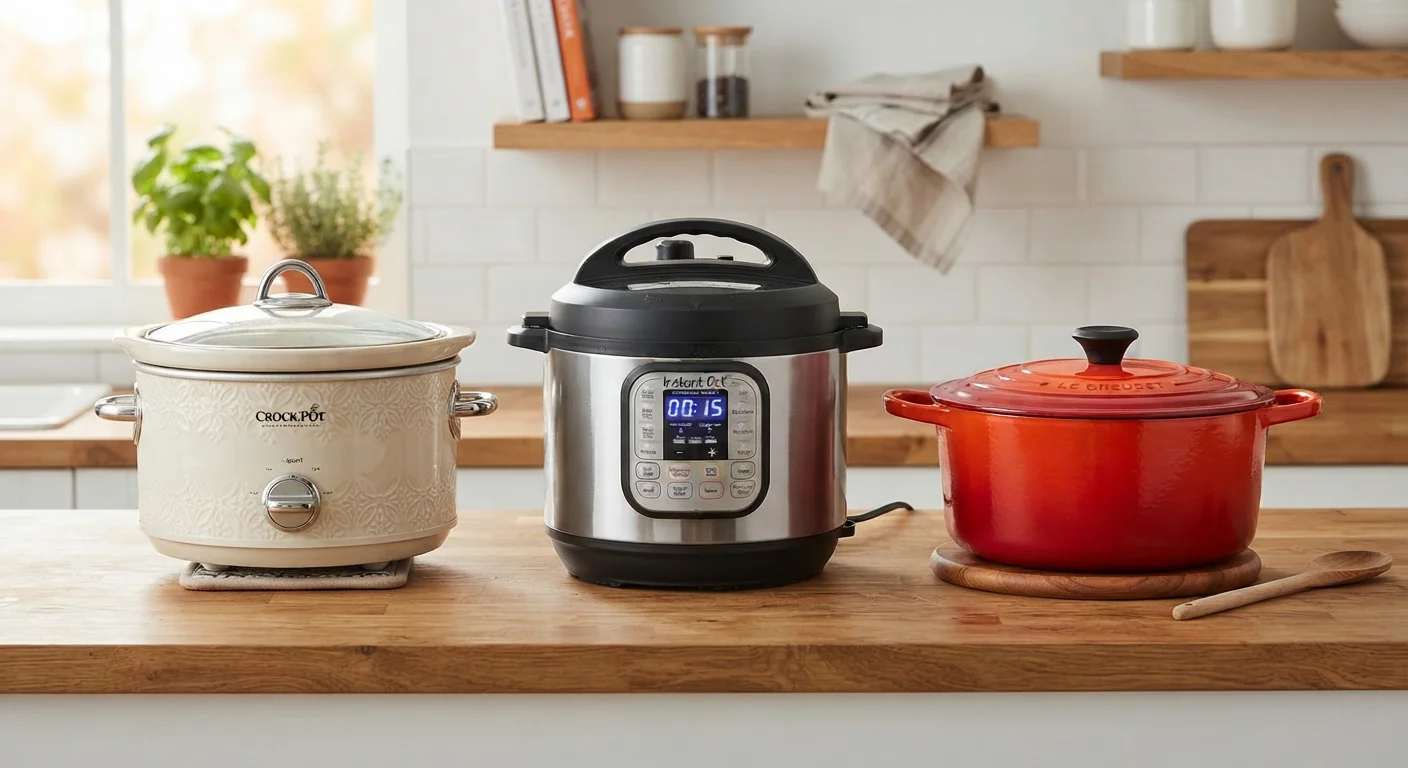
Slow cookers apply low, steady heat over 6-10 hours. They're optimized for tough, collagen-rich cuts of meat, dried beans, and soups. The heat is wet and enclosed, which means food won't brown or develop a crust - it braises and softens. Their strength is entirely in the unattended long cook.
Multi-cookers (often called Instant Pots, though that's one brand name) combine pressure cooking, slow cooking, sautéing, and sometimes air frying in one insert. Pressure cooking works by sealing steam to raise the boiling point of liquid, which dramatically shortens cook times for foods that normally take hours. A pork shoulder that needs 8 hours in a slow cooker can be done in about 90 minutes under pressure.
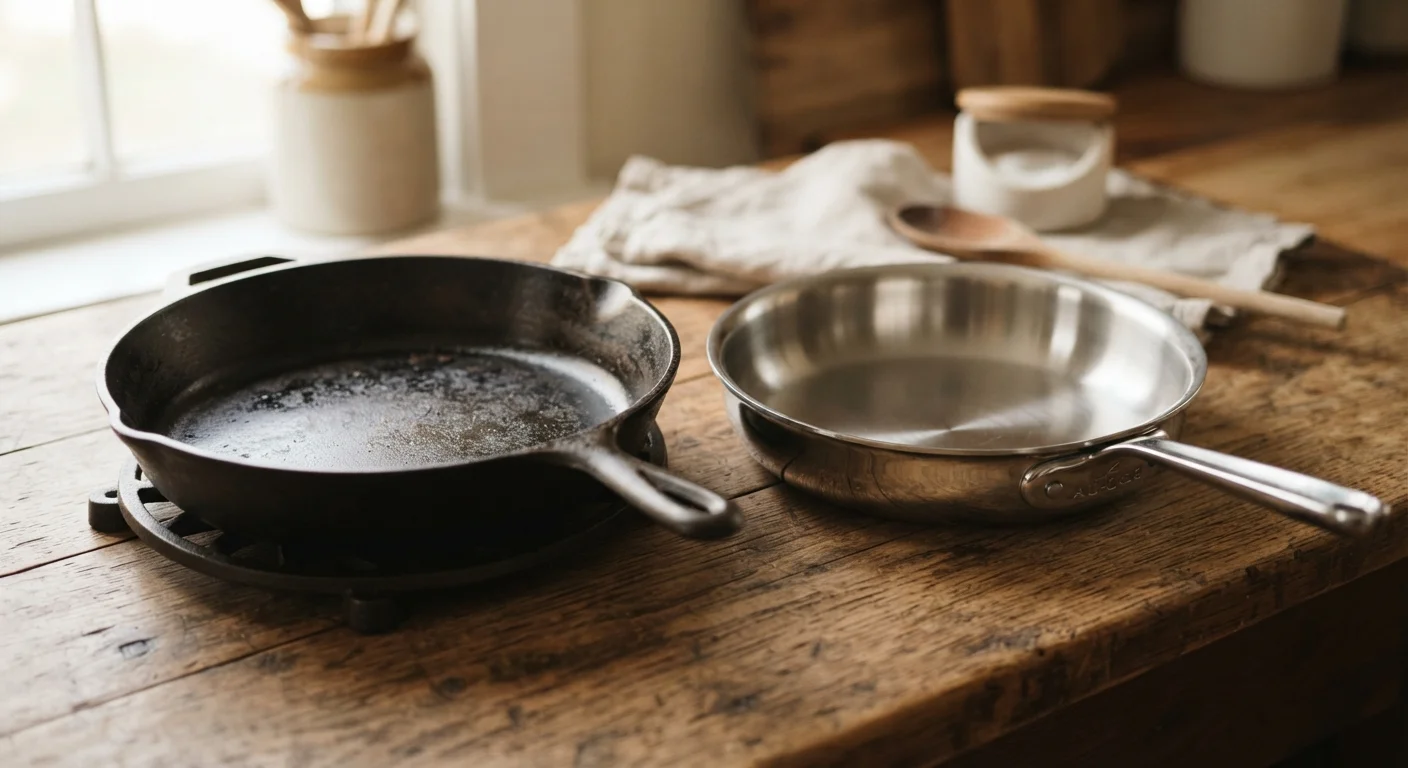
Dutch ovens are heavy-walled pots - typically enameled cast iron or plain cast iron - that move from stovetop to oven. They retain and distribute heat exceptionally well, making them ideal for searing meat before braising, baking bread, frying, and making stocks. They require you to be in the kitchen managing the process. See how cookware material choices affect performance in our piece on cast iron vs. stainless steel cookware.
Matching the Tool to Your Cooking Habits
The honest question isn't which tool is objectively better - it's which one fits how you actually behave in the kitchen.
| Slow Cooker | Multi-Cooker | Dutch Oven | |
|---|---|---|---|
| Hands-on time required | Minimal - set and leave | Moderate - active setup needed | High - active cooking throughout |
| Typical cook time | 6-10 hours on low | 30-90 minutes under pressure | 1-4 hours stovetop/oven |
| Upfront cost range | Low to moderate | Moderate to high | Moderate to high |
| Durability | Good; insert can crack | Moderate; gaskets wear out | Excellent; decades of use |
| Counter/storage footprint | Large; needs outlet | Large; needs outlet | Compact; no outlet needed |
| Browning/searing capability | None | Yes, via sauté function | Excellent on stovetop |
| Best for | Unattended all-day cooking | Speed and multi-function | Active cooking, baking, frying |
If you leave for work before 9 a.m. and want dinner ready when you get home: a slow cooker is genuinely the right fit. There's no timing anxiety, no risk of pressure-release errors, and no need to be present.
If your evenings are unpredictable but you cook in bursts: a multi-cooker makes more sense. You can start a pressure cook at 6 p.m. and have food on the table by 7:30. The sauté function also means you can do everything in one pot without dirtying a skillet first.
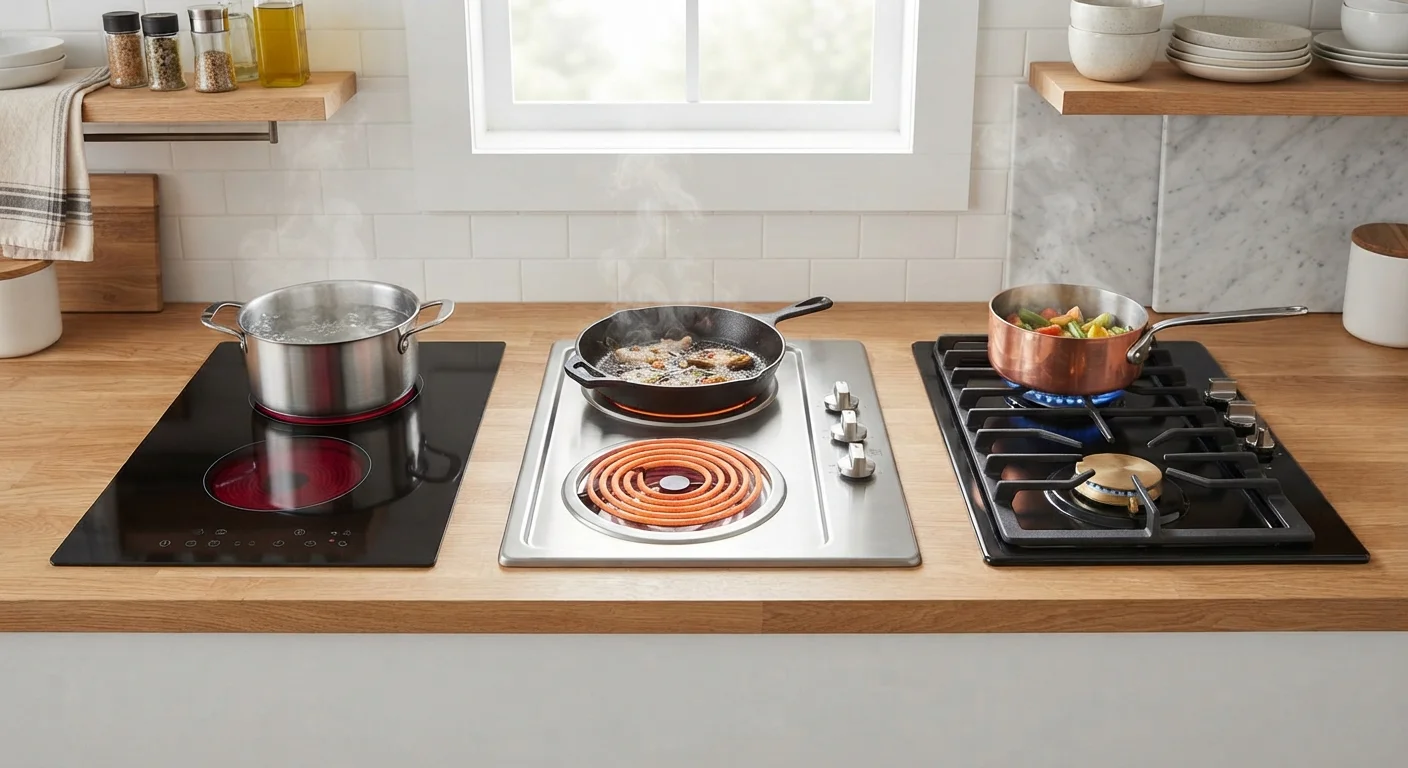
If you cook on weekends, enjoy the process, and want a single vessel that does everything: a Dutch oven pays off over years of use. A quality enameled Dutch oven can last decades without degrading, and it works on any cooktop type - relevant if you're considering a switch, as covered in our induction vs. electric vs. gas cooktops comparison.
Test Your Real Routine First
Before purchasing, track how you actually cook for two weeks - not how you intend to cook. If you never use a slow cooker setting on your current appliance, a dedicated slow cooker is probably a poor investment. If you regularly forget food on the stovetop, a multi-cooker with automatic keep-warm may suit you better than a Dutch oven.
Cost, Maintenance, and Counter Space
Price ranges vary widely within each category, but some general patterns hold.
Slow cookers tend to sit at the lower end of the price spectrum for entry-level models, making them accessible for households equipping a kitchen on a tight budget - something explored in our guide to setting up a functional kitchen on a tight budget. They have few parts to fail, but the ceramic insert can crack if thermally shocked.
Multi-cookers cost more upfront, and their complexity - gaskets, pressure valves, electronic controls - means more components that can wear out or need replacement. Gaskets typically need replacing every year or two with regular use. That said, replacing one multi-cooker potentially replaces several single-purpose appliances.
Dutch ovens carry the highest upfront cost among quality enameled models, but they have no electronic components to fail and no gaskets to replace. Properly maintained, they're functionally permanent kitchen tools. For care habits that extend appliance life generally, see our piece on keeping small kitchen appliances running longer.
Watch for Multi-Cooker Complexity Creep
Multi-cookers with 20+ preset functions often go unused beyond a handful of modes. More presets add cost without proportional utility for most households. Prioritize models with well-documented gasket and sealing ring replacements available at reasonable cost - these components wear out and should not be a barrier to continued use.
Counter and storage space is a practical constraint that often goes unconsidered. Slow cookers and multi-cookers are bulky and not attractive enough to leave out on most counters. Dutch ovens stack in cabinets or hang from hooks and require no outlet, which simplifies storage considerably.
When You Might Actually Need More Than One
For households that cook regularly and in volume - families, meal preppers, people who batch-cook on Sundays - the question isn't always either/or. A Dutch oven and a slow cooker together cover a wide range of tasks without significant overlap: the Dutch oven handles active cooking and baking; the slow cooker handles unattended long cooks on busy workdays.
Adding a multi-cooker on top of those two provides diminishing returns unless you specifically value the pressure-cooking speed or the built-in yogurt or rice functions. If counter space and budget are constrained, prioritize the vessel that matches your most common cooking pattern, not your most aspirational one.
This article provides general product information for educational purposes. Prices, specifications, and product availability vary by retailer and region. Always verify current details before purchasing.