Start With a Clear Inventory Mindset
The biggest mistake people make when setting up a kitchen from scratch is shopping without a framework. Stores and online listings are organized to sell variety, not to help you figure out what you actually need first. The result is a drawer full of gadgets and a missing colander.
Before buying anything, list the meals you realistically cook - or plan to cook - each week. A household that makes pasta, stir-fry, and eggs most nights needs very different gear than one that roasts meat and bakes regularly. This step alone eliminates half the impulse purchases.
Cookware
Pots, pans, and baking dishes used directly on the stove or in the oven to prepare food.
Hand tools
Non-powered kitchen utensils - spatulas, ladles, peelers - used manually during food prep and cooking.
Nonstick coating
A surface treatment (often PTFE-based) applied to pans to reduce sticking; requires lower heat and non-metal utensils to avoid damage.
Dutch oven
A thick-walled, lidded pot - usually cast iron or enameled cast iron - that retains heat well and works on stovetops and in ovens.
Open-box item
A product returned to a retailer or removed from its original packaging, often sold at a lower price while still being in working condition.
The same budget-filtering mindset that works for a capsule wardrobe applies directly here: identify the items that do the most work, and resist adding anything that only solves one narrow problem.
The Cookware That Actually Gets Used
Cookware is where most of your starting budget should go, because it affects every meal you make. A poorly made pan warps, heats unevenly, and makes cooking harder. A well-made one, cared for properly, can last a decade or more - see how long kitchen items typically last for realistic expectations by category.
A practical starter set includes:
- A 10- or 12-inch skillet - handles sautéing, eggs, pancakes, and pan sauces
- A 3- to 4-quart saucepan with lid - soups, grains, sauces, reheating
- A 6- to 8-quart stockpot - pasta, large batches, blanching
- A rimmed baking sheet - roasting vegetables, sheet-pan meals, baking
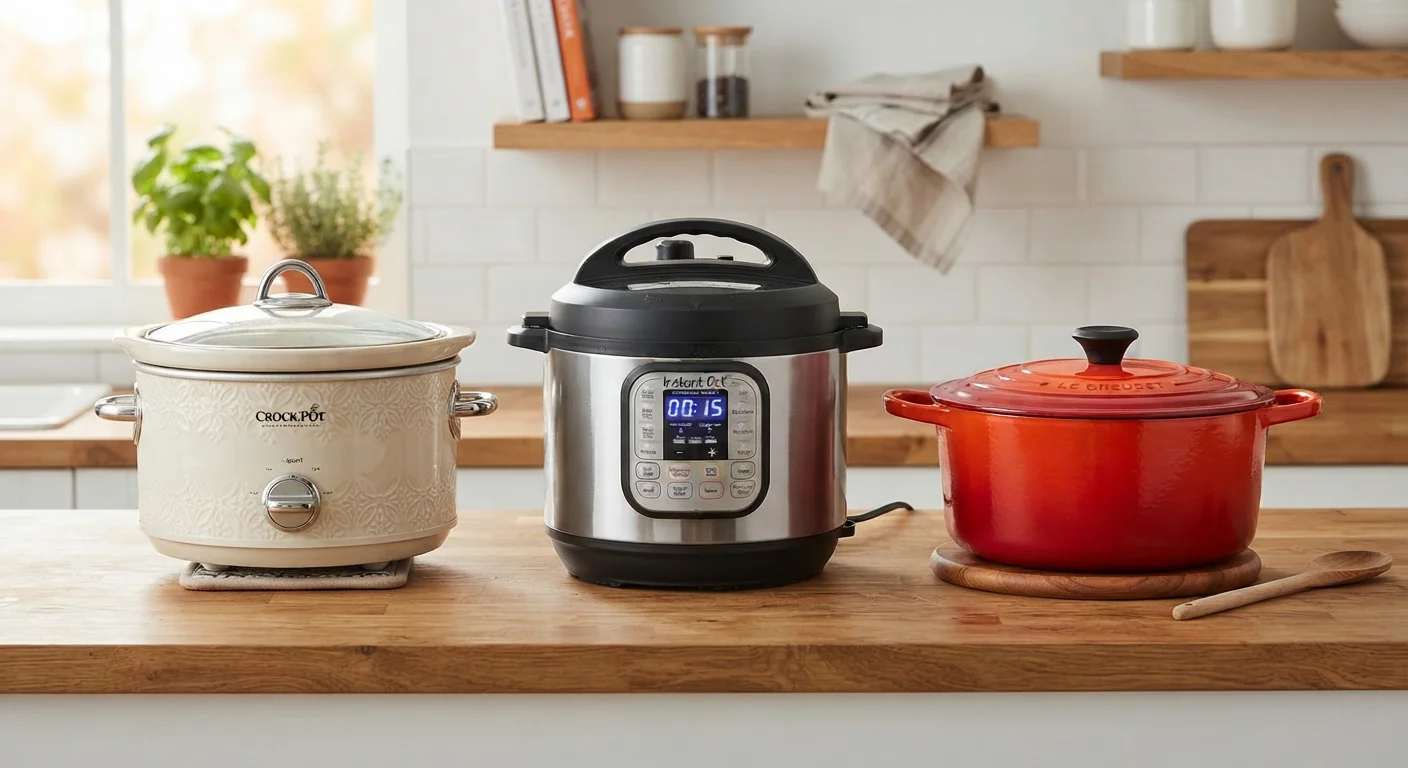
A lidded Dutch oven or heavy casserole dish can replace both the stockpot and a slow cooker for many households. The right choice between these tools depends on how you actually cook, not how you imagine you will.
Inspect cookware before buying secondhand
For pots and pans, check that the base sits flat (warping causes uneven heating), that handles are firmly attached, and that any nonstick coating isn't peeling or scratched through to the metal. A warped pan is not fixable. A scratched nonstick surface should be replaced, not used.
Knives, Cutting Boards, and Hand Tools
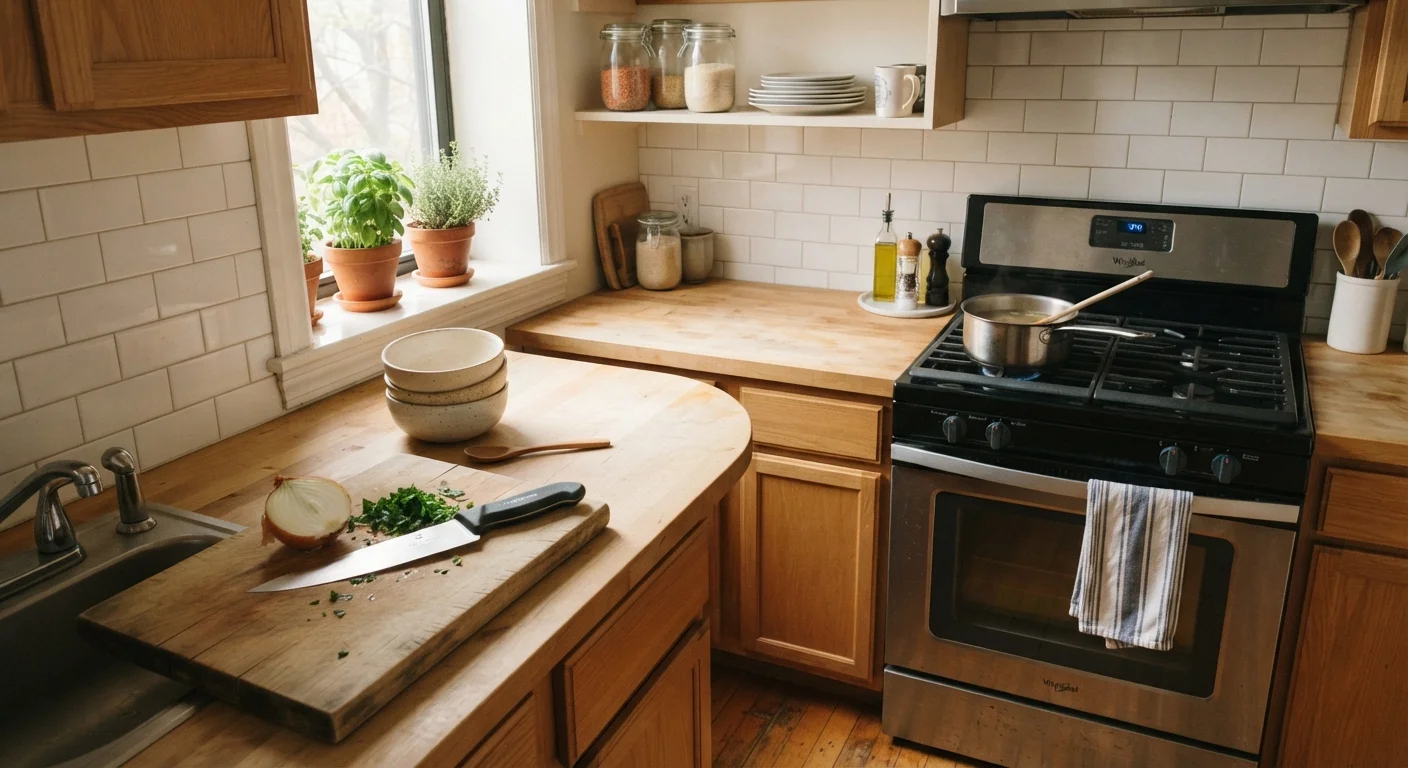
A single quality 8-inch chef's knife outperforms a full block of mediocre ones. Add a paring knife and a serrated bread knife and you have a complete set. Understanding what you're actually buying - blade steel, edge type, handle material - helps you evaluate options without relying on packaging claims. Our knife terminology guide breaks this down clearly.
For cutting boards, both wood and plastic are widely used, but each requires specific cleaning habits to remain food-safe. Common assumptions about which is more hygienic are often wrong - here's what food safety guidance actually recommends. Own at least two boards: one for raw proteins, one for produce and bread.
Essential hand tools to add from the start:
- A silicone or wooden spatula
- A ladle
- A colander or strainer
- A box grater
- A set of dry and liquid measuring cups
- A vegetable peeler and can opener
Appliances Worth the Counter Space
Small appliances are where kitchen budgets tend to bloat. The rule of thumb: only add an appliance if it replaces a task you currently do manually and find genuinely inconvenient, or if it enables something your cookware simply cannot do.
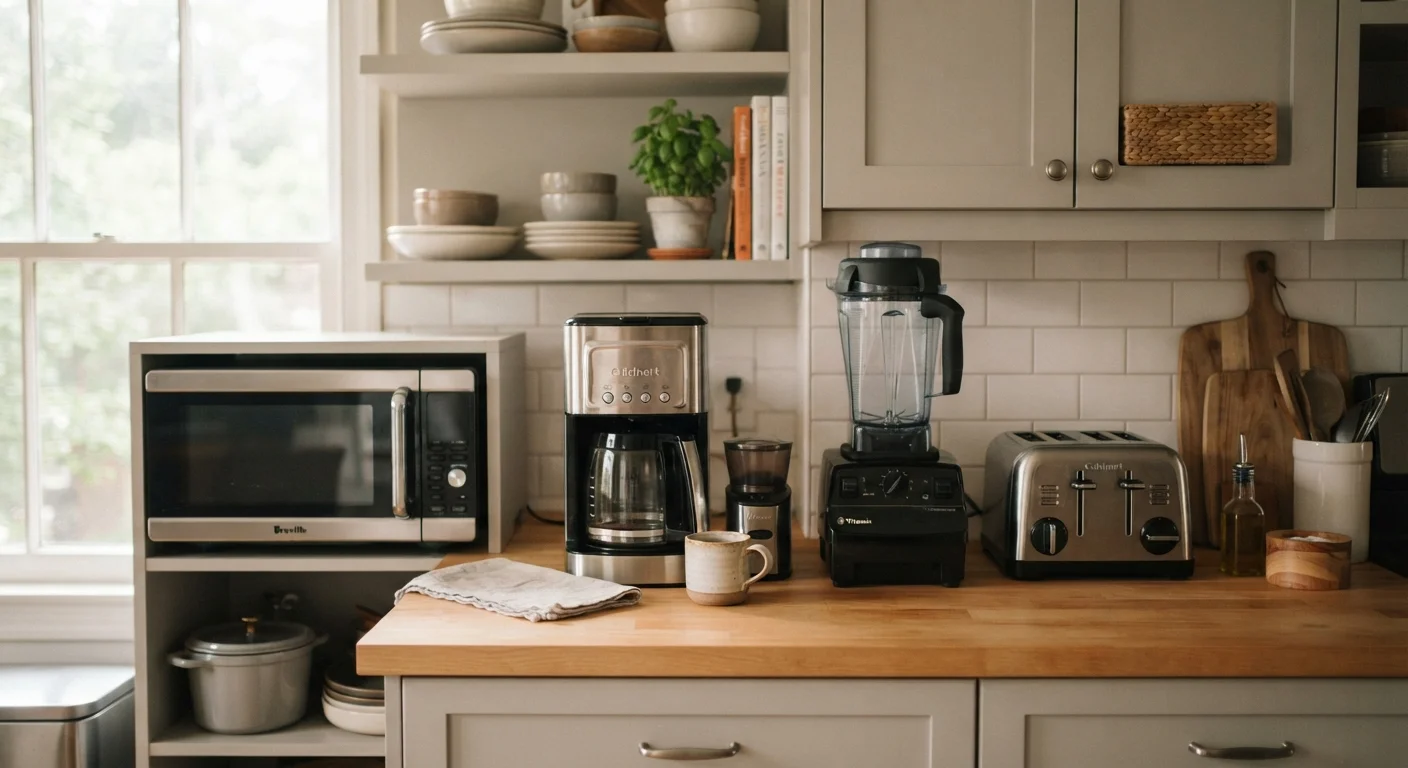
Appliances that earn their place in most starter kitchens:
- Microwave - reheating and defrosting; saves time daily for most households
- Electric kettle - faster than stovetop for boiling water; useful for cooking and beverages
- Drip coffee maker - if coffee is a daily habit, brewing at home cuts costs substantially versus café purchases
A countertop dishwasher may be worth considering in small kitchens without a built-in unit. The trade-offs compared to a full-size dishwasher are worth understanding before you decide. Similarly, if you're configuring a kitchen from scratch and choosing a refrigerator, refrigerator layout comparisons can help you match the configuration to your actual storage habits.
Avoid buying appliances speculatively
An air fryer or stand mixer sitting unused on a counter represents money tied up in clutter. Purchase specialty appliances only after you've identified a recurring cooking task they would solve. If you're unsure, many libraries and community organizations now offer tool-lending programs that let you try before you commit.
Stocking Basics Before You Shop
Equipment enables cooking; pantry staples determine what you can actually make on a given night. Once your core tools are in place, building a practical pantry is the logical next step. Our guide to stocking a kitchen pantry covers which staples are genuinely worth keeping on hand and how to organize them for easy use.
For readers thinking about how kitchen setup fits into a broader household budget, basic budgeting frameworks can help you allocate deliberately rather than reactively. And if you're working on eating nutritiously alongside setting up your kitchen, eating well on a tight budget offers grounded guidance that pairs naturally with having the right tools in place.
Finally, whatever you buy, care habits matter. Simple maintenance routines can meaningfully extend the working life of appliances and cookware - which is among the most effective cost-saving strategies available to any household kitchen.