What Each Format Actually Does
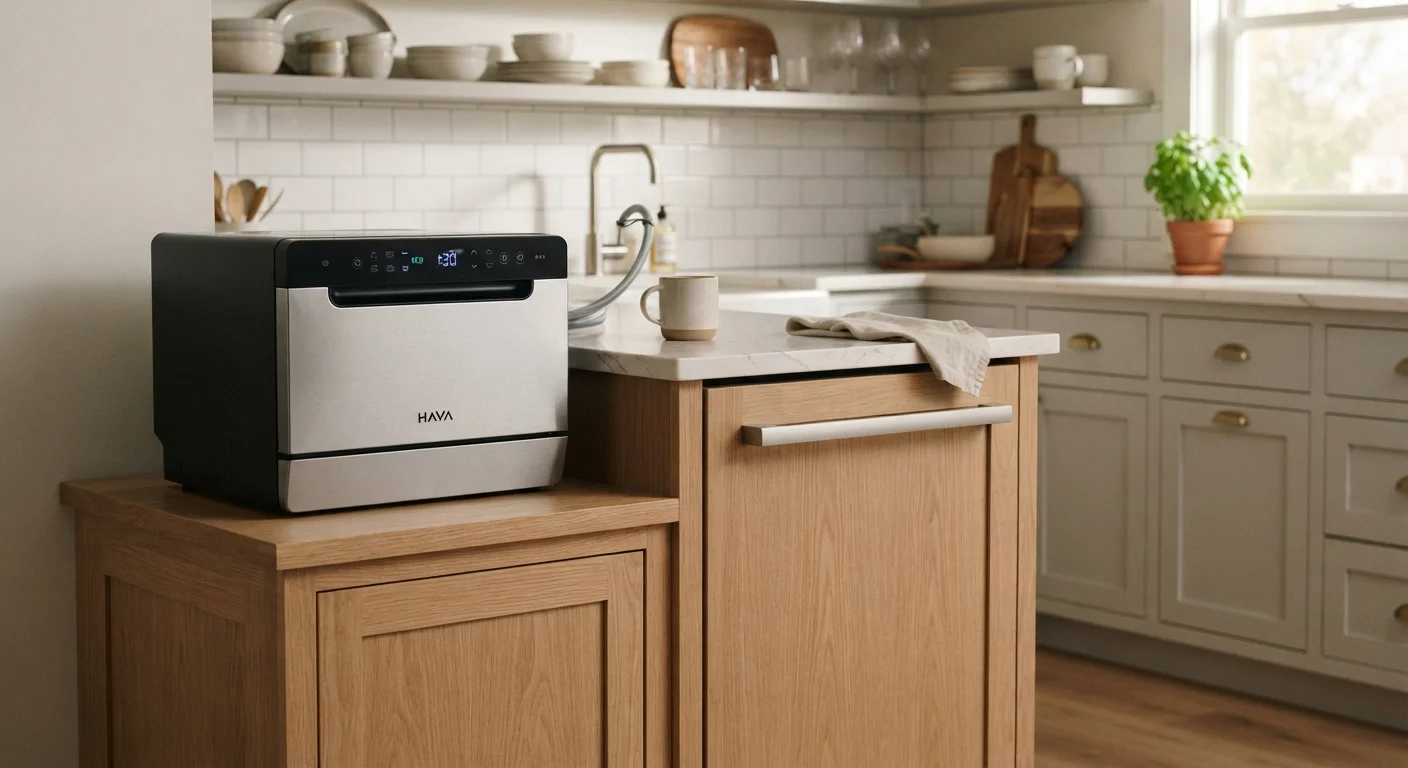
A countertop dishwasher is a freestanding unit that sits on your counter, connects to your kitchen faucet via an adapter, and drains into the sink. It requires no permanent plumbing and no dedicated electrical circuit beyond a standard outlet. A full-size dishwasher is a built-in appliance - typically 24 inches wide - that connects to your home's hot water supply and drain line under the sink.
Both formats wash dishes using heated water and detergent run through spray arms. The core mechanical difference is scale: full-size units run larger wash chambers with more spray coverage, higher water volume, and dedicated heating elements that maintain precise temperatures throughout the cycle. Countertop units accomplish the same task in a compressed form factor, generally running shorter cycles at slightly lower temperatures.
Before weighing one against the other, it helps to work through the questions that matter most for your specific kitchen. See our framework for comparing home appliances for a useful starting structure.
Countertop Dishwashers: Pros and Cons
The appeal of a countertop unit is straightforward: it fits where a full-size machine cannot. But the tradeoffs go beyond dimensions.
No installation required - connects to any standard faucet
Setup takes minutes and requires no plumber or electrician. This makes countertop dishwashers a practical option for renters who cannot modify their kitchens.
Lower upfront purchase price
Countertop models typically cost significantly less than full-size units, making them accessible for budget-constrained households or temporary living situations.
Portable - moves with you when you relocate
Unlike a built-in appliance, a countertop unit is not attached to the home. It can be transported to a new apartment or stored when not needed.
Shorter cycle times for small loads
Most countertop models complete a wash cycle in 45-90 minutes. For one or two people, this can be faster than running a half-empty full-size machine.
The capacity ceiling is the most important limitation to understand before purchasing. At roughly 6 place settings per load, a countertop unit works well for one or two people eating at home most nights. For a household of three or more, or anyone who batch-cooks, it becomes a bottleneck - requiring two or more cycles per day. That compounds energy and water use over time.
Limited capacity - typically 6 place settings per load
Households of three or more will likely need multiple daily cycles, which reduces the convenience advantage and increases water and energy use over time.
Occupies valuable counter real estate
In a small kitchen, a countertop dishwasher competes directly with prep space, small appliances, and drying areas - potentially creating more clutter than it solves.
Lower maximum wash temperature than full-size models
Countertop units generally cannot reach the sanitizing temperatures (150°F or higher) that full-size dishwashers achieve, which may matter for households with health concerns.
Awkward fit for large cookware and oversize dishes
Interior rack dimensions in most countertop models cannot accommodate standard pots, sheet pans, or large serving platters, requiring those items to be hand-washed separately.
Countertop models also vary significantly in rack layout. Some struggle to accommodate larger pots, pans, or oversized plates, so checking interior dimensions against your actual cookware is worthwhile before committing.
Full-Size Dishwashers: Efficiency at Scale
Full-size dishwashers carry a higher upfront cost and require either existing plumbing or professional installation. But for households that consistently generate a full load of dishes daily, the per-load economics often favor the larger unit.
6 vs. 16
Place settings per load: countertop vs. full-size
Standard countertop dishwashers hold approximately 6 place settings; full-size units range from 12 to 16 depending on model and rack configuration.
~3 gal
Water used per countertop cycle
Countertop dishwashers use roughly 2-3 gallons per cycle; full-size Energy Star models use 3-4 gallons while cleaning two to three times more dishes.
A full-size dishwasher can handle 12-16 place settings in one cycle, meaning a family of four can typically consolidate all daily dishes into a single evening run. Modern full-size units also include dedicated wash zones, adjustable racks, and sanitize cycles that reach temperatures countertop machines cannot reliably hit.
The installation requirement is a genuine barrier for renters, but for homeowners with existing dishwasher plumbing, swapping to a newer full-size model is often straightforward. If you're equipping a kitchen from scratch, see our guide on setting up a functional kitchen on a tight budget for context on where a dishwasher fits within the broader appliance priority list.
Renter Considerations Worth Knowing
Most countertop dishwashers use a faucet adapter that fits standard aerator threads. However, some pull-out or spray-style faucets are not compatible without additional adapters. Before purchasing, check your faucet type. Also note that running a countertop dishwasher means your sink faucet is temporarily occupied, which affects kitchen workflow during wash cycles.
The Space and Water Math
Countertop units consume roughly 2-3 gallons of water per cycle. Full-size Energy Star-certified dishwashers typically use 3-4 gallons per cycle but clean two to three times as many dishes in that single run. On a per-dish basis, the full-size machine is almost always more water-efficient.
Energy consumption follows the same pattern. A countertop unit draws less electricity per cycle in absolute terms, but if you run two or three cycles daily to match the output of one full-size load, the total energy cost rises accordingly.
Counter space is the variable that often breaks the tie. In a galley kitchen or studio apartment where every linear foot of counter is already occupied, a countertop dishwasher may not be a realistic option regardless of its other advantages. Measure your available counter space - including clearance above and to the sides - before assuming a countertop unit will fit comfortably alongside your other workflow areas.
Keeping any dishwasher format running well over time matters too. The same habits that extend the life of small appliances apply here - see how to keep small kitchen appliances running longer for maintenance principles that translate to countertop units.