
Why Your Comparison Framework Matters More Than the Products
Most appliance shoppers start by picking two models and stacking their spec sheets side by side. That approach sounds logical, but it skips the step that actually determines whether a purchase works out: knowing what you're comparing for.
Without a defined framework, you end up weighing features that don't apply to your household, ignoring costs that will hit you later, and getting swayed by spec differences that have no real-world impact. This checklist is designed to fix that. Work through these questions before you open a single product listing, and your comparison will be grounded in what actually matters to you - not what a product page wants you to notice.
For more on organizing information once you do start researching, see our practical habits for comparison shopping across sites.
Define Your Use Case First
Space and Installation Requirements
Total Cost of Ownership
Cutting Through Feature Marketing
Warranty, Support, and Longevity
Tools That Make This Process Easier
You don't need specialized software to run a rigorous appliance comparison, but a few basic tools make the process faster and less error-prone. Using these consistently also helps if you're comparing more than two options at once.
Spreadsheet (Google Sheets or Excel)
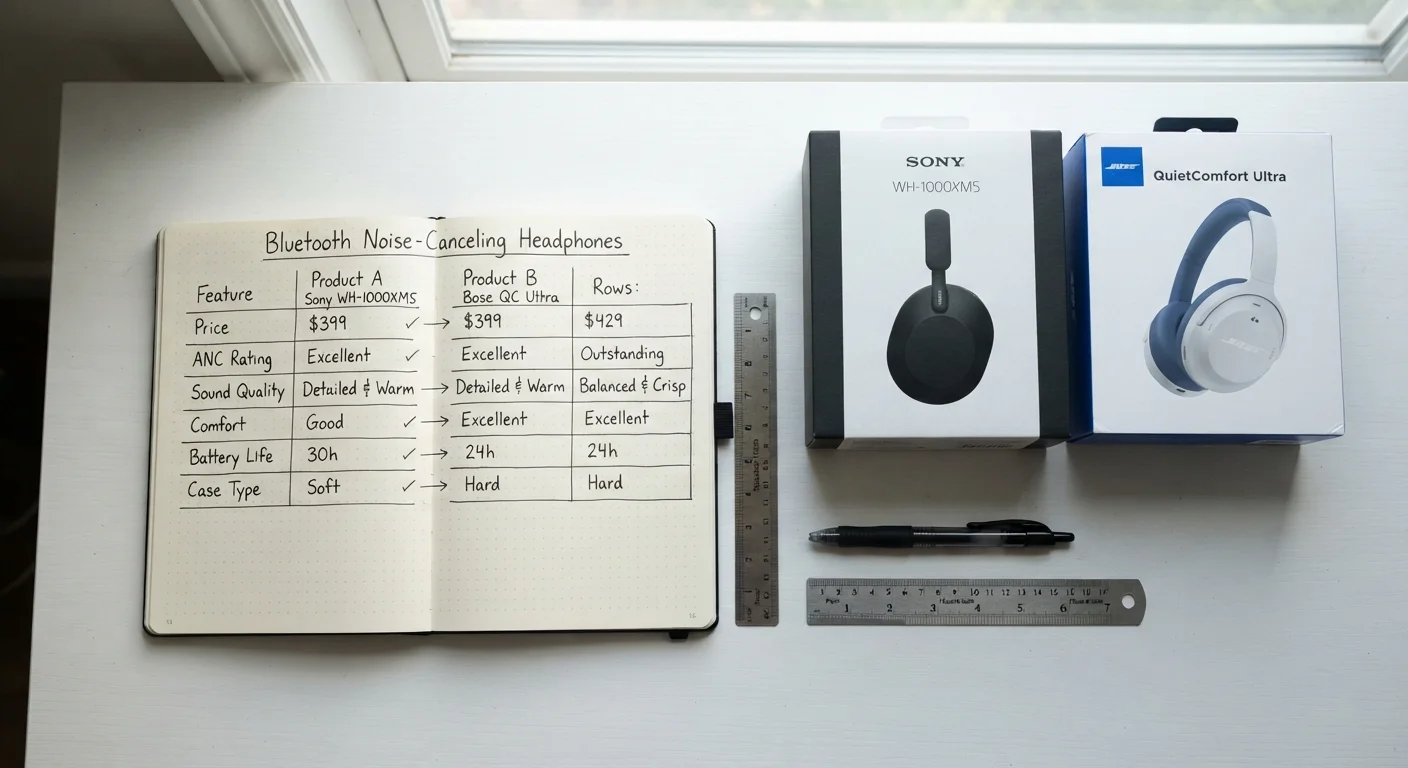
Create a side-by-side comparison grid with your own criteria as rows, so you're evaluating both appliances on identical terms.
Tape measure
Verify installation space dimensions before checking product specs to avoid wasting time on models that won't fit.
Energy cost calculator (utility provider or government energy sites)
Estimate annual operating costs using a model's published kWh figure and your local electricity rate.
Manufacturer's owner's manual (PDF)
Review actual maintenance requirements, part numbers, and installation specs rather than relying on retailer listing summaries.
Once you have your framework and tools in place, the actual side-by-side evaluation becomes much more straightforward. Our guide on building a fair comparison between unfamiliar products covers how to evaluate options when you have no firsthand experience with either one.
Retailer Listings Often Omit Key Specs
Product pages on retailer sites frequently leave out installation requirements, voltage ratings, or part availability details. Always cross-reference with the manufacturer's own product page or the official owner's manual before finalizing your comparison. Our guide on aligning product information across retailer sites covers strategies for bridging these gaps.
It's also worth separating spending decisions by category. Not every appliance warrants the same level of scrutiny. See where quality differences are real versus mostly marketing for a category-by-category breakdown. And if you're factoring in how long an appliance is likely to last before it needs replacing, typical kitchen appliance lifespans gives useful durability context.