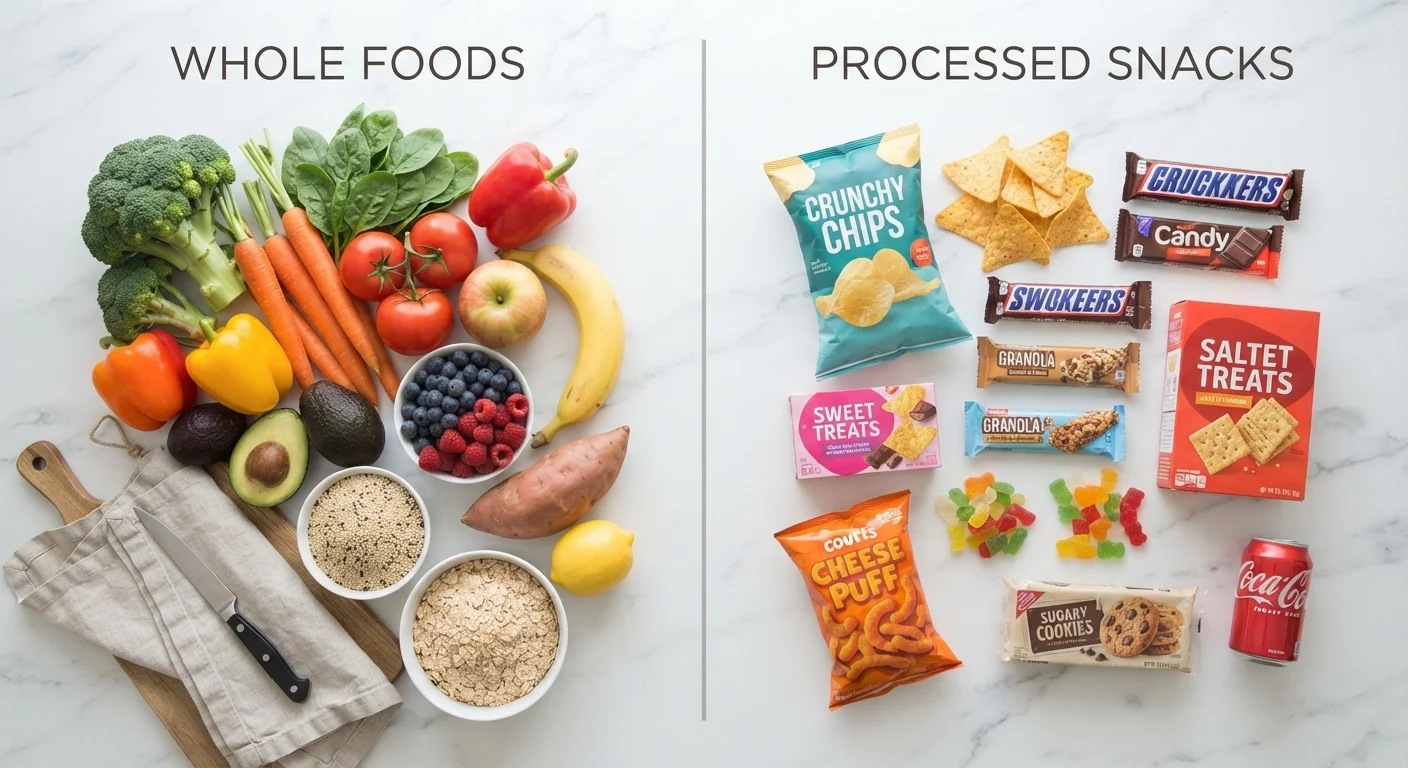

The Chemistry Is the Same - the Context Is Not
At a molecular level, glucose is glucose and fructose is fructose regardless of whether they come from a mango or a candy bar. Your digestive system does not chemically distinguish between a sugar molecule in strawberries and one in a flavored yogurt. So why does nutrition science treat them differently?
The answer lies in what surrounds the sugar. When you eat a piece of whole fruit, you consume sugar alongside dietary fiber, water, vitamins, and antioxidants. That fiber physically slows digestion, which moderates how quickly sugar enters the bloodstream. Whole foods also provide satiety signals - you feel full before you can easily overconsume. Added sugars, by contrast, typically arrive stripped of those moderating companions. A 12-ounce can of regular soda can contain around 39 grams of sugar with no fiber, no meaningful micronutrients, and little effect on hunger.
This distinction - packaging, not chemistry - is the foundation of how public health guidelines approach sugar. See how food processing more broadly affects nutrient context in our guide to whole foods vs. processed foods.
| Criterion | Natural Sugar | Added Sugar |
|---|---|---|
| Source | Whole fruit, dairy, vegetables | Added during processing or cooking |
| Chemical structure | Identical to added sugar | Identical to natural sugar |
| Fiber present | Yes, in whole food sources | Rarely, if ever |
| Micronutrient content | Vitamins, minerals, antioxidants | Typically none |
| Effect on satiety | Fiber and water aid fullness | Minimal satiety effect |
| Listed on Nutrition Facts | Under 'Total Sugars' only | Separately as 'Added Sugars' |
| Dietary guideline limit | No specific limit for whole foods | Less than 10% of daily calories |
What Nutrition Guidelines Actually Say
The Dietary Guidelines for Americans - developed by the U.S. Department of Agriculture and the Department of Health and Human Services - recommend that added sugars make up less than 10% of total daily caloric intake. This threshold is based on observational research linking high added-sugar consumption to increased risk of obesity, type 2 diabetes, cardiovascular disease, and dental cavities. The guidelines do not set a comparable limit for naturally occurring sugars in whole foods.
The U.S. Food and Drug Administration updated its Nutrition Facts label requirements to include a separate line for Added Sugars precisely because research suggested that added sugars warranted distinct tracking. This change acknowledged that 20 grams of sugar in plain milk (lactose, a natural sugar) carries different health implications than 20 grams of sugar added to a flavored coffee drink.
17 tsp
Average daily added sugar intake for U.S. adults
According to the CDC, Americans consume roughly 17 teaspoons of added sugar per day on average, well above the recommended limit.
~39g
Added sugar in a typical 12-oz regular soda
A standard 12-ounce can of regular cola contains approximately 39 grams of added sugar, nearly all of a typical adult's recommended daily limit.
10%
Recommended daily calorie cap from added sugars
The Dietary Guidelines for Americans recommend that added sugars account for less than 10% of total daily caloric intake.
That said, no credible nutritional framework recommends eliminating all natural sugar from fruit, dairy, or vegetables. These foods contribute essential nutrients that support overall health, and the sugar they contain is considered part of a balanced diet for most healthy adults. If you have a specific health condition like diabetes, speak with your healthcare provider or a registered dietitian about appropriate intake targets for your situation.
Practical Ways to Apply This Knowledge
Understanding the distinction becomes most useful when you're navigating a grocery aisle or reading a food label. Here are some concrete ways to put this knowledge to work:
- Check the Nutrition Facts label. The 'Added Sugars' sub-line under Total Sugars tells you how much sugar was incorporated during processing or preparation. Foods with zero added sugars but some total sugars get their sweetness naturally - think plain yogurt or 100% orange juice.
- Be skeptical of health halos. Products marketed as 'natural' or 'made with real fruit' can still contain significant added sugar. The label is more reliable than front-of-package claims. Learning to spot labeling tactics is worth the effort - our piece on label tactics explains techniques used across product categories.
- Prioritize whole fruit over juice. Even 100% fruit juice removes most of the fiber from whole fruit, which changes how your body handles the sugar load. Whole fruit is generally the more nutritious choice.
- Watch beverages first. Sweetened drinks - sodas, energy drinks, sweetened teas, and flavored coffees - are among the largest sources of added sugar in the American diet and offer minimal nutritional value in return.
This article is for general informational and educational purposes only and does not constitute medical or dietary advice. Consult a qualified healthcare professional or registered dietitian before making significant changes to your diet, especially if you have an existing health condition.