Why You Don't Need Complex Rules to Eat Well
Nutrition science can seem intimidating - full of macros, micronutrients, and conflicting headlines. But the core principles of eating well are actually straightforward, and they don't require calorie-counting apps or a background in dietetics. What matters most is the overall pattern of what lands on your plate, not precise measurements at every meal.
The framework in this guide is based on public health guidance from established bodies including the USDA and the Dietary Guidelines for Americans. It translates that guidance into a practical, visual method anyone can apply at any meal. For a fuller grounding in nutrition concepts, this complete nutrition reference covers the core ideas in plain language.
What you will need
Below, you'll find the tools and steps to start building balanced plates today - starting with your very next meal.
General Information Only - Not Medical Advice
The guidance in this article reflects general nutrition principles based on established public health frameworks. It is not a substitute for personalized medical or dietary advice. If you have a chronic health condition, food allergy, or specific nutritional concern, consult a registered dietitian or licensed healthcare provider before making significant changes to your diet.
What You'll Need
A standard dinner plate (9-10 inches)
Used as a visual guide to portion your food groups without measuring cups or scales.
Measuring cups (set)
Useful during the learning phase to calibrate your eye for appropriate portion sizes.
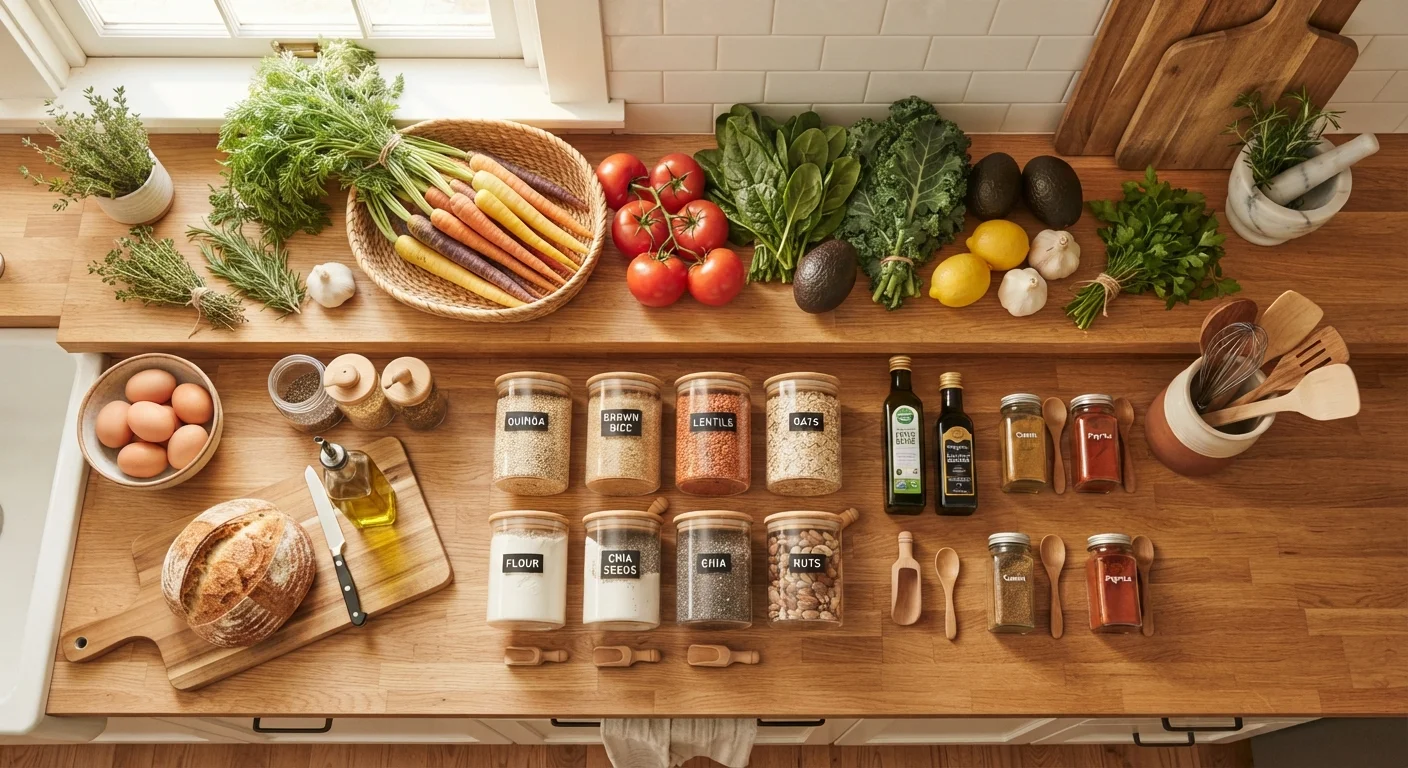
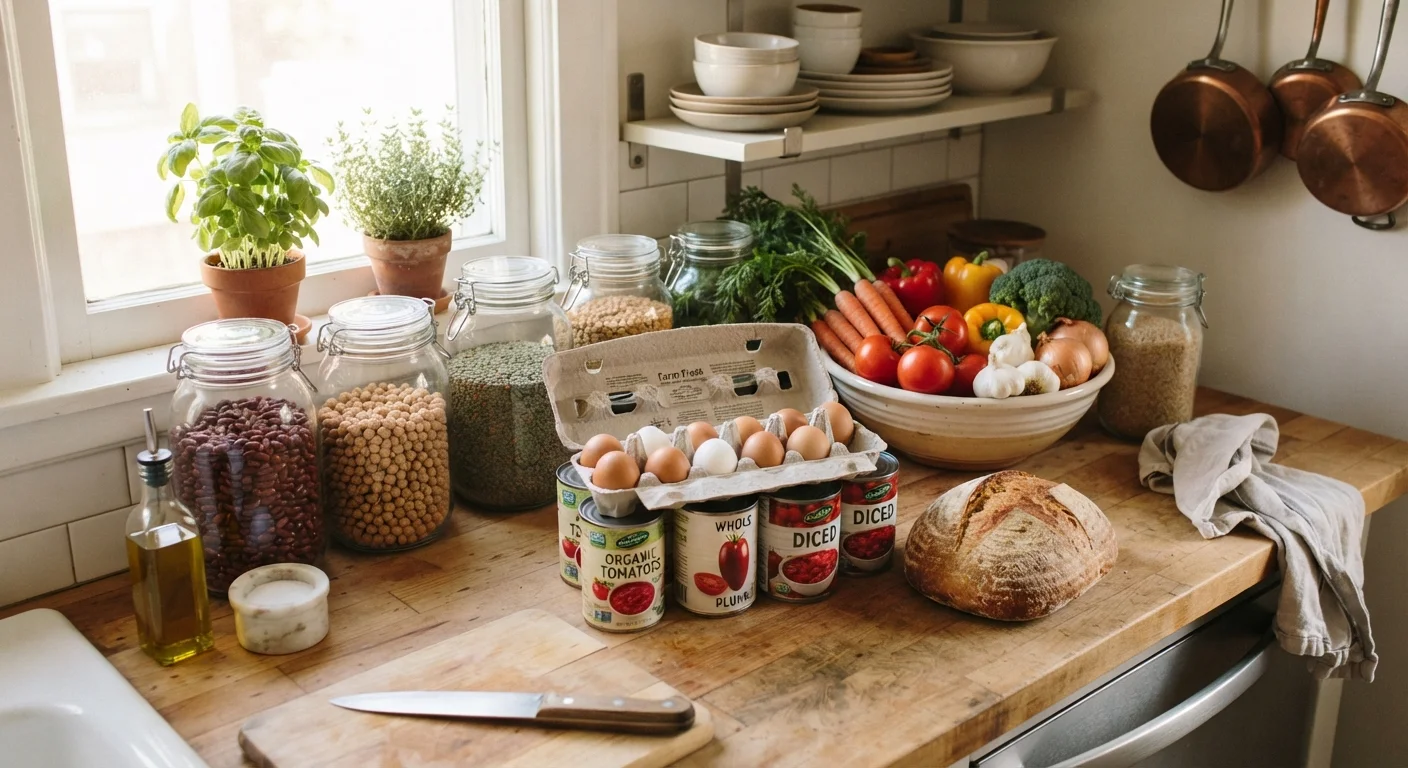
Pantry staples: canned beans, frozen vegetables, whole grains
Form the affordable nutritional backbone of most balanced meals.
You don't need an elaborate kitchen setup to eat well. If you're working on equipping your cooking space on a tight budget, the guide to setting up a functional kitchen affordably covers what's actually worth buying.
How to Build a Balanced Plate: Step by Step
Special Populations: Always Consult a Professional
Nutrition needs differ significantly for pregnant or breastfeeding individuals, young children, older adults, and people managing chronic conditions such as diabetes, kidney disease, or cardiovascular disease. The plate method is a useful general framework, but these groups should work with a qualified healthcare professional to develop an approach suited to their specific circumstances.
Start with the plate method framework
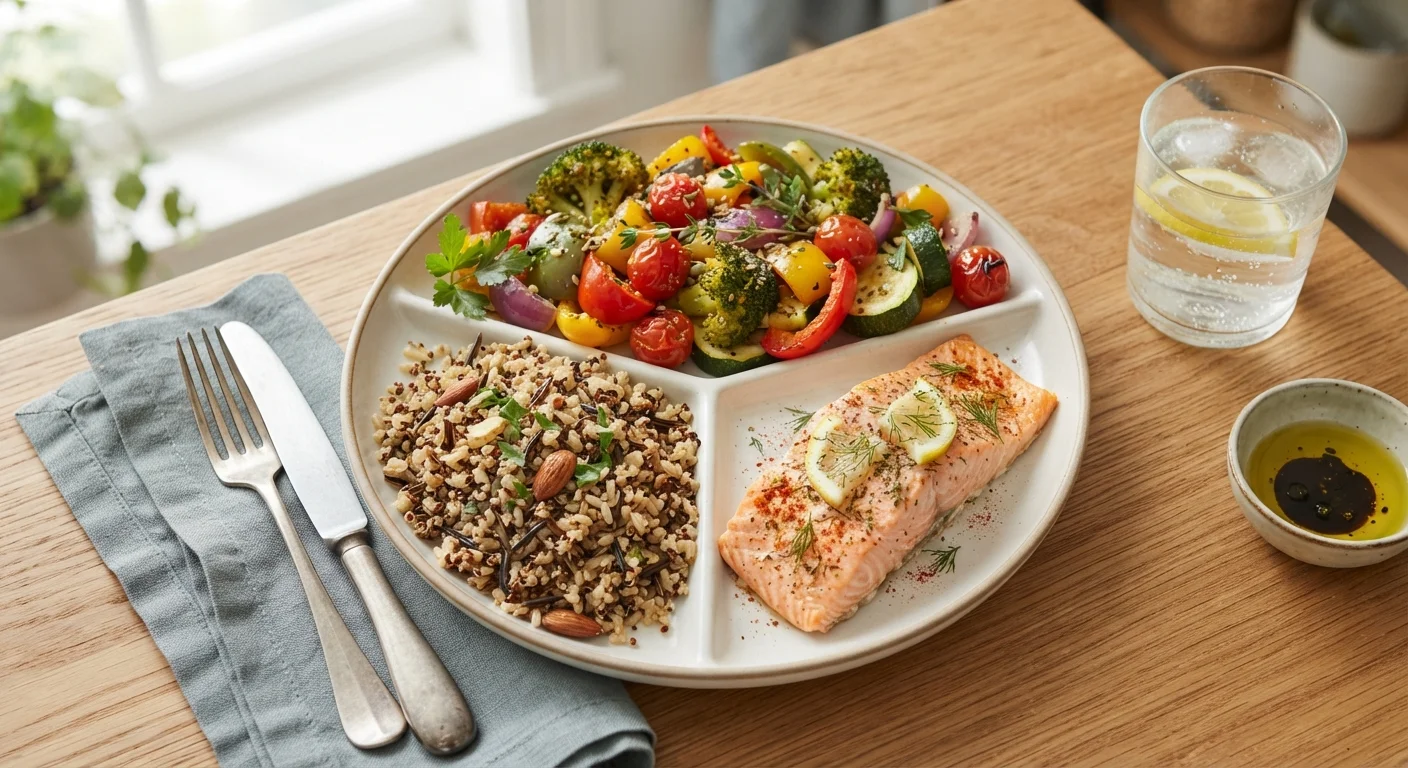
The USDA's MyPlate framework offers the simplest starting point: mentally divide your plate into four sections. Fill roughly half with vegetables and fruit, one quarter with a lean or plant-based protein, and one quarter with a whole grain or starchy vegetable. Add a small serving of dairy or a calcium-rich alternative on the side if it fits your diet.
This visual approach requires no tracking apps, no food scales, and no nutrition knowledge beyond recognizing which foods belong to which group. It works at home, in a cafeteria, or at a restaurant.
Choose vegetables that work for your budget and schedule
Fresh produce is ideal, but frozen and canned vegetables are nutritionally comparable and often significantly cheaper. Frozen spinach, mixed vegetables, and canned tomatoes are reliable, shelf-stable options. When choosing canned vegetables, check the label and opt for varieties with no added salt when possible, or rinse them before use to reduce sodium.
Aim for color variety over time - different pigments in vegetables generally signal different vitamins and minerals. You don't need every color at every meal; aiming for variety across the week is sufficient.
Pick a protein that fits your meal and your wallet
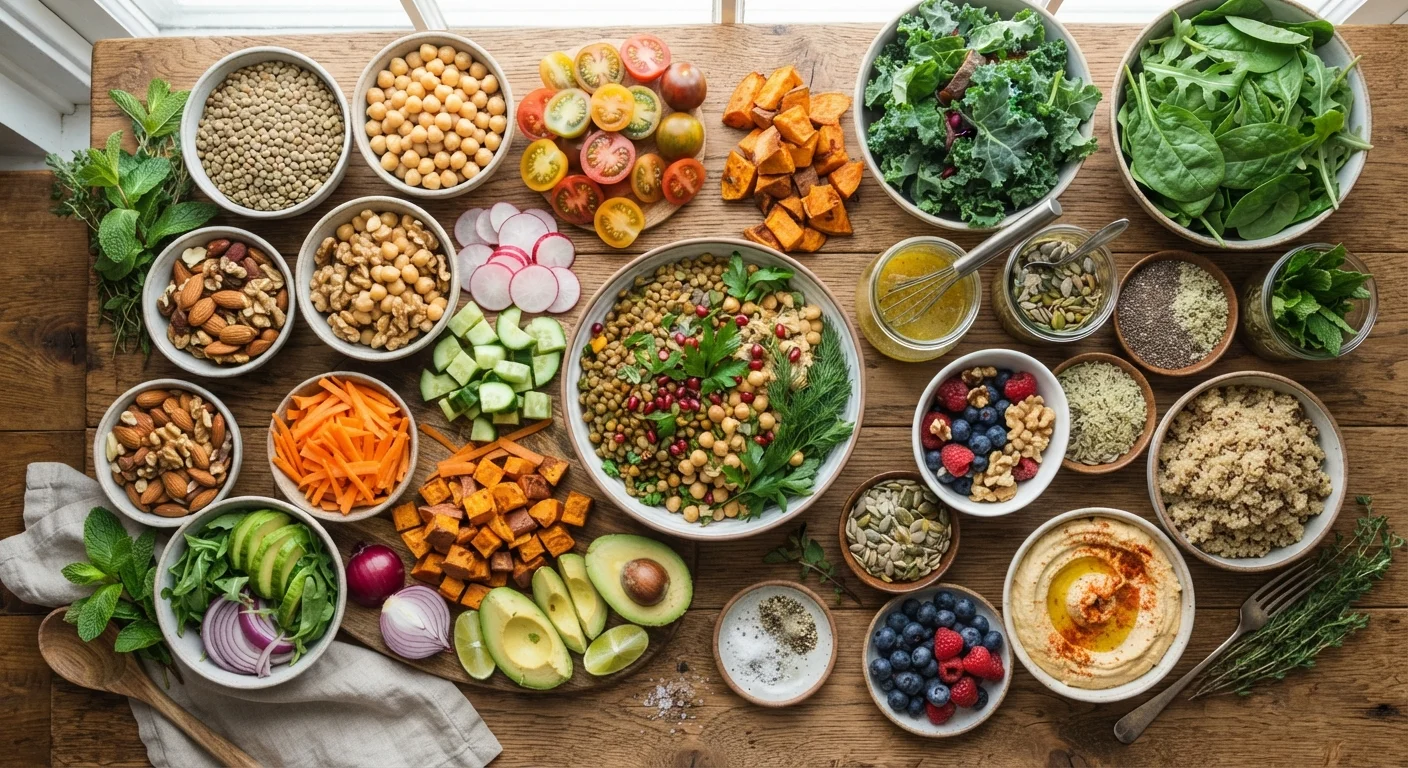
Protein sources range widely in cost. Eggs, canned tuna, dried or canned beans, lentils, and tofu are among the most affordable options and provide solid protein alongside other nutrients. Skinless chicken thighs and canned sardines are other budget-friendly choices worth rotating in.
If you eat mostly plant-based proteins, pairing different sources across the day - such as grains and legumes - helps ensure you're getting a broad range of amino acids over time. For a deeper look at plant-forward eating, see plant-based nutritional trade-offs worth planning around.
Fill your grain quarter with whole grains when possible
Whole grains - such as brown rice, oats, whole-wheat bread, barley, and corn tortillas - retain more fiber and micronutrients than their refined counterparts. Fiber supports digestive health and helps you feel full longer. Refined grains aren't off-limits; the goal is for at least half your daily grain servings to come from whole-grain sources.
In practical terms: swap white rice for brown a few times a week, choose oatmeal for breakfast over a sugary cereal, or pick whole-wheat pasta when the price difference is minimal.
Add healthy fats in small amounts
Fat is not the enemy. Unsaturated fats - found in olive oil, nuts, seeds, avocado, and fatty fish - support heart and brain health. Because fats are calorie-dense, a little goes a long way: a drizzle of olive oil on roasted vegetables or a small handful of walnuts with a meal is enough to make a meaningful contribution.
Saturated fats (found heavily in fatty red meat and full-fat dairy) don't need to be eliminated but are generally recommended in moderation by major health bodies including the American Heart Association.
Apply the framework consistently, not perfectly
Nutrition research consistently shows that dietary patterns over time matter far more than individual meals. A meal that misses the mark isn't a failure - it's just one meal. The goal is to hit the general structure most of the time, not to achieve perfection at every sitting.
Before planning a full week of balanced eating, check out the preparation checklist for a nutritious week to set your pantry and habits up for success.
Budget-Friendly Nutrition Is Very Achievable
Some of the most nutritious foods - dried beans, lentils, eggs, oats, and frozen vegetables - are also among the least expensive items in any grocery store. You don't need specialty health foods or expensive supplements to build a balanced plate. For more on affordable, nutritious eating, see our practical nutrition primer for tight budgets.
Building balanced meals is a skill that gets easier with repetition. The six steps above are designed to be applied gradually - you don't need to change everything at once. Start with the plate visual, then layer in protein variety, whole grains, and healthy fats as those habits feel natural.
This article is for general informational and educational purposes only and does not constitute medical or dietary advice. Always consult a qualified healthcare professional for guidance specific to your health needs.