
What Nutrition Actually Means
Nutrition is the study of how food and drink affect the body's growth, repair, energy, and overall function. Every time you eat, your body extracts nutrients - chemical compounds it uses to carry out thousands of processes, from breathing and moving to fighting infection and rebuilding tissue.
The field distinguishes between essential nutrients (those the body cannot make on its own and must get from food) and non-essential nutrients (those the body can synthesize). Understanding this distinction helps explain why dietary variety matters: no single food contains every essential nutrient in adequate amounts.
Good nutrition isn't about perfection. It's about consistent patterns over time that provide the body what it needs. This reference covers the core concepts so you can evaluate food choices with confidence, not confusion.
This article is for general informational purposes only and is not a substitute for professional medical or dietary advice. Consult a qualified healthcare provider or registered dietitian for guidance specific to your health needs.
Macronutrients: The Big Three
Macronutrients are nutrients needed in relatively large amounts and are the body's primary sources of energy, measured in calories.
4 kcal/g
Energy per gram of carbohydrate or protein
A standard measure used in nutrition science to calculate caloric content of foods.
9 kcal/g
Energy per gram of dietary fat
Fat is the most calorie-dense macronutrient, providing more than twice the energy of carbohydrates or protein per gram.
~90%
Americans falling short on dietary fiber
According to USDA dietary guidance analysis, the vast majority of Americans consume less fiber than recommended daily.
Carbohydrates
Carbohydrates are the body's preferred energy source. They break down into glucose, which fuels the brain, muscles, and organs. Complex carbohydrates - found in whole grains, legumes, and vegetables - digest slowly and provide sustained energy. Simple carbohydrates - found in refined sugars and white flour - digest quickly and can cause rapid blood sugar fluctuations. Dietary fiber, a type of carbohydrate the body cannot fully digest, supports digestive health and helps maintain a feeling of fullness.
Protein
Protein is made up of amino acids and is essential for building and repairing tissues, producing enzymes and hormones, and supporting immune function. Complete proteins (containing all essential amino acids) are found in animal products and some plant sources like soy and quinoa. Combining varied plant proteins - such as beans and rice - throughout the day can also meet amino acid needs.
Fat
Dietary fat supports brain health, hormone production, and the absorption of fat-soluble vitamins (A, D, E, and K). Unsaturated fats - from nuts, seeds, avocados, and fish - are associated with cardiovascular health in research. Saturated fats - found in fatty meats and full-fat dairy - should be consumed in moderation according to most major health guidelines. Trans fats, largely eliminated from the U.S. food supply, were found to raise cardiovascular risk and are now restricted by the FDA.
When evaluating a food's carbohydrate quality, check the fiber content alongside total carbs. A higher fiber-to-total-carb ratio generally signals a less refined, more slowly digested source.
Fiber slows glucose absorption and supports digestive health, making it one of the more meaningful figures on a nutrition label.
If you're building meals around plant proteins, aim for variety across the day rather than engineering every meal to be 'complete.' Your body pools amino acids over time, not meal by meal.
Decades of nutrition research confirm that plant-based eaters who eat varied diets consistently meet amino acid needs without meticulous combining at each sitting.
Micronutrients: Small Amounts, Big Impact
Micronutrients are vitamins and minerals required in smaller quantities but are no less critical. Deficiencies in key micronutrients are among the most common nutritional issues globally, even in high-income countries.
Key Vitamins
- Vitamin D: Supports bone health and immune function; many Americans have inadequate levels, especially in northern states with limited sunlight.
- Vitamin B12: Essential for nerve function and red blood cell production; found almost exclusively in animal products, making supplementation important for those on plant-based diets.
- Folate (B9): Critical for DNA synthesis; particularly important during pregnancy for fetal neural development.
- Vitamin C: Supports immune health, collagen synthesis, and iron absorption from plant foods.
Key Minerals
- Iron: Necessary for oxygen transport in the blood; heme iron (from meat) is absorbed more readily than non-heme iron (from plants).
- Calcium: Essential for bone density, muscle contraction, and nerve signaling.
- Potassium: Helps regulate blood pressure and fluid balance; most Americans consume less than recommended.
- Magnesium: Involved in over 300 enzymatic reactions, including energy metabolism and muscle function.
Eating a varied diet rich in fruits, vegetables, whole grains, and legumes is the most reliable way to meet micronutrient needs without relying on supplements.
Supplements Are Not a Food Substitute
While certain supplements address documented deficiencies - such as vitamin D or B12 - they do not replicate the full nutritional matrix of whole foods, which contain thousands of compounds that interact in ways science is still mapping. If you're considering supplements, discuss them with a healthcare provider first, especially if you take medications or have an underlying health condition.
Understanding Food Labels
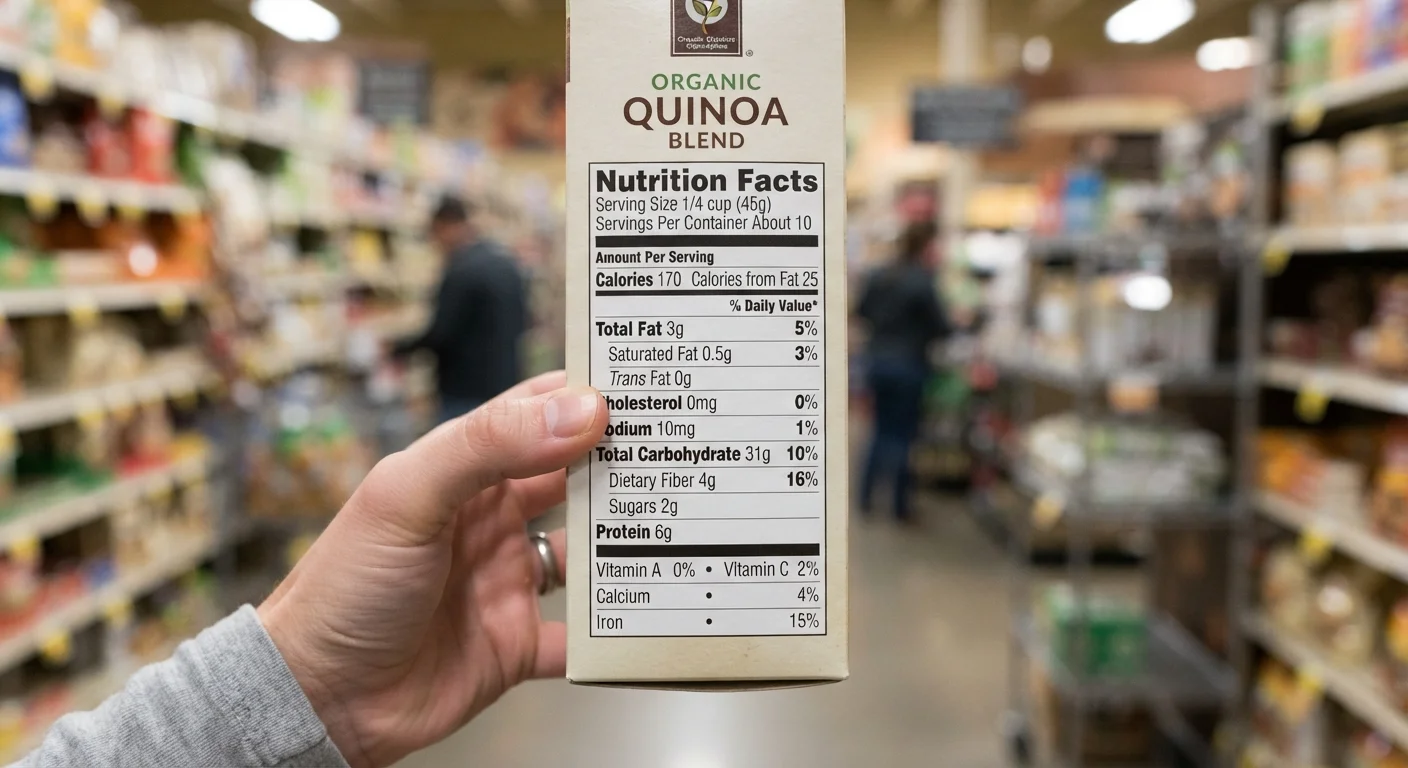
The Nutrition Facts label is a federally regulated tool designed to help consumers make informed choices. Learning to read it quickly transforms grocery shopping from guesswork into a practical skill. For a deeper walkthrough, see Reading a Nutrition Facts Label Without the Confusion.
What to Focus On
- Serving size: All figures on the label apply to one serving, not the whole package. Check whether your typical portion matches the stated serving size.
- Total calories: A reference point for energy content per serving.
- % Daily Value (%DV): Based on a 2,000-calorie daily diet, %DV shows how much a nutrient one serving contributes. A general rule: 5% DV or less is low; 20% DV or more is high.
- Nutrients to limit: Saturated fat, sodium, and added sugars.
- Nutrients to prioritize: Fiber, potassium, calcium, vitamin D, and iron.
Use %DV as a Quick Comparison Tool
When comparing two similar products on the shelf, the %DV columns let you judge nutrient differences at a glance - no math required. Look for higher %DV in fiber, potassium, and calcium, and lower %DV in sodium and saturated fat. This approach works even when serving sizes differ slightly between brands.
The ingredient list is equally informative. Ingredients are listed by weight in descending order, so the first few ingredients reflect what a product is mostly made of.
Hydration and Its Role in Nutrition
Water is an essential nutrient. It regulates body temperature, transports nutrients, removes waste, lubricates joints, and supports virtually every metabolic process. Mild dehydration can impair concentration, physical performance, and mood - often before thirst becomes noticeable.
Fluid needs vary by individual, activity level, climate, and health status. Rather than prescribing a specific daily amount, most health authorities recommend drinking enough that urine is pale yellow. Plain water is the most effective hydrating fluid. Foods with high water content - such as cucumbers, oranges, and leafy greens - also contribute meaningfully to daily fluid intake.
Sugary Drinks Don't Signal Thirst Relief
Sodas, sweetened teas, sports drinks, and energy drinks contribute significant added sugar and calories without meaningfully quenching thirst for most people. Relying on them as a primary fluid source can undermine an otherwise balanced diet. Water, unsweetened sparkling water, and plain coffee or tea (in moderate amounts) are more effective hydration choices for everyday use.
Meal Timing and Eating Patterns
Research on meal timing suggests that when you eat can influence energy levels, digestion, and metabolic health - though the evidence is still evolving and individual responses vary. What is well established is that overall dietary pattern matters more than any single meal or timing rule.
Practical Patterns Supported by Evidence
- Eating breakfast: Associated with better diet quality in observational studies, though not universally required for everyone.
- Avoiding large meals late at night: Some research links late heavy eating with disrupted sleep and metabolic effects, though this area continues to develop.
- Regular meal structure: Consistent eating times may support hunger regulation and reduce impulsive food choices.
For practical frameworks to put these principles into action at mealtime, see Building a Balanced Plate Without a Nutrition Degree. If you're planning a full week of eating, A Week of Nutritious Eating: What to Check Before You Start offers a structured starting point.
“Nutrition science is the study of what happens when you eat various foods - and the challenge is that humans eat meals, not nutrients. Context, combination, and pattern matter enormously.”
— Walter Willett, Professor of Epidemiology and Nutrition, Harvard T.H. Chan School of Public Health
Eating Well on Any Budget
Nutritious eating doesn't require specialty stores or premium products. Some of the most nutrient-dense foods available - dried beans, lentils, oats, eggs, canned fish, frozen vegetables, and seasonal produce - are also among the most affordable items in any grocery store.
Budget-Friendly Nutrition Strategies
- Prioritize whole, minimally processed foods. They tend to cost less per serving and deliver more nutrients than packaged convenience items.
- Embrace plant proteins. Beans, lentils, and tofu are significantly less expensive per gram of protein than most meat products.
- Use frozen and canned produce. Frozen vegetables are often harvested and frozen at peak ripeness, preserving most of their nutritional value.
- Plan before you shop. A simple meal plan reduces waste and impulse purchases.
For a deeper look at this topic, Eating Well on a Tight Budget: A Practical Nutrition Primer covers real grocery staples most Americans already know.
MyPlate (USDA)
The USDA's MyPlate resource offers a visual framework for building balanced meals across food groups, along with practical tips for different life stages and budgets.
Dietary Guidelines for Americans
Published jointly by the USDA and HHS, these science-based guidelines are updated every five years and provide the federal benchmark for nutrition recommendations across age groups.
NIH Office of Dietary Supplements - Fact Sheets
Peer-reviewed fact sheets on individual vitamins and minerals, covering functions, food sources, deficiency signs, and upper tolerable limits in plain language.
This article provides general nutrition information for educational purposes and does not constitute medical or dietary advice. Individual needs vary. Please consult a registered dietitian or healthcare professional for personalized guidance.