Why Fiber Matters - and Why Most Americans Don't Get Enough
Fiber rarely gets the attention that protein or vitamins do, yet it is one of the most consistently under-consumed nutrients in the American diet. Federal dietary surveys suggest the average U.S. adult takes in roughly 15 grams of fiber per day - well below the general recommendations of 25 grams for women and 38 grams for men. That shortfall has real consequences for everyday health.
The gap exists largely because the modern American diet leans heavily on refined and processed foods - white bread, packaged snacks, fast food - that have had most of their fiber stripped away. Understanding what fiber actually does, and where to find it affordably, is a practical first step toward better everyday nutrition. For a broader look at common gaps in the American diet, see common nutrient shortfalls.
~15g
Average daily fiber intake for U.S. adults
According to federal dietary survey data, American adults consume roughly 15 grams of fiber per day on average - well below general recommendations.
95%
Americans not meeting fiber recommendations
Research published in nutrition journals estimates that the vast majority of U.S. adults fail to meet recommended daily fiber intake from food alone.
25-38g
General recommended daily fiber intake
U.S. Dietary Guidelines suggest approximately 25 grams per day for adult women and 38 grams per day for adult men, with variation by age.
Soluble vs. Insoluble Fiber: What Each Type Does
Fiber is not a single substance - it encompasses a broad family of plant compounds, generally organized into two categories.
- Soluble fiber dissolves in water, forming a thick gel in the digestive tract. This slows digestion, which helps moderate blood sugar spikes after meals and can lower LDL ("bad") cholesterol levels. Good sources include oats, barley, apples, citrus fruits, beans, and flaxseeds.
- Insoluble fiber does not dissolve. It adds bulk to stool and helps food move through the intestines more efficiently, reducing the risk of constipation. Whole wheat products, bran, nuts, and most vegetables are rich in insoluble fiber.
Most plant foods contain a mix of both types, so eating a wide variety of whole plant foods naturally covers both. You don't need to track each type separately - variety is the practical strategy.
Practical Strategy: Variety Over Precision
Rather than tracking soluble versus insoluble fiber separately, focus on eating a wide variety of whole plant foods throughout the week. Legumes, whole grains, fruits, vegetables, nuts, and seeds each contribute different fiber types naturally. Variety takes care of balance without requiring meticulous record-keeping.
Health Benefits Supported by Research
The evidence supporting dietary fiber's role in health is among the more robust in nutrition science. Key areas of established benefit include:
- Digestive regularity: Adequate fiber intake is consistently associated with reduced constipation and healthier bowel function.
- Blood sugar management: Soluble fiber slows glucose absorption, which can help moderate post-meal blood sugar responses - a relevant factor for people managing or at risk for type 2 diabetes.
- Cardiovascular health: Multiple large studies link higher fiber intake to lower LDL cholesterol and reduced cardiovascular disease risk.
- Satiety and weight management: Fiber-rich foods tend to be more filling, which can help prevent overeating without requiring calorie counting.
- Gut microbiome support: Fiber serves as fuel for beneficial gut bacteria. Fermentation of fiber produces short-chain fatty acids that nourish colon cells and may influence inflammation and immune function.
This content is general health information and is not a substitute for personalized medical advice. Always consult a qualified healthcare professional about your specific health situation.
“Dietary fiber has consistently emerged in large epidemiological studies as one of the dietary factors most strongly associated with reduced risk of chronic disease - yet it remains among the most overlooked nutrients in public health messaging.”
— Joanne Slavin, Professor of Food Science and Nutrition, University of Minnesota, and fiber researcher
Affordable, Everyday Sources of Fiber
One underappreciated fact about fiber: the foods richest in it are also among the most budget-friendly items in any grocery store. You do not need specialty products or expensive supplements to improve your intake.
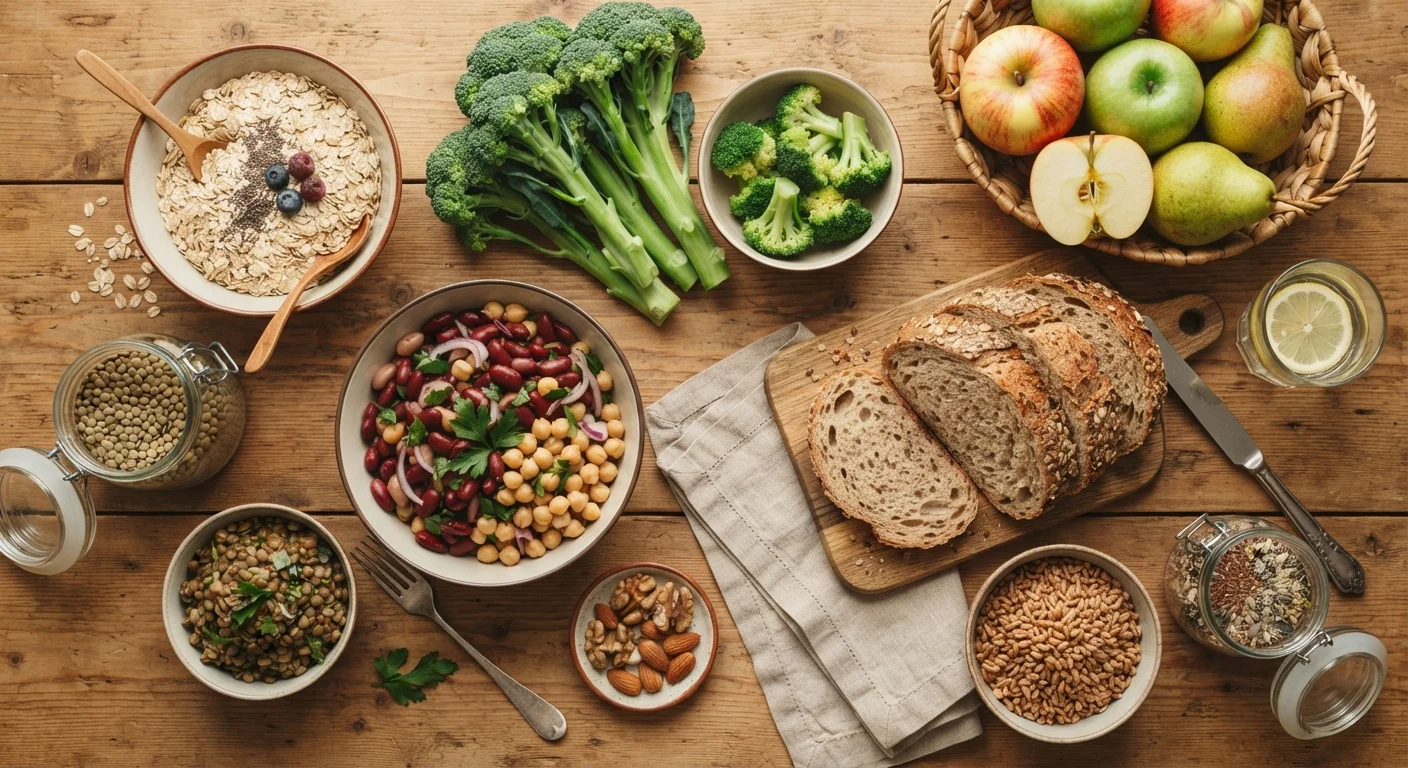
- Dried or canned legumes - lentils, black beans, chickpeas, kidney beans - offer some of the highest fiber content per dollar of any food.
- Oats are an inexpensive breakfast staple with meaningful soluble fiber content.
- Whole grain bread and pasta provide more fiber than their refined equivalents, often at comparable prices.
- Vegetables such as broccoli, carrots, sweet potatoes, and Brussels sprouts are solid fiber contributors.
- Fruits including apples, pears, and berries (fresh or frozen) add both soluble fiber and important micronutrients.
Swapping refined grains for whole grain versions and adding a serving of beans or lentils a few times per week can meaningfully close the fiber gap without significantly raising your grocery bill. For more on eating well without overspending, see eating well on a tight budget.
How to Increase Fiber Without Discomfort
A sudden large increase in fiber intake can cause bloating, gas, or cramping as the gut microbiome adjusts. The practical solution is to increase intake gradually - adding one or two higher-fiber foods per week rather than overhauling everything at once.
Drinking adequate water is equally important. Fiber, especially insoluble fiber, absorbs water to function properly. Without enough fluid, a high-fiber diet can paradoxically worsen constipation in some individuals.
Reading food labels is a useful habit: the Nutrition Facts panel lists dietary fiber per serving, making it straightforward to compare products at the store. Foods labeled "whole grain" as the first ingredient and items with 3 grams or more of fiber per serving are generally good choices. For a guide to spotting misleading food label claims, see common nutrition myths.
If you have a digestive condition, are managing a chronic illness, or are pregnant, speak with a healthcare professional before making significant dietary changes. General guidance is a starting point - individual needs vary.
This article is for general informational and educational purposes only and does not constitute medical or dietary advice. Consult a qualified healthcare professional for guidance specific to your health needs.