Why Layout Matters More Than It Looks
Refrigerator layout determines how you physically interact with your food every single day - which items are at eye level, how wide a door can swing before hitting a cabinet, and whether frozen goods are easy or awkward to reach. Before diving into specs, it helps to work through a structured set of questions about your household's actual habits. The framework for comparing home appliances can help you identify what really matters before you walk into a showroom.
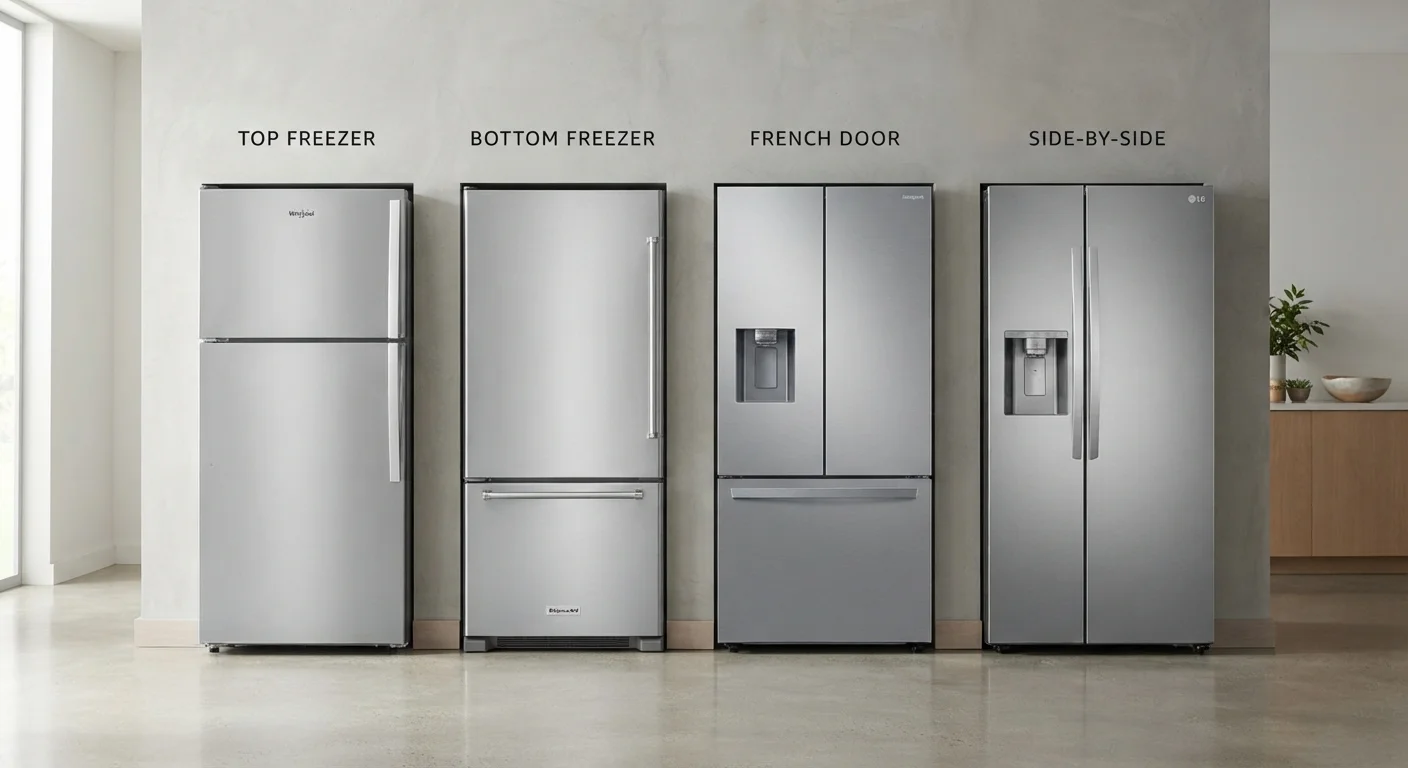
Four layouts dominate the U.S. market: top freezer, bottom freezer, French door, and side-by-side. Each has a distinct physical logic, and each involves real trade-offs - not just stylistic differences.
| Top Freezer | Bottom Freezer | French Door | Side-by-Side | |
|---|---|---|---|---|
| Typical purchase price range | Lower | Moderate | Higher | Moderate to higher |
| Energy efficiency | Generally strong | Comparable to top freezer | Varies widely by model | Often lower than other types |
| Fresh food access height | Below waist | Eye and chest level | Eye and chest level | Full height, narrow |
| Door swing clearance needed | Full single door | Full single door | Half door each side | Half door each side |
| Wide-item storage (platters, trays) | Good | Good | Very good | Limited by narrow shelves |
| Freezer organization ease | Good (shelved) | Drawer - harder to see | Drawer - harder to see | Shelved, but narrow |
| Repair complexity | Generally simpler | Moderate | More complex | Moderate to complex |
Top Freezer: The Practical Workhorse
Top freezer refrigerators place the freezer compartment above the fresh-food section. They have been the standard U.S. household refrigerator format for decades, and there are good practical reasons they remain widely available.
From an energy standpoint, top freezer models consistently rank among the most efficient configurations, in part because cold air naturally sinks from the freezer into the refrigerator compartment below. Their mechanical simplicity also tends to translate into lower repair frequency and lower repair costs over time.
The main usability drawback: fresh food - which most people reach for multiple times a day - sits below waist height. Crisper drawers require a full bend. For households with back issues or limited mobility, this daily ergonomic cost is worth weighing carefully.
Check the EnergyGuide Label First
Every refrigerator sold in the U.S. is required to carry an EnergyGuide label showing its estimated annual energy consumption in kilowatt-hours. Use this number - not the layout category - to compare actual operating costs between specific models you are considering. A more efficient unit in any layout can save meaningfully on electricity costs over a 10-to-15-year lifespan.
Bottom Freezer: Ergonomics Flipped
Bottom freezer models invert the top freezer logic: the refrigerator section sits at eye and chest level, while the freezer pulls out as a drawer below. For households that use frozen goods infrequently, this layout dramatically reduces daily bending since fresh food is always within easy reach.
The freezer drawer format does have a genuine limitation - it is harder to organize and see frozen items at a glance compared to a top-mounted shelf layout. Bulkier frozen items, like large bags or flat trays, can be awkward to fit around the drawer dividers.
Energy efficiency is broadly comparable to top freezer models, and purchase prices tend to sit in a moderate range - higher than basic top freezer units but typically well below French door configurations. If you want a deeper look at how layout shapes daily usability, this layout breakdown covers storage access in more detail.
French Door: Wide Access, Higher Cost
French door refrigerators pair two narrow side-by-side doors on the fresh-food section with a pull-out freezer drawer at the bottom. The split-door design reduces door-swing clearance by roughly half compared to a single-door unit - a genuine advantage in tighter kitchens.
The fresh-food compartment is typically wide, making it easier to store large platters, wide casserole dishes, and sheet pans flat. This is the configuration's most practical advantage over other layouts.
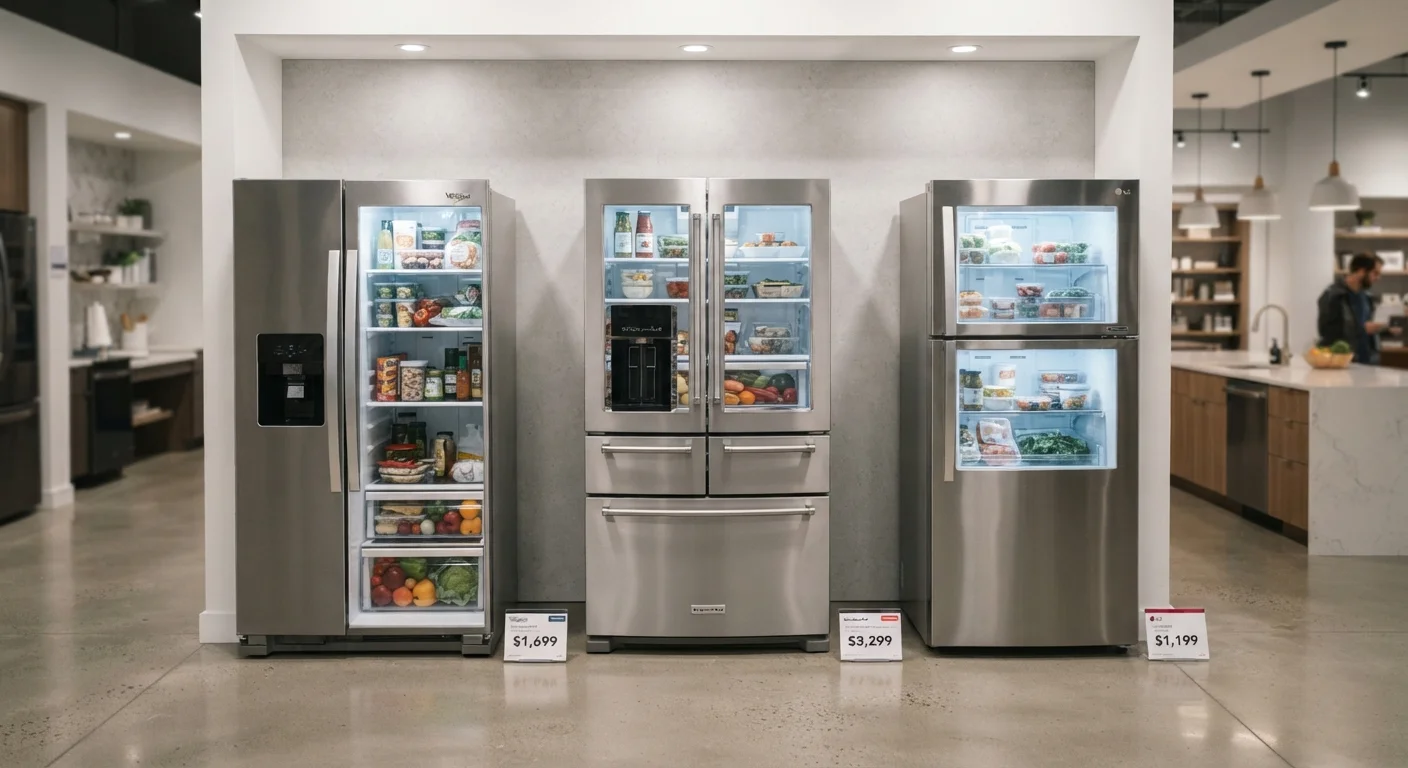
The costs are real, though. French door models generally carry higher purchase prices, and their more complex hinge and drawer mechanisms can mean higher repair costs when something goes wrong. Energy use varies considerably by model, so checking the EnergyGuide label for any specific unit matters more than assuming the layout is efficient.
Factor In Repair Costs, Not Just Sticker Price
Refrigerators with more complex mechanisms - multi-door hinges, motorized ice and water dispensers, electronic control panels - tend to cost more to diagnose and repair when components fail. Before choosing a feature-rich layout, consider whether extended warranty coverage is available and what out-of-pocket repair costs have looked like historically for that design category. A lower-complexity model may deliver better total cost of ownership over a decade of use.
Side-by-Side: Narrow Doors, Divided Space
Side-by-side refrigerators split the cabinet vertically - fresh food on one side, freezer on the other - running the full height of the unit. Both sections are always accessible without opening an additional door or drawer, and the narrow door panels require very little clearance to swing open.
The significant trade-off is internal width. Because the cabinet is divided vertically, each compartment is narrower than in other formats. Wide items - a large pizza box, a full sheet pan, or wide deli platters - frequently will not fit on a single shelf. Freezer shelving is similarly constrained, which can make organizing bulkier frozen goods frustrating.
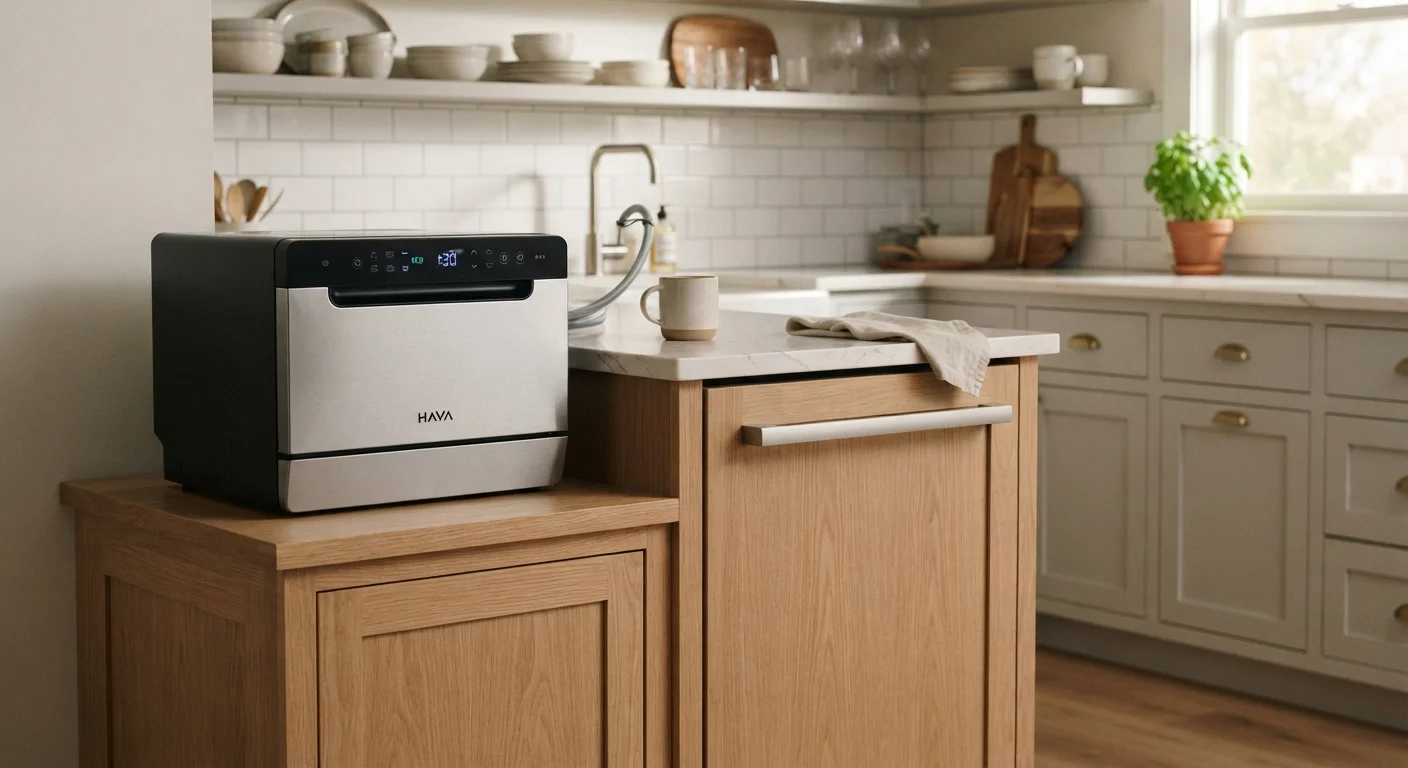
If your kitchen has a tight galley layout or the refrigerator is positioned opposite a counter or island, the side-by-side's minimal door swing can resolve a genuine spatial problem. For those also navigating other appliance trade-offs in a compact kitchen, the countertop vs. full-size dishwasher comparison covers similar space-versus-capacity decisions.
If you are setting up a kitchen from scratch and weighing this decision alongside other appliance choices, the guide to equipping a kitchen on a tight budget offers a practical starting framework.