Why Layout Matters More Than Cubic Footage
Most shoppers focus on capacity - total cubic feet - when comparing refrigerators. But a fridge's layout determines how easily you actually reach food, how well it fits your kitchen footprint, and how much you'll spend running it every year. Before diving into specs, it's worth asking the right foundational questions. Our guide on questions worth asking before comparing home appliances covers a useful pre-shopping framework that applies directly here.
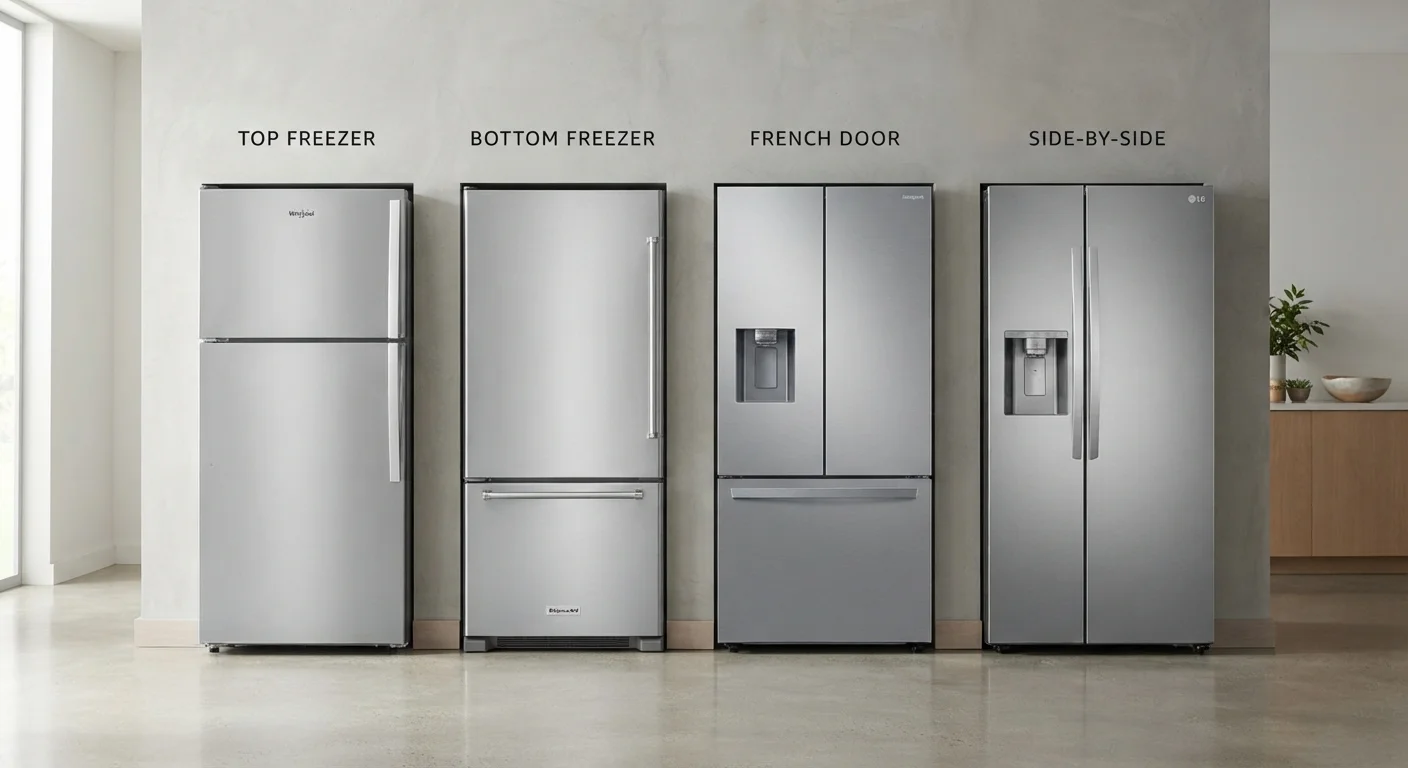
The three most common layouts - side-by-side, French door, and top-freezer - represent genuine design trade-offs, not just style choices. Each one shapes how you interact with your refrigerator dozens of times a day.
Top-Freezer: The Practical Workhorse
The top-freezer design places the freezer compartment above the refrigerator section, which is where most modern refrigeration technology originated. It remains the most straightforward and typically the most affordable layout category.
Storage access: The fresh-food section sits at mid-to-lower height, meaning lower shelves require bending. The freezer is at eye level, which benefits households that reach for frozen items frequently. Shelf layout inside top-freezer models tends to be simple - fewer door bins and less specialized compartmentalization than other formats.
Energy use: Top-freezer models consistently rank among the most energy-efficient configurations. Because cold air sinks naturally, the freezer-on-top arrangement works with basic thermodynamics rather than against it. This can translate to measurably lower annual electricity costs compared to the other two formats.
Kitchen fit: These units are typically narrower (28-33 inches wide) and less deep than French door or side-by-side models. That makes them practical for smaller kitchens or apartments. Door swing requires full clearance on one side, which is worth measuring before purchase.
Measure Before You Shop
Before visiting a showroom or browsing online, write down your kitchen's exact opening width, height, and depth - plus the distance from the fridge opening to any perpendicular wall or island. Door swing clearance is one of the most common reasons a refrigerator purchase doesn't fit the intended space. Bringing those numbers with you saves time and avoids returns.
French Door: Wide Fresh-Food Access, Higher Cost
French door refrigerators pair two narrow side-by-side doors on the fresh-food compartment with a pull-out freezer drawer below. This layout has grown popular in mid-range and upper-end kitchen builds over the past decade.
Storage access: The dual-door design means each door swings only halfway, requiring less clearance in tight kitchens than a standard single door. The full-width fresh-food interior allows wide items - sheet cake boxes, large platters, catering trays - to fit without awkward angling. The bottom freezer drawer, however, requires bending and pulling to reach items, which can be a daily inconvenience for households that use frozen food heavily.
Energy use: French door models vary widely depending on whether the freezer section is single- or dual-drawer and how well the door seals are maintained. Generally, they use more energy than top-freezer models, though efficiency ratings have improved across the category.
Kitchen fit: Most French door refrigerators measure 30-36 inches wide and are designed for standard or counter-depth installations. Counter-depth models reduce the amount the unit protrudes into the kitchen but sacrifice some interior storage volume. For a broader comparison of this layout against additional formats, see our full refrigerator layout breakdown.
| Top-Freezer | French Door | Side-by-Side | |
|---|---|---|---|
| Typical width | 28-33 inches | 30-36 inches | 32-36+ inches |
| Fresh-food access | Mid-to-low height, bending required | Eye level, wide interior | Eye level, narrow compartments |
| Freezer access | Eye level, convenient | Pull-out drawer, requires bending | Eye level, narrow shelves |
| Energy efficiency | Highest among three layouts | Moderate, varies by model | Generally lower efficiency |
| Door clearance needed | Full single-door swing | Half-width swing per door | Half-width swing per door |
| Wide-item storage | Limited by shelf depth | Accommodates large platters | Constrained by narrow width |
| Price range (general) | Lower end of market | Mid to upper range | Mid range |
Side-by-Side: Narrow Doors, Constant Freezer Access
Side-by-side refrigerators split the unit vertically - fresh food on the right, freezer on the left - giving full-height access to both compartments. This layout solves specific spatial problems but creates others.
Storage access: Both sections are accessible at eye level without bending, which is a meaningful ergonomic advantage for users with mobility limitations. The trade-off is width: each compartment is narrower than in the other two layouts. Wide items like pizza boxes or large baking sheets often won't fit in either section without being slid in diagonally or cut down. Freezer shelving tends to be better organized in this format than in a bottom-drawer freezer.
Energy use: Side-by-side models generally consume more electricity than top-freezer units. The larger door-seal perimeter and the two tall, adjacent compartments make maintaining consistent temperatures slightly more energy-intensive.
Kitchen fit: These units are typically the widest of the three formats, commonly measuring 32-36 inches or more. The biggest practical advantage is door clearance: because each door is only half the full unit width, neither door requires as much swing space. This makes side-by-side configurations well-suited for galley kitchens or kitchens with an island directly opposite the fridge.
~$30-$60
Estimated annual energy cost difference
Consumer energy estimates suggest top-freezer models can cost noticeably less per year to run than larger-format refrigerators, depending on local electricity rates and model efficiency ratings.
35%+
Market share held by French door models
Industry sales data has shown French door refrigerators capturing a growing share of the U.S. market over the past decade, particularly in mid-range and new-construction homes.
Choosing Based on Your Kitchen, Not the Showroom
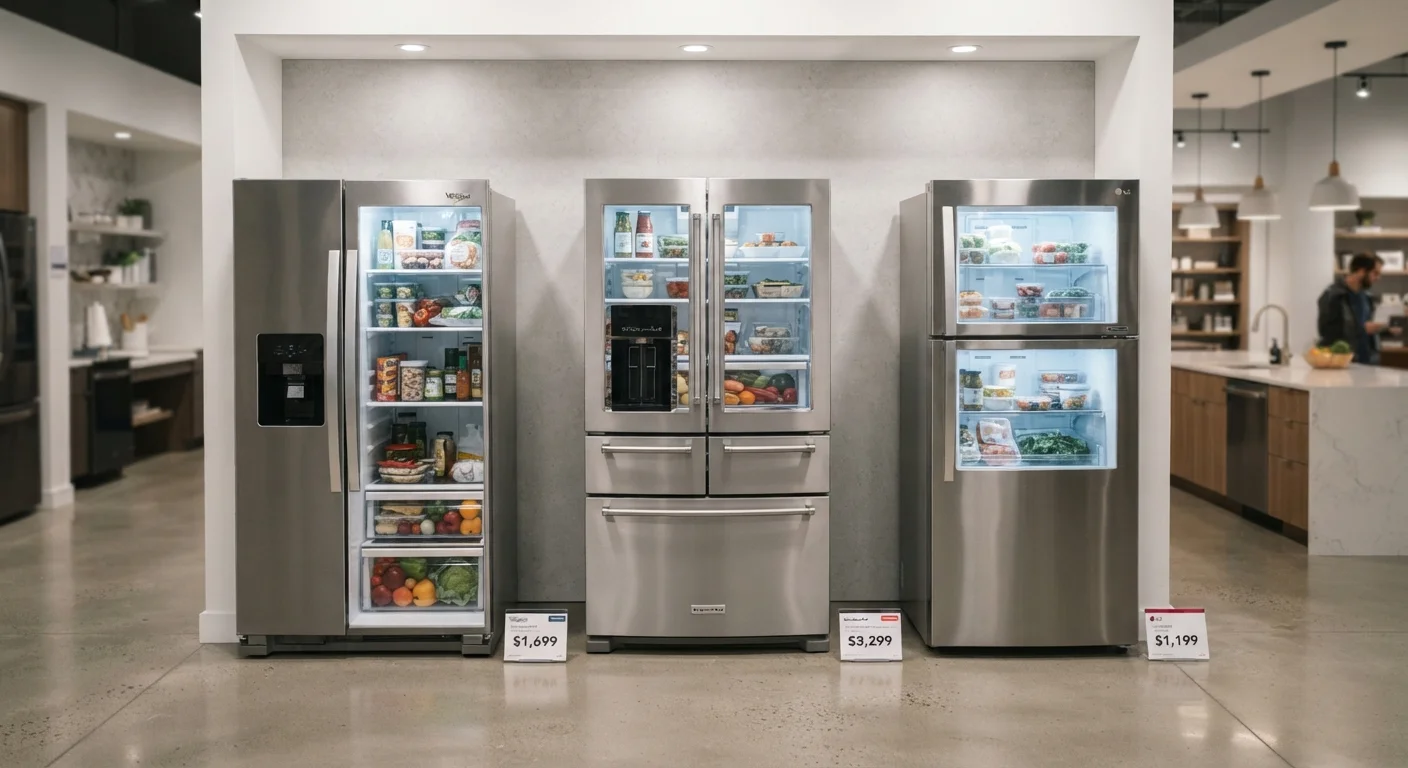
The refrigerator that looks impressive in a showroom may be poorly suited to your actual kitchen dimensions or daily habits. A few practical steps matter more than visual appeal:
- Measure twice: Check width, height, and depth of your opening - and account for ventilation clearance on the sides and top. Note the direction doors swing and whether nearby walls or cabinets will obstruct them.
- Track your freezer habits: If your household reaches into the freezer multiple times daily, a bottom-drawer design will wear on you quickly. If frozen food is an afterthought, a bottom freezer frees up prime real-estate for fresh food.
- Factor in running costs: A lower-priced top-freezer unit may cost less to purchase and less to operate annually. Over a 10-year lifespan, that gap can be meaningful on a tight budget.
- Fit to the kitchen, not the other way: Remodeling a kitchen to accommodate a refrigerator layout rarely makes financial sense. Choose a format that works in the space you have.
If you're comparing other major kitchen appliances at the same time, our piece on small kitchen appliance trade-offs covers similar decision-making logic for dishwashers in tight spaces.