Why a Pantry Strategy Saves You Money
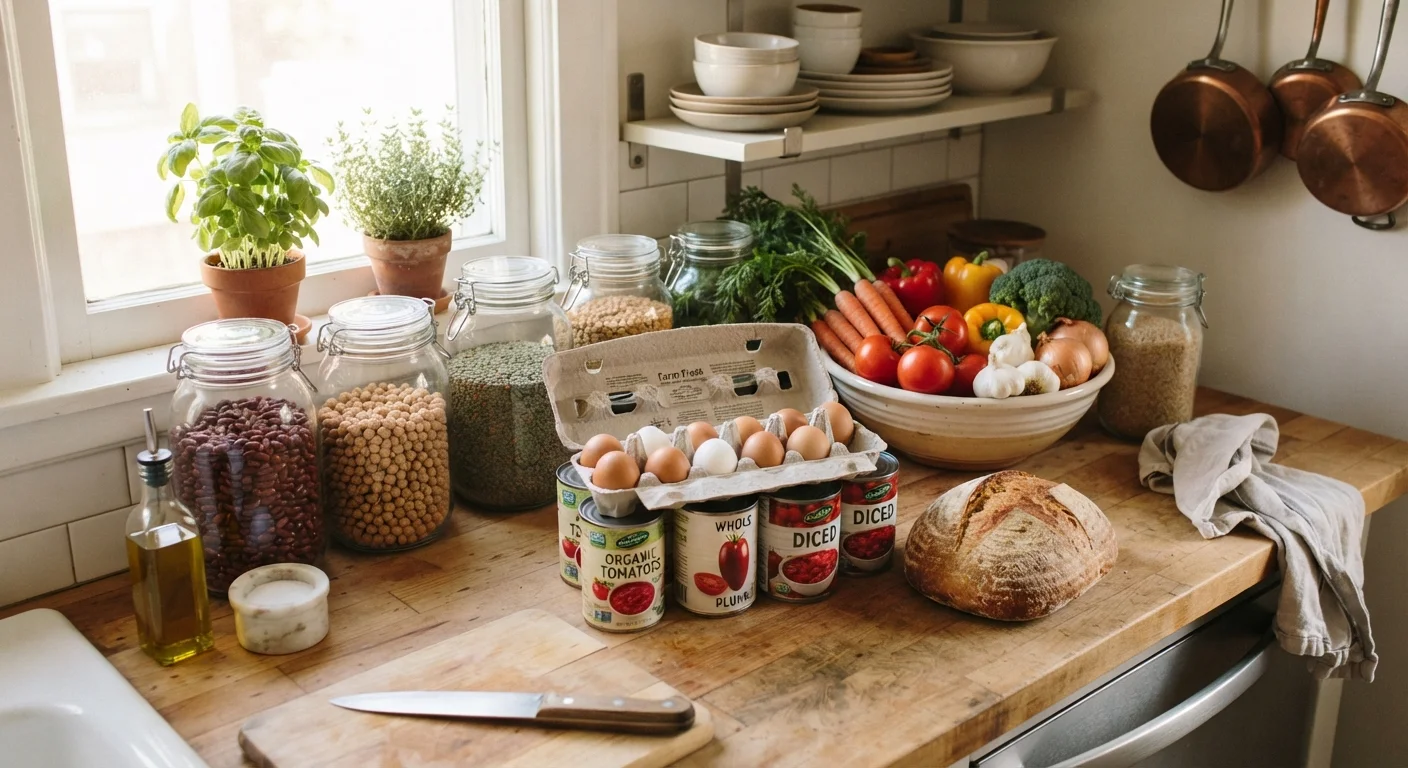
Cooking from a well-stocked pantry consistently costs less than assembling meals from scratch each night or relying on takeout to fill gaps. The difference isn't about buying more - it's about keeping the right things on hand so that a pound of chicken, a bag of dried beans, or whatever's on sale can become a real meal without a separate shopping run.
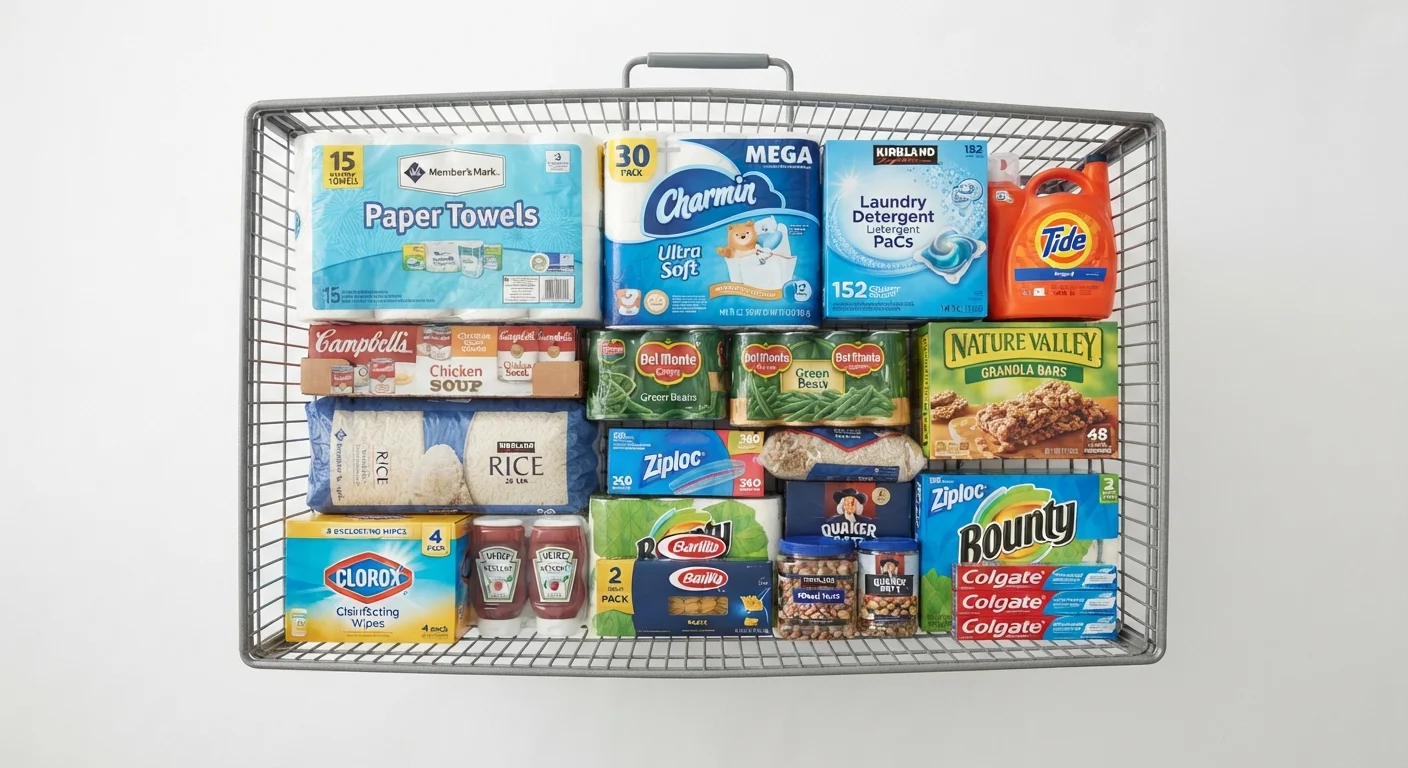
This checklist is built around one guiding principle: every item should earn its shelf space. That means versatility (usable in multiple dishes), long shelf life (low waste risk), and genuine price-per-use value. If you're also thinking about when bulk purchasing makes sense for pantry staples, see our balanced look at bulk buying before loading up.
For households working within a tight grocery budget, a strategic pantry also reduces the pressure of any given shopping trip. When your shelves already hold grains, canned goods, and cooking basics, you're buying to supplement - not to start from zero. Our practical nutrition primer for tight budgets pairs well with this checklist if you're also thinking about meal quality alongside cost.
Grains and Starches
Proteins and Legumes
Canned and Jarred Goods
Fats and Oils
Baking and Sweeteners
Spices and Flavor Builders
What You Need to Work Through This Audit
Before you start checking items off, set aside 30 to 60 minutes to physically look at what you have. Guessing from memory leads to duplicates and gaps. Pull things out, check dates, and note quantities. A phone note or a printed sheet works fine as a tracking tool - no special app required.
Permanent marker and masking tape
Label homemade containers with contents and the date opened to make rotation and expiration tracking effortless.
Airtight food storage containers
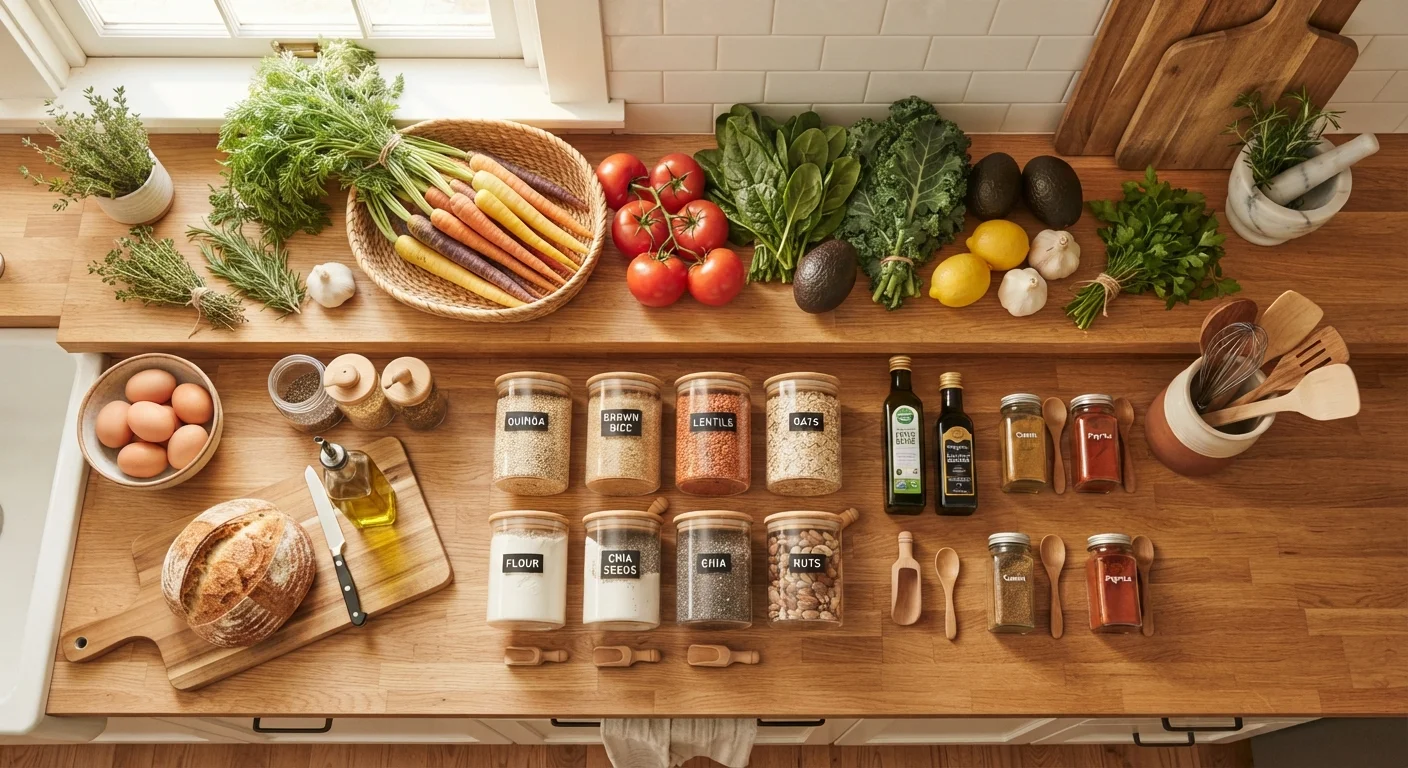
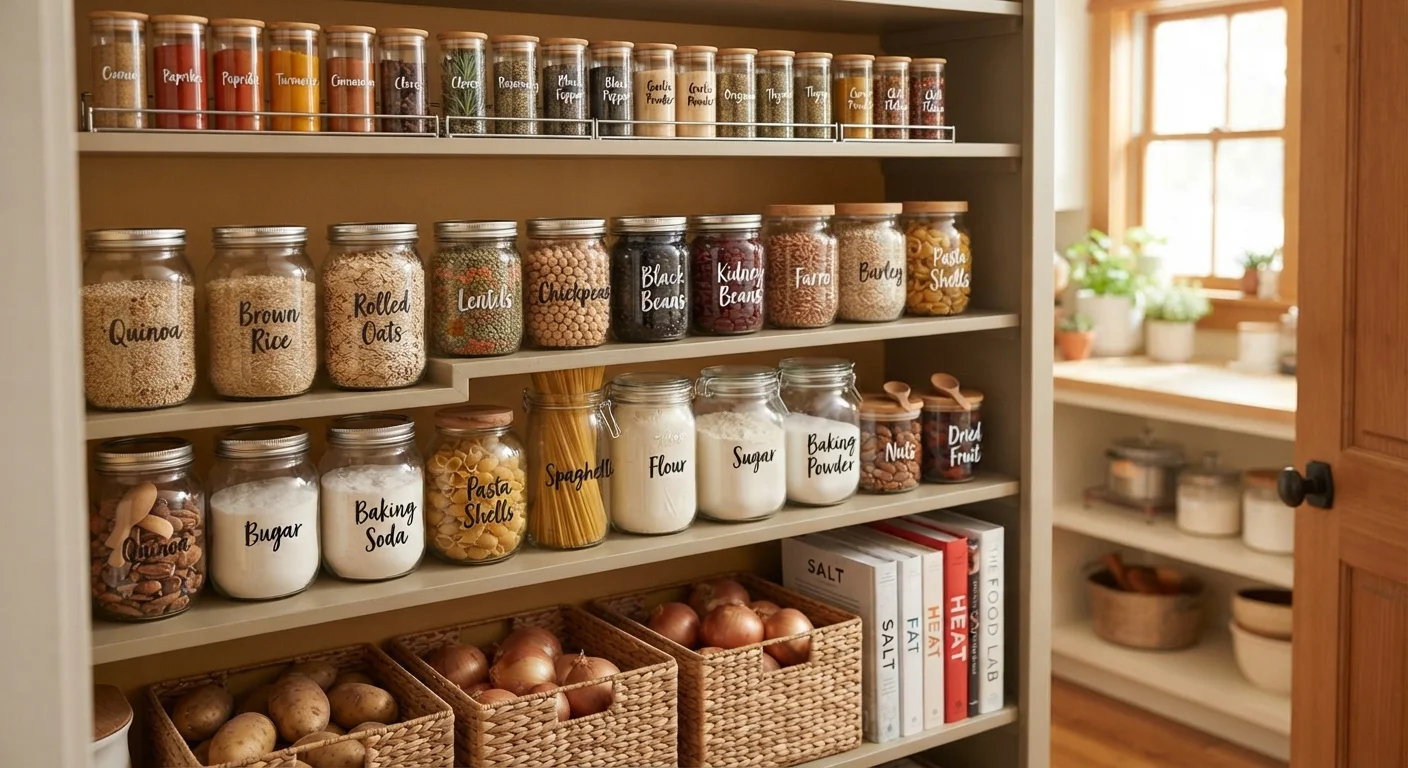
Transfer bulk grains, flour, and dried legumes into sealed containers to extend shelf life and deter pests.
Basic kitchen scale
Helps measure bulk purchases accurately and reduces waste when portioning grains or flour from larger bags.
Pantry audit checklist (printed or phone note)
Track what you have, what's running low, and what's expired during your quarterly review.
Don't Let 'Stocking Up' Become Hoarding
A pantry that's too full creates its own problems: items get buried, expiration dates go unnoticed, and money is tied up in food you don't use. Aim for a 4-8 week supply of most staples, not a year's worth. If shelf space is limited, prioritize the most versatile items over specialty ingredients you rarely reach for.
Once your pantry is stocked, use it. A pantry that gets rotated regularly stays fresher and cheaper than one that sits untouched. If you're planning structured weekly meals, our weekly eating checklist can help you put these staples to work systematically.
How to Keep Your Pantry Working Over Time
Stocking up once isn't the goal - the goal is a pantry that stays functional with minimal effort. Apply a simple first-in, first-out rule: when you buy a new can of tomatoes, put it behind the older one. This one habit eliminates most food waste.
Plan a light pantry audit every three months. It takes about 10 minutes and prevents the slow drift of expired items accumulating at the back of shelves. If a category keeps going stale, you're buying more than you use - adjust quantities accordingly.
Check Expiration Dates Before You Restock
Canned goods generally remain safe to eat well past their printed 'best by' dates, but quality does decline. Spices lose potency faster than most people expect - typically within 1-2 years of opening. Before buying replacements, open the jar and smell it. A spice with little to no aroma won't meaningfully flavor your food, even in larger quantities.
Managing pantry costs connects naturally to broader household budgeting. If you're working on building a financial cushion alongside smarter grocery spending, the savings safety net guide offers grounded steps for households with limited room in the budget. And if your kitchen gear needs an upgrade to make cooking from scratch easier, our cookware comparison breaks down what's actually worth owning.