
Why a Safety Net Matters Even on a Small Income
An emergency fund is not a luxury reserved for people with comfortable incomes. It's the financial tool that keeps one unexpected expense-a busted radiator, a medical bill, a gap between jobs-from cascading into debt. Without any cushion, even a modest disruption can send a carefully balanced budget into a spiral that takes months to recover from.
The difficult reality is that building savings when income is tight requires trading off something else-at least temporarily. That tradeoff is real and worth naming honestly. But the cost of not having a safety net tends to be higher in the long run, both financially and in terms of stress. For a clear-eyed look at what strict budgeting involves, this overview of budgeting tradeoffs lays out both sides without sugarcoating.
The goal here is not to become wealthy overnight-it's to reach a point where a $400 or $500 problem doesn't blow up your entire month.
What you will need
What You'll Need Before You Start
You don't need special software or a financial planner to begin. The tools below are sufficient for most people working through this process for the first time.
Budget tracking method (app, spreadsheet, or paper)
To record and review your income and expenses so you can identify where money is going.
Separate savings account
Keeping savings physically separate from your checking account reduces the temptation to spend it accidentally.
Automatic transfer feature
Scheduling recurring transfers eliminates the need to manually move money each pay period.
Once you have these in place, work through the steps below at whatever pace fits your schedule. The entire process can be done in one sitting or spread across a few evenings.
This Is General Financial Education
The information in this article is intended for general educational purposes only and does not constitute personalised financial advice. Everyone's financial situation is different. Consider consulting a licensed financial professional before making significant decisions about saving, debt, or account structures.
Step-by-Step: Building Your Safety Net
These steps are designed to be sequential, but real life doesn't always cooperate. If you already have a savings account open, skip to Step 4. If you've already mapped your spending, use that data for Step 3. Adapt as needed.
Set a small, specific savings target
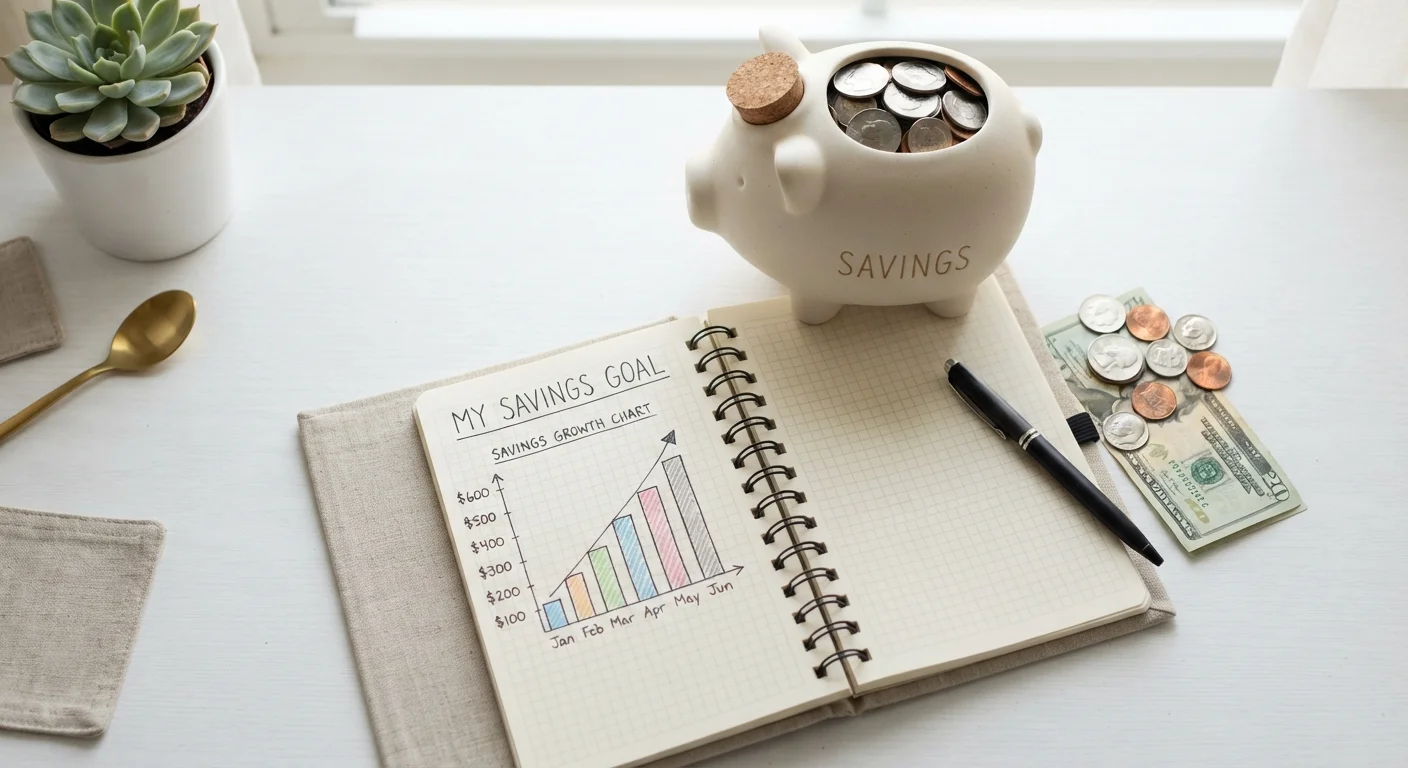
Before doing anything else, choose a concrete first milestone. Financial educators commonly suggest $500 to $1,000 as a starter emergency fund-enough to cover a car repair, an urgent medical co-pay, or a month's utilities without reaching for a credit card.
Write the number down. A vague goal like "save more" is harder to act on than "save $600 by the end of four months." Starting small is not a failure of ambition-it's a realistic acknowledgment that a fund you can actually build is worth more than a target you abandon.
Map your current spending honestly
Pull up the last 30 to 60 days of bank and card statements. Sort every expense into two columns: fixed (rent, insurance, loan minimums) and variable (groceries, dining, subscriptions, clothing).
Most people find at least one or two variable categories where spending is higher than they realized-streaming services that overlap, takeout habits, or app purchases. You don't need to cut everything. You need to find one or two categories where a modest reduction is genuinely feasible without feeling punishing.
Open a dedicated savings account
Money sitting in the same account as your daily spending tends to disappear into daily spending. Open a separate account specifically for your emergency fund. You don't need to switch banks-most institutions let you open a secondary savings account at no cost.
For a comparison of how different savings account types work, see our overview of HYSA, money market, and traditional savings accounts. Understanding the structure helps you choose an account that matches how soon you might need access to the funds.
Decide on a deposit amount and automate it
Based on your spending map, identify a realistic amount to move to savings each pay period. Even $10 to $25 per paycheck is a meaningful start. The key is consistency, not size.
Set up an automatic transfer to your dedicated savings account timed to arrive the day after your paycheck does. Automating the transfer removes the decision point-and the temptation to spend first and save what's left (which, for most people, amounts to nothing).
Review and adjust monthly
At the end of each month, spend 10 minutes checking three things: Did the transfer happen? Did you dip into the savings account? Can you increase the transfer amount, even slightly?
This monthly check-in is also the right moment to catch budget drift-expenses that crept up without you noticing. For a structured approach to this habit, the monthly budget reset guide walks through exactly what to review and carry forward.
Plan for irregular but predictable expenses
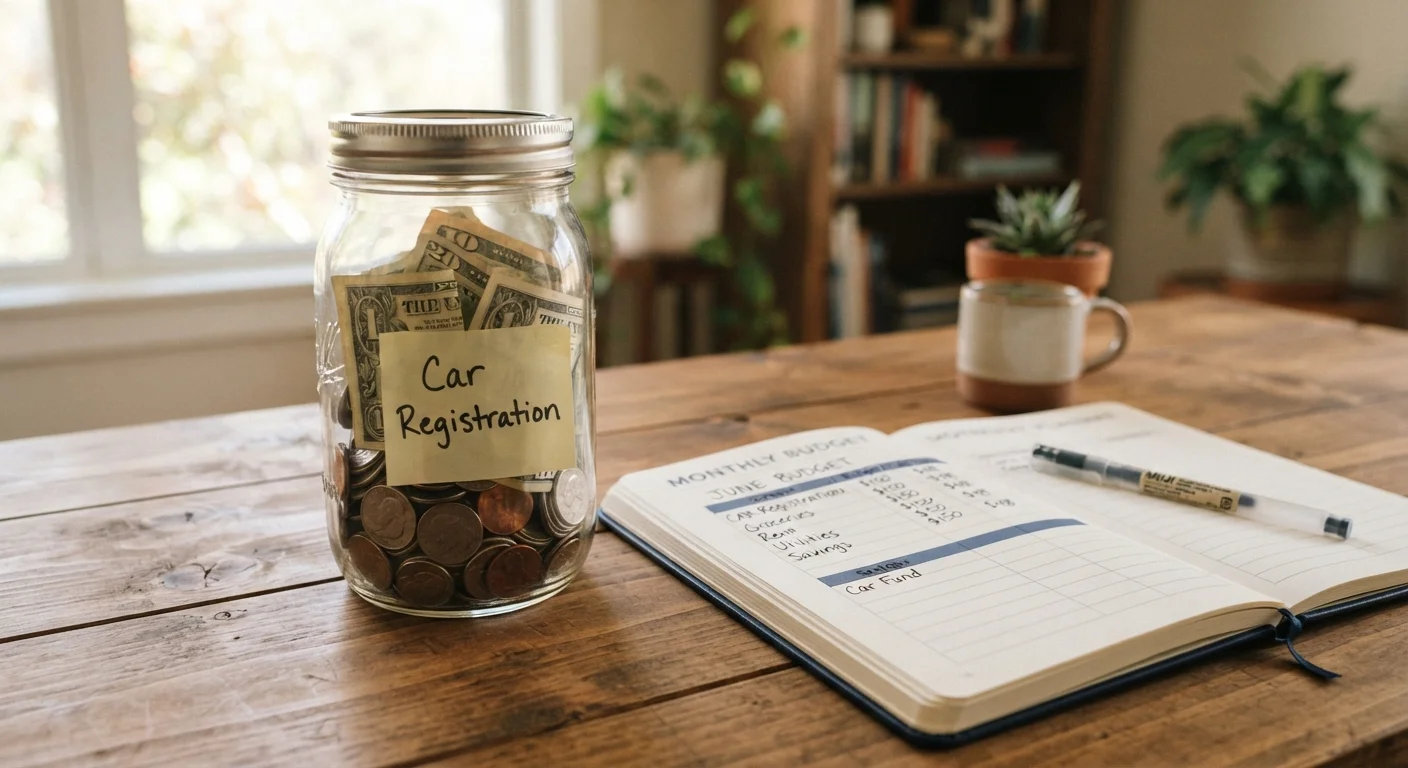
One of the most common reasons emergency funds get raided isn't true emergencies-it's expenses people forgot to plan for: annual insurance premiums, car registration, holiday spending. These aren't surprises; they're just irregular.
The solution is a sinking fund: a separate sub-savings pool for each known future cost, funded in small monthly amounts. Sinking funds explained details exactly how to set one up alongside your emergency fund so that neither cannibalizes the other.
Don't Skip High-Interest Debt Entirely
If you're carrying high-interest debt-such as credit card balances-building a large savings cushion while ignoring that debt may cost you more overall. Many financial educators suggest a middle path: build a small starter fund first, then focus aggressively on high-interest debt before expanding savings. Understand your own debt costs before deciding on your approach.
Staying on Track After the First Month
The hardest part of saving on a tight budget is not starting-it's continuing when the novelty wears off. A few principles help here.
- Progress over perfection: If you miss a month or raid the fund once, restart without treating it as a failure. Consistency over a year matters more than a single bad month.
- Increase gradually: Each time income rises-a raise, a side gig, a tax refund-redirect a portion to savings before it's absorbed by lifestyle creep.
- Protect the fund's purpose: An emergency fund is for genuine emergencies (job loss, urgent medical need, essential car repair), not for planned purchases. That's what sinking funds handle.
The 'Round-Up' Mindset Works
Some people find it easier to save by mentally rounding up their expenses and depositing the difference. Spent $43 on groceries? Transfer $7 to savings to hit a round $50. It feels painless and adds up faster than expected. This is a habit adjustment, not a product recommendation-any savings account can work.
For broader context on how savings and insurance work together as a financial protection system, see this end-to-end guide to savings and insurance. And if budget discipline has been difficult to sustain in the past, understanding why budgets fail in month two may help identify the specific friction points to address.
This article is for general informational and educational purposes only and does not constitute personalised financial advice. Consult a qualified financial professional for guidance specific to your situation.