
Why Big Expenses Blindside Budgets
You set up a careful monthly budget. Income in, bills out, a little left over. Then December arrives, or your car registration comes due, or your annual home insurance premium lands in your inbox - and suddenly your carefully balanced plan has a gaping hole in it.
This is one of the most common reasons budgets fail, and it's not a discipline problem. It's a design problem. Most monthly budgets only account for recurring monthly costs. They ignore the reality that many significant expenses arrive on a quarterly, semi-annual, or annual schedule.
Sinking funds solve this by converting those irregular future costs into predictable, bite-sized monthly contributions. The concept is straightforward, but its impact on financial stability is significant. As explored in common budgeting misconceptions, many people abandon budgets not because they spend too much, but because their budgeting system isn't built to handle real life.
~$2,000
Average American holiday spending per household
According to Gallup polling data, Americans consistently report planning to spend roughly $900-$1,000 on gifts alone during the holiday season, with total seasonal spending often higher.
40%
Adults who can't cover a $400 emergency without borrowing
Federal Reserve survey data has consistently found that a significant share of U.S. adults lack liquid savings to handle modest unexpected costs - a gap sinking funds help prevent from growing.
12-18
Common number of irregular annual expenses per household
Personal finance researchers estimate most households face over a dozen predictable non-monthly expenses per year, ranging from insurance renewals to vehicle costs to annual memberships.
How a Sinking Fund Actually Works
The mechanics are simple. Identify an upcoming expense, estimate its total cost, count the months until you need the money, and divide. That quotient is your monthly sinking fund contribution.
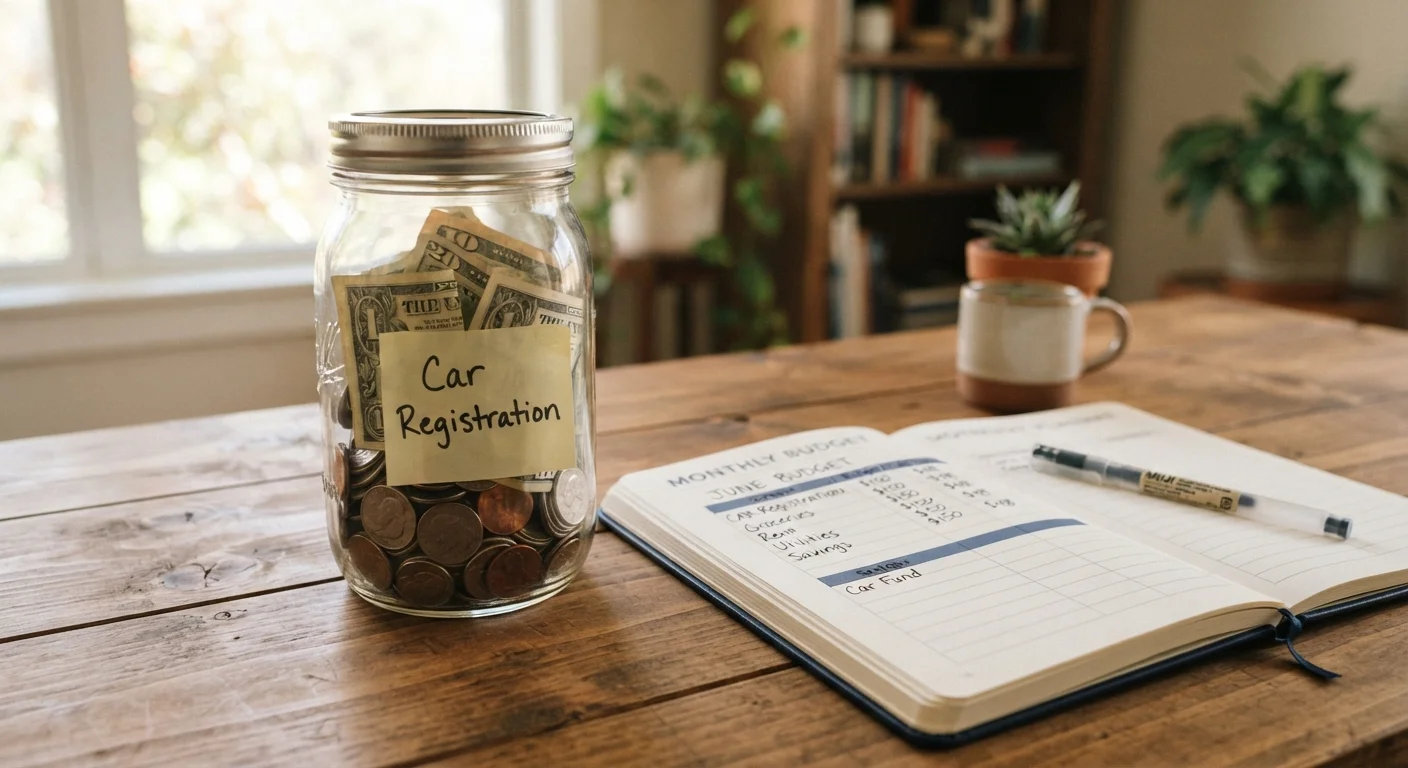
Example: Your car registration runs about $240 and renews every 12 months. Set aside $20 per month in a dedicated account. When the bill arrives, the money is already there.
The same logic applies to holiday gift spending, annual subscriptions, a planned vacation, veterinary visits, or back-to-school costs. Any expense that is predictable in nature - even if not down to the exact dollar - is a candidate for a sinking fund.
You can maintain multiple sinking funds simultaneously, ideally in labeled sub-accounts or separate savings buckets. Many online banks and credit unions support this kind of account segmentation at no cost. This approach complements the kind of monthly review process described in a monthly budget reset routine, where you audit what's coming up and adjust contributions accordingly.
Name Your Funds to Make Them Stick
Labeling each sinking fund with its specific purpose - 'Car Registration,' 'Holiday Gifts,' 'Vet Visits' - makes the money feel earmarked and harder to spend impulsively. Many banks and budgeting apps allow you to name savings buckets directly. This small psychological step significantly improves follow-through.
Sinking Funds vs. Emergency Funds: Know the Difference
These two concepts are often confused, but they serve distinct purposes. An emergency fund is a buffer for genuinely unexpected events - a job loss, a medical emergency, an urgent car repair you didn't see coming. A sinking fund is for costs you know are coming, even if they don't arrive every month.
Conflating the two is a common budgeting error. If you raid your emergency fund every December to cover holiday gifts, you're depleting a safety net for a cost that was never actually a surprise. A sinking fund keeps that boundary clean.
For a deeper look at how these two tools work together in your broader financial picture, see how emergency savings and insurance complement each other. And if you're building financial stability on a tight income, building a savings safety net on a tight budget offers a realistic starting point.
Making Sinking Funds a Durable Habit
The sinking fund concept only works if the contributions happen consistently. Treat each fund like a non-negotiable monthly bill - it leaves your checking account on payday, same as rent or utilities. Automating the transfer removes the decision entirely.
Revisit your sinking funds during your monthly budget check-in. Did the car repair cost more than expected? Adjust next month's contribution. Did you spend less on gifts this year? Roll the surplus forward or redirect it to another fund.
Sinking funds are a hallmark of budgeting habits that hold up over time - not because they're complicated, but because they're honest about how spending actually works. Building this practice alongside a broader savings and insurance strategy creates a more resilient financial foundation, as outlined in this comprehensive look at saving and insurance together.
This article is for general informational and educational purposes only and does not constitute personalized financial or investment advice. Consult a qualified financial professional for guidance specific to your situation.