The Hidden Math Behind Cheap Clothing
There's a familiar feeling that comes with finding a $10 dress or a $6 tee - immediate satisfaction, zero guilt. But that feeling often has a short shelf life, and so does the item itself. Fast fashion's business model depends on low cost-per-unit and high purchase frequency, which means the incentive to build lasting pieces simply isn't there.
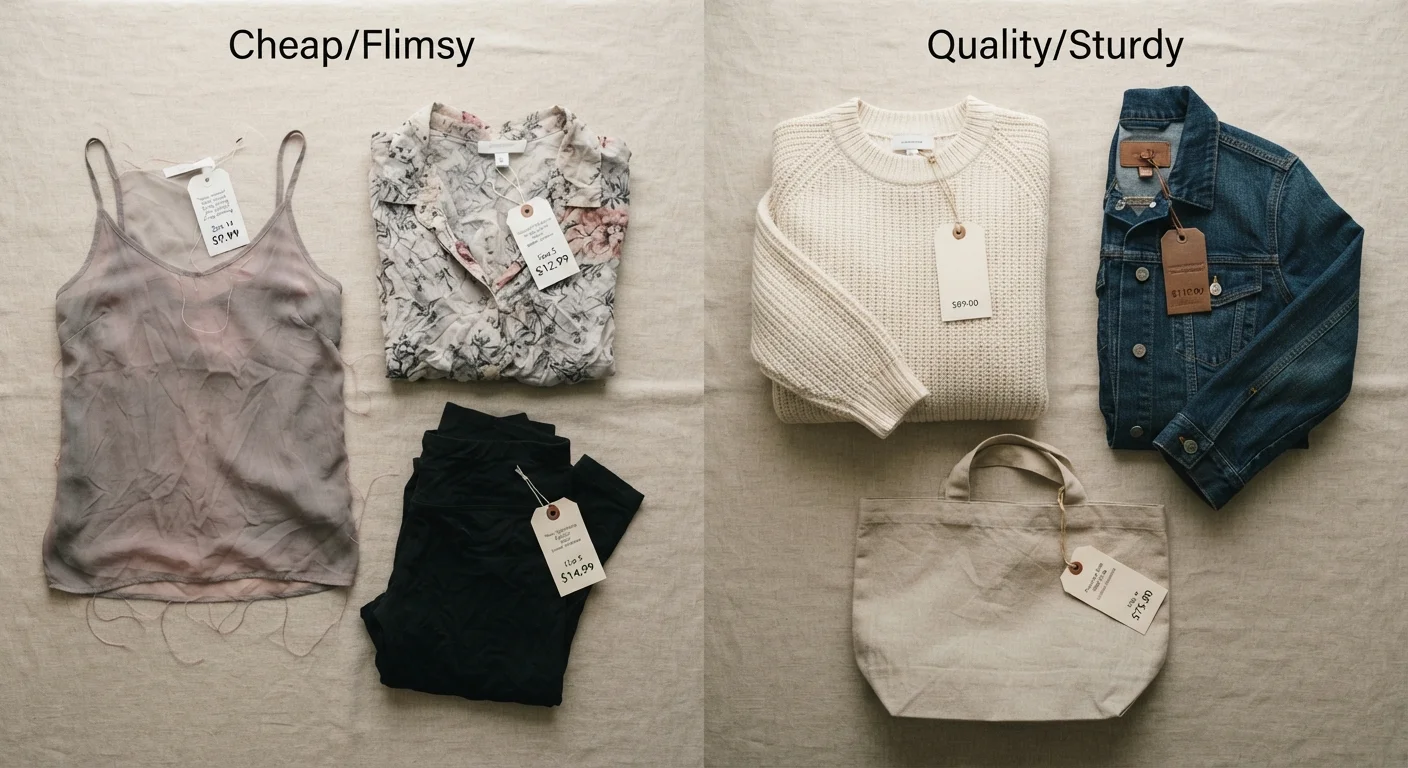
Fabric composition is one of the fastest indicators. Thin, low-thread-count weaves, weak dye processes, and skipped interfacing all translate into garments that stretch out, fade, or unravel quickly. None of this is visible on a hanger in a bright store - it shows up after the third wash. Understanding the trade-offs between fast and slow fashion gives shoppers a clearer picture of what they're actually getting for their money.
Myth
Buying the cheapest option always saves me the most money.
Fact
The lowest upfront price frequently leads to higher total spending once replacements and repairs are factored in.
This is the most pervasive myth in budget shopping. When a garment wears out, fades, or loses its shape after a handful of washes, you're back at the checkout buying a replacement - sometimes within weeks. The math is straightforward: frequency of replacement multiplied by unit cost often exceeds the price of a more durable alternative purchased once. For a deeper look at this pattern across product categories, see why a lower price tag doesn't always mean a better deal.
Myth
Expensive clothing is automatically higher quality.
Fact
Price and quality do not have a perfect correlation - marketing, branding, and retail markup all inflate costs independently of construction quality.
A premium logo or a department store address can add significant cost to a garment with no meaningful improvement in fabric weight, stitching, or durability. Conversely, some mid-range and even budget-tier pieces are constructed with care and last surprisingly well. The same principle applies in beauty - what you're actually paying for in beauty products is often more about positioning than formula. Evaluate construction details rather than relying on price as a proxy for quality.
Myth
Fast fashion is the only realistic option for people on a tight budget.
Fact
Thrift stores, clothing swaps, and strategic capsule wardrobe building can stretch a modest clothing budget considerably further than fast fashion.
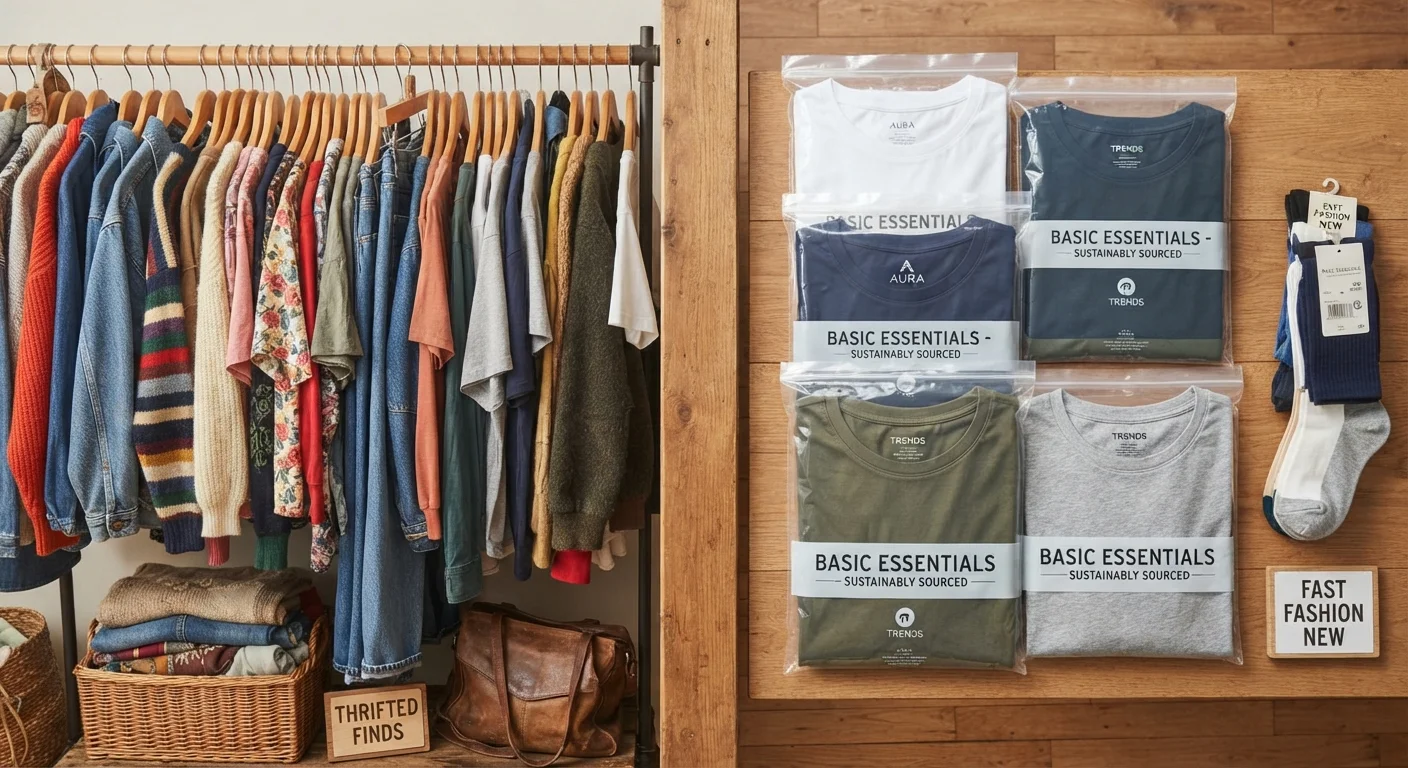
Fast fashion has positioned itself as the default affordable option, but that framing overlooks alternatives that often deliver better value. Secondhand shopping in particular can yield durable, well-made pieces at a fraction of their original retail price. The thrift store vs. fast fashion comparison reveals that secondhand often wins on long-term value. Building a tight, versatile set of core pieces - a capsule wardrobe approach - also reduces the pressure to keep buying. See how to build a capsule wardrobe on a tight budget for practical starting points.
Myth
A sale price means I'm definitely getting a good deal.
Fact
Retail discounts are often calculated from inflated reference prices, meaning the 'deal' may not reflect genuine savings.
Retailers frequently set original prices high specifically to make markdowns look more dramatic. A '50% off' tag may still represent a price higher than what the item is typically worth. Understanding when retail markdowns are real versus theater helps you evaluate whether a sale price actually represents value - or just clever merchandising. Always compare against the item's typical selling price, not the crossed-out number on the tag.
Myth
Cost-per-wear is too complicated to be a useful tool for everyday shoppers.
Fact
Cost-per-wear is a simple division: price divided by estimated number of times you'll wear something. It consistently reveals which purchases are genuinely worth it.
The formula couldn't be more accessible. A $60 jacket worn 80 times costs $0.75 per wear. A $15 top worn four times before it pills and gets donated costs $3.75 per wear - five times as much. The cost-per-wear formula reframes every purchase decision and is especially powerful when evaluating basics you'll reach for constantly versus trend pieces you may tire of quickly.
What to Look For Instead of Just Price
Smarter shopping isn't about spending more - it's about spending more intentionally. A few construction checks go a long way before committing to a purchase.
The Replacement Cycle Adds Up Fast
A $12 top that falls apart after six washes and gets replaced three times in a year has effectively cost $36 - more than a $25 version that lasted two years. Before assuming a low price is a win, consider how often you'll need to rebuy. This cycle is one of the most common ways budget shoppers unintentionally overspend on clothing.
- Fabric weight: Hold the fabric up to the light. If it's nearly see-through and you're not buying a sheer, it won't last.
- Seam allowance: Pinch a seam and feel how much fabric is inside. Narrow seams unravel; wider seams give room for alterations and hold their shape.
- Stitching density: More stitches per inch generally means a stronger seam. Loose, widely spaced stitching pulls apart under regular wear.
- Button and zipper quality: Plastic buttons crack; light-gauge zippers jam. These details signal how the rest of the garment was built.
These aren't luxury considerations - they're practical ones that apply equally to a $30 pair of trousers and a $90 one. The goal is to identify pieces that will hold up, wherever they sit on the price spectrum. For broader guidance on where to put your dollars, smart shopping strategies can help you prioritize across categories.
3x
Average clothing purchases per year vs. 20 years ago
Research from environmental and consumer studies consistently finds that garment purchasing frequency has roughly tripled over recent decades while individual item lifespans have shortened.
~60%
Garments discarded within a year of purchase
Industry analysis and sustainability research suggest the majority of fast fashion items are no longer worn or are discarded within 12 months of purchase.
$1,700+
Average annual American clothing spend
According to U.S. Bureau of Labor Statistics Consumer Expenditure Survey data, the average American household spends over $1,700 per year on apparel and related services.