
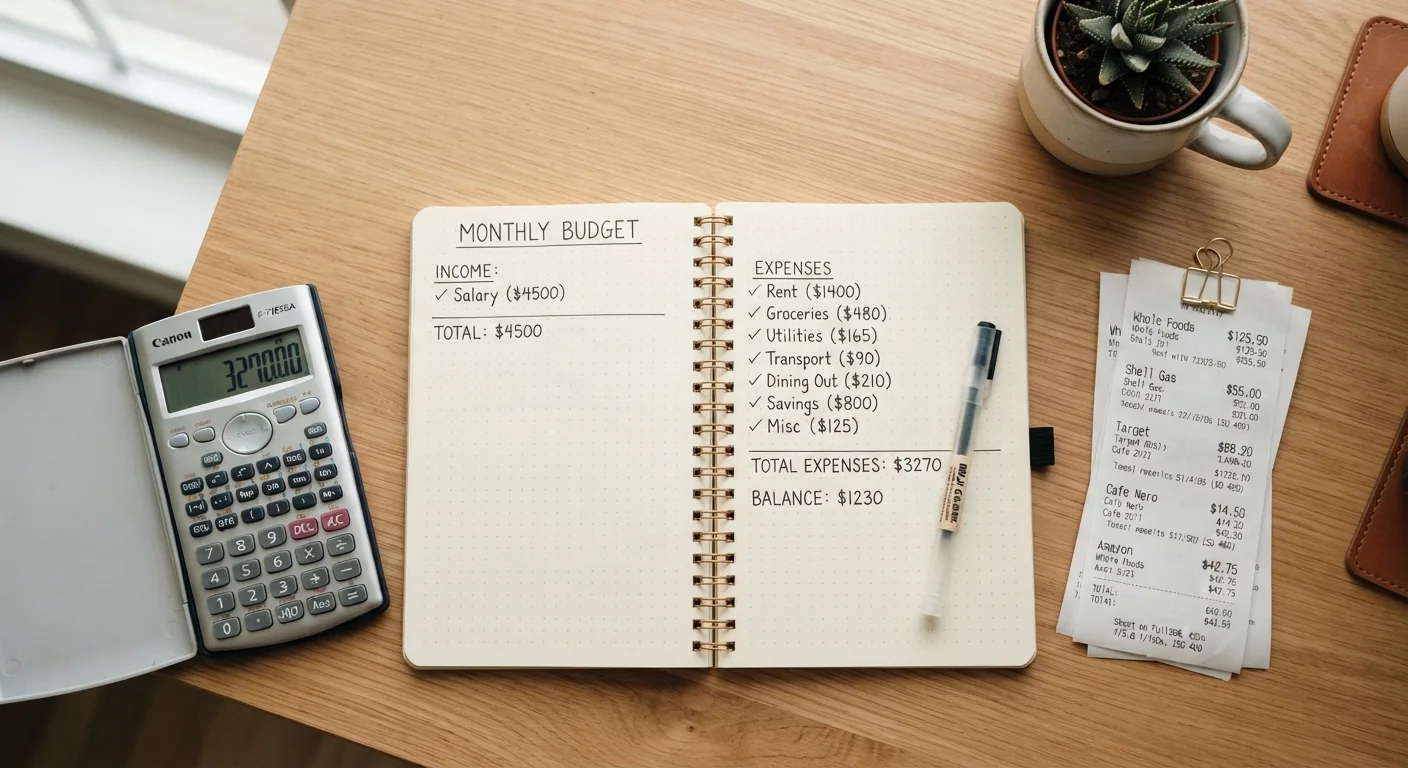
Why Most People Don't Know Where Their Money Goes
Most Americans have a rough sense of their big expenses - housing, car payments, insurance - but a surprisingly fuzzy picture of everything in between. That gap is where budgets break down. Research from the Consumer Financial Protection Bureau and various consumer surveys consistently finds that discretionary spending is the hardest category to self-estimate accurately, with most households underestimating it by a meaningful margin.
The problem isn't carelessness. It's that modern spending is frictionless. Tap-to-pay, one-click checkout, and auto-renewing subscriptions all reduce the moment of financial awareness that used to come with handing over cash. The result is a month-end statement that surprises even careful people.
Tracking spending doesn't require a personality change or a finance degree. It requires a reliable system applied consistently. Once you see the real numbers, you can make deliberate choices - and that's the foundation of any working budget. If you're ready to build on this tracking habit, a ground-up guide to building your first personal budget is the logical next step.
This Is Education, Not Financial Advice
The information in this article is general financial education and is not personalized financial advice. Every household's situation is different. For guidance tailored to your specific circumstances, consult a licensed financial adviser or credit counselor.
What You'll Need Before You Start
Before working through the steps below, gather everything you need in one place. Incomplete data produces an incomplete picture.
What you will need
Bank or credit union statements
Primary source of transaction history for the past 30-90 days.
Spreadsheet software (e.g., Google Sheets or Excel)
Flexible, free tool for building a custom spending tracker with running totals.
Personal finance app
Automatically imports and categorizes transactions from linked accounts.
Small notebook or index cards
Low-tech option for logging cash purchases in real time.
Don't Skip the First Full Month
One week of data is not enough - spending patterns vary significantly week to week. Collecting at least 30 days of transactions gives you a representative baseline. Acting on partial data often leads to budgets that don't reflect reality.
Step-by-Step: Track Every Dollar This Month
Pull 30 days of transaction data from every account
Log in to every account you use to spend money - checking accounts, credit cards, digital wallets - and download or print the last 30 days of transactions. If you regularly pay with cash, estimate those amounts separately. The goal is a single, complete list of outflows. Missing even one account creates gaps that distort the picture.
List every recurring fixed expense first
Scan the transaction list and pull out anything that hits at the same amount on a predictable schedule: rent or mortgage, car payment, insurance premiums, loan minimums, and subscriptions. Write these in a dedicated section. Fixed expenses are the non-negotiable floor of your monthly spending - knowing this number anchors everything else.
Categorize all variable spending
With fixed expenses set aside, sort every remaining transaction into broad categories: groceries, dining out, transportation, personal care, entertainment, household supplies, clothing, and miscellaneous. Keep the list under 12 categories - the more granular you go, the less likely you are to maintain it. Use whatever labels match your actual life, not a textbook template.
Total each category and calculate your monthly outflow
Sum each category and then add fixed and variable totals together. This number is your actual monthly spend. Compare it to your monthly take-home income. If spending exceeds income, you now have a documented baseline - not a vague worry - to work from. If there's a surplus, you can see precisely how much is truly available for saving or debt payoff.
Identify your top three surprise categories
Look at your category totals and highlight the three where the actual amount surprised you. For most households, dining out, subscriptions, and convenience shopping account for the largest gap between perceived and real spending. Write down the dollar amount next to each. This step converts vague awareness into a specific, actionable number.
Choose a tracking method you will actually use consistently
A system you abandon in week two is worthless. Choose based on your habits: if you prefer automation, a linked finance app handles most of the work. If you want full control, a spreadsheet with manual entry takes about 10 minutes per week. Prefer analog? A notebook works. The right method is the one that fits your routine. See how these options compare in depth: envelope budgeting vs. digital spending trackers.
Set a weekly 10-minute review habit
Tracking is not a once-a-month task. Schedule a brief weekly check-in - Sunday evening works well for many people - to log the week's spending and compare running totals against your category expectations. Catching overspending mid-month leaves time to adjust; catching it at month-end does not.
Make Categorizing Easier From the Start
Rename recurring payees in your tracking tool to something memorable - 'streaming subscription' instead of a cryptic billing name, for example. This cuts review time in half. Keep your category list under 12 buckets to avoid over-complicating the process.
What to Do With What You Find
Once you have a clear monthly snapshot, you're equipped to make real decisions. If grocery spending is high, that's a concrete target - not a vague intention to 'spend less on food.' If subscriptions total more than expected, a 20-minute audit can cut them. Understanding the distinction between needs and wants in your actual data is also explored in our guide to value-based shopping for everyday purchases.
Tracking also reveals how much you realistically have available to save. Even on a tight income, identifying $50-$100 in genuine slack is the starting point for building a financial cushion. For practical steps on that, see building a savings safety net on a tight budget.
Once your tracking habit is solid, the next step is choosing a budgeting framework that fits your goals. Budgeting methods compared - zero-based, pay yourself first, and more lays out the most common approaches side by side so you can pick what works for your household.
This article is for general informational and educational purposes only and does not constitute personalized financial advice. Consult a licensed financial professional for guidance specific to your situation.