How Each Method Actually Works
Zero-based budgeting (ZBB) starts with a simple premise: income minus expenses equals zero. Before the month begins, you assign every dollar you earn to a specific category - rent, groceries, transportation, savings, and so on - until nothing is left unallocated. Any remaining dollar must be intentionally placed somewhere, whether that's debt repayment or an emergency fund.
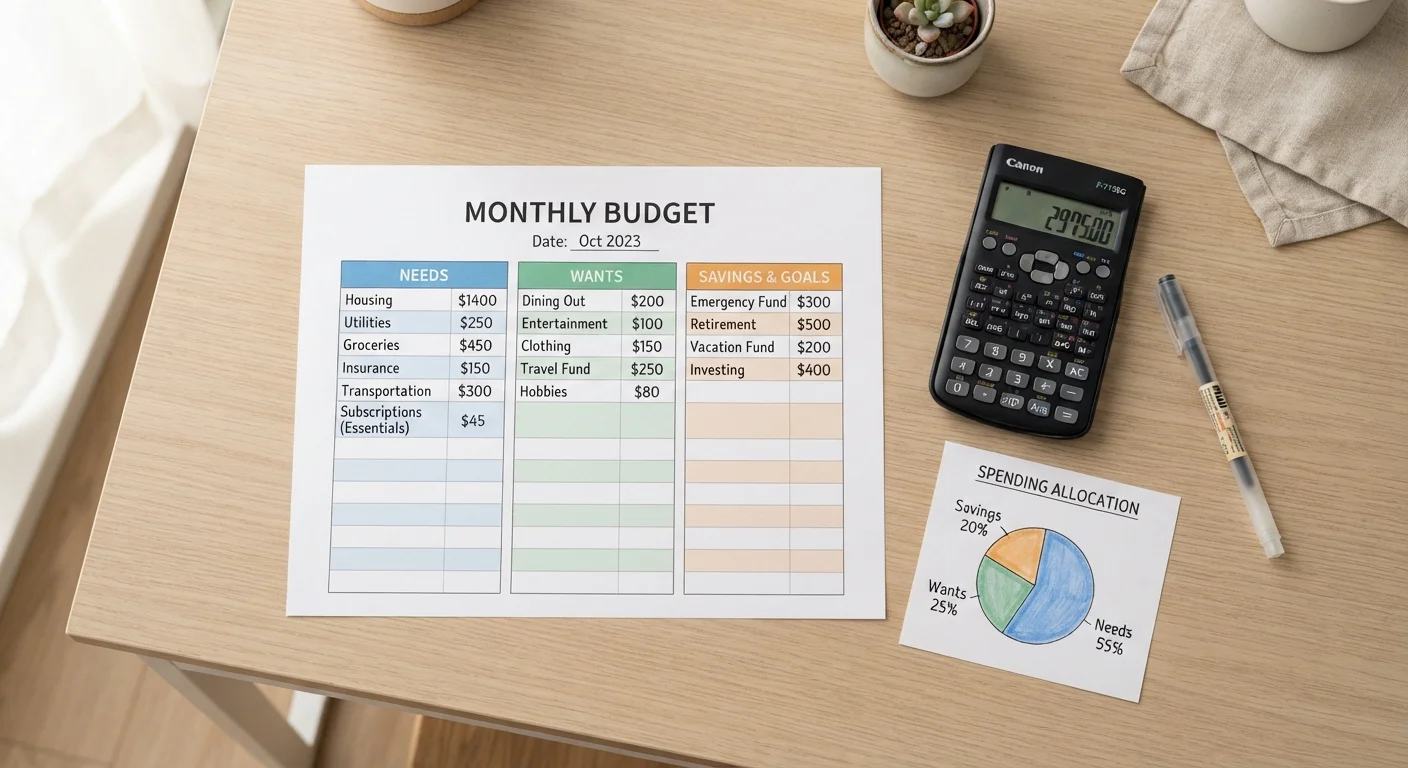
Percentage-based budgeting works differently. Rather than itemizing each spending category, you divide income into broad buckets using fixed ratios. The widely recognized 50/30/20 rule - explained in detail here - allocates roughly 50% to needs, 30% to wants, and 20% to savings and debt repayment. The exact percentages can shift based on your situation, but the logic stays the same.
Both approaches are tools, not rules. The difference lies in how much granularity you want - and how much time you're willing to invest. For a broader look at how these and other methods stack up, see this comparison of popular budgeting approaches.
| Criterion | Zero-Based Budgeting | Percentage-Based Budgeting |
|---|---|---|
| Core principle | Every dollar assigned a job | Income split into broad ratios |
| Monthly time commitment | High (30-60 min setup + tracking) | Low (set once, maintain lightly) |
| Flexibility for variable income | Strong - rebuilt each month | Weaker - ratios assume stable income |
| Spending visibility | Very detailed, category by category | Broad buckets only |
| Beginner friendliness | Moderate - steeper learning curve | High - simple to start |
| Best suited for | Detail-oriented, irregular earners | Salaried, simplicity-seeking budgeters |
| Risk of budget fatigue | Higher | Lower |
The Real Costs of Each Approach
Zero-based budgeting's biggest cost is time. You'll spend 30 to 60 minutes at the start of each month building a fresh budget, then check in regularly throughout the month to track whether you're on target. For people with complex finances - multiple income streams, irregular bills, or aggressive savings goals - that time investment can pay off. For everyone else, it can become exhausting fast.
Percentage-based budgeting trades precision for ease. Once your ratios are set, monthly maintenance is minimal. But that simplicity has a downside: it can mask overspending within a category. If your "needs" bucket consistently runs over 50%, the framework won't automatically tell you why - you'll have to dig deeper yourself.
You Don't Have to Choose Permanently
Some people start with percentage-based budgeting to build the habit, then layer in zero-based techniques once they're comfortable tracking. Others use zero-based budgeting during a financial crunch and switch back to percentages once things stabilize. Your budgeting method can evolve as your life does - consistency over any given month matters more than methodological purity.
Both methods share a common failure point: giving up in the second month, when the novelty wears off. If you've struggled with consistency, this breakdown of why budgets stall in month two is worth reading before you commit to either approach. And if you're weighing how much structure is actually good for you, this honest look at strict budgeting tradeoffs offers useful perspective.
Which Budgeter Are You?
The right method depends heavily on two factors: how your income arrives and how detailed you're willing to get.
Freelancers, gig workers, or anyone with month-to-month income variation often find zero-based budgeting more practical. Because you build a new budget each month based on actual expected income, there's no awkward mismatch when a slow month cuts your paycheck by 20%.
Salaried workers with predictable expenses tend to benefit from percentage-based budgeting's low overhead. Once set up, the system largely runs itself - which means you're more likely to stay consistent. If you're also exploring how to track your spending in real time, this comparison of envelope and digital tracking methods pairs well with either approach.
73%
Americans living paycheck to paycheck
A 2023 LendingClub report found roughly 73% of U.S. consumers reported living paycheck to paycheck, underscoring the urgency of any consistent budgeting habit.
1 in 3
Adults with no written or tracked budget
The National Financial Educators Council has consistently found that a large share of American adults do not follow any formal budgeting system.
Whichever method you choose, the underlying goal is the same: spending intentionally rather than reactively. Consulting a certified financial planner can help you tailor a budgeting framework to your specific income, debts, and goals. This article provides general financial education and is not personalized financial advice.
This content is for informational purposes only and does not constitute personalized financial advice. Consult a licensed financial professional before making decisions specific to your situation.