
Why Motivation Is the Wrong Foundation
Most people approach home fitness as a motivation problem: they wait to feel inspired, then try to ride that energy as long as possible. The trouble is, motivation is a mood - it rises and falls based on sleep quality, stress, and a dozen other variables outside your control. Building a sustainable home workout practice means treating consistency as a system problem, not a willpower problem.
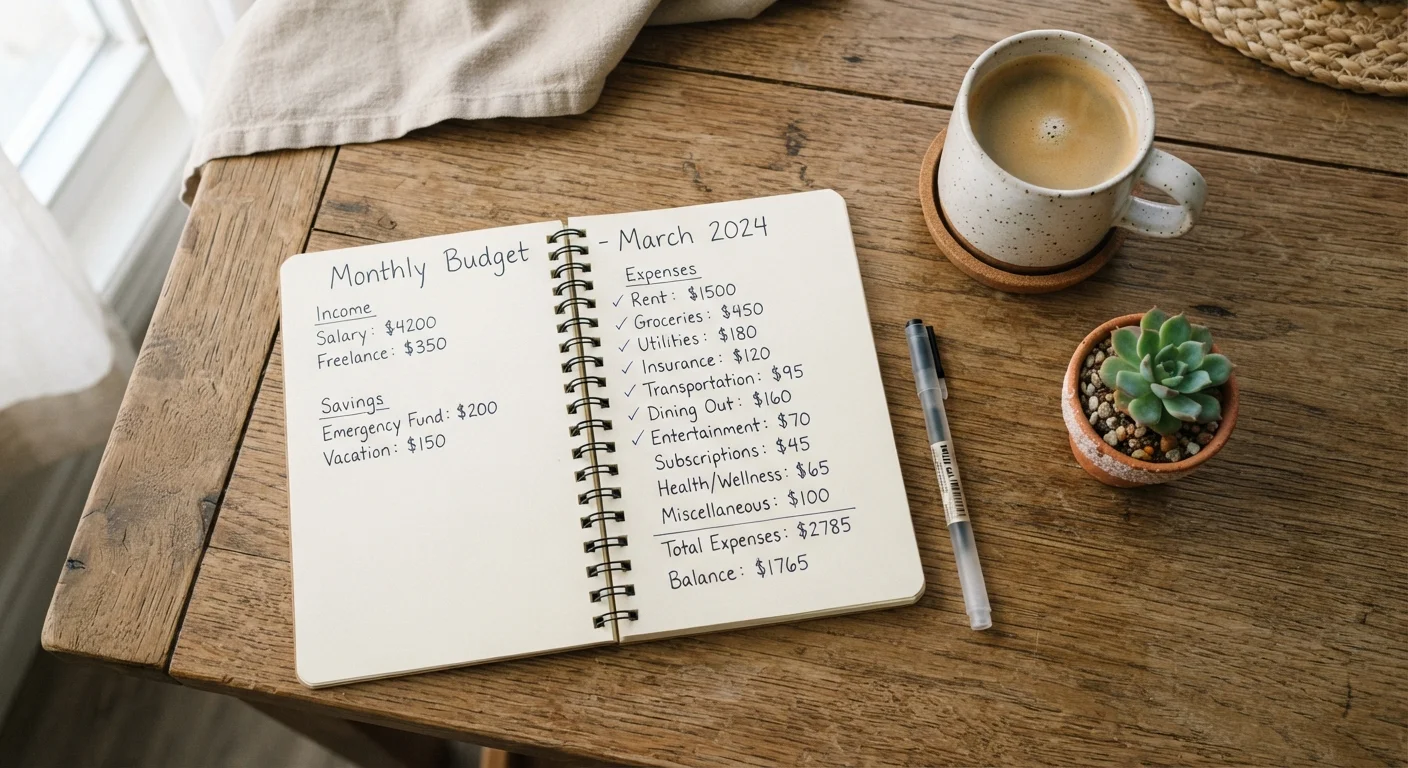
The same principles that make financial habits stick - automating decisions, reducing friction, building in checkpoints - apply directly to exercise. For a parallel perspective on durable habit design, see budgeting habits that hold up over time. The mechanics of consistency transfer across domains.
“We are what we repeatedly do. Excellence, then, is not an act, but a habit.”
— Will Durant, Historian and philosopher, paraphrasing Aristotle in 'The Story of Philosophy' (1926)
Scheduling and Habit Stacking: Making Workouts Automatic
The most effective home exercisers tend to work out at roughly the same time each day, in the same space, triggered by the same cue. This predictability is deliberate. When a behavior becomes automatic, it stops requiring a decision - and decisions are where most workouts die.
Anchor workouts to an existing daily habit using habit stacking.
Motivation is unreliable and tends to fade after the first few weeks. Attaching a new behavior to a well-established one - like morning coffee or a lunch break - means the existing habit acts as an automatic trigger, reducing the decision fatigue that kills follow-through.
Schedule workouts as fixed calendar appointments, not open intentions.
Vague plans like 'I'll exercise sometime today' are easy to defer. Treating a workout like a meeting - with a specific start time and duration - dramatically increases the likelihood it actually happens. Research in behavioral science consistently shows that implementation intentions (when, where, how) are stronger predictors of follow-through than motivation alone.
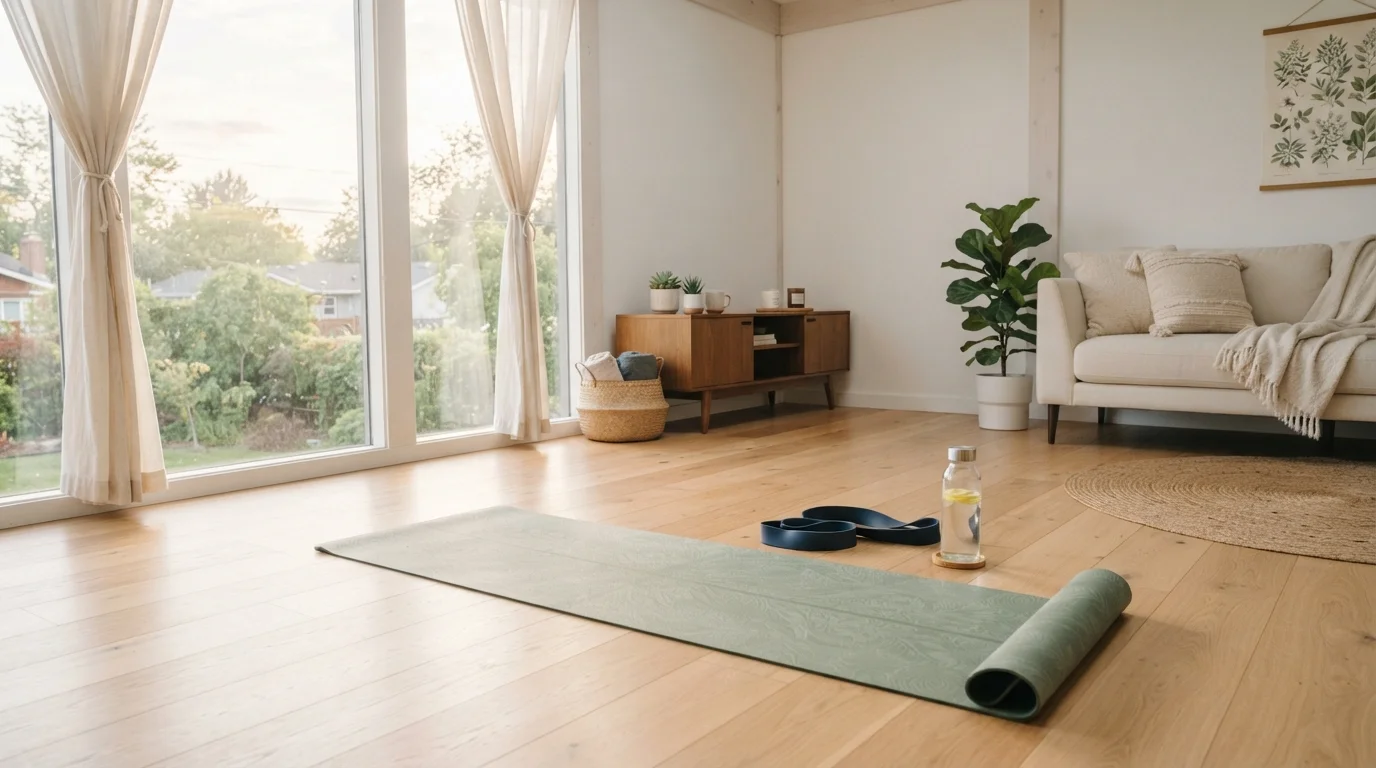
Define a dedicated movement space, however small.
Environmental cues are powerful. A specific physical space - even just a cleared patch of floor - signals your brain that this context means exercise. It also removes the minor but real friction of rearranging furniture each time, which can become an excuse to skip.
Keep a simple workout log to track what you've done.
Logging creates a visible record of effort that builds identity ('I'm someone who works out') and makes it psychologically harder to break a streak. It also helps you spot progress that feels invisible day to day - more reps, shorter rest periods, improved form.
Use a commitment partner or social accountability mechanism.
Telling someone else about your plan - a friend, a family member, or an online group - introduces social stakes that reinforce follow-through. You don't need a gym buddy physically present; a text check-in or a shared log achieves a similar effect.
Plan for missed sessions without treating them as failure.
Perfectionism is one of the most common reasons people quit entirely after a missed day. Research on habit resilience suggests that 'missing once never ruins progress, but missing twice starts a pattern.' A flexible plan that expects occasional skips is far more durable than an all-or-nothing approach.
For a practical framework on what those sessions should actually contain, the weekly home workout framework offers a structured starting point that balances effort, rest, and variety.
Removing Friction and Building Accountability
Friction is the enemy of consistency. Every small obstacle between you and starting - finding your mat, changing clothes, deciding what to do - creates an opportunity to bail. Reducing those obstacles in advance is a form of preparation that pays compound dividends over time.
Short Sessions Count - Don't Wait for a 'Full Hour'
A 15- or 20-minute session done consistently is far more valuable than a 60-minute workout done twice a month. If time is tight, reduce the duration rather than skipping entirely. Movement compounds over weeks and months, not single sessions.
Accountability works the same way. You don't need an expensive personal trainer to create social stakes. A shared workout log with a friend, a check-in text, or even posting a simple streak to a private note app can be enough to make skipping feel like breaking a commitment rather than just a personal lapse.
If you're not sure what to do when you show up, having a plan eliminates that friction point too. The full-body home workout plan gives you a ready-made session structure that needs nothing more than floor space.
Tracking Progress and Staying the Course
Progress in home fitness is often invisible without a record. Strength gains accumulate slowly; cardio endurance builds over weeks. A workout log - even a simple one - surfaces that progress and reinforces your identity as someone who exercises regularly.
43%
People who skip workouts due to lack of motivation
A survey by the American Council on Exercise found motivation to be among the most frequently cited barriers to regular physical activity.
66 days
Average time to form a new habit automatically
A study published in the European Journal of Social Psychology (Lally et al., 2010) found habit formation took 18 to 254 days, with 66 days as the average - much longer than the popular '21-day' myth.
2x
Consistency boost from implementation intentions
Meta-analyses of behavioral research show that forming a specific when-where-how plan roughly doubles follow-through on exercise intentions compared to vague goal-setting.
Plateaus are a normal part of any consistent routine, not a sign that your approach has failed. Understanding why stalls happen and how to adjust is covered in detail in why home workouts stall and what to do about it. As your consistency builds, you can also begin applying progressive overload without weights to keep your sessions challenging without buying equipment.
This Is General Information, Not Medical Advice
The guidance in this article is intended for general educational purposes. It is not a substitute for professional medical or fitness advice. If you have an existing health condition, injury, or are new to exercise, consult a qualified healthcare provider before beginning a new routine.
This article is for general informational and educational purposes only. It does not constitute medical advice. Consult a qualified healthcare professional before starting any new exercise program, particularly if you have an existing health condition or injury.