Why a No-Cost Routine Can Actually Work
Stress management has become a surprisingly expensive industry - apps, supplements, subscription meditation platforms, and wellness retreats all compete for attention. But many of the most well-researched stress-reduction techniques require nothing more than time and intention. Diaphragmatic breathing, mindfulness, physical movement, expressive writing, and consistent sleep hygiene each have substantial bodies of peer-reviewed research behind them, and none carry a price tag.
The key is routine. Single sessions of any stress-relief practice produce modest, short-lived benefits. When those practices are stacked into a predictable daily sequence, the nervous system begins to anticipate and prepare for recovery - which is where lasting change happens. The routine outlined in this guide is designed to fit into a typical workday with minimal disruption, using only tools most households already have.
These Practices Are Not a Substitute for Care
The habits described here are general wellness strategies supported by published research, not medical treatment. If you are experiencing persistent anxiety, depression, or stress that interferes with daily functioning, please consult a qualified mental health professional. See free and low-cost mental health resources for accessible options.
If financial pressure is adding to your stress load, it's worth knowing that building even a small savings buffer can reduce day-to-day anxiety. Our guide to building a savings safety net on a tight budget offers realistic steps for doing that on a stretched income.
What You'll Need and How to Use This Guide
Before starting, gather a few basic items and set realistic expectations.
What you will need
Notebook or loose paper
Used for journaling and thought-record exercises, which research links to improved emotional regulation.
Timer (phone clock works)
Helps you maintain timed breathing intervals and limits sessions so they don't feel open-ended.
Comfortable floor mat or folded blanket
Provides cushioning for seated or lying-down relaxation exercises.
Follow the steps below in sequence for the first two weeks to establish the habit pattern. After that, you can adjust timing and order to suit your schedule. For those interested in going deeper on self-guided cognitive techniques, cognitive behavioral techniques you can practice without a therapist covers evidence-based methods you can layer in over time.
Your Daily Stress-Relief Steps
Anchor your morning with a breathing exercise
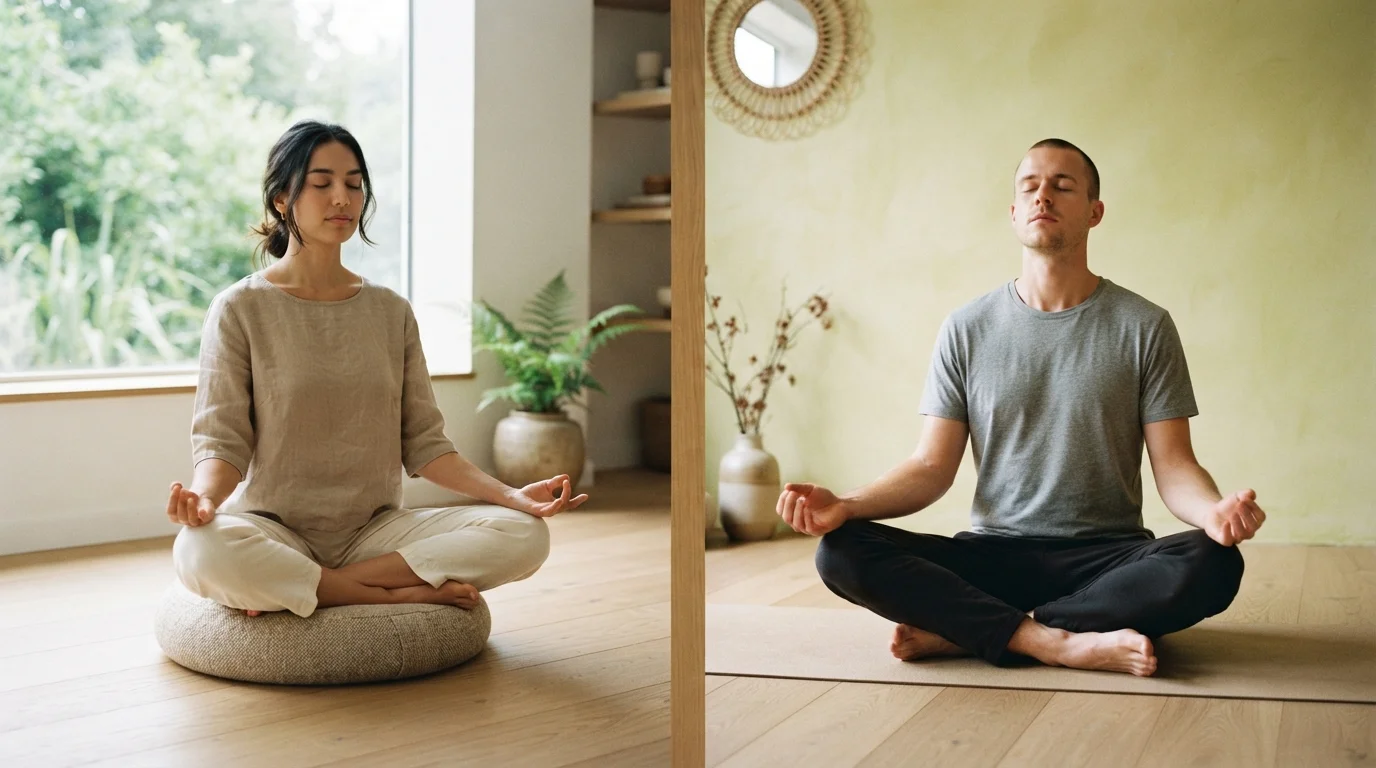
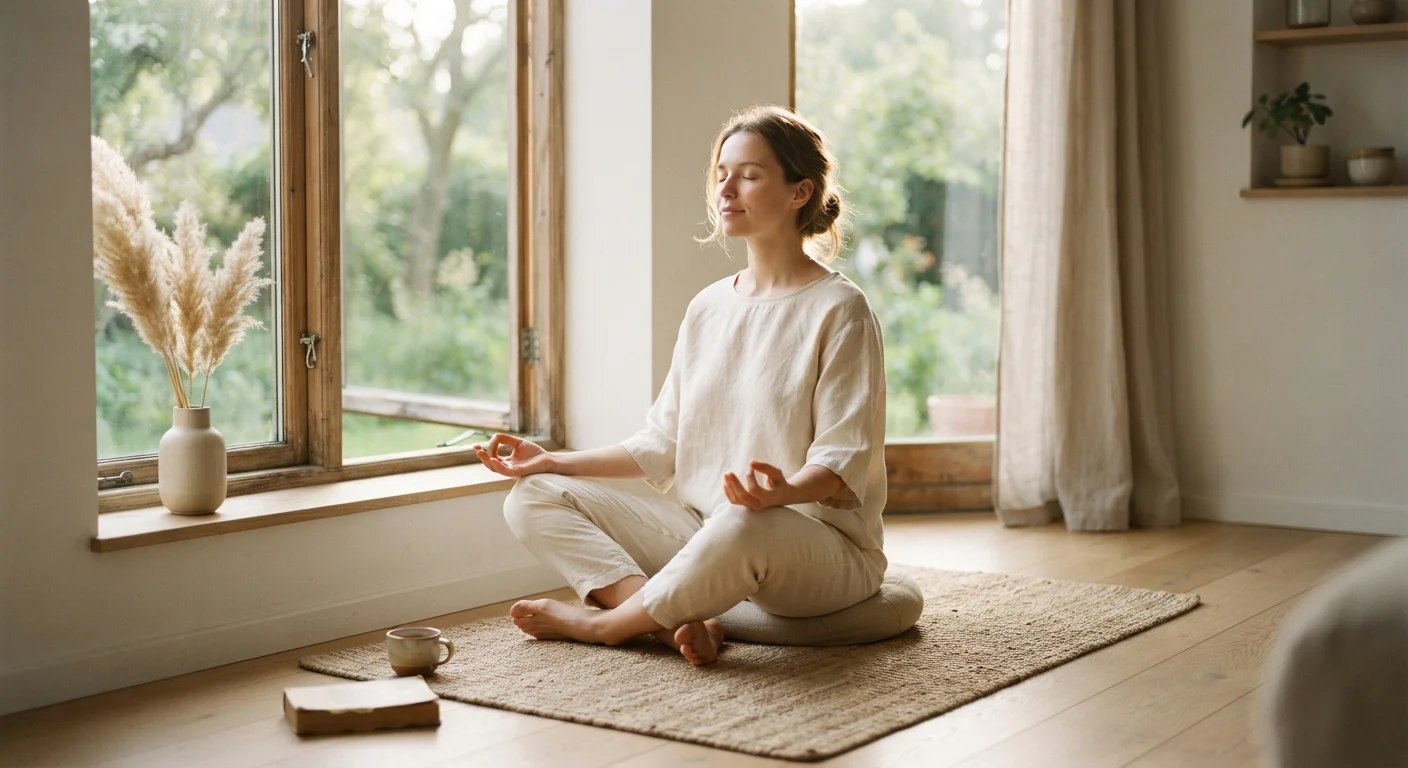
Before reaching for your phone, sit upright and practice diaphragmatic breathing - slow, belly-expanding breaths - for five minutes. A common pattern is inhaling for four counts, holding for four, and exhaling for six. This activates the parasympathetic nervous system, which counteracts the body's stress response. For a deeper comparison of techniques, see meditation vs. deep breathing to find the approach that suits you best.
Add a brief mindfulness check-in
Immediately after your breathing exercise, spend two to three minutes noticing your surroundings without judgment - sounds, light, temperature. This is the core of mindfulness practice: non-reactive awareness. You don't need an app or a guided track. If you're new to the concept, mindfulness on a budget provides a plain-language primer on what the practice actually involves.
Take a 10-minute walk outside at midday
Leave your building or step outside your home for a short walk, ideally somewhere with greenery. Research in environmental psychology consistently associates brief nature exposure with reduced cortisol levels and improved mood. Leave your headphones behind at least a few times a week to allow full sensory engagement with your environment. Even a city sidewalk with trees qualifies.
Practice a brief body scan in the afternoon
Sit or lie down for five minutes and slowly direct your attention from your feet to the top of your head, noticing any areas of tension without trying to fix them. Progressive muscle relaxation - tensing and releasing each muscle group - is a related technique with strong evidence for reducing physical symptoms of stress. Both require nothing but time and a quiet space.
Journal for five minutes in the evening
Use a simple three-prompt format: one thing that went well today, one feeling you noticed, and one thing you want to release before sleep. This kind of structured expressive writing is associated with lower anxiety and better sleep quality in published research. For broader journaling approaches, journaling for emotional health explores gratitude logs, emotion tracking, and more.
Wind down with a screen-free final 20 minutes
Power down screens at least 20 minutes before your intended sleep time. Use this window for light stretching, reading a physical book, or simply sitting quietly. The blue light emitted by screens is well-documented to interfere with melatonin production, and evening scrolling tends to amplify rumination. This single habit, practiced consistently, can meaningfully improve sleep quality - which in turn reduces next-day stress sensitivity.
Consistency Matters More Than Perfection
Missing a day or two won't undo your progress. Research on habit formation suggests that returning to the routine after a lapse - rather than abandoning it - is what produces long-term benefit. Aim for five out of seven days as a realistic target when you're starting out.
This article is for general informational purposes only and does not constitute medical or mental health advice. Always consult a qualified healthcare professional for guidance specific to your circumstances.
Making the Routine Stick Over Time
Habit research consistently shows that attaching a new behavior to an existing one - known as habit stacking - dramatically improves follow-through. Pair your morning breathing with your existing coffee ritual, or your evening journal with your toothbrushing routine. The goal is to reduce the decision-making friction that causes most wellness habits to fade after the first week.
Track your consistency loosely - a simple checkmark on a calendar is enough. After 30 days, most people report that the routine feels automatic rather than effortful. At that point, consider exploring mindfulness practices that require no spending to expand your toolkit without adding cost.
Financial Stress Compounds Emotional Strain
Money pressure and mental wellbeing are tightly interconnected - each can worsen the other. If financial anxiety is a significant driver of your stress, understanding that cycle is a useful starting point. Our article on financial stress and mental health explains how the loop works and which coping strategies have evidence behind them.