How Nonstick Coatings Actually Work - and Why They Fail
Most nonstick pans use a fluoropolymer coating - commonly known by the brand name PTFE - applied in one or more thin layers over an aluminum base. That coating is what makes eggs slide and sauces release cleanly. But it's mechanically and thermally fragile in ways that most product packaging doesn't explain.
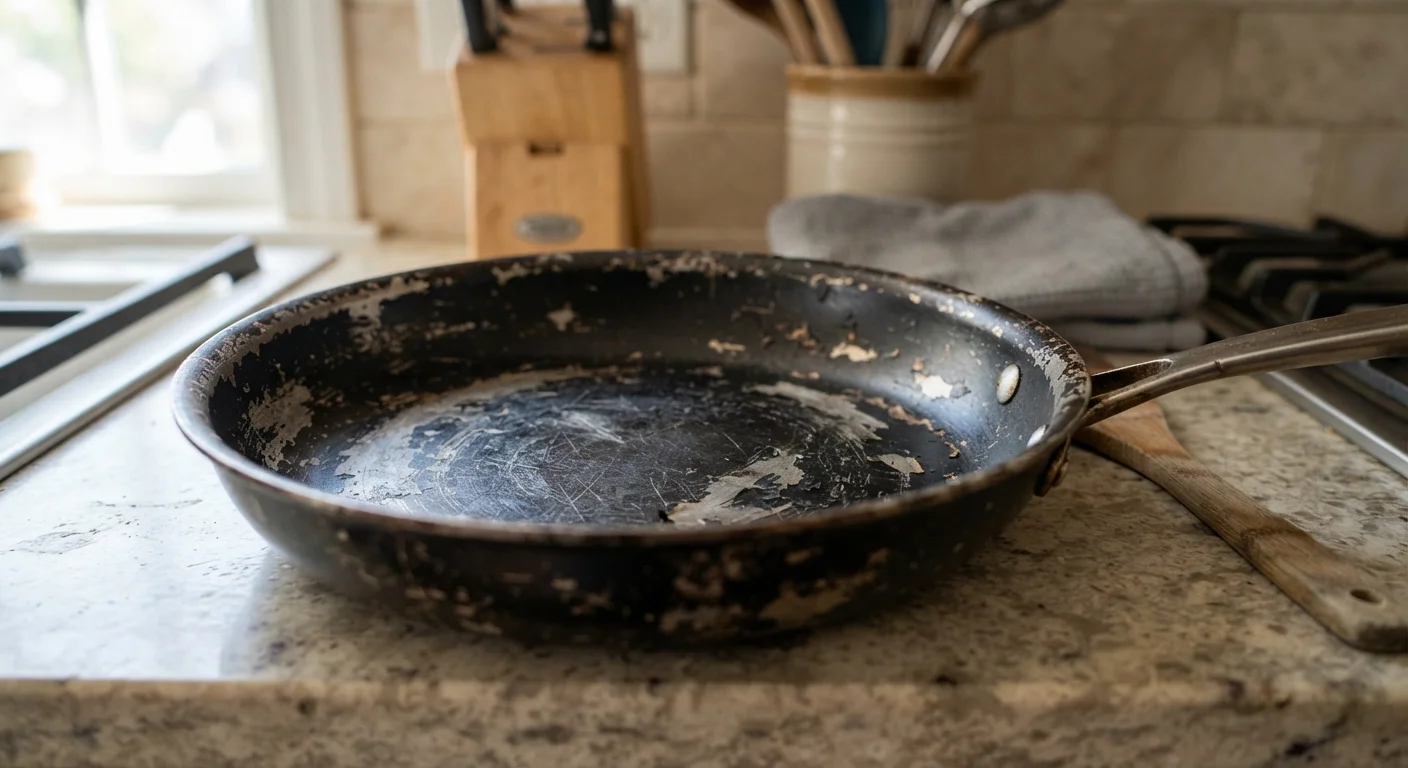
The coating degrades through two primary mechanisms: physical abrasion and heat-induced breakdown. Physical abrasion happens when something harder than the coating contacts the surface - a metal spatula, a rough sponge, or another pan stacked on top. Heat breakdown occurs when the pan exceeds the coating's rated temperature threshold, which for standard PTFE coatings is generally around 500°F (260°C). Above that, the coating begins to chemically degrade and may flake. Neither failure mode is sudden - both accumulate gradually, which is why a pan that seemed fine last month can suddenly look pitted and dull.
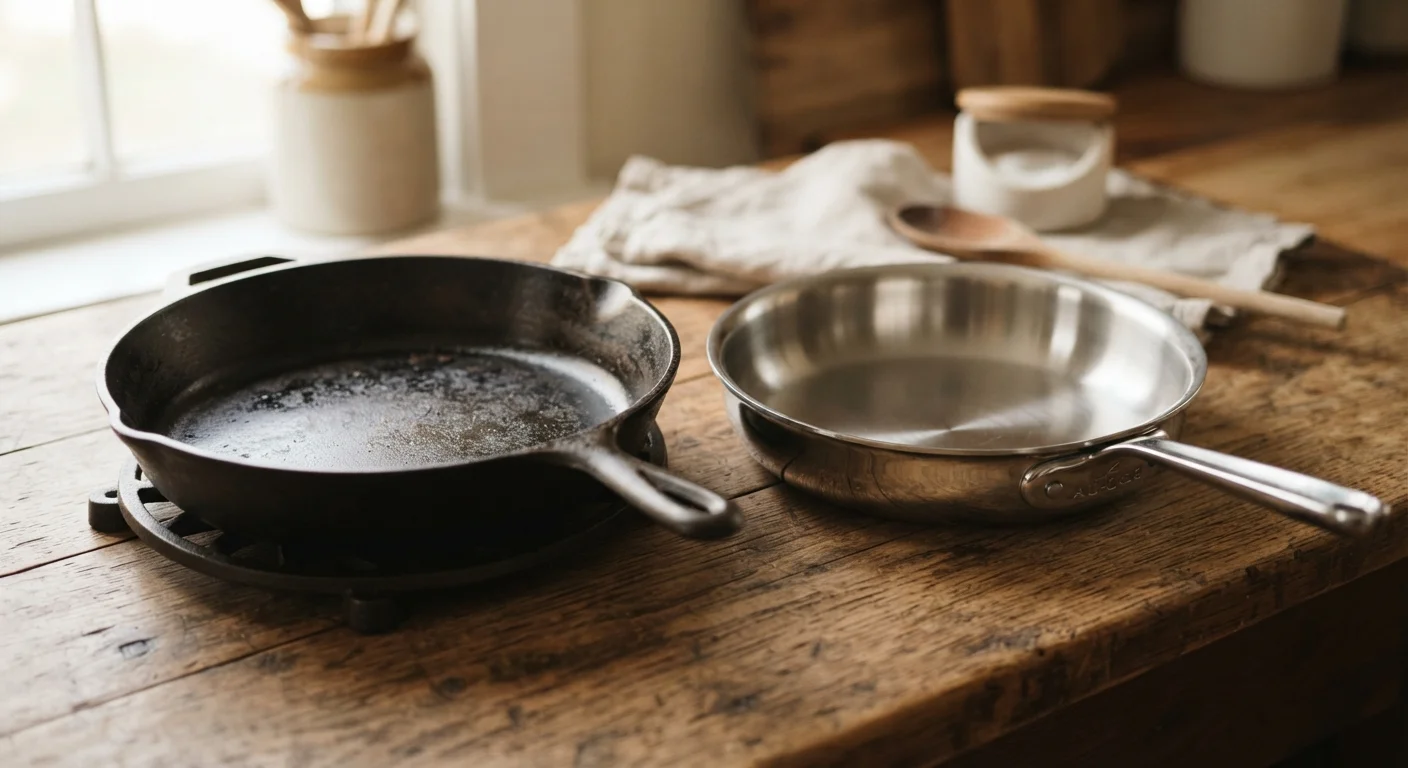
If you're weighing whether nonstick is worth the maintenance trade-off, cast iron vs. stainless steel offers a useful comparison for long-term durability.
Using high heat as the default setting for nonstick pans.
Why it happens: Cooks assume more heat means faster, better results - and habits built around stainless steel or cast iron transfer incorrectly to nonstick.
Using metal spatulas, whisks, or tongs directly on the nonstick surface.
Why it happens: Metal utensils are the default in many kitchens, and the damage from a single slip isn't immediately visible - so the habit continues.
Stacking nonstick pans directly on top of each other during storage.
Why it happens: Cabinet space is limited, and stacking is the most obvious solution - but the uncoated exterior of one pan grinds against the interior of another.
Running a hot nonstick pan under cold water immediately after cooking.
Why it happens: The instinct is to clean up quickly while the pan is still easy to wipe. The rapid temperature change feels harmless but stresses the coating bond.
Using abrasive scrubbers or steel wool to clean stuck-on food.
Why it happens: Stubborn residue prompts the same cleaning response people use on cast iron or stainless - but nonstick surfaces can't withstand that abrasion.
How to Get More Life Out of the Pan You Already Own
Understanding the failure modes points directly to the fixes. Heat control is the highest-leverage change most cooks can make: use medium or medium-low settings for the vast majority of nonstick cooking. These pans heat efficiently and rarely require high heat - if food isn't browning at medium, the issue is usually moisture, not temperature.
2-5 years
Typical nonstick pan lifespan
Consumer cookware guides generally cite two to five years as the realistic range for nonstick pans under regular home use, depending on care habits.
500°F
PTFE coating degradation threshold
Standard PTFE-based nonstick coatings begin to break down chemically above approximately 500°F (260°C), a temperature easily reached on high burner settings.
Utensil choice matters almost as much. Wood, silicone, and nylon tools leave the coating intact. Even a single cut from a metal spatula creates a micro-edge where further peeling accelerates. Storage is often overlooked: nesting pans without protection lets the bottom of one pan abrade the interior of another. Hanging storage or felt pan protectors are simple, low-cost solutions.
Washing technique has a real impact too. Thermal shock - placing a hot pan under cold water - can warp the base and stress the coating bond. Let the pan cool before washing. Dish soap is fine; abrasive scrubbers are not. For more habits that extend cookware and appliance life, see tips for keeping kitchen tools running longer.
Don't Use Nonstick Pans on Broiler or Grill
Broilers and outdoor grills routinely exceed 500°F - well above the safe operating range for most nonstick coatings. Using a nonstick pan in these environments accelerates coating breakdown rapidly and can release degradation byproducts. Reserve nonstick cookware for stovetop and standard oven use below the manufacturer's stated temperature limit.
When a pan shows consistent peeling, deep scratches exposing the base metal, or persistent sticking despite proper care, replacement is the practical choice. Continued use of a heavily damaged nonstick surface raises both performance and safety concerns. For context on how long cookware realistically lasts alongside other kitchen items, the real lifespan of common kitchen appliances is worth a read.