Why Categorizing Expenses Is a Budgeting Skill
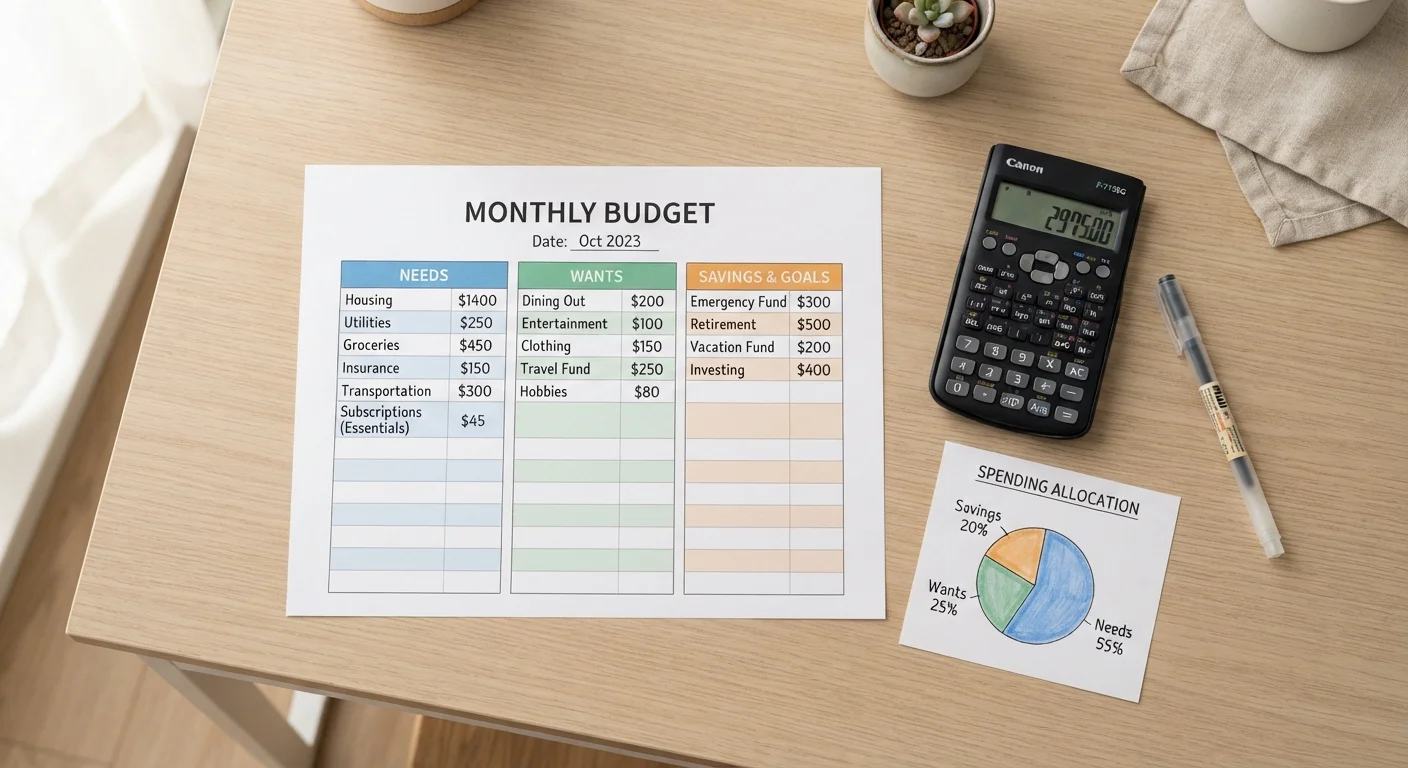
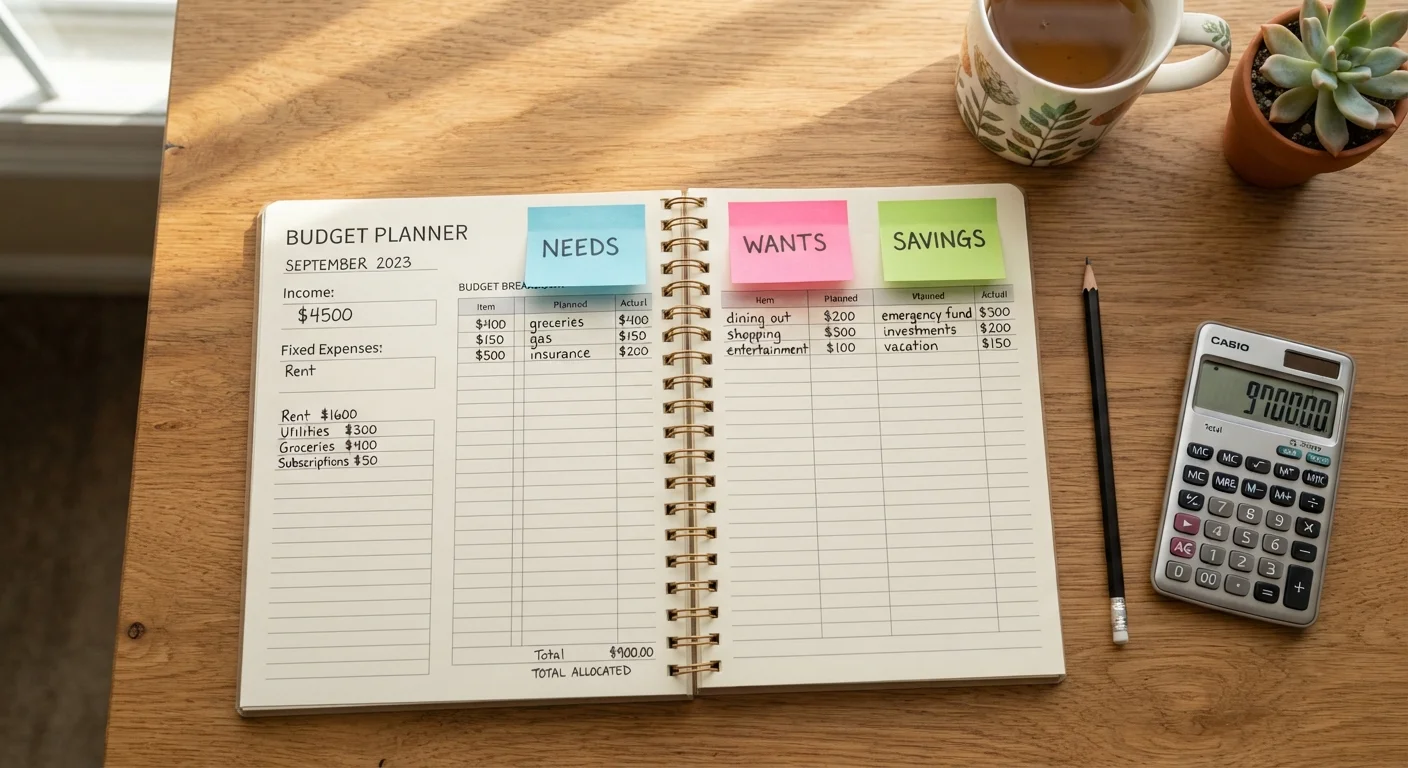
Most budgeting systems fail not because people lack discipline, but because they never establish a clear, consistent logic for sorting expenses. Without categories, a budget is just a list of numbers. The needs-wants-savings framework gives every dollar a label - and that label determines what's negotiable when money gets tight.
This isn't just an organizational exercise. Categorization forces honest thinking about spending habits. It's the step that reveals whether a streaming bundle is a minor convenience or a $60-a-month commitment you'd rather redirect elsewhere. That clarity is where real budgeting decisions get made.
For a deeper look at how this framework maps to specific percentage targets, see the 50/30/20 rule explained.
~40%
Americans with no emergency savings buffer
Federal Reserve surveys have consistently found that a large share of U.S. adults could not cover a $400 unexpected expense from savings alone.
30%
Typical want-spending target in proportional budgets
The widely referenced 50/30/20 guideline allocates roughly 30% of after-tax income to discretionary wants, though actual spending often exceeds this.
Breaking Down the Three Categories
Needs
Needs are expenses you cannot reasonably eliminate without significant harm to your health, safety, or ability to earn income. Common examples include rent or mortgage payments, basic groceries, electricity, water, required medications, and minimum debt payments. Transportation costs count as needs if your job depends on them - though the type of vehicle or commute method may still involve want-level choices.
Wants
Wants are spending choices that make life more comfortable, enjoyable, or convenient - but could be cut back without putting your basic stability at risk. Restaurant meals, subscription services, gym memberships, clothing beyond basics, and entertainment all fall here. These aren't frivolous by definition; they matter to quality of life. But they're where budget flexibility usually lives.
Savings
Savings includes money set aside for emergency funds, retirement contributions, specific financial goals (like a down payment), and debt payoff above the minimum. The most important shift this framework asks you to make: treat savings as a category with the same standing as rent, not as a bonus if spending leaves something over.
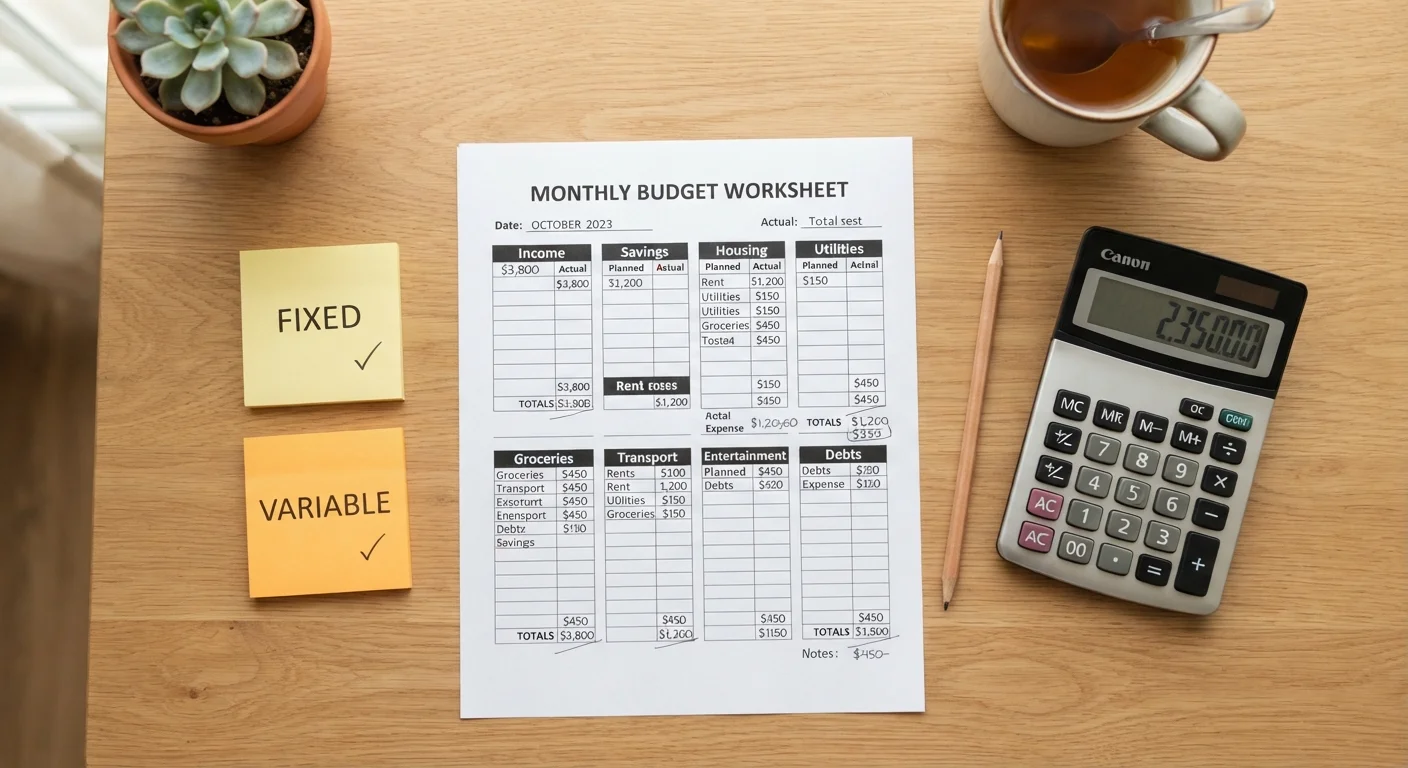
Understanding how your expenses behave - whether they're fixed or variable - adds another useful layer to this picture. See fixed vs. variable expenses explained for more context.
Automate Savings Before You Spend
Set up an automatic transfer to a savings account on the same day your paycheck clears. Even a small fixed amount - $25 or $50 - moved before you see it in your checking balance shifts savings from an afterthought into a commitment. This single habit closes the gap for most people who say they "don't have anything left to save."
The Gray Zone: Expenses That Defy Easy Labels
The most common frustration with this framework is the middle ground - expenses that feel like needs but behave like wants. A cell phone plan is a practical necessity for most people; a premium unlimited data tier with the latest handset upgrade is a want layered onto a need. Cable television was once considered essential; for many households it's now clearly optional.
The honest test: Would eliminating this expense create a genuine hardship, or mainly an inconvenience? Hardship points to a need. Inconvenience points to a want.
The goal isn't rigid purity - it's useful categorization. Even approximate sorting reveals patterns that a raw list of expenses never would.
Categories Can Shift With Life Changes
What qualifies as a need isn't permanent. A car was once a want for someone living near public transit; it may become a need after a job change or move to a suburban area. Revisit your category assignments at least once a year or whenever a major life change occurs - relocation, new job, growing family - to make sure your budget still reflects current reality.
Putting the Framework Into Practice
Start by listing every expense from your last two months of bank and credit card statements. Label each one N (need), W (want), or S (savings). Total each category, then divide by your monthly take-home income to get percentages. This snapshot tells you where you actually stand, not where you think you are.
From there, compare your real splits against whatever target makes sense for your situation. If savings is consistently near zero, that's the signal to look at the want column for room to reallocate - not to add income pressure alone. If needs consume more than two-thirds of income, that's a structural constraint that budgeting apps won't fix on their own.
For practical next steps on building up the savings category specifically, building a savings safety net on a tight budget offers realistic guidance for constrained incomes. And once you're comfortable with categories, comparing budgeting methods can help you decide which system to build around them.
This article is for general informational and educational purposes only and does not constitute personalized financial advice. Consult a qualified financial professional for guidance specific to your circumstances.