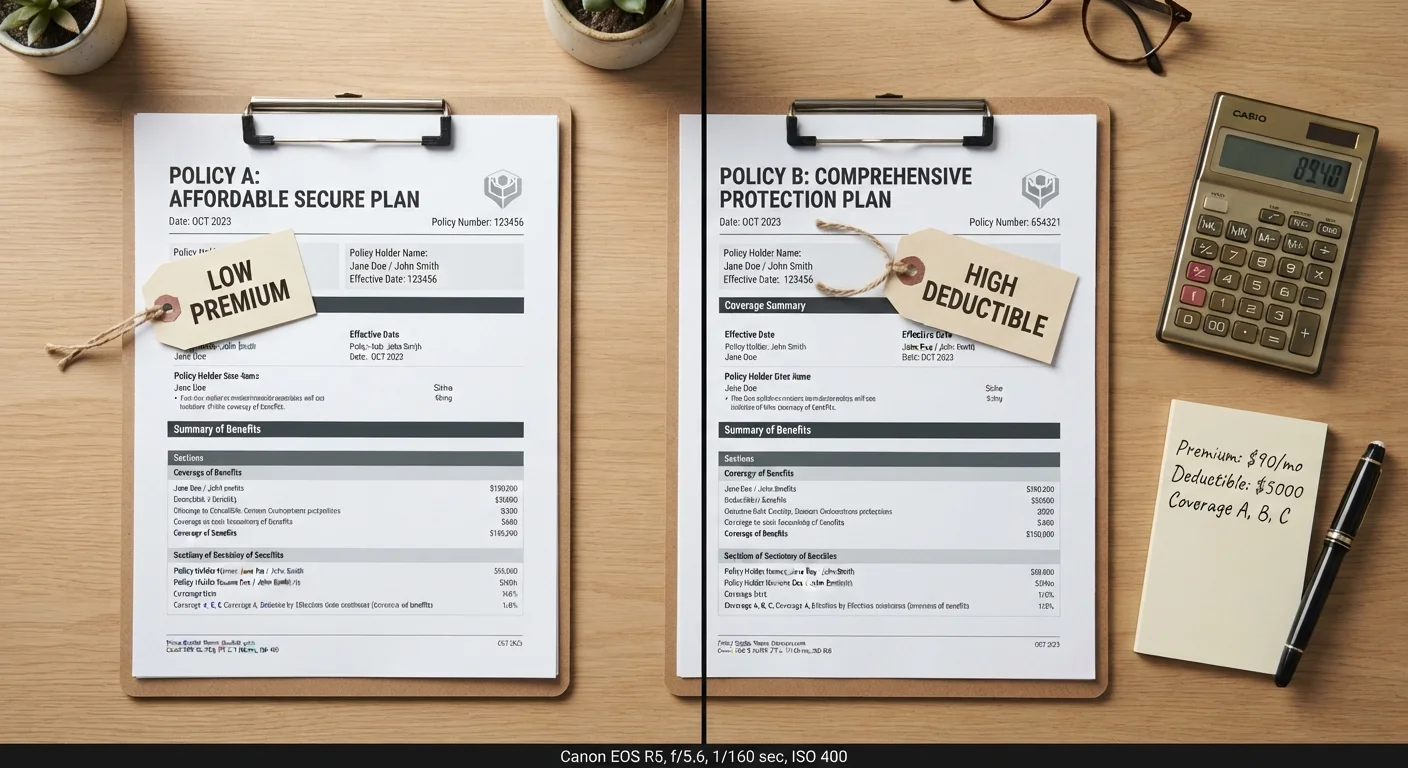

How the HDHP and HSA Combination Works
The HDHP-plus-HSA pairing is built around a trade-off: you accept a higher deductible in exchange for a lower monthly premium. The money saved on premiums can then be directed into an HSA, which you own and control. Contributions to an HSA reduce your taxable income, the funds grow tax-free if invested, and qualified withdrawals for medical expenses are also tax-free. That's three separate tax advantages in a single account.
Understanding your deductible is essential before choosing any plan. See what deductibles actually mean for your coverage for a plain-language breakdown of how they affect the real cost of your insurance.
What Counts as a Qualified Medical Expense?
Qualified medical expenses generally include doctor visits, prescriptions, dental, and vision costs-but not all health-related spending qualifies. The IRS publishes a full list in Publication 502, which is worth reviewing before making HSA withdrawals. Spending on non-qualified items triggers taxes and, if you're under 65, a penalty.
Qualified medical expenses generally include doctor visits, prescriptions, dental, and vision costs-but not all health-related spending qualifies. The IRS publishes a full list in Publication 502, which is worth reviewing before making HSA withdrawals.
The Savings Case: When This Strategy Can Work
For relatively healthy individuals who don't anticipate heavy medical use, an HDHP can mean meaningfully lower premiums. Channeling those premium savings into an HSA builds a tax-advantaged reserve that covers future medical bills-or even retirement healthcare costs.
3x
Tax advantages in one HSA account
HSAs offer pre-tax contributions, tax-free growth, and tax-free withdrawals for qualified medical expenses-a combination not found in most savings vehicles.
$0
HSA funds lost at year-end
Unlike Flexible Spending Accounts, HSA balances roll over indefinitely with no annual forfeiture, allowing long-term accumulation.
HSA funds that aren't spent can be invested in stocks, bonds, or mutual funds, depending on the account provider. Over years of contributions and compounding growth, an HSA can become a significant financial asset. This makes it relevant not just as a healthcare tool but as part of a broader savings strategy-comparable, in some ways, to how you might think about different types of savings accounts and their long-term roles.
Real Risks and Limitations to Consider
The HDHP-HSA model isn't a universal win. If you or a family member has ongoing medical needs, the higher deductible can quickly erode the premium savings-and then some. You'd need to be able to cover the full deductible out of pocket if a medical event occurs before your HSA balance builds up. That financial gap is a real risk for many households.
Calculate Total Cost, Not Just the Premium
A low premium doesn't automatically mean a low-cost plan. Always estimate your realistic annual spending-premiums plus likely out-of-pocket costs-before enrolling in any plan. For many people, running the numbers side by side reveals that a slightly higher premium plan is actually more cost-effective given their usage patterns.
A low premium doesn't automatically mean a low-cost plan. Lower premiums can mask expensive coverage gaps, so always calculate the realistic total cost-premiums plus expected out-of-pocket spending-before enrolling.
For budget-conscious households, the ability to fund an HSA consistently is key. If cash flow is tight, maintaining an emergency fund alongside an HSA is worth prioritizing. The guide on building a savings safety net on a tight budget offers practical steps for doing both on a limited income.
This article is for general informational and educational purposes only and does not constitute personalized financial, tax, insurance, or medical advice. Coverage terms, HSA eligibility rules, and contribution limits vary and change over time. Consult a licensed insurance agent, qualified financial adviser, or tax professional for guidance specific to your circumstances.