
The Allure of the Low Premium
When money is tight, a cheaper insurance premium looks like a straightforward win. You pay less each month, and if nothing goes wrong, you come out ahead. That logic isn't entirely wrong - but it ignores what insurance is actually for: protecting you financially when something does go wrong.
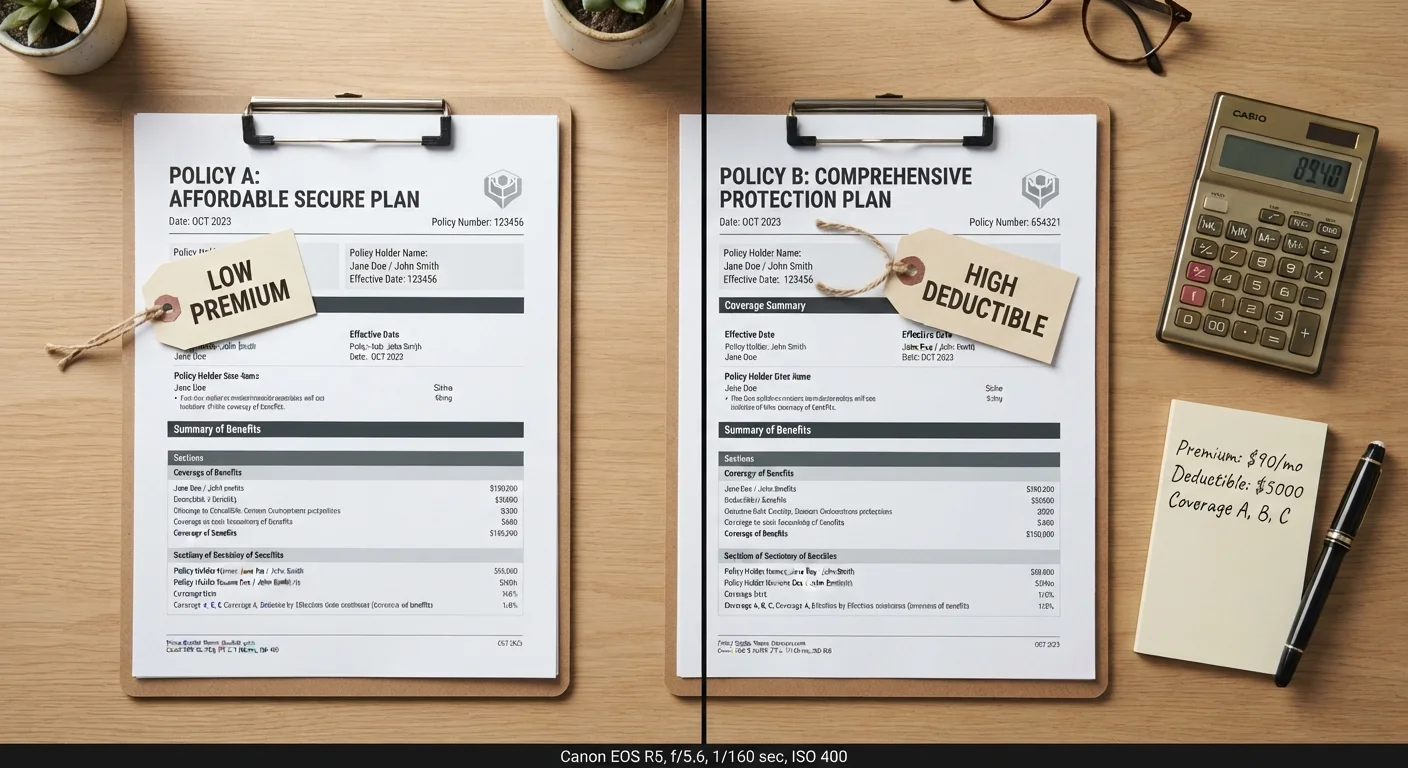
The problem is that a low premium is usually low for a reason. Insurers price policies based on the risk they're taking on. When they charge less, they almost always offset that risk somewhere else - through higher deductibles, lower coverage limits, broader exclusions, or weaker claims support. Budget-conscious shoppers who focus only on the monthly cost can find themselves absorbing the very losses they thought they were covered against.
This isn't a reason to overpay for coverage you don't need - overpaying is a real and common problem too. The goal is to understand what you're actually buying before you commit. The mistakes below show where cheap insurance most often fails people.
Choosing the lowest deductible-premium combination without checking coverage limits.
Why it happens: Shoppers often compare two numbers - premium and deductible - without reading what the policy actually pays out at claim time. Low limits can mean the insurer pays a fraction of a real loss.
Assuming 'minimum required' coverage is sufficient for your financial situation.
Why it happens: State-mandated minimums for auto insurance, for example, exist to protect other parties - not necessarily you. Many drivers carry only the legal minimum and believe they're adequately protected.
Ignoring exclusions until a claim is denied.
Why it happens: Policy exclusions are buried in dense legal language that most people skip. The summary page feels sufficient, but exclusions define the real boundaries of what's covered.
Selecting a high deductible to reduce premiums without having savings to cover it.
Why it happens: A higher deductible is one of the most effective ways to lower a monthly premium, so it's a natural place to cut. But it shifts financial risk directly to you at claim time.
Skipping renters or supplemental coverage because it seems unnecessary.
Why it happens: Many renters assume their landlord's policy covers their belongings, or that the cost of renters insurance outweighs the benefit. Neither assumption is generally true.
How to Evaluate a Policy Beyond the Price
Once you understand the common traps, a more disciplined evaluation process makes it easier to compare policies on substance rather than sticker price.
1 in 8
Drivers on US roads are uninsured
According to the Insurance Research Council, approximately one in eight drivers in the United States carries no auto insurance, increasing financial risk for everyone on the road.
~40%
Renters who carry renters insurance
Industry survey data consistently shows that fewer than half of US renters carry renters insurance, leaving the majority without protection for personal property losses.
Check the Deductible Against Your Savings
Your deductible is the amount you pay before insurance kicks in. Deductibles can make or break your real-world coverage value. If a policy has a $2,500 deductible and you only have $800 in savings, you're functionally underinsured for any claim under $2,500 - and on the hook for the first $2,500 of anything larger.
Read the Exclusions, Not Just the Highlights
Every policy has an exclusions section. This is where insurers define what they won't cover, and it's the most important part of the document for evaluating real-world value. Common exclusions in lower-cost plans include flood damage, certain liability scenarios, and specific personal property categories.
Consider Bundling as a Cost-Reduction Strategy
Consolidating multiple policies with one insurer - such as auto and renters - can reduce premiums without stripping coverage. Bundling doesn't always save money, but when it does, the math is worth understanding.
State Minimums Don't Equal Adequate Coverage
Meeting a state's legal minimum insurance requirement only means you're compliant with the law - it doesn't mean you're financially protected. Minimum liability limits for auto insurance, for example, can be exhausted quickly in a serious accident involving medical bills or property damage. If a claim exceeds your limits, the difference may come out of your own pocket. Always evaluate whether your limits reflect your actual exposure, not just the legal threshold.
For a broader look at how upfront savings can mask long-term costs, see why a lower price tag doesn't always mean a better deal. The same principle applies across insurance, vehicles, and car ownership costs more broadly.
This article is for general informational and educational purposes only and does not constitute personalized insurance, financial, or legal advice. Coverage terms, exclusions, and eligibility vary by provider and state. Consult a licensed insurance professional before making decisions about your own coverage.