
The Hidden Cost of Set-It-and-Forget-It Insurance
Most people shop for insurance once, set up autopay, and move on. That convenience has a price. Insurance premiums are not static - they're shaped by dozens of personal and market factors that shift over time. When your policy doesn't keep pace with your actual life, you often end up paying for coverage that no longer reflects your needs or your risk profile.
This is general financial information, not personalized insurance advice. For guidance specific to your situation, consult a licensed insurance agent or adviser. That said, understanding the most common overpayment traps is a practical first step toward smarter coverage decisions - and toward protecting your overall financial picture. For broader context on how apparent savings can hide real costs, see why cheap insurance can end up being the most expensive choice.
Insuring a car for more than it's worth
Comprehensive and collision coverage make sense when a vehicle has significant market value. But as a car ages, its actual cash value drops - and so should the logic behind paying for full coverage. If your annual premium for those coverages approaches or exceeds what the insurer would actually pay in a total-loss claim, you may be spending more than the protection is worth.
Check your vehicle's current market value periodically and weigh it against what you're paying. This doesn't mean dropping coverage carelessly, but it does mean the math deserves a second look every few years.
When annual premiums approach what an insurer would pay out, full coverage stops making financial sense.
Missing discounts you already qualify for
Insurers offer a wide range of discounts - for safe driving records, home security systems, completing a defensive driving course, paying annually instead of monthly, or going paperless. Many of these discounts are not applied automatically. Policyholders who never ask, or who forget to report qualifying changes, simply don't receive them.
It's worth calling your insurer or reviewing your account annually to confirm which discounts are applied and which you may now qualify for. A single unreported home alarm system, for example, can represent meaningful annual savings on a homeowner's policy.
Many valid discounts are never applied simply because policyholders don't ask or forget to report changes.
Carrying a deductible that doesn't match your finances
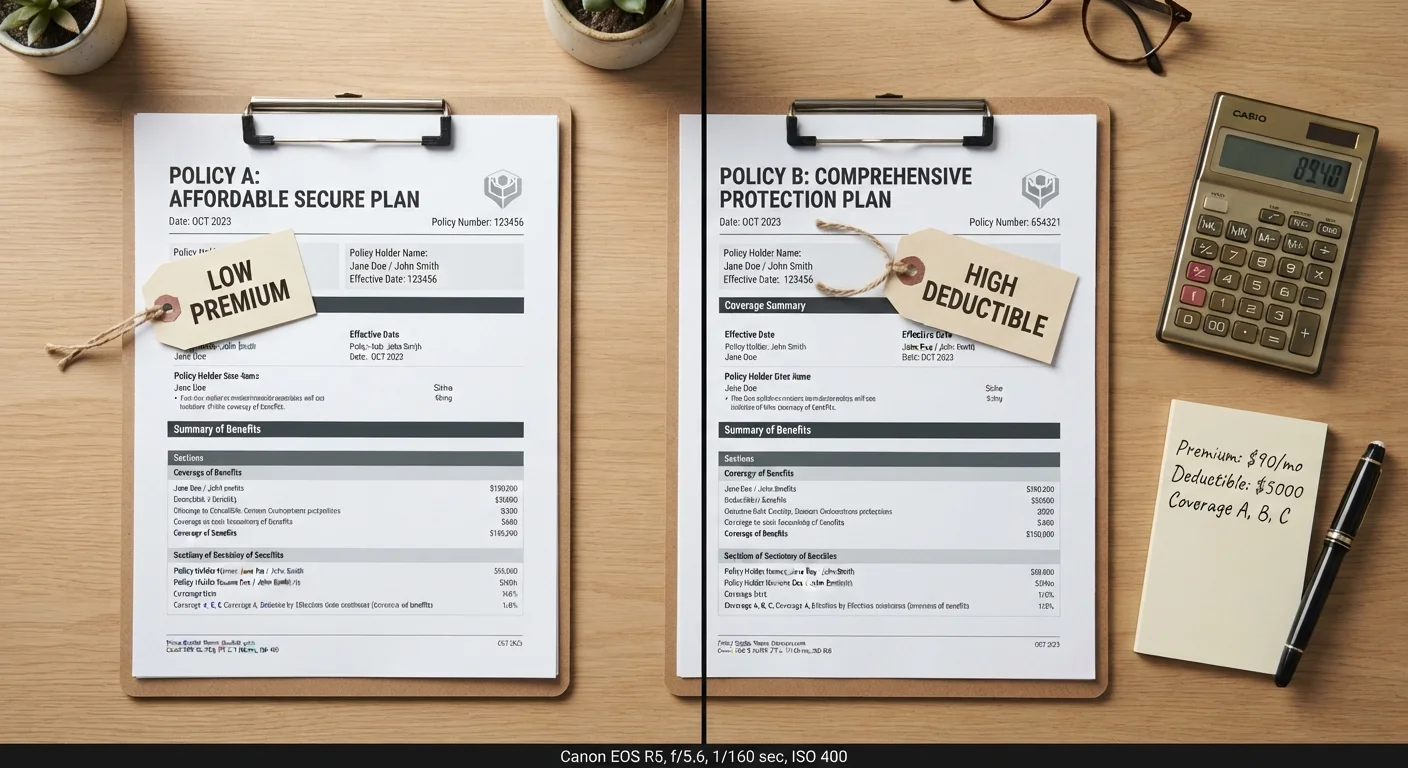
A low deductible means higher monthly premiums. A high deductible means lower premiums but more out-of-pocket cost when a claim occurs. Neither is universally right. The problem arises when there's a mismatch - for example, paying for a low deductible when you have savings that could comfortably cover a higher one, effectively overpaying each month for a buffer you don't need.
Conversely, choosing a deductible so high you couldn't realistically cover it creates its own risk. Finding the right balance requires honest assessment of your emergency savings and how frequently you're likely to file a claim. Understanding exactly how deductibles work is essential before adjusting this figure.
Paying for a low deductible when your savings could cover a higher one is a common, quiet overpayment.
Auto-renewing without comparing alternatives
Loyalty to an insurer rarely pays off financially. Many insurers quietly increase premiums at renewal - a practice sometimes called "price optimization" - betting that most customers won't notice or won't bother switching. Studies and consumer advocates have consistently noted that long-term customers often pay more than new customers for equivalent coverage.
Comparing quotes from multiple insurers at each renewal cycle is one of the most straightforward ways to pressure-check whether you're still getting competitive value. This doesn't guarantee switching is always right - but it gives you the information to make that call. Bundling policies is one option worth evaluating as part of that comparison.
Long-term customers often pay more than new customers for identical coverage - loyalty rarely earns a discount.
Paying for duplicate coverage
Roadside assistance through your auto insurer. Roadside assistance through your car manufacturer's warranty. Roadside assistance through a credit card benefit. Travel insurance from a card perk and a standalone travel policy purchased separately. Duplicate coverage is surprisingly common, and it means paying for protection you can only use once.
Before adding any new coverage, check what you already have through existing policies, credit card benefits, employer plans, or membership programs. Eliminating genuine overlap can trim your annual spending without reducing your actual protection. This type of review also pairs well with a broader look at your full budget - the budgeting basics hub can help you build that habit systematically.
Paying for roadside assistance three times over doesn't triple your protection - it just triples your cost.
Not updating coverage after major life changes
Moving to a lower-crime zip code, paying off a mortgage, getting married, retiring and driving significantly less - all of these changes can affect what you should be paying for insurance. Yet many people never notify their insurer or reassess their coverage when life shifts.
Some changes may increase what you owe (adding a teenage driver, for example), but many create legitimate opportunities to reduce premiums or adjust limits. Treating your insurance review as a routine life-admin task - similar to updating your beneficiaries or checking your credit report - is a practical way to avoid paying for a snapshot of your life that no longer exists.
Your insurance should reflect your life today - not the circumstances you had when you first signed up.
Take a Closer Look Before Your Next Renewal
The single most impactful habit you can build around insurance is deliberate annual review. Before automatically renewing any policy, pull out the declarations page and ask whether your coverage limits, deductibles, and listed discounts still make sense. Life changes - a paid-off car, a new security system, a change in your commute - can all move the needle on what you owe.
Make Annual Policy Review a Calendar Event
Set a recurring reminder 30 days before each policy renewal date. Use that window to review your coverage limits, confirm active discounts, check for life changes that affect your risk profile, and pull at least one comparison quote. This simple habit costs nothing and consistently helps identify gaps or overpayments before they roll over for another year.
If you haven't compared your current premiums against alternatives in more than two years, that alone is worth your attention. Understanding how your deductible affects your true cost of coverage is equally important - learn what your deductible actually means before assuming your current setup is optimal. For help fitting insurance costs into your broader spending plan, the budgeting basics hub offers practical frameworks to get started.
This article is for general informational and educational purposes only and does not constitute personalized insurance, financial, or legal advice. Coverage terms, eligibility, and pricing vary by provider, policy, and state. Always read your policy documents carefully and consult a licensed insurance professional before making coverage decisions.