Why Moisture Content Changes Everything
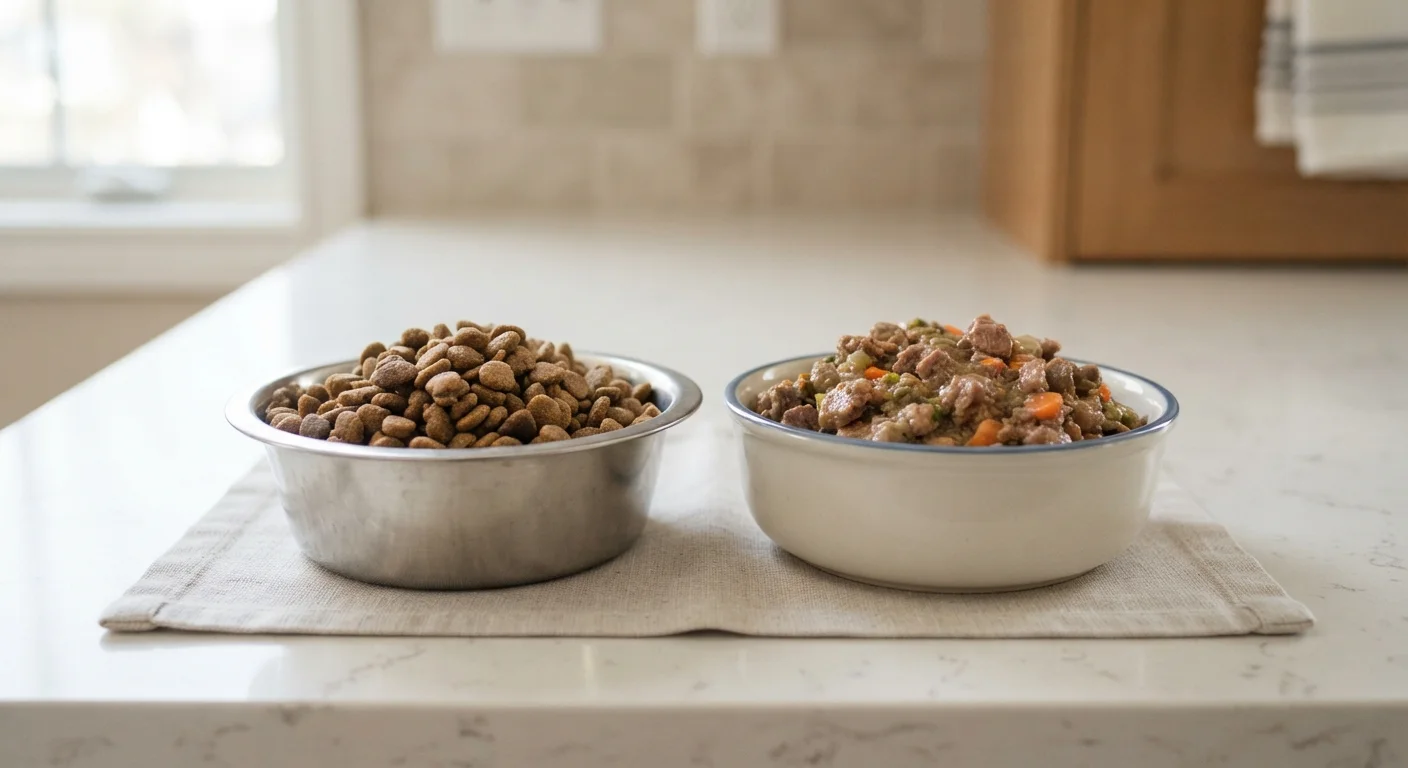
The single biggest difference between kibble and wet food is water. Dry kibble typically contains between 6% and 10% moisture, while canned wet food ranges from 70% to 82%. That gap has direct consequences for how you interpret a nutrition label - and how your pet actually uses the food.
Because wet food is largely water, the protein percentage listed on the label looks lower than kibble's. A wet food showing 9% crude protein and a kibble showing 28% crude protein may actually deliver similar protein levels once you strip out the moisture - a calculation called the dry-matter basis. To compare fairly, divide the nutrient percentage by the dry-matter percentage (100 minus moisture). This is explained in more detail in our guide to reading pet food labels.
For cats especially, the added moisture in wet food matters beyond nutrition. Cats evolved as desert animals with a naturally low thirst drive, so they often don't drink enough water when fed exclusively dry food. Many veterinary nutritionists note this as a reason to consider wet food - or at least mixed feeding - for feline patients prone to urinary or kidney issues. Consult your veterinarian if your pet has any existing health conditions before changing diet formats.
| Criterion | Dry Kibble | Wet / Canned Food |
|---|---|---|
| Moisture content | 6-10% | 70-82% |
| Calories per cup | 300-400 kcal | 80-150 kcal |
| As-fed protein % | Typically 24-32% | Typically 7-12% |
| Dry-matter protein | Often similar to wet | Often similar to dry |
| Typical daily cost (medium dog) | $0.50-$1.50 | $2.00-$5.00+ |
| Shelf life after opening | Weeks in sealed container | 2-3 days refrigerated |
| Dental abrasion benefit | Moderate (some products) | Minimal |
| Palatability for picky eaters | Moderate | High |
| Hydration contribution | Low | High |
Calories, Protein, and Cost Per Serving
Caloric density is where kibble has a clear practical advantage. A cup of dry kibble typically contains 300-400 calories, while the same volume of wet food may deliver only 80-150 calories - because most of its weight is water. This means you need to feed significantly more wet food by volume (and cost) to match the same energy intake.
70-82%
Moisture content in wet / canned food
Compared to just 6-10% in dry kibble, this difference significantly affects caloric density and daily feeding amounts.
2-4×
Higher daily cost of wet vs. dry food
General estimates based on mid-range formulas; actual cost varies by brand, region, and pet size.
~60%
Of U.S. cat owners report feeding dry food as primary diet
According to the American Pet Products Association's periodic national pet owner surveys, dry food remains the dominant format in U.S. households.
On protein quality, both formats can be nutritionally complete if they carry an AAFCO (Association of American Feed Control Officials) nutritional adequacy statement. AAFCO is the body that sets pet food nutrient standards in the U.S. The format alone does not determine protein quality - the ingredient source and processing do. For a deeper look at how ingredients are ranked and what terms like "by-product" or "meal" actually mean, see our overview of pet food nutrition from label to daily routine.
Cost per day matters for most households. Nationally, a mid-range dry kibble typically runs $0.50-$1.50 per day for an average-sized dog, while equivalent wet food can cost $2.00-$5.00 or more. For budget-conscious owners with healthy pets, this difference is meaningful over months and years.
How to Compare Labels Fairly
Never compare the as-fed protein or fat percentages of dry and wet food directly - the moisture difference makes them look incomparable. Use the dry-matter basis instead: divide each nutrient percentage by (100 minus the moisture percentage). For example, a wet food with 10% protein and 78% moisture has a dry-matter protein of about 45% - higher than it appears. This calculation gives you a true apples-to-apples comparison across formats.
Dental Health, Palatability, and Practical Trade-Offs
Kibble is often cited for dental benefits. The mechanical abrasion of chewing dry pieces can reduce plaque accumulation compared to soft food, though the effect is modest and not a substitute for regular tooth brushing or veterinary dental cleanings. Some kibbles carry a Veterinary Oral Health Council (VOHC) seal, indicating controlled studies support their dental claims - a more meaningful signal than general "dental formula" marketing language.
Wet food wins on palatability. Its stronger aroma and softer texture appeal to picky eaters, older pets with dental pain or reduced smell, and animals recovering from illness. If a pet won't eat enough to maintain healthy weight on kibble alone, the additional cost of wet food may be worth it medically and practically.
Storage is another real consideration. Dry kibble keeps for weeks in a sealed container at room temperature. Opened canned food must be refrigerated and used within two to three days. For multi-pet households or anyone buying in bulk, kibble's shelf life simplifies feeding logistics considerably. If you're interested in how diet format choices compare for cats specifically, our cat-specific diet format guide covers feline considerations in more depth.
This article provides general nutritional information for educational purposes only and is not a substitute for veterinary advice. Always consult a licensed veterinarian before making significant changes to your pet's diet, especially if your pet has existing health conditions.