The AAFCO Statement: Start Here, Not at the Ingredients
Most pet owners scan the ingredient list first. In practice, the single most important piece of text on any pet food label is the AAFCO nutritional adequacy statement. It appears in small print - often near the feeding guidelines - and it tells you whether the food is formulated to be complete and balanced for a specific life stage.
A valid statement reads something like: " is formulated to meet the nutritional levels established by the AAFCO Food Nutrient Profiles for ." Alternatively, it may state that the food has passed AAFCO feeding trials. Both are acceptable; the feeding trial version involves live animal testing, while the nutrient profile version is based on calculated nutrient content.
If a label says only "for supplemental or intermittent feeding," the food is not designed to be a sole diet. Feeding it exclusively can create nutritional gaps over time. For a deeper look at how this statement works, see what AAFCO actually means on a pet food bag.
Feeding Trials vs. Nutrient Profiles
Both types of AAFCO adequacy statements are considered valid. Feeding trial statements mean the food was tested on live animals for a defined period. Nutrient profile statements mean the formula was calculated to meet AAFCO's established nutrient minimums and maximums. Neither automatically indicates a superior food - both confirm basic nutritional adequacy for the stated life stage.
Decoding the Ingredient List
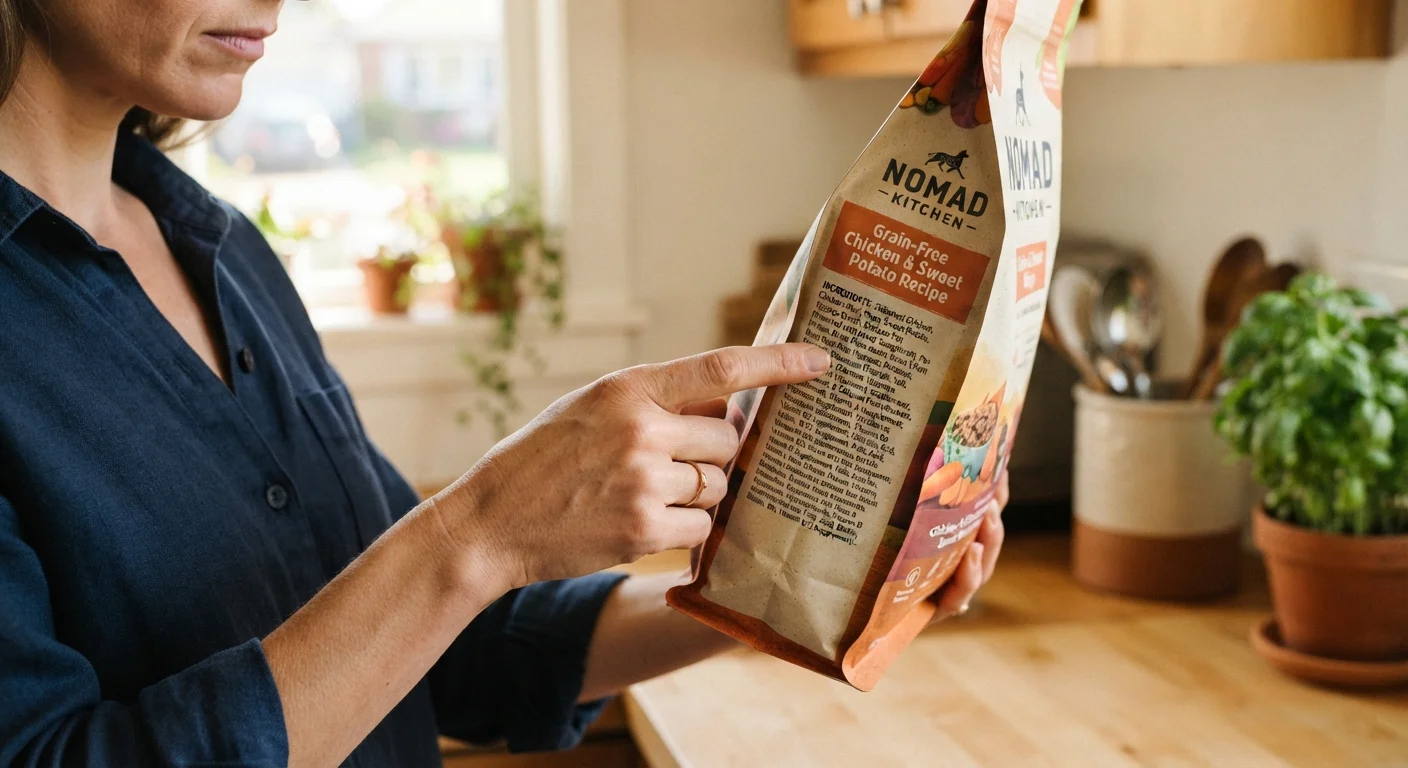
Ingredients are listed in descending order by weight before cooking. This matters because a whole protein like chicken is roughly 70% water. After processing, its actual contribution shrinks considerably. "Chicken meal," by contrast, is already dehydrated, so a smaller listed quantity delivers more concentrated protein.
This is why ingredient splitting - listing one ingredient in multiple forms to keep them lower on the list - can shift what appears at the top. For example, corn listed as "ground corn," "corn gluten meal," and "corn flour" separately may collectively outweigh the first-listed protein source.
A few terms worth knowing:
- Meal (e.g., salmon meal): A concentrated, dehydrated protein source - not a low-quality ingredient.
- By-products: Organ meats and other non-muscle-tissue animal parts. Regulated by AAFCO definition; quality varies.
- Natural: Has a loose AAFCO definition (no synthetic additives) but does not indicate superior nutrition.
- Organic: Refers to how ingredients were grown or raised, not to nutritional completeness.
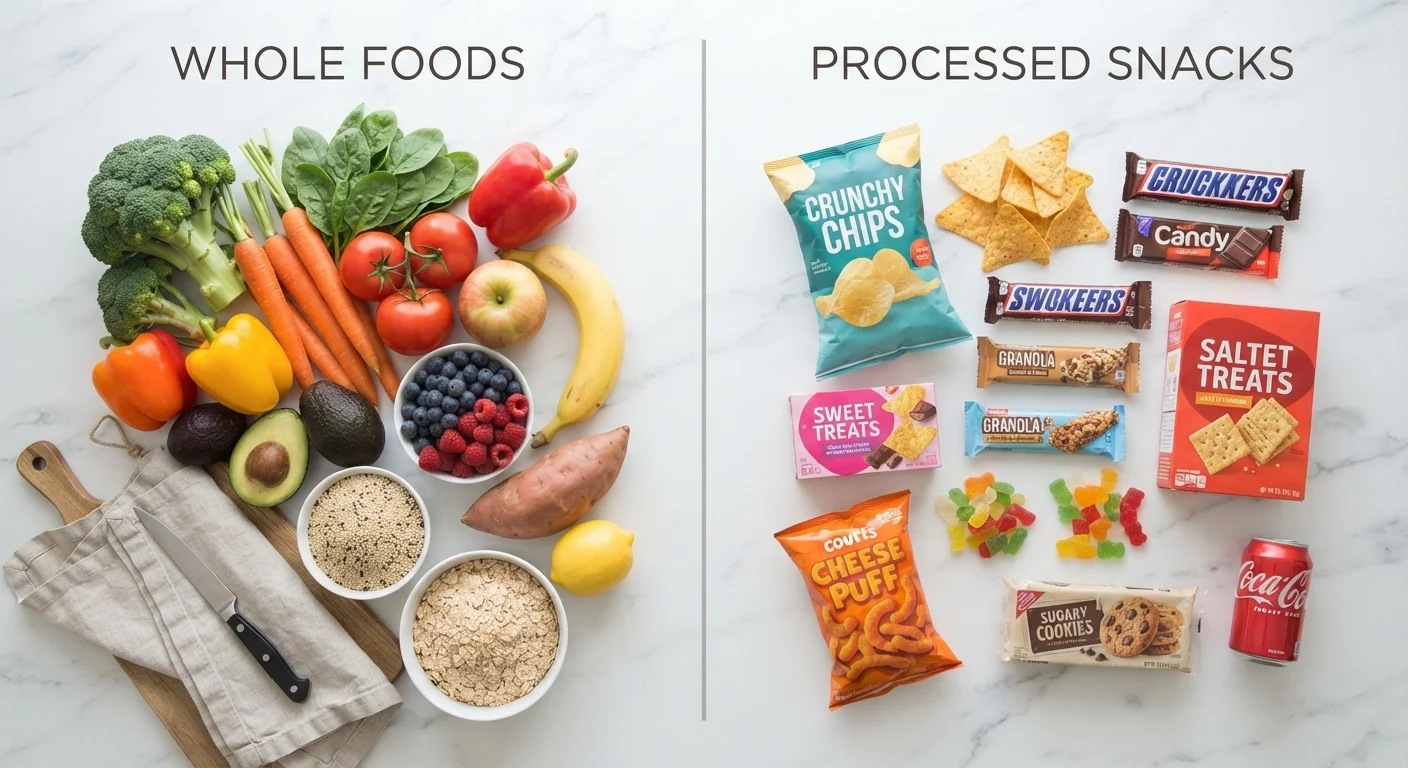
For context on how ingredient processing affects nutritional value more broadly, understanding the whole foods vs. processed foods distinction can sharpen your thinking.
How to Spot Ingredient Splitting
If you see the same base ingredient listed in multiple forms close together - such as 'corn,' 'corn gluten meal,' and 'corn flour' - add them mentally as one ingredient. Their combined weight may exceed that of the first-listed protein source. This doesn't automatically make the food inferior, but it's useful context when comparing labels.
The Guaranteed Analysis: What Those Percentages Really Mean
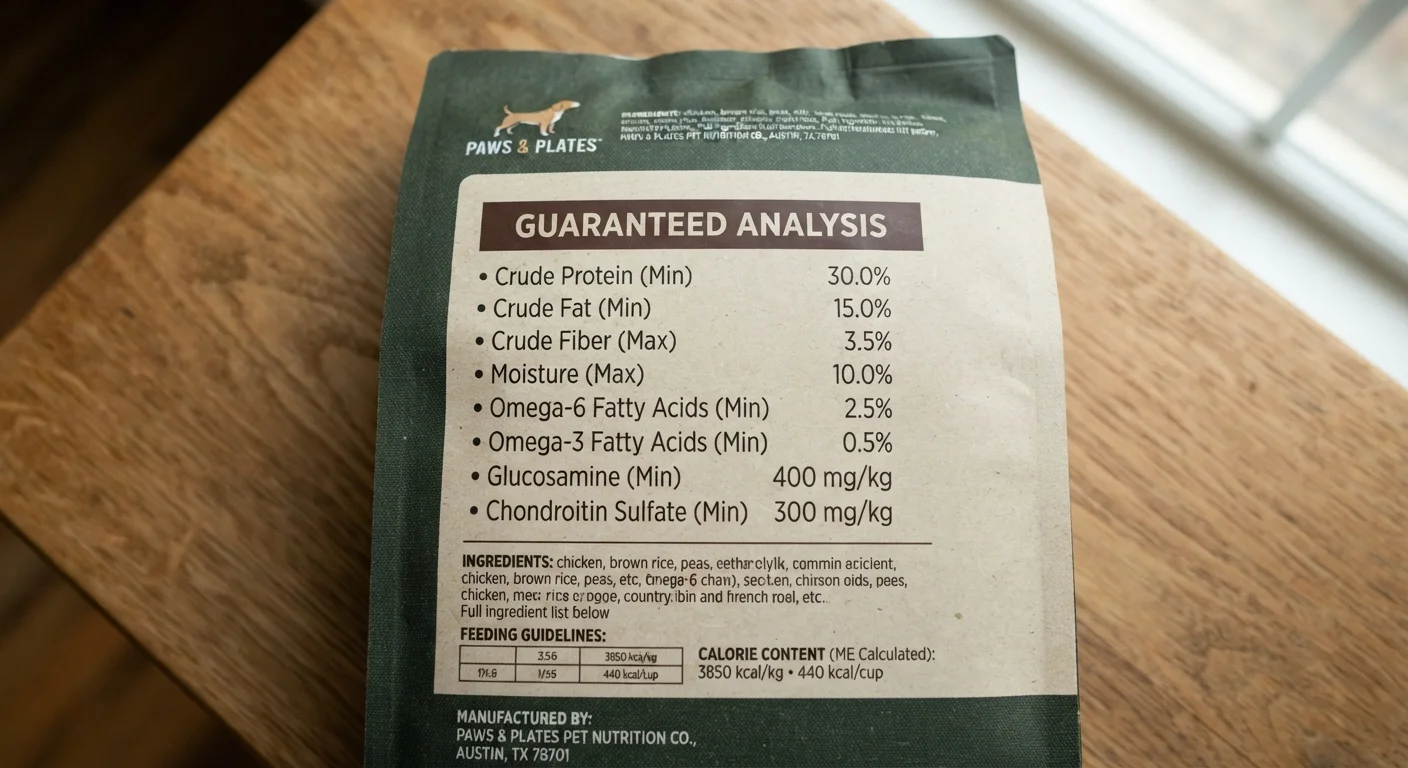
The guaranteed analysis panel lists four core figures: minimum crude protein, minimum crude fat, maximum crude fiber, and maximum crude moisture. These are regulatory thresholds, not precise measurements. A food guaranteed to have at least 26% protein may have considerably more.
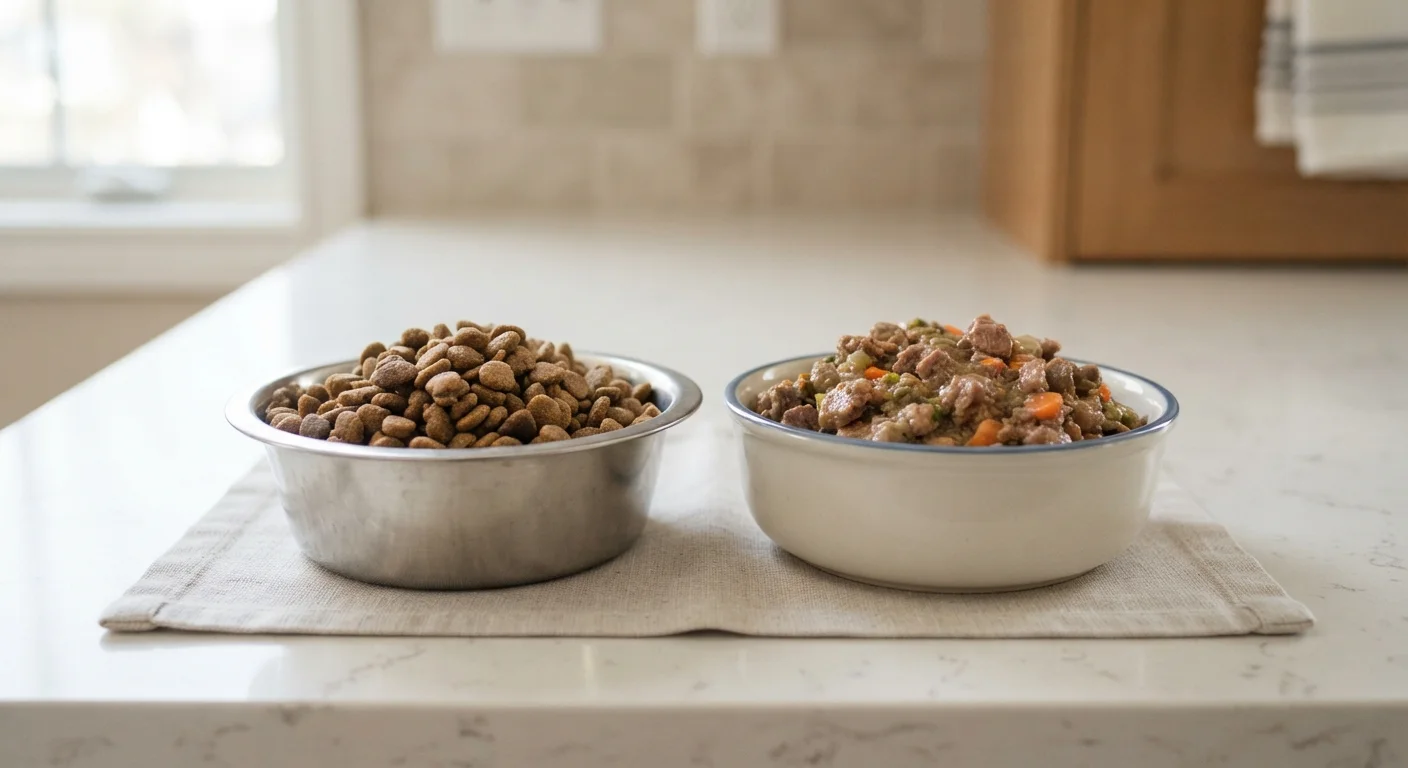
The challenge is that moisture content makes direct comparisons misleading. Wet food typically contains 75-82% moisture; dry kibble averages around 10%. Comparing their protein percentages as listed is like comparing apples to water. To compare fairly, convert to a dry-matter basis by dividing the nutrient percentage by (100 minus the moisture percentage), then multiplying by 100.
For a detailed side-by-side look at how this plays out between kibble and canned food, see how dry kibble and wet food compare nutritionally.
78%
Average moisture content in canned pet food
According to AAFCO nutrient profile guidelines, wet pet foods typically contain 75-82% moisture, making as-fed nutrient comparisons with dry kibble unreliable without conversion.
~10%
Average moisture content in dry kibble
Dry kibble's low moisture content means its as-listed nutrient percentages represent a much more concentrated product than the same figures on a wet food label.
95%
Meat content required by AAFCO's '95% rule'
Under AAFCO naming conventions, a food called 'Chicken for Dogs' must contain at least 95% chicken by dry weight of the total product, excluding water added for processing.
Life Stage Claims and What They Obligate
Pet foods must specify which life stage they support. The main categories are Adult Maintenance, Growth (covering puppies, kittens, and pregnant or lactating animals), All Life Stages, and sometimes Senior. Note that "Senior" has no standardized AAFCO definition - it is a marketing term, not a regulated nutritional standard.
"All Life Stages" foods meet the higher nutrient thresholds required for growth, making them nutritionally appropriate for any age. However, for large-breed puppies in particular, excess calcium and phosphorus can contribute to developmental orthopedic issues. Your veterinarian can help determine whether a general life-stage formula is appropriate for your specific animal.
Budget-conscious owners often assume pricier specialty foods are necessary at certain life stages. In many cases, an AAFCO-compliant adult maintenance or all-life-stages food at a mid-range price point delivers equivalent nutrition. See how to stretch your pet food budget without cutting nutritional corners for practical strategies.
This article provides general educational information about pet food labels and is not a substitute for personalized veterinary advice. Consult your veterinarian for guidance specific to your pet's health, life stage, and dietary needs.