Why Budget Pet Feeding Goes Wrong
The most common mistake budget-conscious pet owners make is treating price as a proxy for nutritional value - in either direction. Some assume the most expensive food must be best; others assume any savings represents a reasonable trade-off. Neither is reliably true. Pet food pricing reflects marketing, ingredient sourcing, packaging, and brand positioning as much as actual nutritional quality.
A second widespread problem is unintentional overfeeding. When portions are eyeballed rather than measured, most owners feed significantly more than their pet needs. This wastes money, contributes to obesity, and accelerates the kind of chronic health problems - joint stress, diabetes, heart strain - that generate substantial veterinary costs down the line. Portion discipline alone can meaningfully reduce monthly food spend without changing a single ingredient.
Understanding what actually matters on a pet food label is foundational. Before comparing prices across formulas, it helps to know how to read what you're buying. Our field guide to pet food labels walks through the key sections, including AAFCO statements and life-stage claims, in plain language.
What you will need
How to Feed Well for Less: Step-by-Step
The steps below are designed to help you make smarter food decisions without requiring a nutrition degree. Work through them in order - each builds on the previous one. If your pet has a diagnosed health condition, consult your veterinarian before making any dietary changes.
Kitchen scale or measuring cup
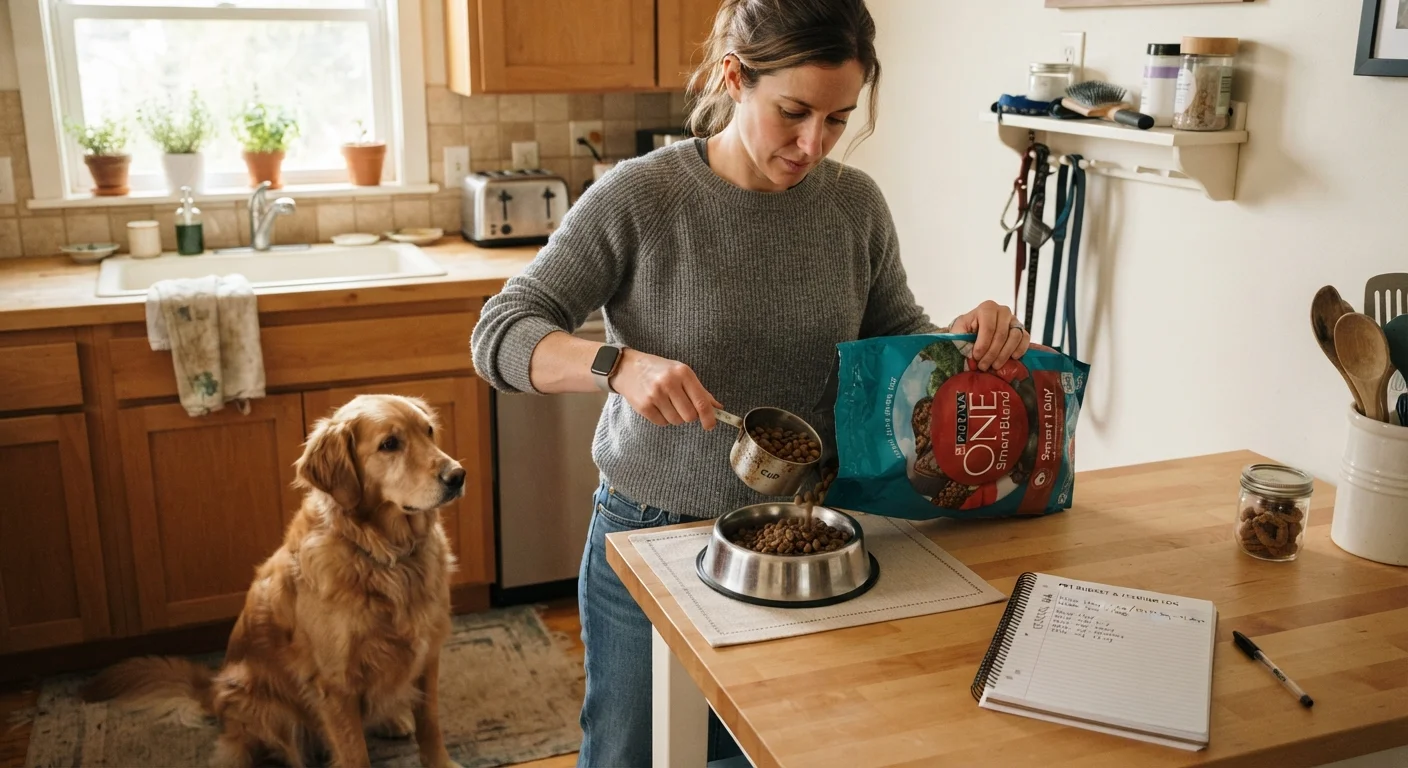
Ensures accurate portion sizes instead of eyeballing, which consistently leads to overfeeding.
Notepad or budgeting app
Tracks cost-per-day across foods to make objective comparisons rather than relying on sticker price.
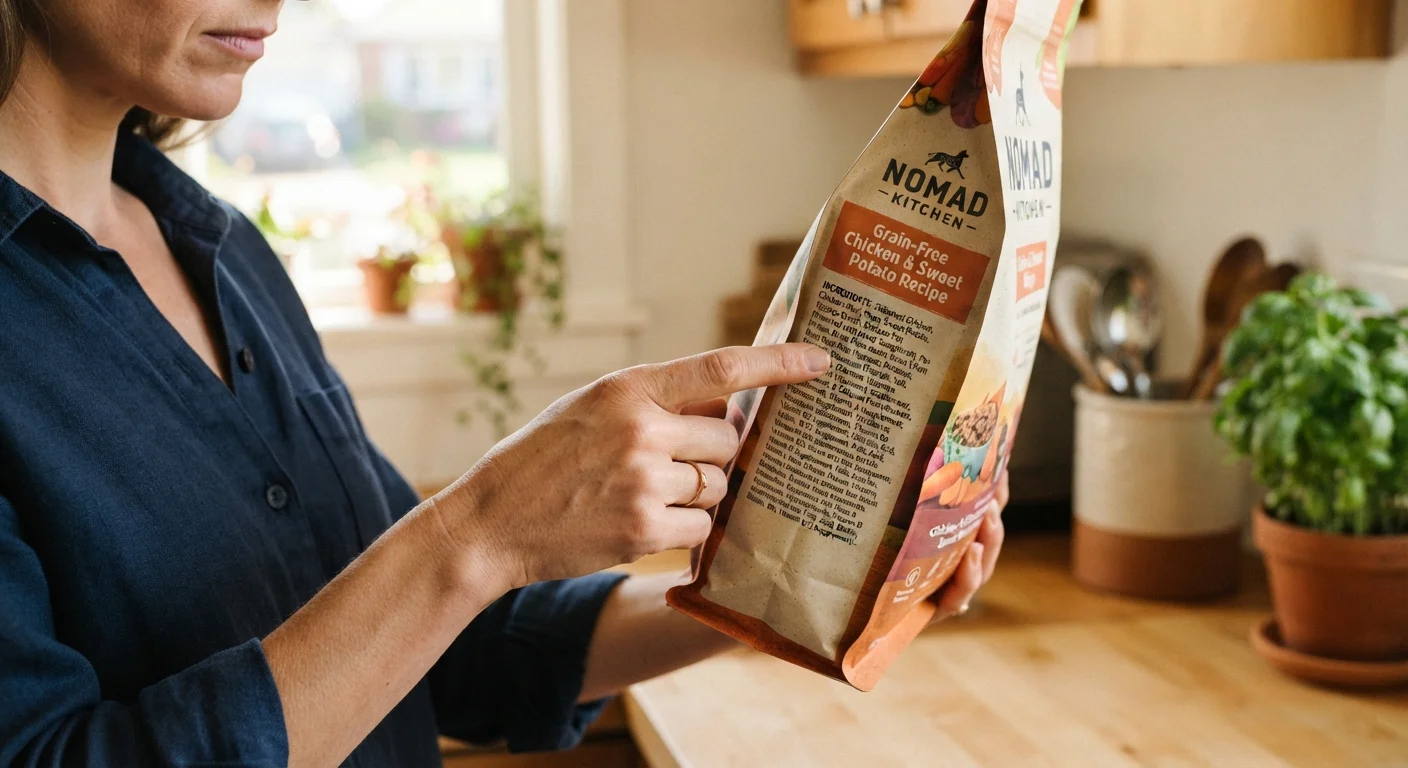
Current pet food bag or packaging
Provides the AAFCO statement, feeding guidelines, and guaranteed analysis needed for label comparison.
Calculate Your True Cost-Per-Meal
Sticker price is misleading. A larger bag of a denser food often costs less per meal than a smaller bag of a lighter formula, even if the upfront price is higher. Divide the total bag cost by the number of servings the feeding guidelines indicate for your pet's weight. This gives you an honest daily cost to compare across options.
Record this number - it becomes your baseline for every comparison going forward.
Verify the AAFCO Nutritional Adequacy Statement
Before comparing anything else on the label, locate the AAFCO nutritional adequacy statement. It should explicitly state that the food is "complete and balanced" for your pet's life stage (puppy/kitten, adult, or all life stages). If the statement is absent or says "intended for intermittent or supplemental feeding only," that food cannot safely serve as your pet's primary diet, regardless of price.
Our pet food label guide explains how to interpret these statements alongside the rest of the packaging.
Measure Portions Accurately
Most pet owners overfeed by 10-25% simply by estimating rather than measuring. Use a standard measuring cup or kitchen scale and follow the manufacturer's guidelines for your pet's body weight - not the highest weight range on the chart. Chronic overfeeding accelerates weight gain and increases long-term veterinary costs related to obesity, joint disease, and metabolic conditions.
If your pet seems persistently hungry after correct portions, the issue may be food quality or calorie density rather than quantity. Our article on why dogs stay hungry after a full bowl explains the underlying factors.
Compare Ingredient Quality Across Price Points
Ingredients are listed by pre-cooking weight, so a named protein (such as chicken or salmon) appearing first is a meaningful positive signal. Be aware that ingredient splitting - listing variations of a single ingredient separately (e.g., corn flour and corn gluten meal) - can push lower-quality ingredients down the list artificially.
Budget-friendly foods are not automatically inferior, but some commonly cut corners on omega-3 fatty acids, taurine, and trace minerals. Review our guide to nutrients missing from budget pet foods to understand which gaps carry the most health risk for your specific pet.
Transition Gradually When Switching Foods
Any food change - even a lateral move to a similar formula at a lower price - should be made over seven to ten days. Replace approximately 25% of the current food with the new food every two to three days. Abrupt switches commonly cause digestive upset, which can result in vet visits that immediately eliminate any savings you achieved.
Evaluate Buying Habits and Storage
Larger bag sizes typically offer a lower cost-per-serving, but only if the food stays fresh long enough to be used. Dry kibble stored in its original bag, clipped shut, in a cool, dry location generally stays fresh for four to six weeks after opening. Transferring to an airtight container can extend freshness and reduce fat oxidation, which degrades both palatability and nutritional value over time.
If a large bag goes stale before your pet can finish it, the savings are illusory. Calculate honestly based on your pet's actual consumption rate.
Track Condition, Not Just Cost
After any diet change, monitor your pet's coat shine, energy level, stool consistency, and body weight over four to six weeks. These are reliable early indicators of whether a food is meeting nutritional needs. See our guide on signs a pet's diet is working to know exactly what to look for.
Home-Cooked Diets Carry Real Risks
Preparing meals at home may seem like an obvious budget move, but unsupplemented home-cooked diets frequently develop serious nutritional deficiencies over time. If you're considering this route, consult a board-certified veterinary nutritionist before making the switch. Our article on home-cooked pet meals covers both the genuine benefits and the real risks in detail.
Never Sacrifice Nutritional Completeness
A food labeled "complete and balanced" by AAFCO standards must meet established minimum nutrient profiles for your pet's life stage. Foods marketed as "complementary," "treat," or "intermittent feeding" do not meet these thresholds and should not serve as a primary diet. When cost-cutting, this distinction is non-negotiable - chronic nutritional gaps lead to health problems that cost far more to treat than quality food ever would.
This article provides general educational information about pet nutrition and is not a substitute for personalized veterinary advice. Always consult a licensed veterinarian before making significant changes to your pet's diet, especially if your animal has a medical condition.