
Where to Find the AAFCO Statement
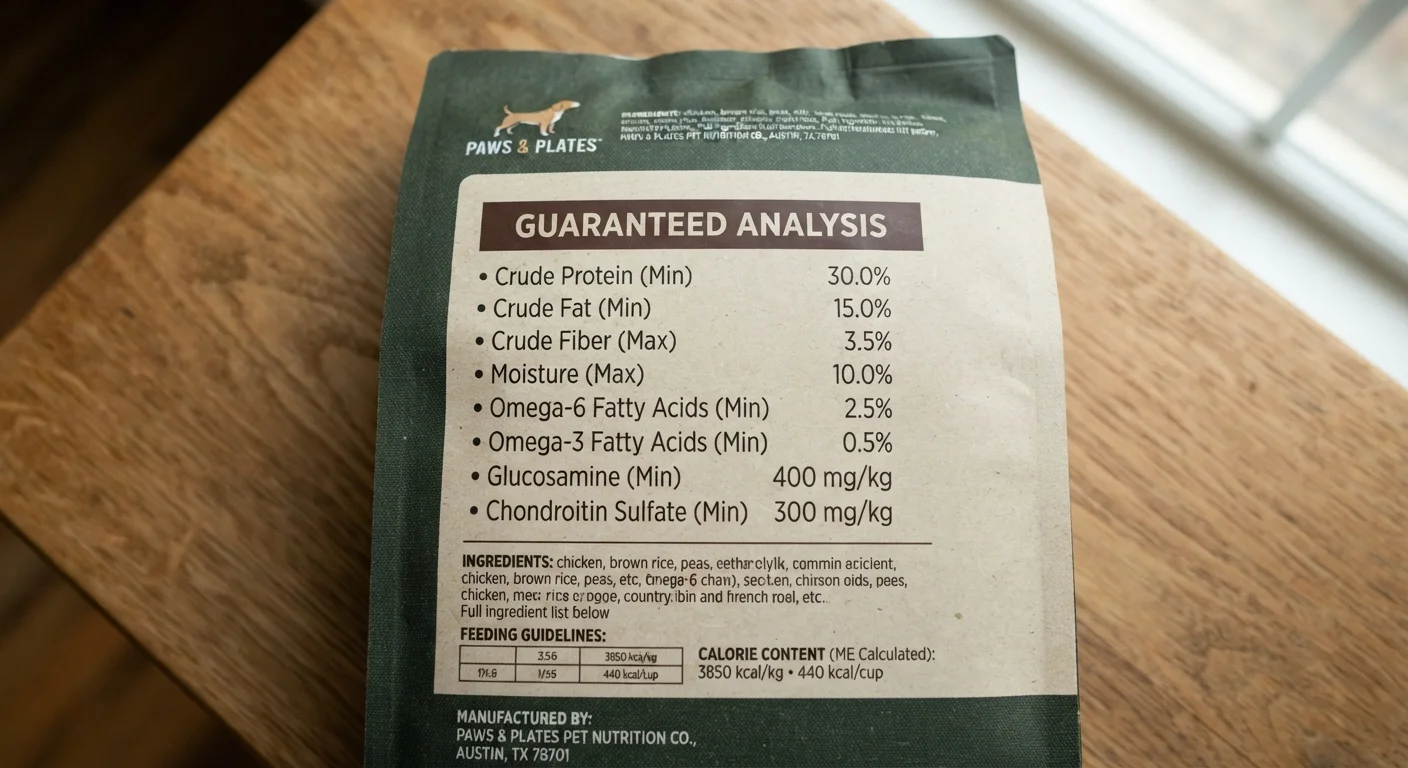
Look for the AAFCO nutritional adequacy statement on the back or side panel of any pet food bag, usually near the guaranteed analysis or feeding guidelines. It typically reads something like: " is formulated to meet the nutritional levels established by the AAFCO Food Nutrient Profiles for ." Or, alternatively: "Animal feeding tests using AAFCO procedures substantiate that provides complete and balanced nutrition for ."
That distinction - formulated to meet versus feeding tests substantiate - is the most critical thing to understand about this statement. For a fuller breakdown of everything else on the label, see Reading a Pet Food Label: A Field Guide for Confused Owners.
50+
U.S. states and territories with AAFCO-aligned feed regulations
Most U.S. states adopt AAFCO model regulations to standardize pet food labeling and nutritional requirements, according to AAFCO's own published membership information.
26 weeks
Minimum duration of an AAFCO feeding trial
AAFCO's official feeding trial protocols require dogs or cats to be fed the test food for at least 26 weeks while health markers are monitored by researchers.
2
Core AAFCO nutrient profiles (dogs and cats)
AAFCO publishes separate nutrient profiles for dogs and cats, each covering growth and adult maintenance life stages with distinct minimum and maximum values.
Formulation vs. Feeding Trial: A Real Difference
A formulation-based statement means a nutritionist calculated that the recipe, on paper, contains the nutrients AAFCO requires. This is the most common type. It is valid and meaningful, but it relies on the assumption that nutrients survive processing and remain bioavailable in the finished product.
A feeding trial-based statement means the food was actually fed to a group of dogs or cats for a minimum period - typically 26 weeks - while researchers monitored specific health markers. This real-world testing adds confidence that the food performs as intended when eaten, not just when analyzed in a lab.
Neither statement is a guarantee of excellence, but understanding which one you are looking at helps you assess the evidence behind the claim. Budget-conscious owners should know that feeding trial foods are not necessarily more expensive - the statement type is not directly tied to price.
Quick Check Before You Buy
Flip the bag before you add any pet food to your cart. Find the AAFCO statement and confirm it lists the correct life stage for your animal. If the statement is missing entirely, treat the food as a supplement or treat, not a complete diet. This 15-second check costs nothing and can prevent nutritional gaps.
Why the Life Stage Listed Actually Matters
The AAFCO statement always specifies a life stage: growth, adult maintenance, or all life stages. This is not a marketing label - it reflects a nutritional standard with real differences in protein, calcium, phosphorus, and calorie requirements.
- Growth: Required for puppies and kittens. Higher in calcium and protein to support developing bones and muscles.
- Adult maintenance: Calibrated for healthy adult animals. May be insufficient for growing or pregnant animals.
- All life stages: Must meet the more demanding growth profile. Appropriate for any age, though calorie density may be higher than a sedentary adult needs.
Feeding an adult-maintenance food to a puppy - or vice versa over the long term - can lead to nutritional imbalances. This is why checking the life stage in the AAFCO statement matters as much as whether the statement exists at all. For broader guidance on building a sound feeding routine, visit Pet Food Nutrition from First Bag to Daily Routine.
What AAFCO Cannot Tell You
AAFCO compliance is a nutritional floor, not a ceiling. The standards are designed to prevent deficiency and excess - they do not evaluate ingredient sourcing, manufacturing hygiene, palatability, or long-term health outcomes beyond the minimum testing period.
Two foods can both carry an identical AAFCO statement while differing significantly in ingredient quality, digestibility, and caloric density. This is why reading the full label - including the ingredient list and guaranteed analysis - remains important even when an AAFCO statement is present. Our Reading a Pet Food Label Without the Confusion guide walks through each section in plain terms.
AAFCO Standards Are a Starting Point
Meeting AAFCO requirements means a food clears a well-established nutritional baseline - not that it is optimally formulated for every individual animal. Pets with chronic health conditions, food sensitivities, or unusual metabolic needs may require diets specifically designed under veterinary supervision, which may or may not align with standard AAFCO-compliant commercial options.
Once you have confirmed nutritional adequacy through the AAFCO statement, tracking your pet's actual response to the food is the next step. See Signs a Pet's Diet Is Working - and Signs It Isn't for what to monitor between vet visits.
This article is for general informational purposes only and is not a substitute for veterinary nutritional advice. Consult your veterinarian before making significant changes to your pet's diet, especially for animals with health conditions or special needs.