Why Aquarium Keeping Is More Complex Than It Looks
Fish are often marketed as low-maintenance pets, but an aquarium is actually a managed ecosystem. Unlike setting up space for a cat - as covered in our guide on setting up a safe, enriching space for a new cat - aquarium keeping requires understanding water chemistry before any animal enters the picture.
The most common reason new tanks fail isn't bad equipment or wrong fish - it's skipping the biological setup phase. Fish produce ammonia as waste. Without a functioning bacterial colony to process that ammonia, water becomes toxic quickly. Understanding this from the start determines whether your setup succeeds or crashes.
This Guide Covers Freshwater Setups Only
Saltwater and reef aquariums involve additional equipment - including protein skimmers, live rock, and precise salinity monitoring - and are significantly more demanding to manage. Most aquarium educators recommend gaining confidence with freshwater first before attempting a marine system.
This article covers freshwater aquariums, which are the most practical starting point for new hobbyists. Saltwater setups involve additional equipment and a steeper learning curve and are best approached after gaining experience with freshwater first.
Understanding the Nitrogen Cycle Before You Buy Anything
The nitrogen cycle is the single most important concept in aquarium keeping. It describes the process by which beneficial bacteria convert ammonia (from fish waste and uneaten food) first into nitrite - also toxic - and then into nitrate, which is far less harmful at low concentrations.
Nitrogen cycle
The biological process by which fish waste is broken down from toxic ammonia into nitrite and then into the less harmful compound nitrate, carried out by beneficial bacteria in the tank.
Cycling
The process of establishing a colony of beneficial bacteria in a new aquarium before adding fish, so the tank can safely process waste without toxic ammonia buildup.
Biological filtration
The component of aquarium filtration that supports beneficial bacteria, which are responsible for converting ammonia and nitrite into safer compounds.
Stocking level
The total number and size of fish a tank can safely support without overwhelming the filter's capacity to process waste and maintain water quality.
Water conditioner
A liquid additive used to neutralize chlorine and chloramines in tap water, making it safe for fish and the beneficial bacteria that support the nitrogen cycle.
Nitrate
The final, relatively low-toxicity byproduct of the nitrogen cycle; it accumulates over time and is managed through regular partial water changes.
A new tank has no established bacterial colonies. Cycling a tank means deliberately building those populations before stocking fish. There are two main approaches:
- Fishless cycling: Adding a pure ammonia source to feed developing bacteria without exposing any fish to harmful conditions. This is widely considered the most humane method.
- Fish-in cycling: Adding a small number of hardy fish and performing frequent water changes to manage ammonia levels during the process. This carries real risk for the fish and requires close monitoring.
Either way, plan for 4 to 8 weeks before your tank is ready. A liquid water test kit - not the less accurate strip tests - is essential to track ammonia, nitrite, and nitrate levels during this period.
Choosing the Right Tank Size and Filtration
Beginners often choose small tanks thinking they're simpler to manage. In practice, the opposite is true. A 5-gallon tank can swing from safe to dangerously toxic in hours if something goes wrong. A 20-gallon tank gives you more margin for error and is a far more forgiving entry point.
When choosing filtration, understand that a good filter performs three functions:
- Mechanical filtration: Physically traps particles like uneaten food and waste.
- Biological filtration: Provides surface area for beneficial bacteria to colonize - the most critical function.
- Chemical filtration: Uses media like activated carbon to remove dissolved impurities and odors.
Filter flow rate is usually rated in gallons per hour (GPH). A common guideline is to turn over the total tank volume at least four times per hour, though this varies by species and stocking level. Avoid the impulse to clean filter media aggressively - doing so destroys the bacterial colony you've spent weeks building.
Never Clean Filter Media with Tap Water
Tap water contains chlorine, which kills the beneficial bacteria living in your filter media. If your filter needs cleaning, rinse media only in water removed during a routine water change. This preserves the bacterial colony that keeps your tank stable.
Stocking Your Tank: Fish Compatibility and Load
Fish selection is where new owners face the most consequential decisions. Overstocking - adding too many fish - is one of the fastest ways to destabilize water quality and cause disease outbreaks. The commonly cited one-inch-per-gallon rule is a rough starting point, but it doesn't account for species that produce heavy waste, grow large as adults, or are highly territorial.
Compatibility matters as much as quantity. Some fish are peaceful community species; others are aggressive or predatory. Research each species before purchasing, considering:
- Adult size, not the juvenile size sold at the store
- Water temperature and pH requirements
- Temperament and whether the species is schooling, solitary, or territorial
- Feeding behavior - some species compete aggressively for food
Introduce fish gradually over several weeks rather than all at once. Each addition increases the biological load the tank must process, and gradual stocking gives your bacterial colony time to adjust.
Essential Gear and What Can Wait
The gear decisions you make before setup day matter more than many beginners expect. Much like knowing which supplies a first-time dog owner actually needs on day one, distinguishing essentials from optional extras saves money and reduces overwhelm.
Gear you need from day one:
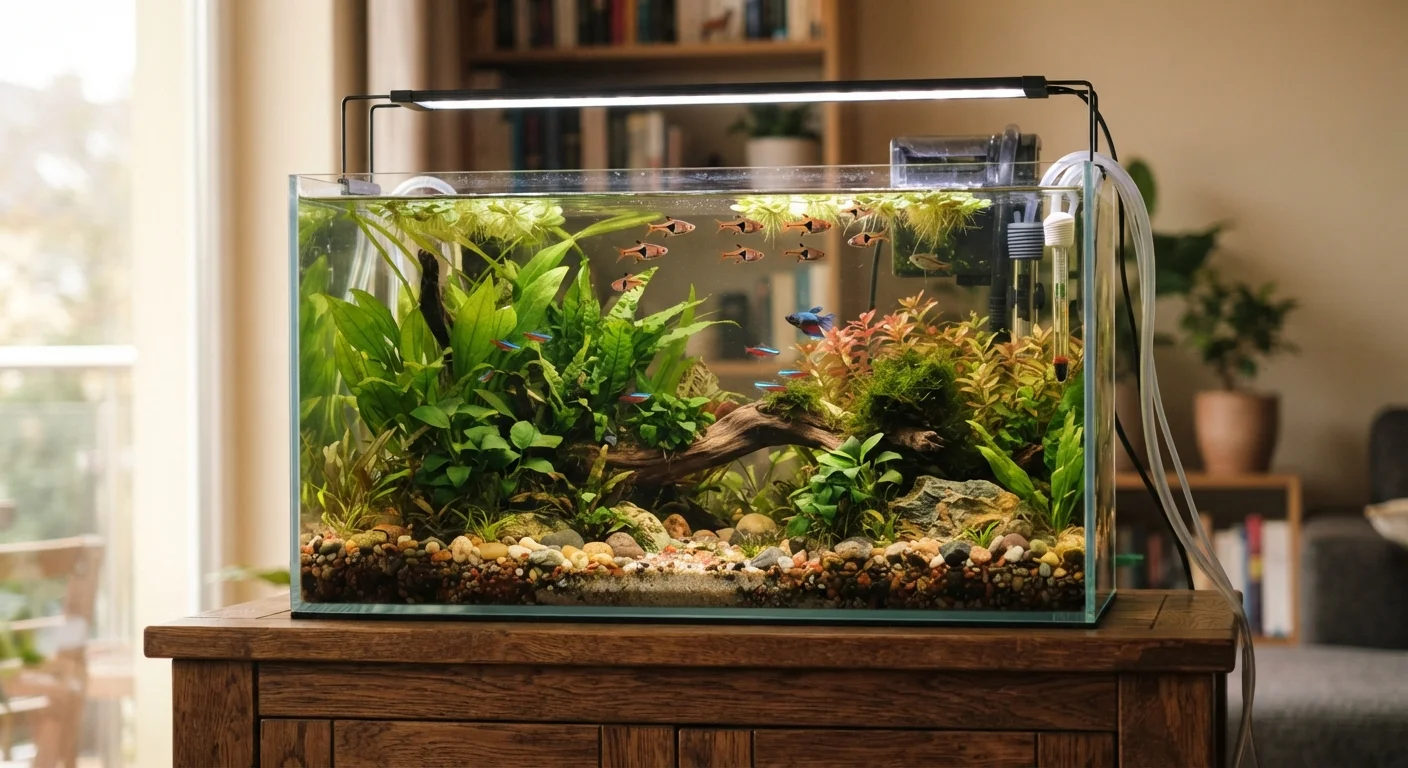
- Aquarium with a fitted lid
- Filter sized appropriately for the tank volume
- Heater and thermometer (for tropical species)
- Liquid water test kit (ammonia, nitrite, nitrate, pH)
- Water conditioner (dechlorinator) - tap water contains chlorine that is harmful to fish and bacteria
- Substrate (gravel or sand)
- A reliable light source, especially if you plan to grow live plants
Gear that can wait:
- CO2 injection systems (relevant only for advanced planted tanks)
- Automatic fish feeders
- Decorative backgrounds and elaborate ornaments
- UV sterilizers (useful but not essential for most beginner setups)
This article is for general educational purposes only. Always consult an aquatic veterinarian or experienced aquarist for guidance specific to your fish species or if you observe signs of illness in your aquarium animals.