Why Your Setup Matters More Than You Think
Bringing a new cat home is exciting, but from the cat's perspective, it is a significant stressor. Cats are territorial animals whose sense of security is closely tied to their physical environment. A chaotic or poorly planned space can lead to hiding, litter box avoidance, and anxiety-driven behaviors that persist long after the initial adjustment period.
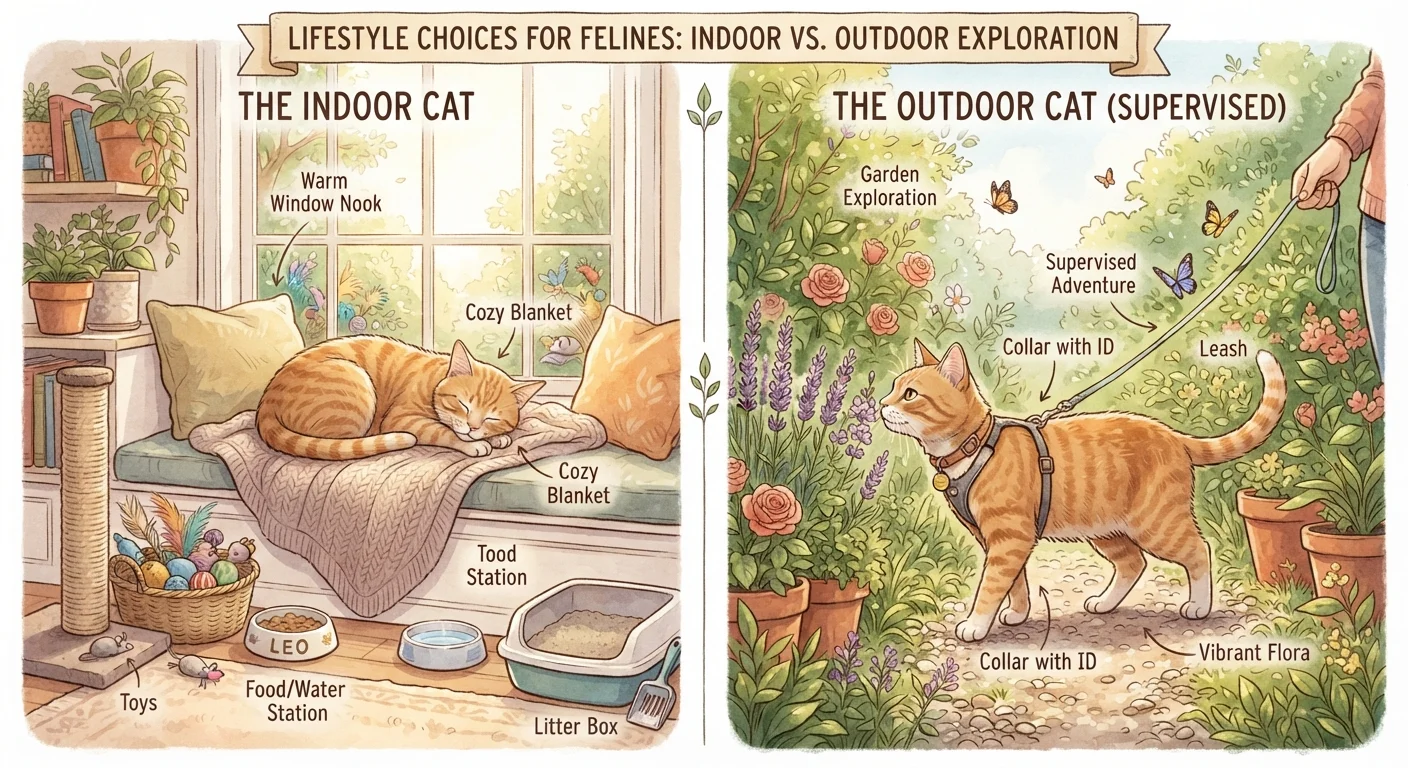
The good news: getting the setup right does not require expensive gear. It requires understanding what cats actually need - predictable zones for eating, eliminating, resting, and observing - and arranging your home to provide them. For indoor cats especially, the environment you create substitutes for the range and complexity they would experience outdoors. See our overview of indoor vs. outdoor cat gear differences for context on how lifestyle shapes what supplies matter most.
What you will need
What You Will Need
Before your cat arrives, gather the core supplies. Prioritizing function over brand recognition will serve most budgets well.
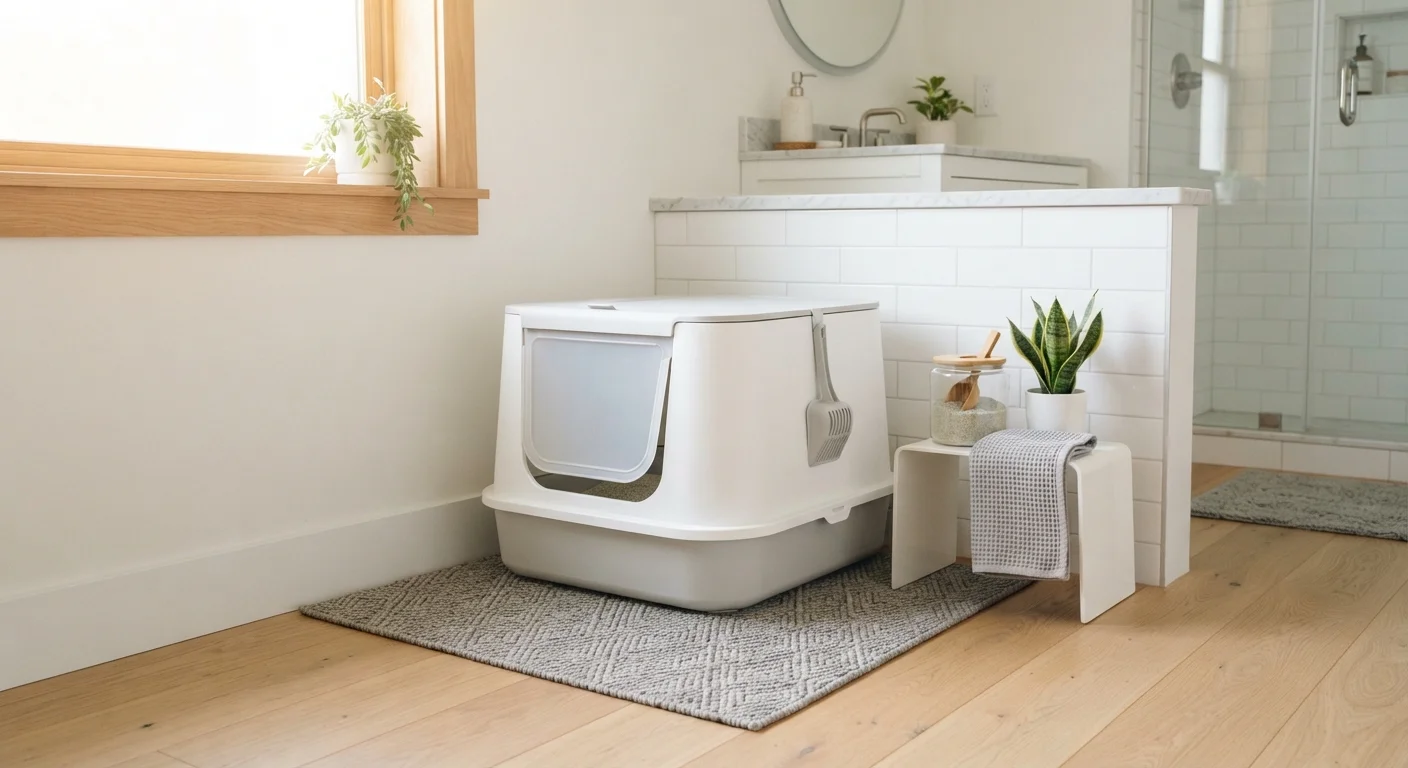
Litter box
Provides a designated elimination area; size and style affect whether cats use it consistently.
Cat carrier or covered hiding box
Gives the cat a retreat space during the stressful early adjustment period.
Scratching post or pad
Allows the cat to express natural scratching behavior and mark territory safely.
Cat tree or wall shelves
Creates vertical territory, which cats rely on for observation, safety, and exercise.
Separate food and water bowls
Supports healthy eating habits; separation from litter reduces avoidance behavior.
Baby gate or door stop
Allows gradual, controlled access to additional rooms during the expansion phase.
Pheromone diffuser
Synthetic feline pheromones may help reduce anxiety in some cats during transition - ask your vet whether this is appropriate for your situation.
Step-by-Step: Setting Up the Space
Follow these steps in order. The goal is to build a structured, calm environment before your cat crosses the threshold - not after.
Prepare a single base room before your cat arrives
Choose a quiet room - a bedroom or a spare room works well - and set up all core resources inside it: litter box, food, water, a hiding spot, and a resting surface. Close the door. This confines your cat to a manageable territory where it can build confidence without being overwhelmed by the full home.
Position the litter box away from food and water
Within the base room, place the litter box on the opposite side from the food and water bowls. Cats have a strong instinct to avoid eliminating near their food source. This separation is one of the most reliable ways to prevent litter box avoidance from the start.
Add at least one vertical option to the base room
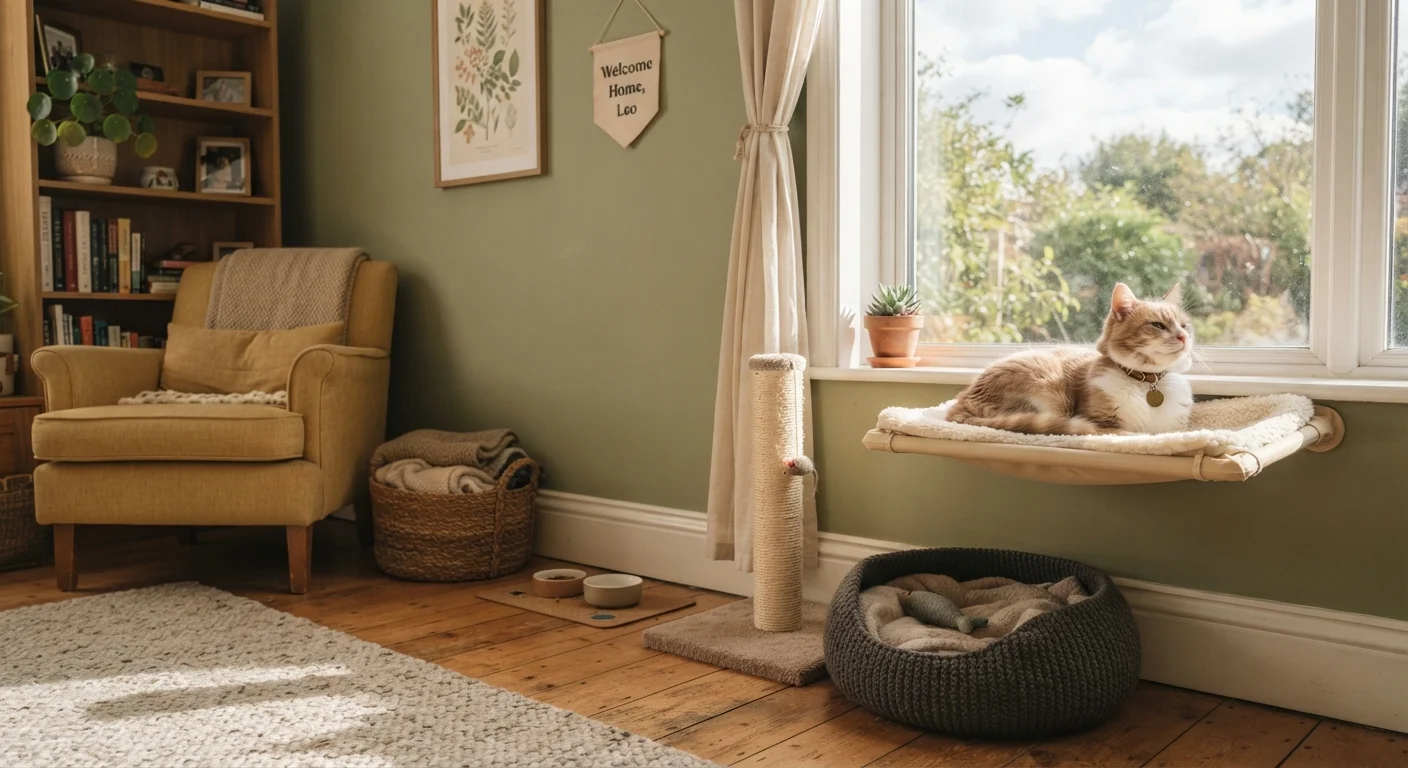
Even a modest cat tree or a cleared shelf gives your cat an elevated position to observe the room from safety. Vertical space is not a luxury for cats - it is a fundamental part of how they assess and claim territory. A cat that can get up high is generally a calmer cat.
Let the cat set the pace for the first 24-72 hours
Open the carrier in the base room and step back. Do not coax the cat out. Sit quietly on the floor, read, or simply be present without directing attention at the cat. Allow it to emerge and explore on its own timeline. Some cats emerge in minutes; others take several days.
Expand access to the rest of the home gradually
Once your cat is eating, drinking, and using the litter box consistently - and showing relaxed body language such as grooming or slow blinking - begin opening access to adjacent areas. Add one room at a time over several days. Rushing this step is one of the most common reasons cats regress into hiding or develop behavioral issues.
Audit the full home for hazards before full access
Before giving your cat run of the entire home, do a room-by-room check: secure loose cords, remove toxic houseplants (lilies are particularly dangerous to cats), block access to gaps behind appliances, and ensure window screens are secure. Indoor cats face their own set of risks distinct from outdoor hazards - our article on how indoor and outdoor lifestyles affect pet health risks explains the difference in detail.
Enrichment Does Not Have to Be Expensive
Cardboard boxes, paper bags with handles removed, and crinkle balls made from foil are effective low-cost enrichment tools. What cats need most is novelty, choice, and a sense of control over their environment - none of which requires a large budget. Rotate simple items in and out to maintain interest.
Common Setup Mistakes and How to Avoid Them
Even well-intentioned owners make a few predictable errors when setting up for a new cat.
- Giving too much space too soon. A large open home can overwhelm a new cat. One room is genuinely enough for the first week.
- Placing litter boxes near food. Cats instinctively avoid eliminating near their eating area. Keep these stations well separated. Our article on litter box quality and placement covers the practical implications in detail.
- Skipping vertical options. Floor-only environments leave cats feeling exposed. Even a single sturdy cat tree makes a meaningful difference.
- Forcing interaction. Let the cat set the pace. Crouching at the cat's level and allowing it to approach you is more effective than picking it up.
Prolonged Hiding Warrants a Vet Call
Some hiding in the first few days is completely normal. If your cat has not eaten, drunk water, or used the litter box within 24-48 hours of arriving, contact your veterinarian. Stress-related illness can develop quickly in cats, and early intervention matters. Do not wait to see if the situation resolves on its own.
Once your cat is settled, establishing consistent routines around feeding, grooming, and vet visits will reinforce the security the environment provides. See how to build a lasting pet health routine for a practical framework. And if you want to understand how your cat's nutritional needs differ from other pets, Cat Nutrition 101 is a useful next read.
This article provides general guidance for educational purposes and is not a substitute for advice from a qualified veterinarian. If your cat shows prolonged signs of distress, illness, or behavioral concerns, consult a licensed veterinary professional.