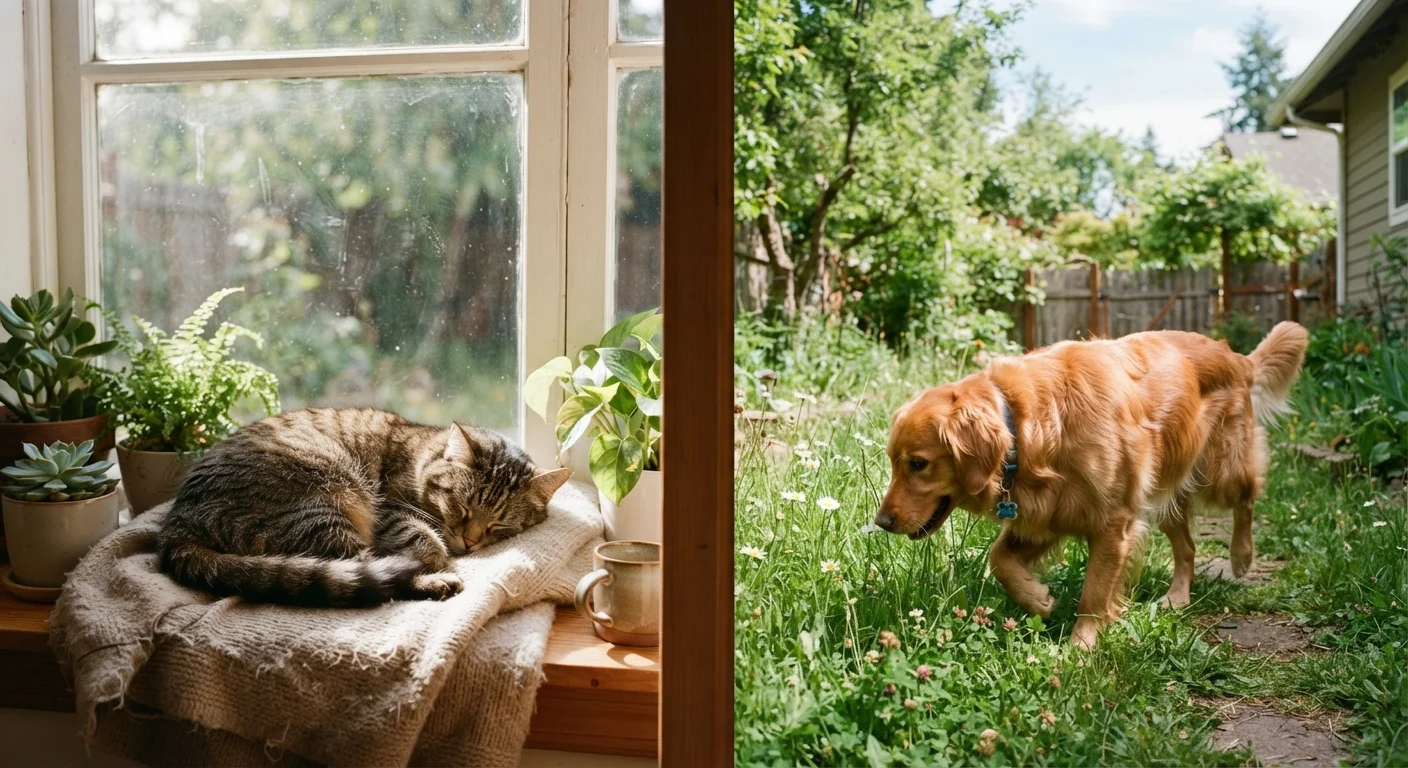
What Actually Changes Between the Two Setups
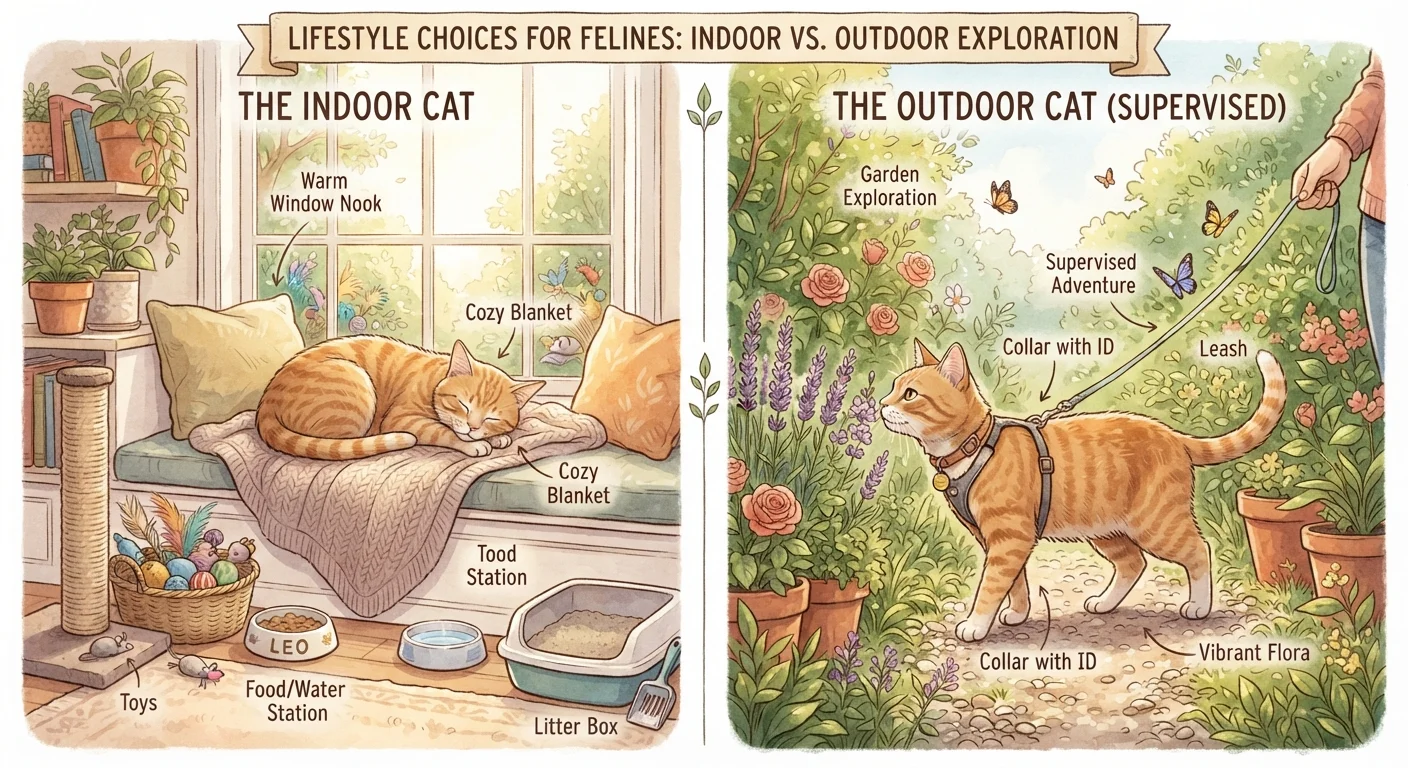
The core supplies every cat needs - food and water dishes, a litter box, a carrier, and a sleeping area - do not change based on lifestyle. What shifts significantly is the safety, identification, and enrichment gear layered on top of that foundation.
Outdoor-access cats face hazards - traffic, other animals, parasites, and infectious diseases - that drive a different set of gear priorities. Indoor cats, conversely, face a subtler risk: under-stimulation in a confined space, which can lead to stress behaviors like over-grooming or aggression.
For a broader look at how lifestyle shapes your cat's health risks, see how indoor vs. outdoor living affects vet needs.
| Criterion | Indoor Cat Setup | Outdoor-Access Cat Setup |
|---|---|---|
| ID & Identification | Microchip recommended | Microchip + breakaway collar with tag essential |
| Parasite Prevention | Lower priority; vet-guided | High priority; regular prevention needed |
| Enrichment Gear | High investment needed (trees, toys, perches) | Supplemental; environment provides stimulation |
| Carrier Type | Soft or hard-sided adequate | Hard-sided preferred for emergencies |
| Litter Box Setup | Primary elimination method; key priority | Still needed; some outdoor cats reduce indoor use |
| Harness / Leash | Optional for supervised outings | Useful for controlled outdoor access |
| Typical Vet Cost Profile | Generally lower injury and disease risk | Higher due to trauma, parasites, infections |
Gear Priorities for Indoor Cats
Without the sensory variety of an outdoor environment, indoor cats need owners to engineer enrichment deliberately. Key investments include:
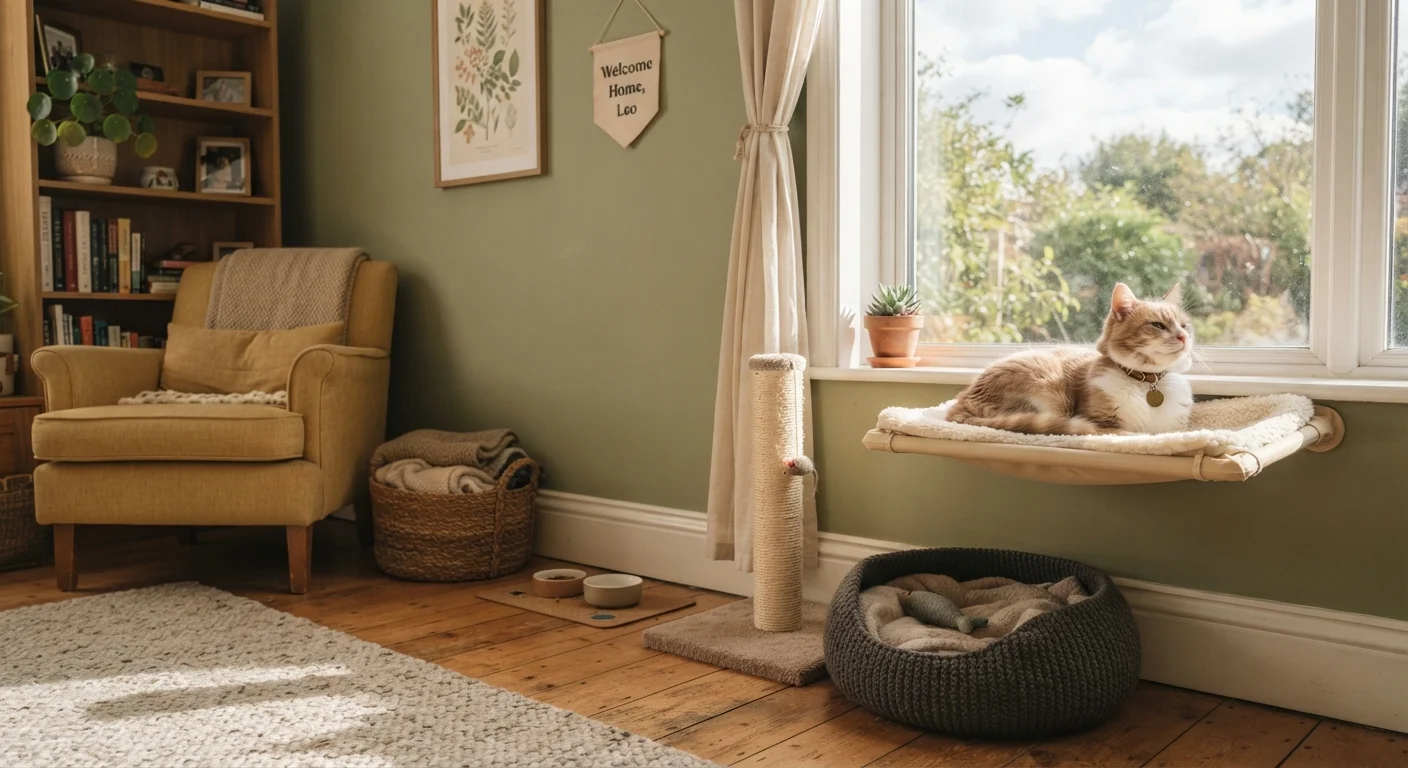
- Vertical space: Cat trees, wall-mounted shelves, and window perches satisfy climbing and surveying instincts that would otherwise go unmet.
- Scratching surfaces: Both horizontal and vertical options reduce furniture damage and support claw health. Material preferences vary by cat - sisal, cardboard, and carpet each have adherents.
- Interactive and puzzle toys: Rotating a small selection of toys prevents boredom more effectively than leaving a large pile out permanently.
- Litter box management: The general guideline is one box per cat plus one extra. Covered versus open styles affect odor control and cat preference differently - observe your cat's behavior.
For a detailed room-by-room setup guide, setting up a safe, enriching space for a new cat covers placement and product choices thoroughly.
2-3×
Lifespan gap: indoor vs. outdoor cats
Veterinary and academic sources consistently report that indoor cats live significantly longer on average than free-roaming outdoor cats, largely due to reduced trauma and disease exposure.
1 per cat + 1
Recommended litter boxes per household
This guideline is widely cited by veterinary behaviorists to reduce elimination problems in multi-cat or confined indoor environments.
Gear Priorities for Outdoor-Access Cats
Safety and identification gear becomes non-negotiable once a cat has outdoor access. The essential additions include:
- Breakaway collar with ID tag: A breakaway release mechanism prevents strangulation if the collar catches on a branch or fence. Include a current phone number on the tag.
- Microchip: A collar can be lost or removed; a microchip cannot. Keep your registration information current with the chip provider.
- Parasite prevention: Fleas, ticks, and intestinal parasites are dramatically more common in outdoor cats. Consult your veterinarian about appropriate prevention products for your region - options vary widely and some are ineffective or unsafe without professional guidance.
- Durable carrier: Outdoor cats are more likely to need urgent vet visits. A hard-sided carrier is more protective in emergencies than a soft bag.
- Catio or enclosure (optional): A secure outdoor enclosure gives cats fresh air and outdoor stimulation while eliminating free-roaming risks entirely.
A Note on Harness Training for Outdoor Access
Not every cat adapts easily to a harness, and forcing the process can cause stress. Introduction should be gradual - starting indoors with short sessions before attempting outdoor use. A properly fitted harness should be snug enough that the cat cannot back out of it, but not so tight it restricts breathing or movement. Ask your veterinarian or a certified cat behaviorist if you are unsure about fit or training approach.
If you are weighing the ongoing veterinary cost difference between indoor and outdoor cats, general pet insurance information is covered in the saving and insurance hub.
What Stays the Same - and Where Not to Cut Corners
Regardless of your cat's lifestyle, certain gear categories warrant consistent investment. Nutrition delivery is one: the format and quality of food matters independently of whether a cat goes outside. See wet food, dry kibble, or raw food trade-offs for a breakdown of the real differences.
A well-sized carrier, regular veterinary care, and appropriate identification are baseline commitments for all cats. Where owners can reasonably economize is in enrichment accessories - a homemade cardboard box scratcher works as well as an expensive sisal post for many cats, and a paper bag can provide more engagement than a costly toy. knowing where quality differences are real versus marketing is a useful framework to apply to pet gear too.
This article is for general informational purposes only and does not constitute veterinary advice. Consult a licensed veterinarian for guidance specific to your cat's health, location, and lifestyle.