Why a Targeted Gear List Matters
Walk into any pet supply store and you will face an overwhelming wall of products - most of which you do not need on day one. First-time dog owners are especially vulnerable to buying duplicates, wrong sizes, or items their specific dog will never use. This checklist focuses on what is genuinely necessary before your dog arrives home, and flags what is worth waiting on until you understand your animal's preferences, size, and behavior patterns.
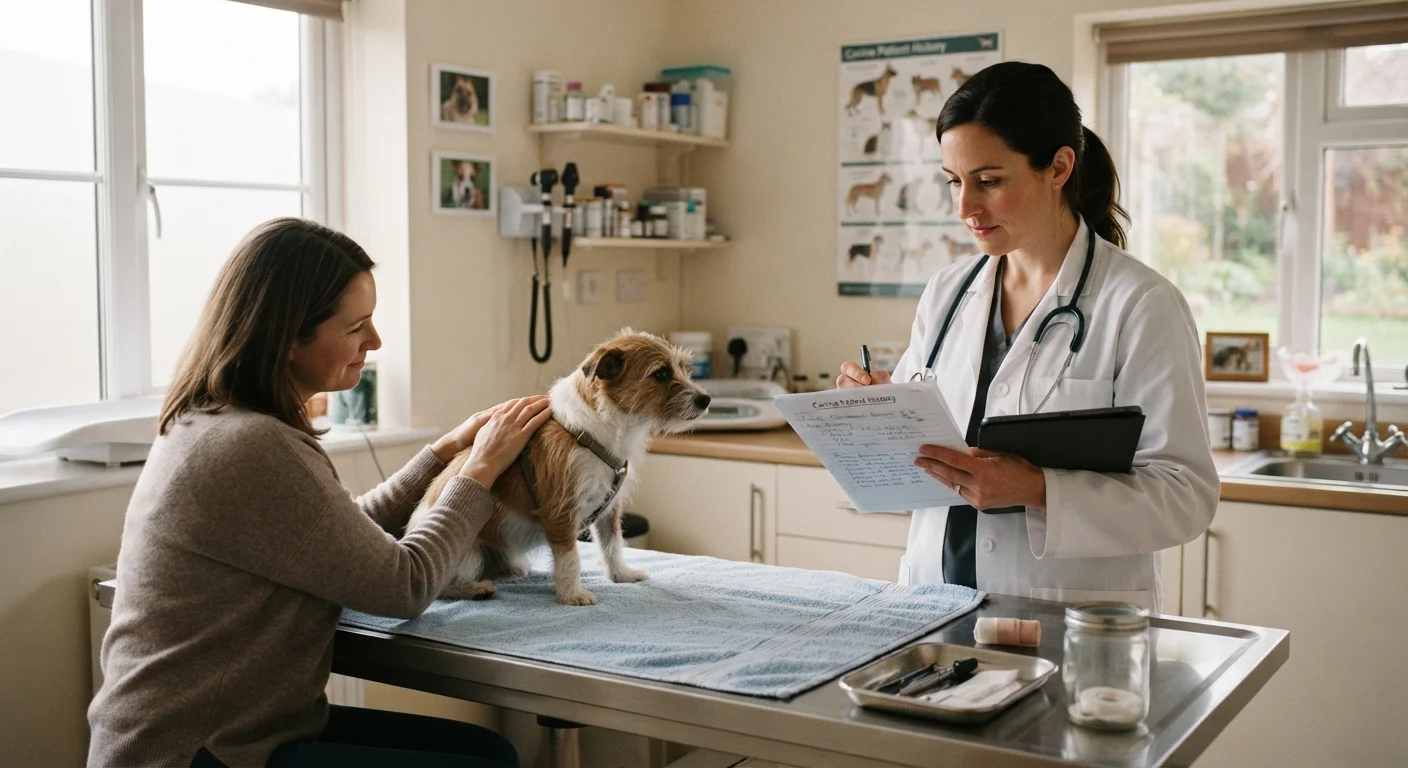
Before anything else: schedule a veterinary appointment. Our guide to your pet's first vet visit explains what documents to bring and which questions to prioritize. A vet can also confirm appropriate food portions and flag any breed-specific health considerations that affect your gear choices.
Measuring tape
Used to measure your dog's neck and girth accurately for collar and harness sizing.
Enzymatic cleaner
Breaks down urine and feces proteins so odor cues that encourage repeat accidents are fully eliminated.
Digital kitchen scale
Weighs precise food portions, which is important for maintaining healthy weight especially in puppies.
Baby gates or exercise pen
Limits your dog's roaming area during housetraining to reduce accidents and hazards.
The Day-One Gear Checklist
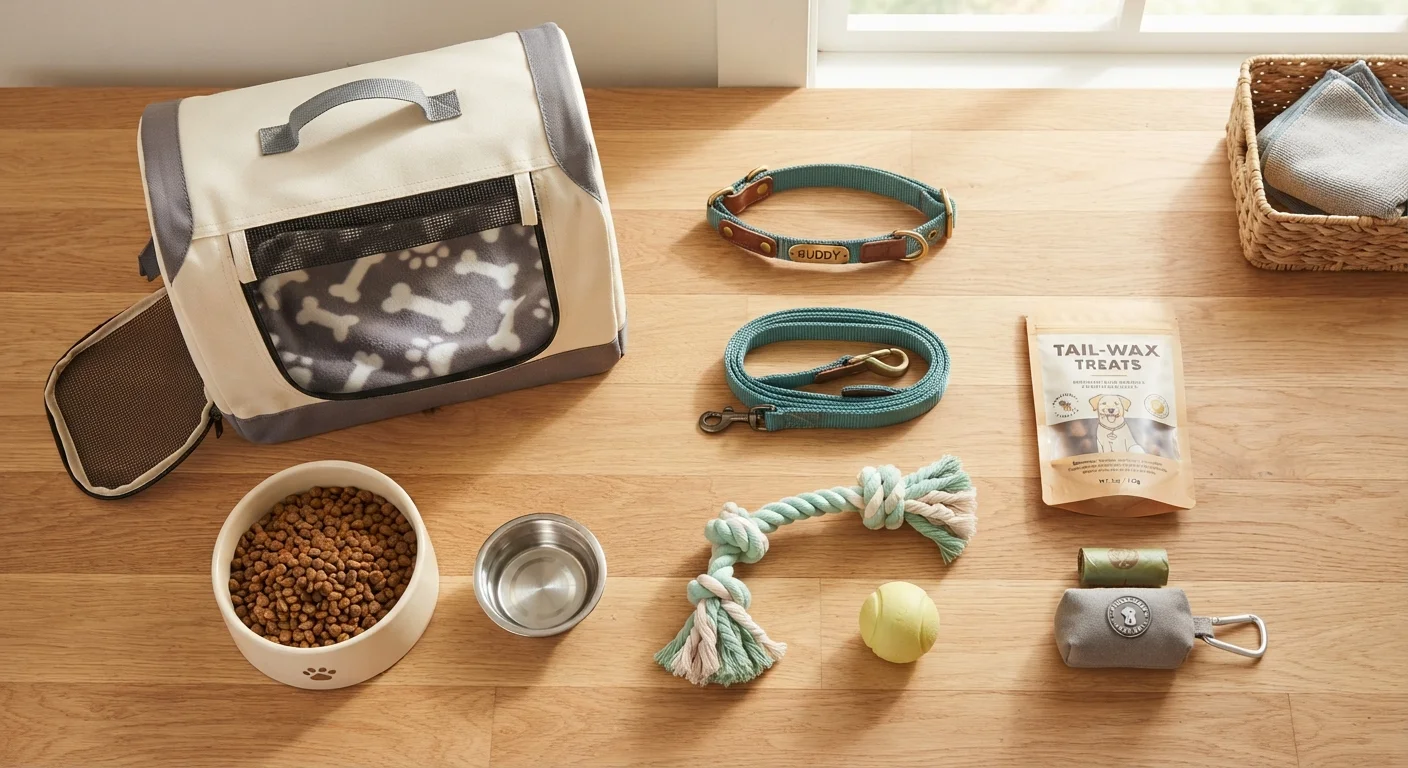
Use the checklist below to audit your readiness before pickup day. Items marked must are non-negotiable for safety and basic care. Items marked should are strongly recommended but can be sourced within the first few days. Nice-to-have items can wait until you know your dog better.
Safety and Identification
Feeding and Hydration
Containment and Rest
Hygiene and Health
Enrichment and Training
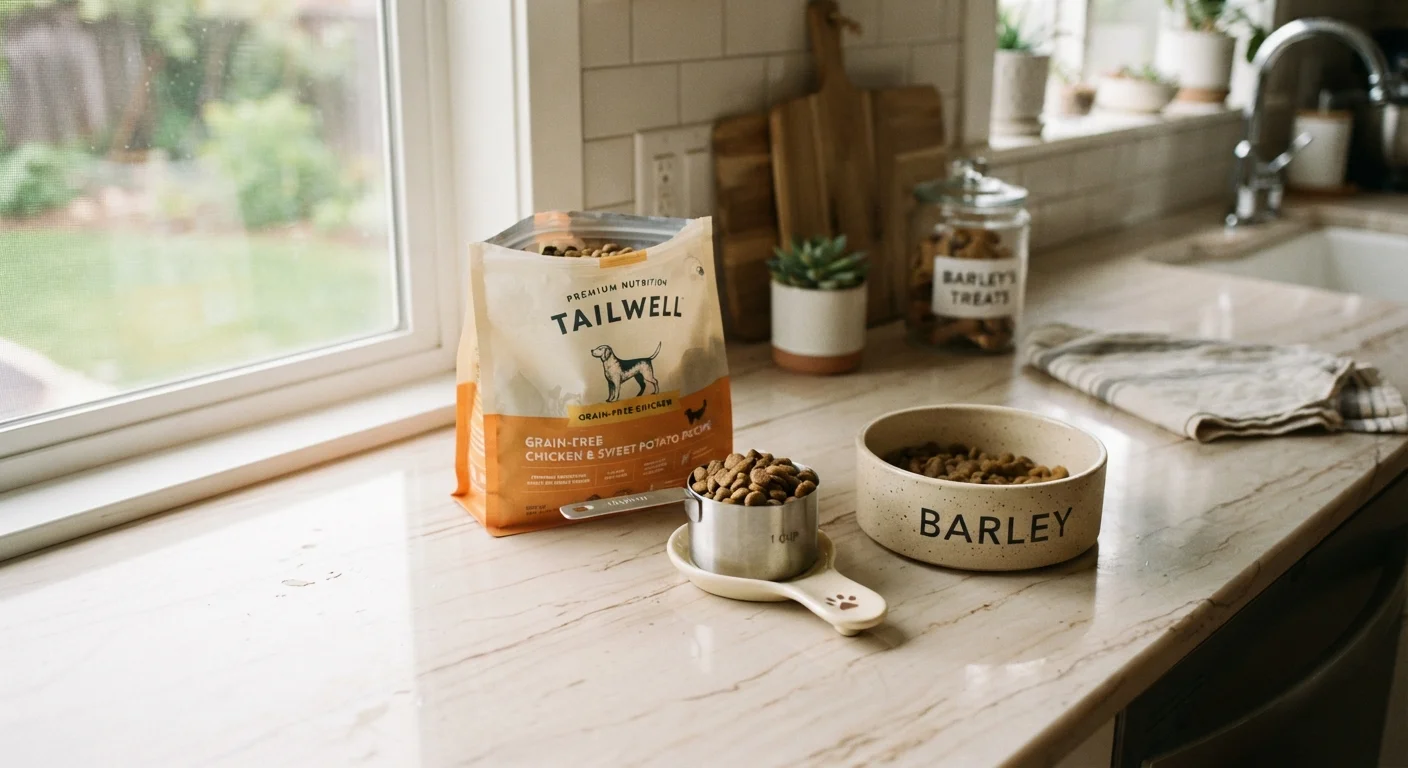
On food specifically: understanding ingredient labels, life-stage formulations, and portion sizes is its own subject. The pet food nutrition primer covers everything from reading labels to realistic budget strategies.
Don't Stock Up on Food Before You Arrive
Many new owners buy a large bag of food before knowing what the dog was previously eating. Switching foods abruptly can cause significant gastrointestinal upset - vomiting, diarrhea, or both. Get a small supply of whatever the dog was already eating from the shelter or breeder, then make any dietary transition gradually over the course of one to two weeks.
Retractable Leashes Pose Real Safety Risks
Retractable leashes give dogs too much distance to build momentum before an unexpected stop, which can cause serious rope burns, joint injuries, or falls - for both dog and handler. Standard fixed-length leashes offer far more control during the critical early period when your dog is still learning to walk on leash.
What You Can Safely Wait On
A common mistake is buying breed-specific accessories before confirming your dog's adult size, coat behavior, or temperament. Grooming tools are the clearest example: the wrong brush can damage coat texture or irritate skin. Once you know your dog's coat type, matching tools to coat type becomes a much more useful exercise.
Similarly, specialized beds, breed-specific harnesses, and enrichment toys are worth selecting after a week or two of observation. Some dogs chew through plush beds immediately; others never touch a rope toy. Gear needs also shift significantly across life stages - how supply needs change as your dog ages is a useful reference once you are past the initial adjustment period.
Finally, use this checklist alongside a consistent daily care routine. Building habits that actually stick helps you move from reactive scrambling to predictable, manageable care - which benefits both you and your dog long term.
This article provides general information for educational purposes and does not substitute for advice from a licensed veterinarian. Consult a qualified vet for guidance specific to your dog's health, breed, and nutritional needs.