Why the Carrier Format Matters More Than You Might Think
A carrier is not just a box you put your pet in - it is the environment your animal occupies during some of the most stressful moments of their life: vet visits, travel, unfamiliar settings. Choosing the wrong format can mean inadequate ventilation, unsafe restraint, or a pet so stressed by confinement that the trip becomes a health concern in itself.
The four main carrier styles - soft-sided, hard shell, backpack, and sling - each represent genuine trade-offs in structure, portability, ventilation, and weight distribution. None is universally superior. The right fit depends on your pet's size and temperament, how frequently and how far you travel, and any transportation-specific requirements (airlines, for instance, publish exact dimension and material rules). If your household needs differ by species or life stage, how gear needs evolve as dogs age is worth reading alongside this guide.
Soft-Sided Carriers
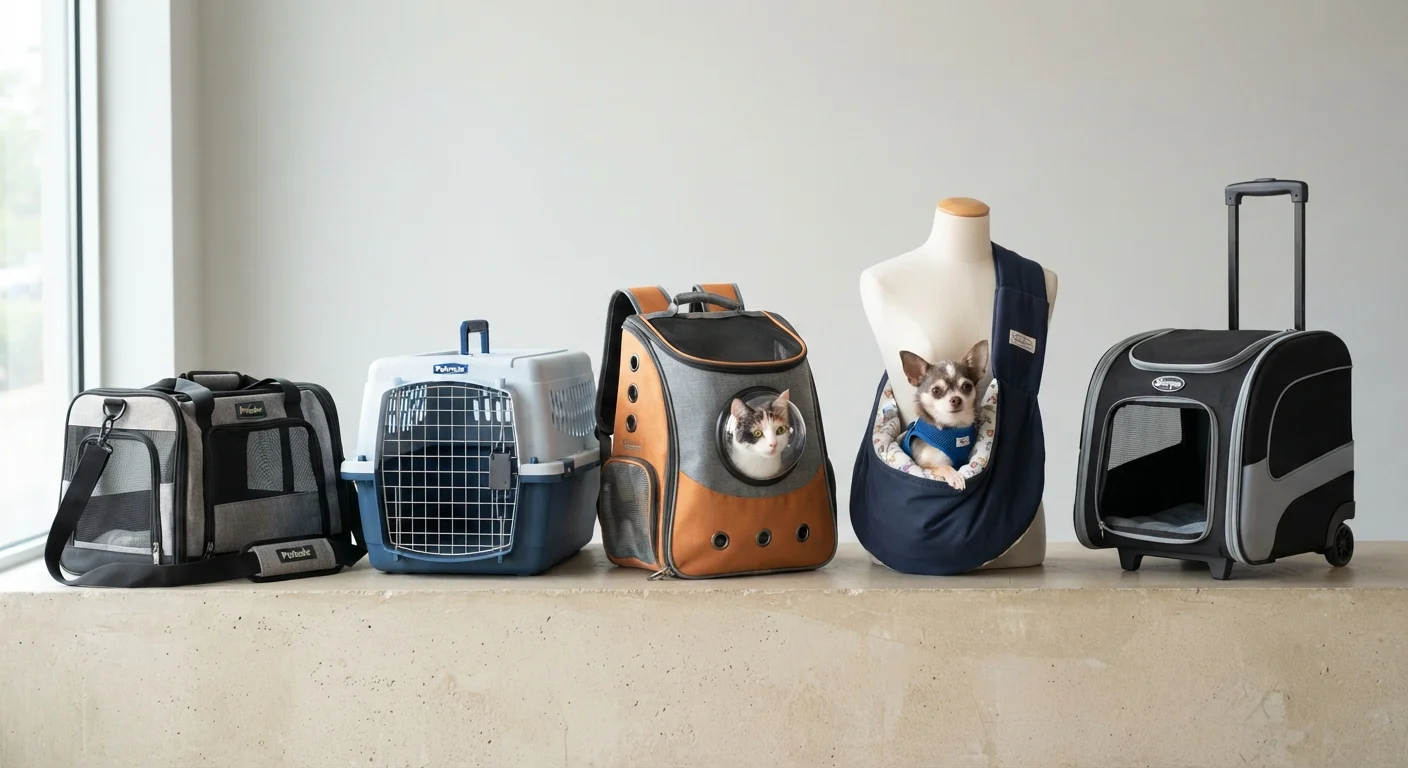
Soft-sided carriers use fabric walls - typically nylon or polyester - supported by a lightweight internal frame or none at all. They are the most common carrier format for everyday use and are widely accepted as under-seat airline cabin carriers, provided they meet the airline's posted dimension limits.
Strengths: Lightweight, often collapsible for storage, and available in a wide range of sizes. Mesh panels on multiple sides allow good airflow. The flexible walls can compress slightly to fit tight spaces.
Limitations: They offer less structural protection in a fall or impact. A pet that claws or chews aggressively can compromise the fabric. They are generally not approved for airline cargo holds, where hard-shell carriers are required.
Best suited for: Small to medium cats and dogs with calm temperaments, short-to-medium distance travel, and frequent vet trips where packability matters.
Soft-sided carriers work well for calm, smaller pets who travel frequently on short trips.
Hard-Shell Carriers
Hard-shell (or hard-sided) carriers are constructed from molded plastic with a metal or heavy-duty wire door. They are the format most airlines require for pets traveling in cargo holds, and many veterinary practices consider them the safest option for anxious animals because the rigid walls prevent collapse.
Strengths: Durable and impact-resistant. Easy to disinfect. Many models are IATA-compliant for international cargo travel. The enclosed design can actually reduce visual stimulation, which calms some animals.
Limitations: Heavier and bulkier than soft carriers. They do not compress for storage. Ventilation is typically limited to the door and side vents, which may be insufficient in warm conditions if airflow is restricted.
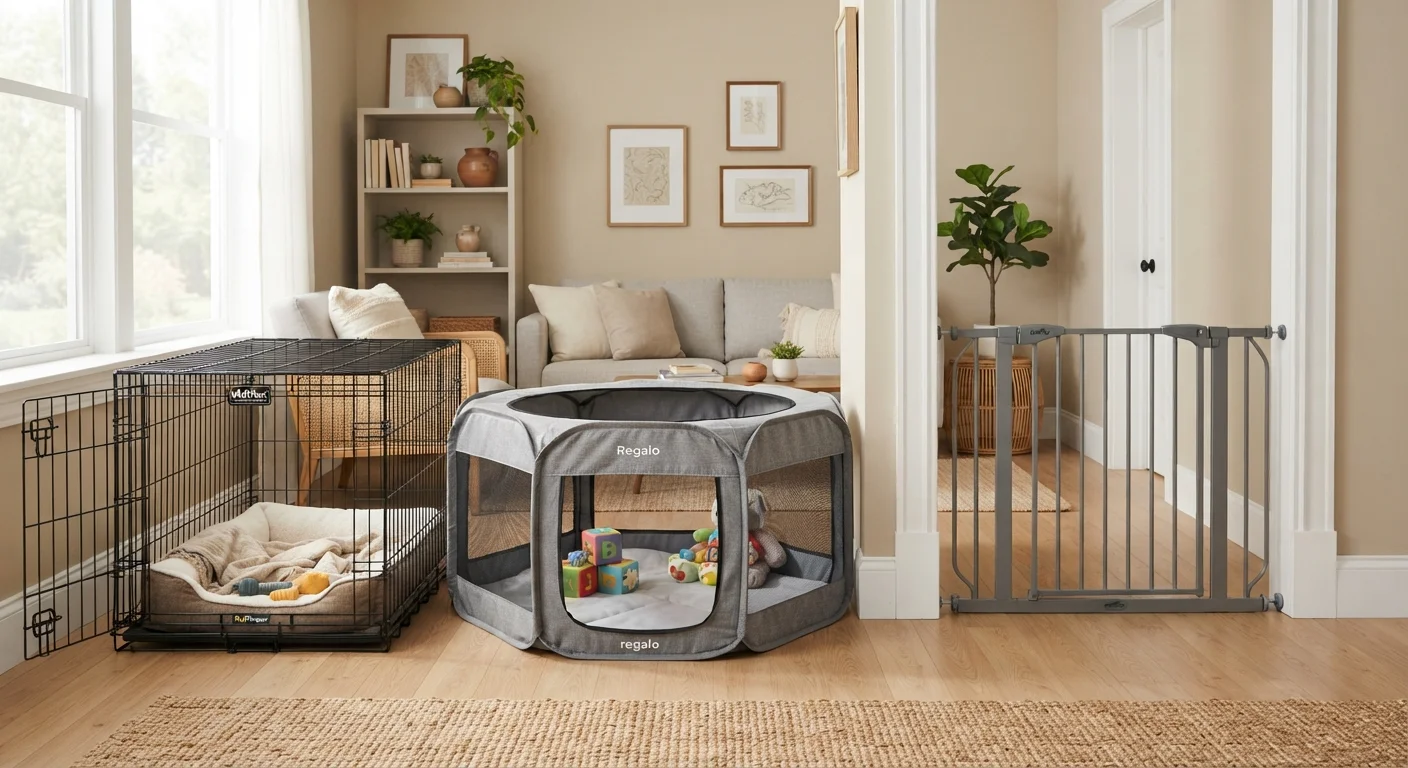
Best suited for: Larger animals, air cargo travel, pets with high anxiety who benefit from a den-like enclosure, and situations where structural integrity is a safety priority. Consider how this compares to stationary containment options covered in dog crates and playpens.
Hard-shell carriers are the standard for cargo air travel and provide the most structural protection.
Backpack Carriers
Backpack carriers are worn on the owner's back and are designed primarily for cats and small dogs under roughly 15-18 lbs, depending on design. Many include a bubble or mesh window on the front panel so the pet can see out.
Strengths: Distribute the pet's weight across both shoulders, reducing arm fatigue on longer walks or hikes. Keep hands free. Useful for urban environments, public transit, and outdoor activities where a handle-style carrier is cumbersome.
Limitations: Pets must be comfortable in a confined, upright space - not all animals tolerate the position or the motion. Interior volume is limited, and ventilation can be restricted depending on the design. Weight capacity is lower than most hard carriers.
Best suited for: Small, calm pets whose owners are active or use public transit regularly. Not recommended for animals showing signs of motion sensitivity or confinement stress. Your pet's lifestyle - whether primarily indoor or outdoor - affects how well they adapt; see indoor vs. outdoor pet lifestyle considerations.
Backpack carriers suit active owners but require a pet that tolerates close, upright confinement.
Sling Carriers
Sling carriers are fabric pouches worn across the owner's body, typically over one shoulder, holding very small pets against the chest or hip. They are the least structured format available.
Strengths: Extremely lightweight and packable. Provide close physical contact, which some small or anxious pets find calming. Easy to put on and remove quickly.
Limitations: Weight is concentrated on one shoulder, which creates fatigue quickly. Structural support for the pet is minimal - there is no rigid floor or frame. Ventilation depends entirely on fabric choice. Slings are generally unsuitable for animals over roughly 10-12 lbs, and they are not appropriate for airline travel in any hold configuration.
Best suited for: Very small, calm animals - often toy breed dogs or small cats - on brief outings where the owner maintains direct physical oversight throughout. They are not a practical choice for vet transport, where the animal may need to be confined independently.
Slings suit only the smallest, calmest pets and are best reserved for brief, closely supervised outings.
Matching Carrier to Context
No single carrier style handles every situation equally well. A hard-shell carrier that works perfectly for a semi-annual flight may be unnecessarily rigid and heavy for weekly short trips to a groomer. Owners with multiple pets - or species as different in size as a rabbit and a cat - may ultimately need more than one format. If you care for smaller animals like guinea pigs or rabbits, the ventilation and floor-space standards discussed in small pet supply guides apply inside carriers as much as they do in home housing.
Acclimate Your Pet Before the Trip
Introduce a new carrier at home well before you need it for travel. Leave it open in a familiar room with bedding that carries your pet's scent. Feeding treats inside, without closing the door initially, builds positive association over days or weeks. Animals that associate the carrier with safety cope significantly better during actual transport.
Before any purchase, confirm whether your pet's vet can assess their comfort with confinement. Some animals have anxiety responses that make certain formats - particularly small slings or enclosed backpacks - inadvisable regardless of owner preference. This article is general educational information; for health-specific guidance, consult your veterinarian.