Why Dental Health Gets Ignored - and Why That's a Problem
Most pet owners focus on vaccines, flea prevention, and annual checkups. Dental care, by contrast, tends to fall off the radar until a problem becomes impossible to ignore - often signaled by noticeably foul breath or a pet that has stopped eating normally. By that point, significant damage may already have occurred.
Veterinary surveys consistently find that periodontal disease is among the most prevalent health conditions diagnosed in companion animals, yet it is also among the most preventable. Part of the gap is perception: owners may not realize that a pet's mouth requires active maintenance, or they may assume that discomfort would be obvious. Animals are instinctively inclined to conceal pain, which means dental disease can progress silently for months or years. See how animals signal pain for a closer look at the behavioral cues owners should learn to recognize.
~80%
Dogs with dental disease by age 3
According to the American Veterinary Medical Association, roughly 80% of dogs and 70% of cats show signs of oral disease by three years of age.
24-48 hrs
Time for plaque to harden into tartar
Veterinary dental guidelines note that plaque mineralizes into tartar within one to two days without mechanical disruption through brushing.
4 in 5
Pets whose dental disease goes undetected
Veterinary industry estimates suggest the majority of dental disease in companion animals is not identified until a professional oral exam is performed.
The Progression: Plaque, Tartar, and What Comes Next
Dental disease in pets follows a predictable sequence. It starts with plaque - a soft, colorless bacterial film that forms on tooth surfaces daily. If not disrupted by brushing, plaque mineralizes into tartar (also called calculus) within 24 to 48 hours. Tartar is hard, porous, and impossible to remove at home once formed.
Tartar accumulation leads to gingivitis, inflammation of the gum tissue. At this stage, the process is still reversible with professional cleaning. Left untreated, gingivitis advances to periodontitis - irreversible destruction of the bone and connective tissue anchoring the teeth. Teeth loosen, abscesses form, and the jawbone can weaken structurally in severe cases.
The consequences extend beyond the mouth. Oral bacteria that enter the bloodstream through inflamed gum tissue have been associated in veterinary research with changes in kidney function, cardiac valve integrity, and liver health. This systemic dimension is why dental disease is treated as a genuine health concern - not merely a cosmetic one. Understanding how these compounding conditions can escalate costs is addressed in our article on deferred pet health care costs.
Home Care: What Actually Works
Daily tooth brushing with a pet-safe toothpaste is the single most effective home intervention supported by veterinary evidence. The mechanical action of bristles disrupting plaque is what matters - enzymatic toothpaste adds some benefit, but the brushing itself is primary. Start slowly, use species-appropriate tools (finger brushes work well for initial acclimation), and build consistency over weeks rather than expecting immediate compliance.
Supplementary products - dental chews, water additives, oral gels - vary considerably in efficacy. The Veterinary Oral Health Council (VOHC) maintains a list of products that have met their standards for plaque or tartar reduction in controlled trials. Looking for the VOHC seal is a useful filter when evaluating options, though no supplement replaces brushing.
Start Slow With Tooth Brushing
Introduce brushing gradually - begin by letting your pet taste the toothpaste, then move to gently rubbing the outer tooth surfaces with your finger before introducing a brush. Rewarding calm behavior during each step builds tolerance far more effectively than forcing the process. Consistency matters more than perfection in the early weeks.
Dental care fits naturally into a broader daily health routine. Our guide on building lasting pet health habits offers a practical framework for integrating dental hygiene alongside grooming and weight monitoring.
Professional Cleanings and What to Expect
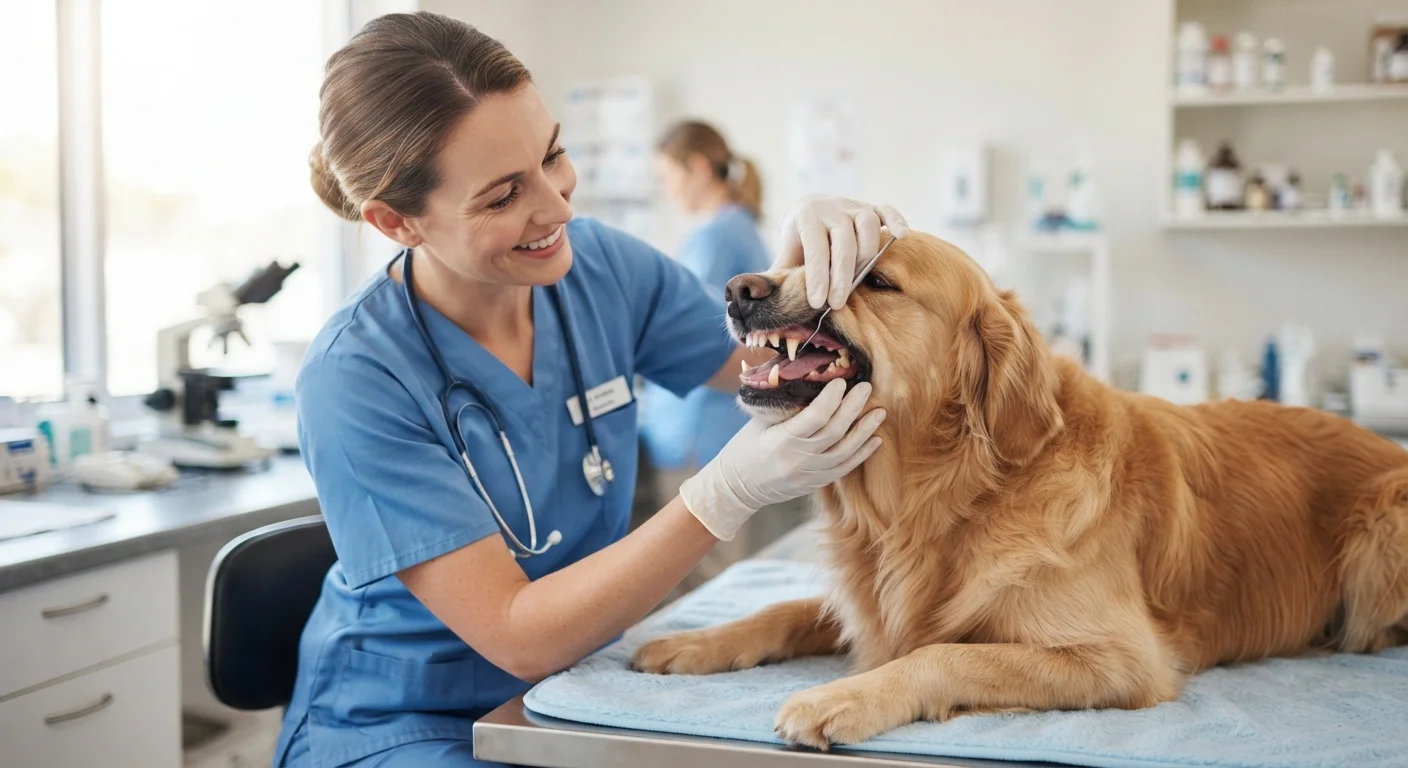
Even with diligent home care, most pets benefit from periodic professional dental cleanings performed under general anesthesia. Anesthesia allows a complete oral examination, dental X-rays (essential for assessing root and bone health not visible to the naked eye), scaling both above and below the gumline, and polishing. Procedures performed without anesthesia - sometimes marketed as "anesthesia-free dental cleanings" - cannot safely or thoroughly address subgingival disease and are not recognized as equivalent by veterinary dental specialists.
Frequency of professional cleanings varies based on the individual animal's size, breed, and existing dental health. Small and toy breeds are generally more prone to rapid tartar accumulation and may need cleanings more frequently than large breeds. Your veterinarian can recommend an appropriate interval after a baseline oral exam.
Dental cleanings are also a natural part of routine wellness visits. Our article on why wellness visits matter explains how regular checkups help catch problems - dental and otherwise - well before they escalate.
This article provides general educational information about pet dental health and is not a substitute for professional veterinary advice. Consult a licensed veterinarian for guidance specific to your pet's health needs.