The Core Difference: Deflect vs. Absorb
Pick up a sunscreen bottle and you'll likely see one of two protection mechanisms at work - and understanding which one you're dealing with changes how you apply it, how it feels, and how well it suits your skin type.
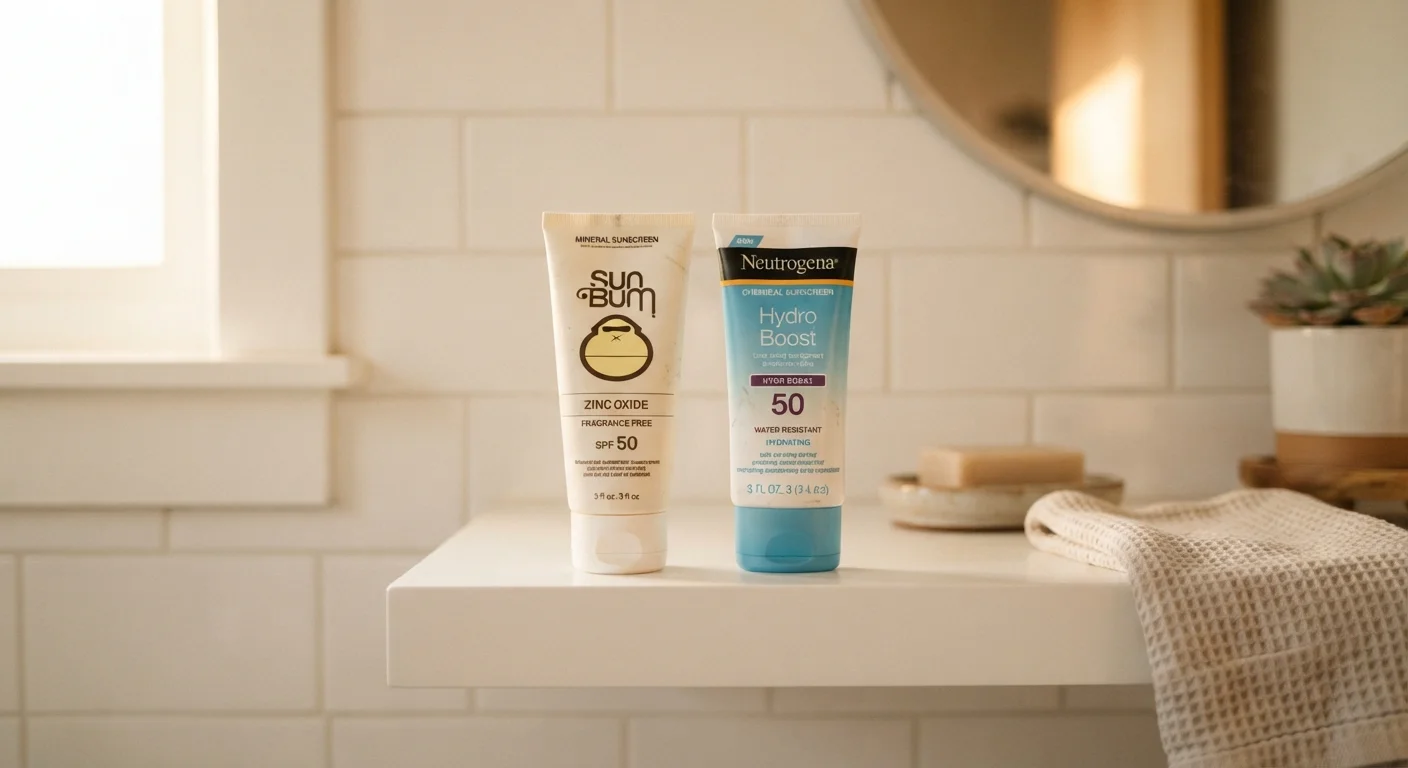
Mineral sunscreens (sometimes called physical sunscreens) rely on two active ingredients: zinc oxide, titanium dioxide, or a combination of both. These minerals sit on the surface of skin and act like a shield, reflecting and scattering UVA and UVB rays before they can penetrate. Because they work immediately upon application, there's no wait time before heading outside.
Chemical sunscreens work through a fundamentally different process. Active ingredients - such as avobenzone, oxybenzone, octinoxate, or homosalate - absorb into the upper layers of skin. When UV rays hit, these compounds absorb the energy and release it as heat instead of letting it damage cells. Most dermatologists recommend applying chemical sunscreen about 15 to 30 minutes before sun exposure to allow the ingredients to fully bind to skin.
For a deeper look at how SPF numbers and broad-spectrum ratings tie into both types, see the sunscreen numbers dermatologists actually want you to understand - it's essential context for reading any sunscreen label.
| Criterion | Mineral Sunscreen | Chemical Sunscreen |
|---|---|---|
| Protection mechanism | Reflects and scatters UV rays | Absorbs UV energy, releases as heat |
| Active ingredients | Zinc oxide, titanium dioxide | Avobenzone, oxybenzone, octinoxate, etc. |
| Time before effective | Works immediately on application | 15-30 minutes after application |
| Finish on skin | Can leave a white cast | Blends clear, no white cast |
| Skin sensitivity | Generally gentler, fewer irritants | Some filters may irritate sensitive skin |
| Under makeup | Can cause pilling or chalkiness | Layers smoothly under foundation |
| Typical price point | Often higher cost per ounce | Often lower cost per ounce |
Texture, Finish, and Everyday Wearability
This is where most people actually make their choice - not in the chemistry, but in how it feels on their face every morning.
Mineral sunscreens have a reputation for leaving a white or grayish cast, particularly on medium to deeper skin tones. This happens because zinc oxide and titanium dioxide are opaque particles. Newer formulations use micronized or nano-sized particles to reduce that effect, but some cast can still remain. The upside: mineral formulas tend to feel more comfortable on oily or sensitive skin because they don't penetrate pores.
Chemical sunscreens blend invisibly. They're typically lightweight, serum-like, or lotion-textured and leave no white residue. That makes them the go-to for anyone who wears makeup or wants a completely undetectable layer of protection. The tradeoff is that some chemical filters - particularly oxybenzone and octinoxate - have been flagged in studies as potential skin sensitizers for some people, though regulatory bodies continue to evaluate the evidence.
Ongoing Research Into Chemical Filters
Some chemical sunscreen ingredients, particularly oxybenzone, have been detected in bloodstream studies at levels that prompted the FDA to request more safety data from manufacturers. This does not mean these ingredients are proven harmful - it means research is still active. If this uncertainty concerns you, mineral formulas using zinc oxide or titanium dioxide are an established alternative while the science continues to develop.
Budget-conscious shoppers will also note that chemical sunscreens are often less expensive per ounce, largely because the active ingredients cost less to produce at scale than cosmetic-grade mineral particles.
~27%
Adults who use sunscreen consistently
According to CDC survey data, only about one in four American adults reports applying sunscreen regularly on face and other exposed skin.
2 hours
Maximum effective reapplication window
Both the American Academy of Dermatology and the FDA recommend reapplying any sunscreen - mineral or chemical - every two hours when outdoors.
Which One Is Right for You?
The honest answer is that both mineral and chemical sunscreens protect against UV damage when applied correctly and consistently. Your skin type, daily routine, and personal preferences matter more than any blanket recommendation.
If you're building a value-driven skincare routine and feel unsure about ingredients, starting with a mineral formula gives you a straightforward option with fewer unknowns. If seamless daily wear and under-makeup performance are priorities, a chemical formula will likely fit better into your morning routine without adding extra steps.
What doesn't change regardless of formula: you need broad-spectrum protection (covering both UVA and UVB), a minimum of SPF 30, and reapplication every two hours outdoors. No mechanism - mineral or chemical - removes the need for that. This article is for general informational purposes only and is not a substitute for professional dermatological advice. Consult a qualified dermatologist for guidance tailored to your specific skin concerns.