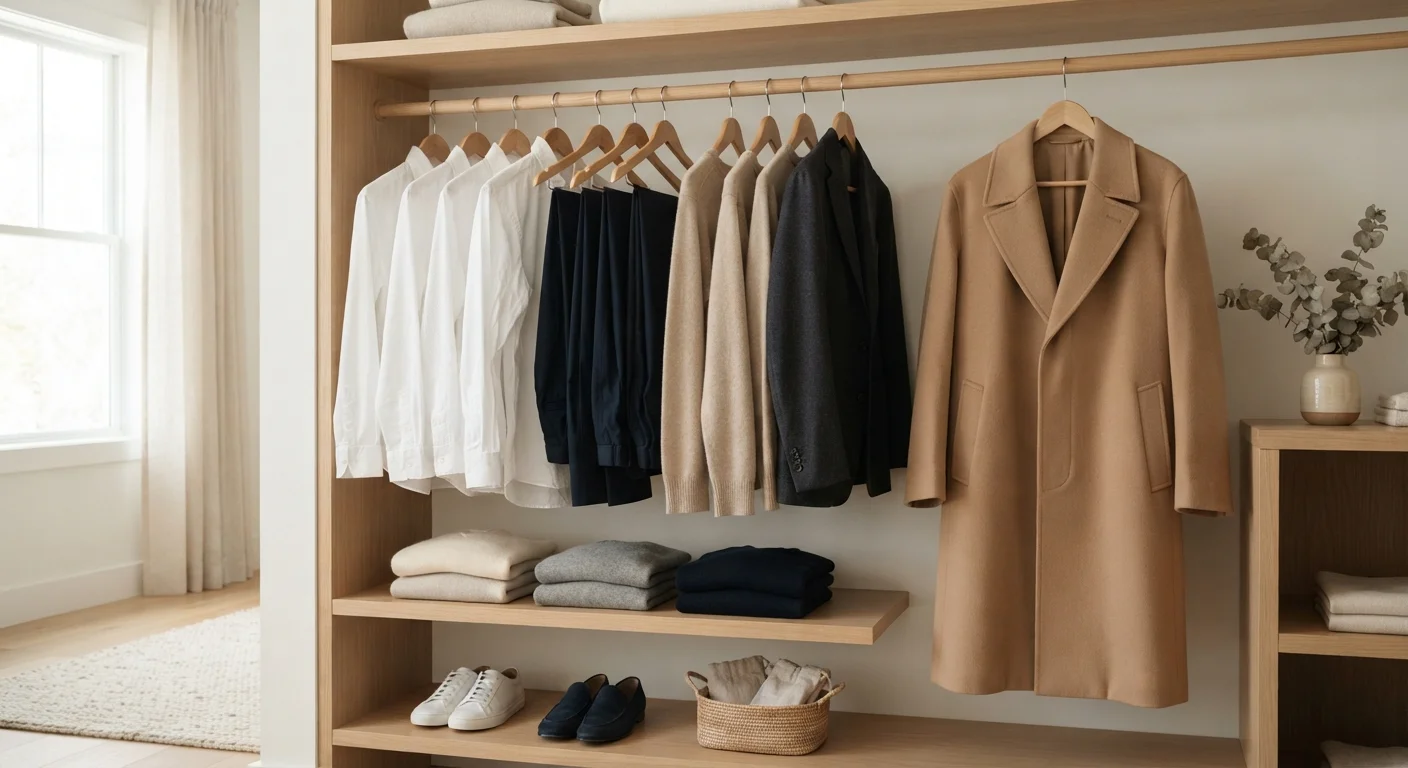
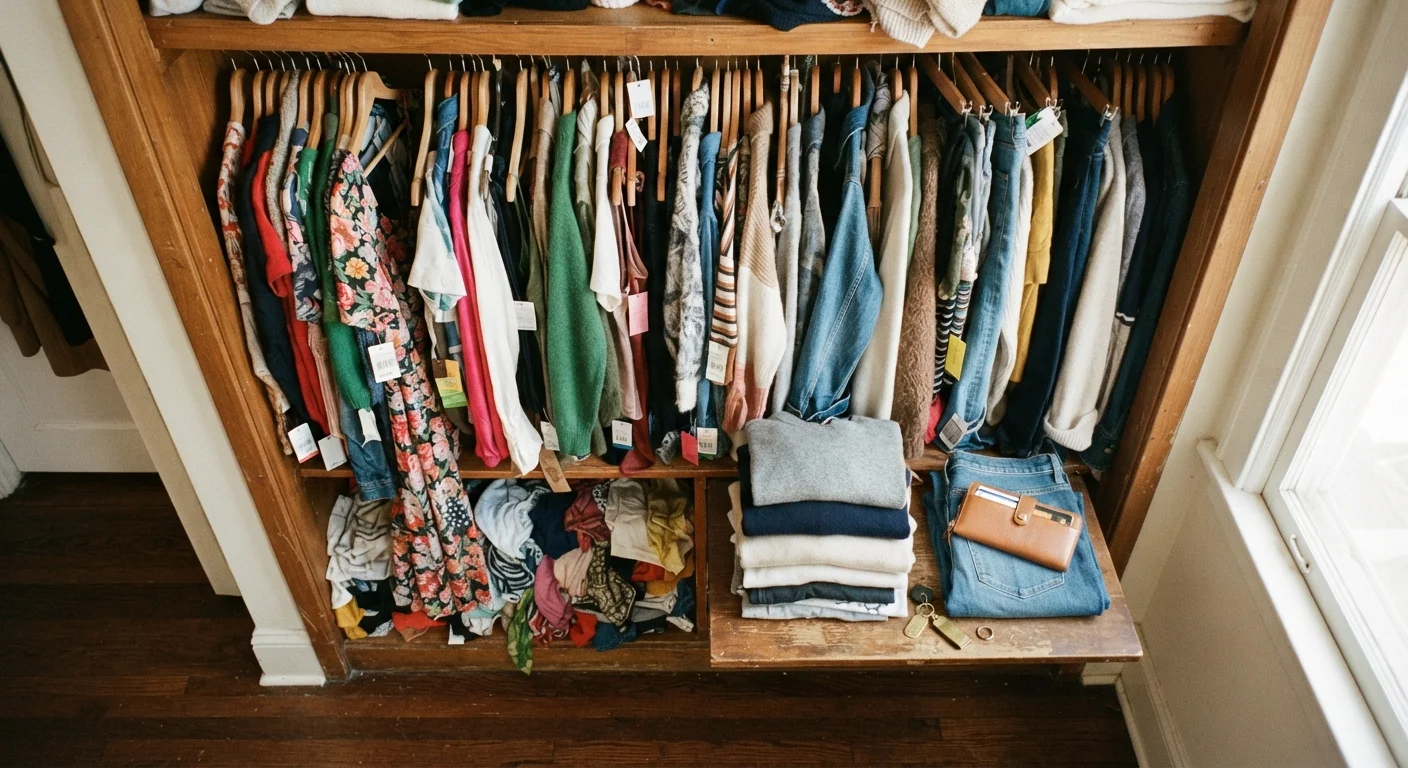
Why Your Closet Is Full but You Have Nothing to Wear
If you've ever stared at a packed closet and felt stumped, you're not alone. This frustratingly common experience isn't a style problem - it's a shopping strategy problem. Most wardrobe regrets trace back to a handful of repeatable mistakes that quietly accumulate over time, draining both storage space and spending money in the process.
The good news: these patterns are recognizable, and once you spot them, they're surprisingly easy to course-correct. Whether you're rebuilding from scratch or just trying to stop the cycle of buying and forgetting, understanding why the wardrobe keeps failing is the first step. For a solid foundation, it also helps to revisit foundational dressing principles that work across every season and budget.
Buying clothes that don't fit your current body, banking on altering or losing weight later.
Why it happens: Sales and optimism make aspirational purchases feel reasonable in the moment. It's easy to rationalize "I'll get it tailored" without actually budgeting for or scheduling that step.
Shopping without a list or intention, leading to duplicate items and gaps in the wardrobe.
Why it happens: Browsing without a plan turns into reactive buying - grabbing what looks good in isolation rather than what completes an existing outfit or fills a real gap.
Prioritizing price over cost-per-wear, leading to cheap items that fall apart quickly.
Why it happens: A low sticker price feels like a win, especially under budget pressure. But a $12 top worn twice costs more per use than a $40 top worn forty times.
Building a wardrobe for the life you wish you had rather than the one you actually live.
Why it happens: Aspirational shopping is human nature. It's easy to buy formal wear for events you rarely attend or athletic gear for workouts you haven't started yet.
Ignoring pattern and color coherence, buying pieces that don't work with anything already owned.
Why it happens: Items look appealing on their own or on a display rack. Without mentally connecting them to existing wardrobe pieces, it's easy to over-buy statement items that never get paired.
The Shopping Patterns That Make It Worse
Wardrobe mistakes rarely happen in isolation - they tend to cluster around specific shopping behaviors. Impulse buying is one of the most common culprits. A full breakdown of how these patterns form and reinforce themselves is worth reading in this deep dive on impulse shopping habits.
~$1,700
Average annual U.S. clothing spend per person
According to the U.S. Bureau of Labor Statistics Consumer Expenditure Survey, American households spend roughly this amount on apparel and related services each year.
50%
Wardrobe items rarely or never worn
Industry research and wardrobe studies consistently suggest that a large portion of most people's clothing goes unworn in any given year, pointing to a widespread mismatch between buying and wearing habits.
Another compounding factor is chasing trends without a clear plan for how a piece will integrate into what you already own. Trendy items often feel urgent in the moment but sit unworn after a few weeks. If you're working within a tight budget, building a capsule wardrobe gives you a framework for identifying which pieces actually pull their weight. And if you're evaluating where to shop, thrifting versus fast fashion is a useful comparison to make before your next purchase.
Trend Chasing Has a Hidden Price Tag
Micro-trends cycle faster than ever, and keeping pace means buying items with a very short style lifespan. Before adding a trend-driven piece, ask honestly whether you'd still want to wear it in eighteen months. If the answer is uncertain, that's useful information. Trend-forward spending can quietly outpace even generous clothing budgets over a year.
Finally, it's worth connecting wardrobe habits to the bigger financial picture. Clothing spending is a real budget line item, and tools like budgeting basics can help you set realistic limits before stepping into a store - or opening an app.