
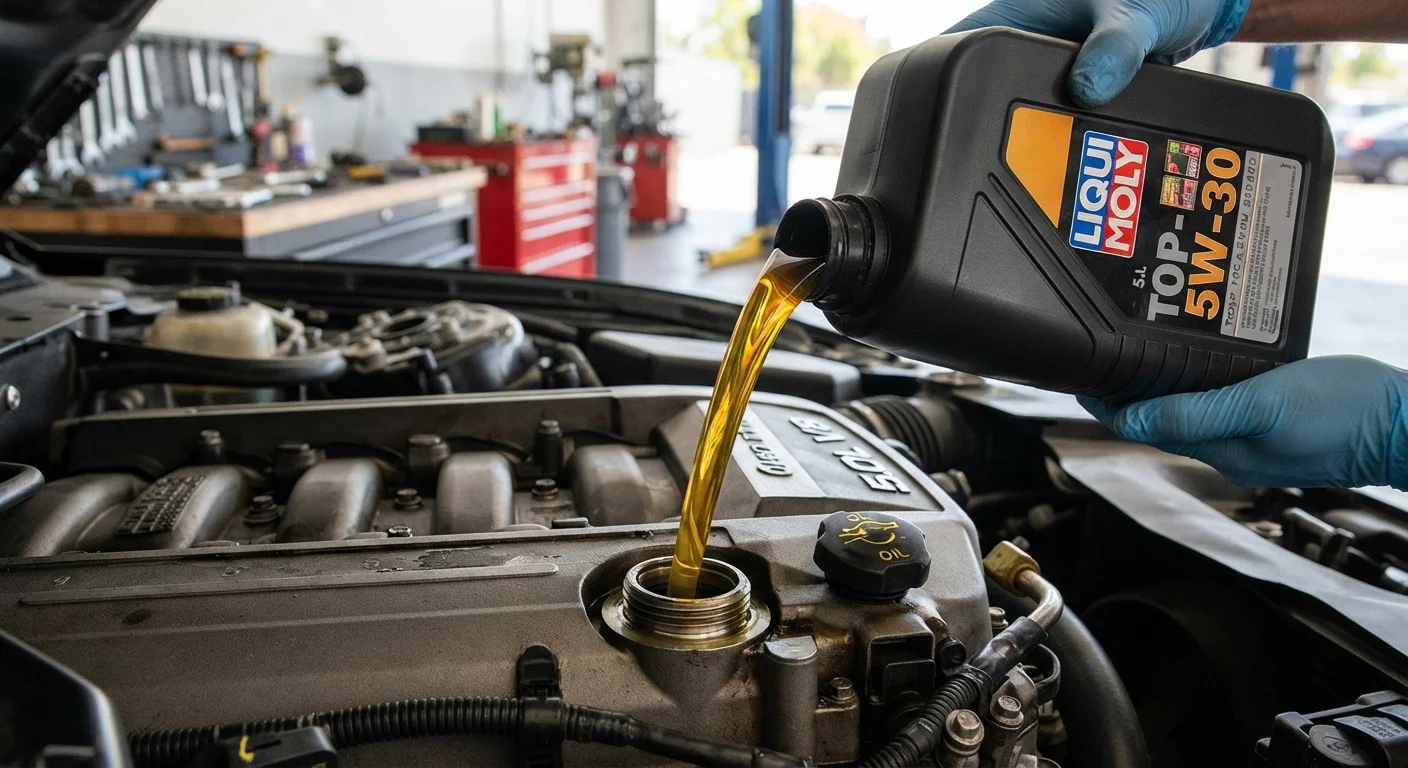
Where Each Oil Comes From
The core difference starts at the molecular level. Conventional motor oil is refined from crude petroleum. Through distillation and processing, refiners remove impurities, but the resulting oil still contains molecules of varying sizes and shapes - a natural inconsistency that affects how it performs under stress.
Synthetic motor oil, by contrast, is chemically built from scratch. Engineers start with base compounds - often derived from natural gas or refined crude fractions - and construct uniform, purpose-designed molecules. The result is an oil with consistent molecular structure, fewer impurities, and predictable behavior across a much wider temperature range.
This isn't marketing language - it's chemistry. The uniformity of synthetic molecules is what drives nearly all of its performance advantages. For a broader look at how oil fits into your vehicle's overall fluid system, see Car Fluids Every Driver Should Know About.
How They Perform Differently Under Real Conditions
Engine oil has one primary job: reduce friction between moving metal parts. But it also has to handle extreme heat, cold starts, and contamination from combustion byproducts - all at the same time.
| Criterion | Synthetic Oil | Conventional Oil |
|---|---|---|
| Origin | Chemically engineered molecules | Refined from crude petroleum |
| Typical change interval | 7,500-15,000 miles | 3,000-5,000 miles |
| Cost per quart | Higher (2-4x more) | Lower upfront cost |
| Cold-weather performance | Flows better at low temps | Thickens more in cold |
| High-heat stability | Resists breakdown longer | Degrades faster under heat |
| Sludge resistance | Stronger resistance | More prone to deposits |
| Best engine type | Modern, turbo, tight-tolerance | Older, simpler engines |
In cold weather, conventional oil thickens more than synthetic, which means your engine runs with less lubrication in the critical first seconds after a cold start. Synthetic oil flows more readily at low temperatures, protecting parts before the engine fully warms up.
At high temperatures - particularly in turbocharged engines where oil circulates through the turbo itself - conventional oil breaks down faster. This thermal breakdown produces sludge and deposits that can clog small passages. Synthetic oil resists oxidation and stays stable at higher temperatures, keeping internal surfaces cleaner over time.
7,500-15,000 mi
Typical synthetic oil change interval
Many vehicle manufacturers specify extended drain intervals when full synthetic oil meeting their oil specification is used.
2-4×
Synthetic oil cost premium per quart
Synthetic oil costs significantly more upfront, though extended intervals can reduce the annual cost difference considerably.
~30 seconds
Critical cold-start lubrication window
Engine wear is disproportionately concentrated in the first moments after startup, when oil has not yet fully circulated - making cold-flow properties especially important.
The Real Cost Comparison
Synthetic oil typically costs two to four times more per quart than conventional. That sounds like a clear disadvantage until you factor in change intervals.
Many vehicle manufacturers recommend changing conventional oil every 3,000-5,000 miles. Synthetic oil, depending on the vehicle and oil specification, can often go 7,500-15,000 miles between changes - and some manufacturers specify full-synthetic intervals even longer. Fewer oil changes per year can partially or fully offset the higher per-quart cost.
That said, change intervals aren't one-size-fits-all. Driving in extreme cold, towing regularly, or making frequent short trips are all conditions that accelerate oil degradation regardless of oil type. The myth of the universal 3,000-mile change interval doesn't hold up under scrutiny - your driving conditions matter as much as the oil type.
Can You Mix Synthetic and Conventional Oil?
Mixing the two won't cause immediate engine damage - modern synthetic and conventional oils are generally compatible. However, blending them dilutes the performance advantages of synthetic, particularly its thermal stability and extended-interval capability. If you're topping off between changes, using the same type as what's already in your engine is the cleaner approach. Many 'synthetic blend' oils on the market are intentionally formulated mixtures, sitting between full synthetic and conventional in both price and performance.
How to Decide What Your Car Actually Needs
The single most reliable guide is your owner's manual. It specifies the oil viscosity grade (such as 5W-30 or 0W-20) and, in many cases, whether synthetic is required or recommended. Following manufacturer specifications keeps your warranty intact and ensures the oil matches your engine's design tolerances.
If your manual doesn't specify synthetic, conventional may be entirely adequate - particularly for older vehicles with higher mileage and worn seals, where some drivers actually prefer conventional oil's slightly thicker consistency. Switching a high-mileage engine from conventional to synthetic isn't dangerous, but it can occasionally surface pre-existing leaks that the thicker conventional oil was masking.
For a full picture of what your service intervals actually mean, Your Car's Maintenance Schedule, Explained walks through each milestone in plain language.
This article is for general informational purposes only. Always consult your vehicle's owner's manual and a qualified mechanic for maintenance decisions specific to your car.