The Wattage Misconception
Walk through any appliance aisle or scroll any product listing and you'll see wattage displayed prominently - 1,200W, 2,000W, 2,400W. The implicit message is that more watts equals more cleaning power. It doesn't. Wattage is simply a measure of electrical consumption: how fast a vacuum draws energy from the outlet. A vacuum rated at 2,000W pulls more electricity than one rated at 1,000W, but that tells you almost nothing about what happens at the nozzle.
The real variable is how efficiently the motor converts that electrical input into useful work - airflow, suction pressure, and the mechanical action of the brush roll. Two motors can consume identical wattage while one loses a substantial portion to heat, friction, and poor engineering, while the other converts most of it into actual cleaning force. This is why treating wattage as a cleaning quality proxy is one of the most common - and costly - mistakes shoppers make.
For a broader framework on evaluating home appliance specs, see questions worth asking before comparing any two home appliances.
Myth
A vacuum with higher wattage will always clean better than one with lower wattage.
Fact
Wattage measures energy consumption, not cleaning output. Motor efficiency, airflow design, and seal integrity determine actual cleaning performance.
A 2,000W vacuum with an inefficient motor and a leaky body can deliver weaker suction at the nozzle than a well-engineered 1,200W model. Manufacturers in some markets have voluntarily moved away from wattage as a primary marketing metric precisely because it misleads consumers about performance.
Myth
Suction strength and airflow are the same thing - one spec covers both.
Fact
Suction pressure (Pa) and airflow volume (CFM) are distinct measurements that affect different aspects of cleaning performance.
Suction pressure determines how forcefully the vacuum pulls at the intake point, which matters most for dislodging embedded particles. Airflow volume determines how efficiently debris is transported through the hose and into the bin. A vacuum optimized for only one of these can underperform in real-world conditions where both are needed simultaneously.
Myth
HEPA filtration is purely a benefit - it makes a vacuum clean better in every way.
Fact
HEPA filters improve air quality output but add resistance to airflow, which can reduce suction if the motor isn't powerful enough to compensate.
Filtration efficiency and cleaning performance involve a trade-off. HEPA-rated filters capture particles as small as 0.3 microns, which benefits households with allergy concerns. However, the denser filter media restricts airflow. Vacuums with underpowered motors may struggle to maintain adequate suction when paired with HEPA filtration, particularly as the filter loads with dust over time.
Myth
All vacuum motors of the same wattage produce the same amount of useful suction.
Fact
Motor efficiency varies significantly by design; two same-wattage motors can deliver very different levels of usable suction pressure and airflow.
Motor design, bearing quality, fan blade geometry, and thermal management all affect how much of the electrical input becomes useful airflow versus waste heat. Brushless motors, for example, are generally more efficient than brushed motors at equivalent wattage ratings, converting more energy into airflow rather than friction and heat.
The Specs That Actually Predict Performance
Three measurements give a much clearer picture of cleaning capability than wattage alone:
- Pascals (Pa): A unit of suction pressure measuring how forcefully the vacuum pulls air at the intake. Higher Pa values indicate stronger suction, particularly useful for lifting embedded debris from carpet fibers. Figures above 20,000 Pa are common in high-performance cordless models.
- CFM (Cubic Feet per Minute): Measures airflow volume - how much air moves through the vacuum per minute. Strong airflow is critical for transporting debris from the floor into the dustbin. A vacuum can have high Pa but low CFM, resulting in strong localized suction but weak transport of larger particles.
- Air Watts: A combined metric calculated from both suction pressure and airflow. Air watts better represent the total useful power output than either Pa or CFM alone, because it accounts for both force and volume of airflow working together.
No single number captures everything. A machine optimized for deep carpet cleaning may prioritize Pa, while one suited to hard floors benefits more from high CFM to sweep debris toward the intake.
20,000+ Pa
Suction pressure in high-performance cordless vacuums
Suction pressure figures above 20,000 Pa are commonly cited by manufacturers of premium cordless vacuum models as a performance benchmark.
~100 CFM
Airflow volume considered strong for full-size uprights
Consumer product testing organizations have historically used airflow near or above 100 CFM as a benchmark for strong debris transport in full-size vacuum cleaners.
Beyond motor metrics, physical design matters enormously. Brush roll stiffness and rotation speed determine how effectively carpet fibers are agitated to release embedded dirt. Seal quality - how well the vacuum's body prevents air leaks between the nozzle and the motor - directly impacts suction efficiency. A vacuum with a powerful motor but a poorly sealed body loses pressure at every joint, reducing effective suction at the floor surface.
Filter Maintenance Affects All Performance Metrics
A clogged or overdue filter increases airflow resistance and can significantly reduce effective suction, regardless of how capable the motor is. Most manufacturers specify filter cleaning or replacement intervals - following them matters more than the specs on the box. Comparing two vacuums fairly requires that both are operating with clean, correctly seated filters.
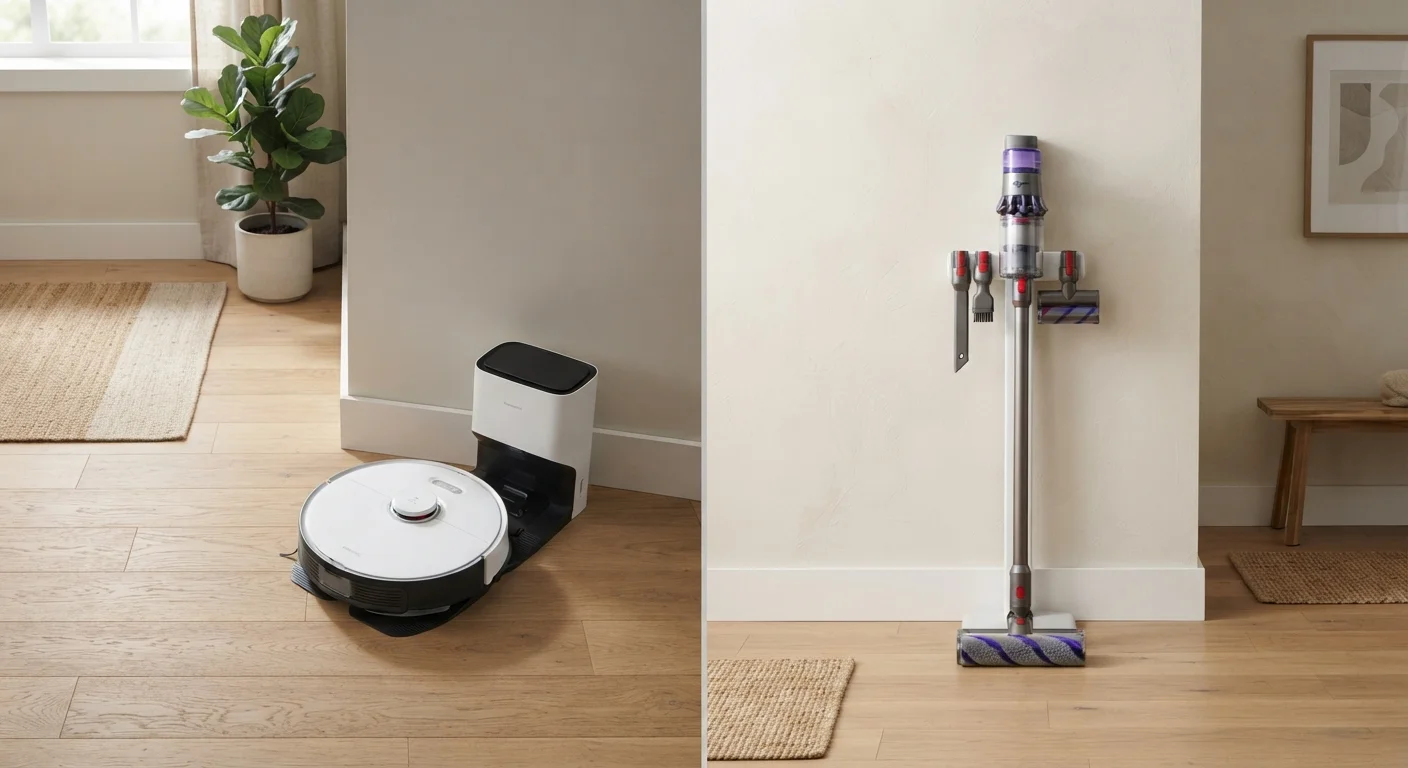
Filtration is the other overlooked variable. A high-efficiency particulate air (HEPA) filter captures finer particles but creates greater airflow resistance. A vacuum with a HEPA filter and a weaker motor may underperform on debris pickup despite excellent air quality output. Understanding the trade-off matters when you're evaluating total performance. For decisions specific to floor type and home layout, robot vacuum vs. stick vacuum comparisons can help you match the right tool to your space.