Why Bed Type Matters More Than You Might Think
A pet bed is not a luxury add-on - it directly affects your animal's sleep quality, joint health, and behavioral comfort. The wrong surface can worsen pressure points in an older dog, fail to provide warmth for a thin-coated cat, or simply fall apart within weeks if it isn't built to handle your pet's size and activity level.
As dogs and cats age, their physical needs shift meaningfully. Bedding requirements change across a dog's life stages, from the warmth and containment a puppy needs to the pressure-relieving support an arthritic senior requires. Understanding what each bed type actually offers - not just what the packaging suggests - helps you make a durable, appropriate choice.
This article is general informational content for pet owners and is not a substitute for veterinary advice. If your pet has a diagnosed orthopedic condition, consult your veterinarian before selecting bedding.
Standard Foam: Accessible but Variable
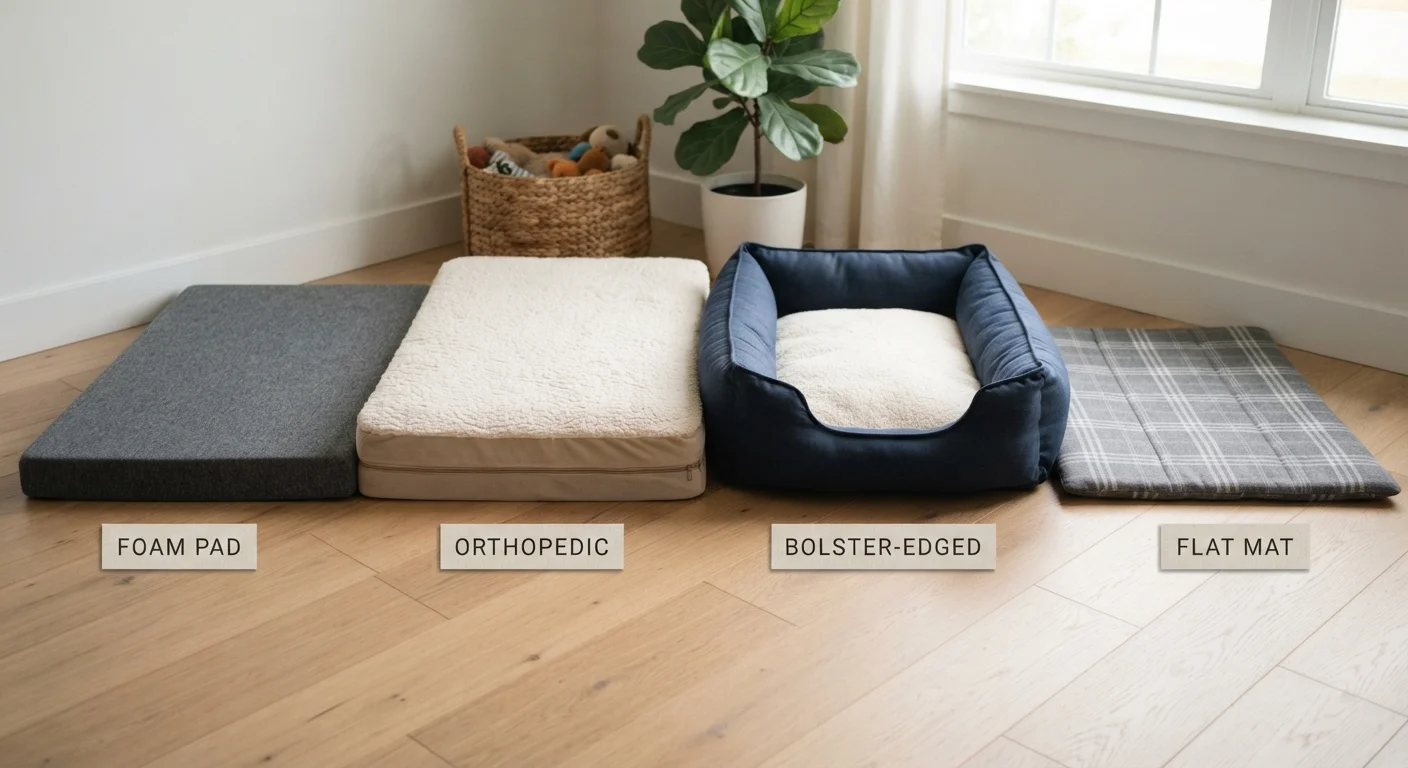
Standard foam beds are the most common and widely available option. They typically consist of a single block or layer of polyurethane foam covered by a fabric shell. Their main appeal is cost - they are generally the least expensive option in any given size range.
The significant caveat is foam density. Low-density foam compresses quickly under weight and loses its shape within months, offering little meaningful support once flattened. Higher-density foam holds up longer but is harder to evaluate without feeling the core directly. Covers can often be removed and machine-washed, though inner foam itself rarely tolerates machine washing without degrading.
Check Foam Density Before You Buy
If you can, compress the foam core with your hand before purchasing - quality foam should push back firmly and return to shape quickly. A bed that compresses easily under hand pressure will bottom out under a pet's full weight within weeks. When shopping online, look for foam density measurements (pounds per cubic foot) in product specifications rather than relying on terms like 'plush' or 'supportive.'
Standard foam works reasonably well for young, healthy pets of appropriate weight. For larger or heavier animals, even a mid-priced foam bed may bottom out faster than expected, effectively reducing the pet to sleeping on the floor with a thin fabric layer on top.
Orthopedic Foam: What the Term Actually Means
"Orthopedic" is a marketing term with no regulated definition in the pet industry - a reality worth understanding before you spend more. That said, beds genuinely built with high-density memory foam or certified CertiPUR-US foam do offer measurably better pressure distribution than standard foam. The material conforms to the body's contours, reducing localized pressure on joints, hips, and elbows.
This matters most for senior animals, large breeds prone to elbow calluses, and pets diagnosed with arthritis or hip dysplasia. The denser the foam, the longer the functional life of the bed - though this also increases weight and sometimes makes cleaning more cumbersome. Look for removable, washable covers as a baseline feature. Understanding your pet's health baseline can help you determine whether enhanced joint support is a medical priority or simply a comfort upgrade.
| Standard Foam | Orthopedic Foam | Bolster Bed | Flat Mat | |
|---|---|---|---|---|
| Joint support | Moderate | High | Low to moderate | Low |
| Typical lifespan | 6-18 months | 2-4 years | 1-2 years | 6-12 months |
| Washability | Cover only | Cover only | Varies; often difficult | Usually fully machine washable |
| Best life stage fit | Young to adult | Senior or arthritic | Any; especially anxious pets | Puppies, travel, crates |
| Portability | Moderate | Low (heavy) | Low | High |
| Relative cost | Lower | Higher | Moderate to high | Lower |
Bolster Beds: Structure and Security
Bolster beds feature raised edges or walls around the sleeping surface, creating a defined boundary. This design serves animals that prefer to rest their heads on an elevated surface or that feel more secure when enclosed on multiple sides. Cats, smaller dogs, and anxious animals tend to gravitate toward this style instinctively.
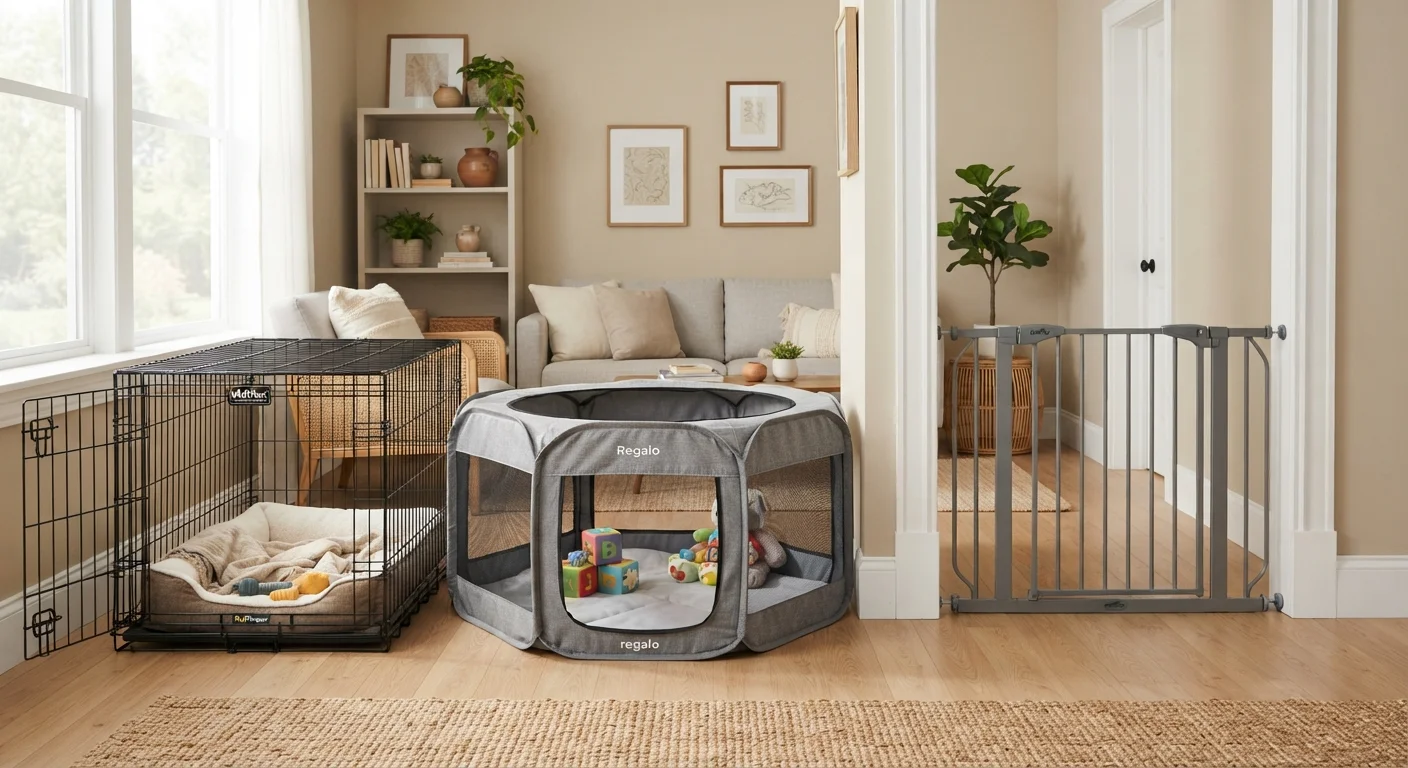
The interior base of a bolster bed is typically foam or fiberfill, and the raised sides are usually fiberfill-stuffed fabric. The tradeoff: the fiberfill in sides and base compresses over time, and washing the entire structure - particularly a large one - can be logistically difficult. Some bolster beds have fully removable covers; others require spot cleaning only. If your pet sleeps in a crate, pairing the right containment setup with appropriate bedding can improve your pet's comfort and your own convenience.
Flat Mats: Simplicity and Washability
Flat mats - sometimes called dog blankets, crate pads, or sleep mats - are the most straightforward option. They consist of a thin padded or quilted layer with no raised edges. Their primary advantages are portability, ease of washing, and versatility: they fit inside crates, layer over furniture, and travel easily.
Flat mats offer minimal orthopedic support and little insulation from cold floors, so they are generally not the right primary bed for a senior animal or a pet with joint concerns. However, they are practical as secondary surfaces, for puppies still prone to accidents, and in warmer climates where insulation is not a priority. Durability varies widely based on stitching quality and fill material - the same principle that applies to household textiles generally. Evaluating textile quality before purchasing is a useful skill that applies equally to pet mats and human linens.
Loose Fill and Small Pets: A Safety Note
Some flat mats and bolster beds use loose polyfill or shredded foam that can shift unevenly or, in the case of damaged seams, become accessible to chewing pets. Small dogs and cats that ingest synthetic filling material can experience gastrointestinal obstruction, which is a veterinary emergency. Inspect seams and covers regularly and replace any bed showing significant wear or exposed fill.