The Claims That Are Actually Regulated
The single most important phrase on a pet food bag is the AAFCO nutritional adequacy statement. It appears in small print, typically near the guaranteed analysis, and it tells you whether a food is formulated to meet a nutrient profile or tested through a feeding trial. Both are valid pathways, but feeding trials involve real animals consuming the food - a higher bar than calculation alone.
Life-stage labeling is also regulated. A food labeled for "growth" (puppies or kittens), "maintenance" (adult animals), or "all life stages" must meet distinct AAFCO nutrient profiles. "All life stages" foods must clear the most demanding threshold - growth requirements - so they are not inherently superior; they simply meet a broader standard. If your adult pet has no special needs, a maintenance formula is often appropriate and may be more economical.
For a deeper walkthrough of how these statements appear on packaging, see the guaranteed analysis and AAFCO statement explainer from our nutrition series.
AAFCO Doesn't Test Products Itself
AAFCO is a standard-setting body, not a federal regulatory agency. It publishes model regulations and nutrient profiles that individual states may adopt, but it does not inspect facilities or test products on store shelves. The FDA and state feed control officials handle enforcement, which means oversight intensity varies by state.
The Ingredient List: What the Order Does and Doesn't Show
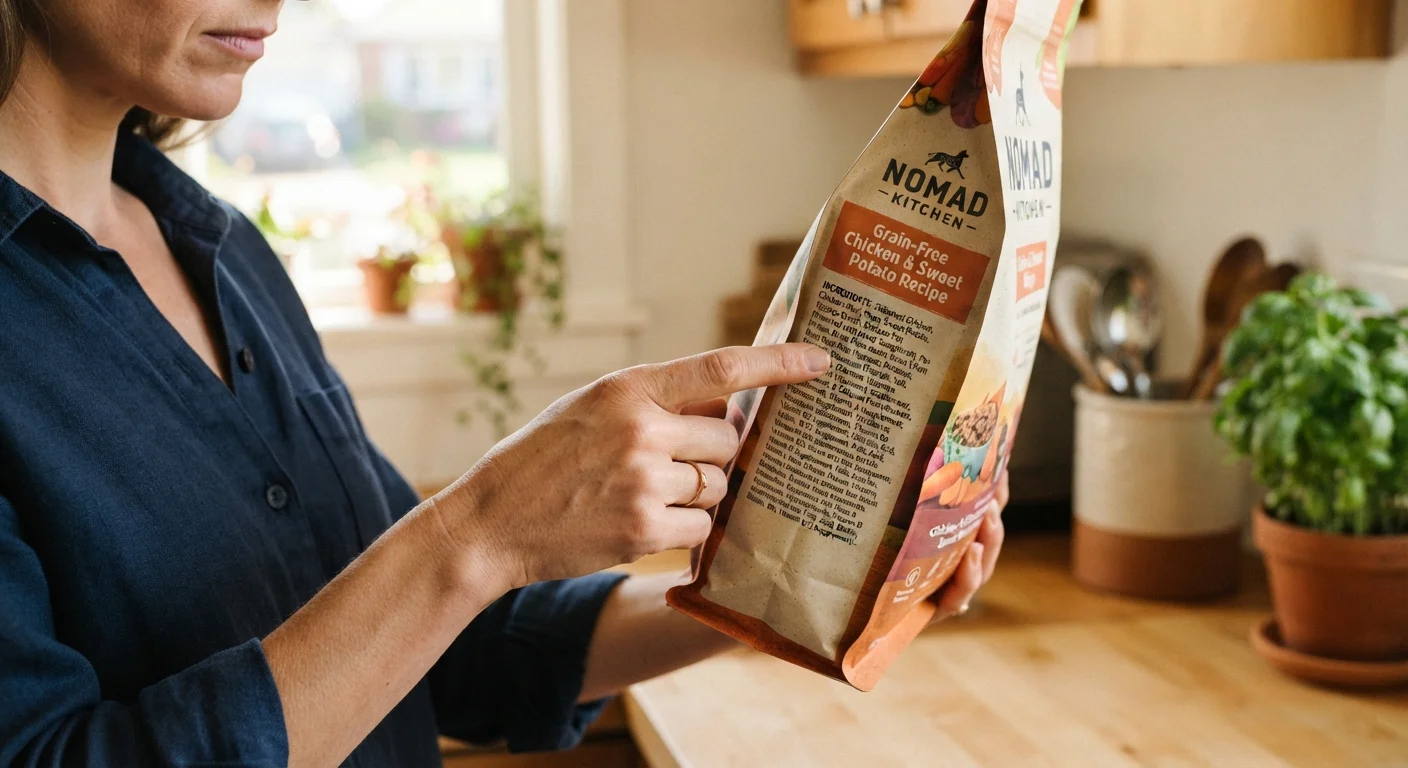
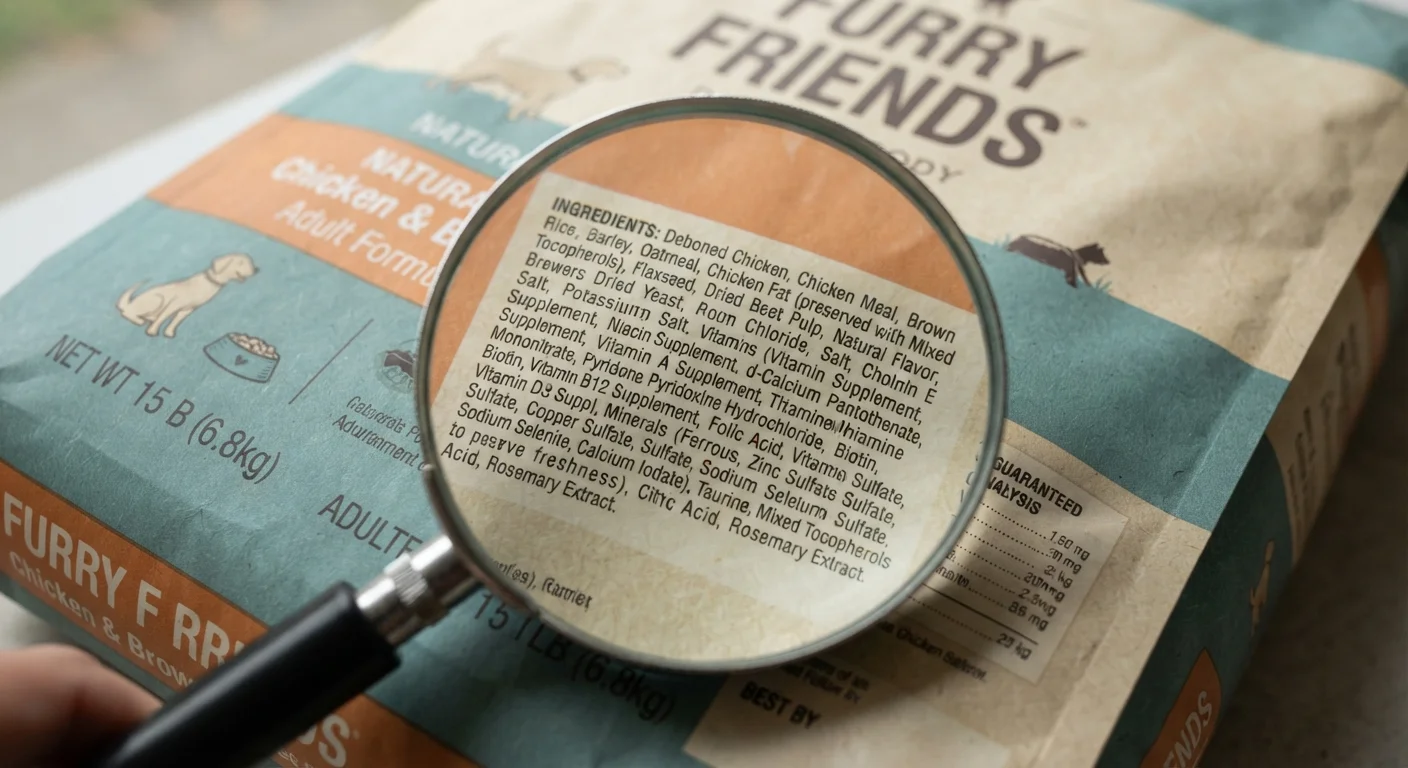
Ingredients are listed in descending order by pre-cooking weight, not by their contribution to the finished product. This distinction is significant. Raw chicken - which is about 70% water - can legitimately appear first on a dry kibble label even when the actual protein content of the food is modest. Once moisture is driven off during processing, a grain listed third or fourth may constitute a larger share of what your pet actually eats.
A related practice worth understanding is ingredient splitting: listing one ingredient under multiple names (e.g., "ground corn," "corn gluten meal," "corn flour") so each entry appears lower on the list individually, even though corn collectively may outweigh the leading protein. Our article on ingredient splitting and label tactics covers this in detail.
~70%
Water content in raw chicken before processing
USDA compositional data shows raw chicken breast is roughly 70% moisture, explaining why it can top ingredient lists in dry kibble despite lower finished-product contribution.
2 pathways
Ways a food can earn "complete and balanced"
AAFCO recognizes formulation to nutrient profiles and actual animal feeding trials as the two approved methods for substantiating a nutritional adequacy claim.
50+
States with independent pet food enforcement authority
Because AAFCO publishes model regulations that states adopt individually, enforcement standards and inspection frequency vary significantly across the country.
Marketing Words With No Regulatory Weight
Several terms that appear prominently on pet food packaging carry no standardized definition under AAFCO or federal law. "Holistic," "premium," "super premium," and "gourmet" are unregulated marketing descriptors. A manufacturer can print any of them on packaging without meeting any additional standard beyond what already applies to all pet food.
"Natural" has a partial definition - AAFCO describes it as food derived from plant, animal, or mined sources without chemical synthesis - but the term is applied inconsistently and does not indicate a specific quality tier. "Organic" is more tightly controlled when it appears on pet food (it must meet USDA National Organic Program standards), but certified organic pet food remains uncommon and may carry a significant price premium.
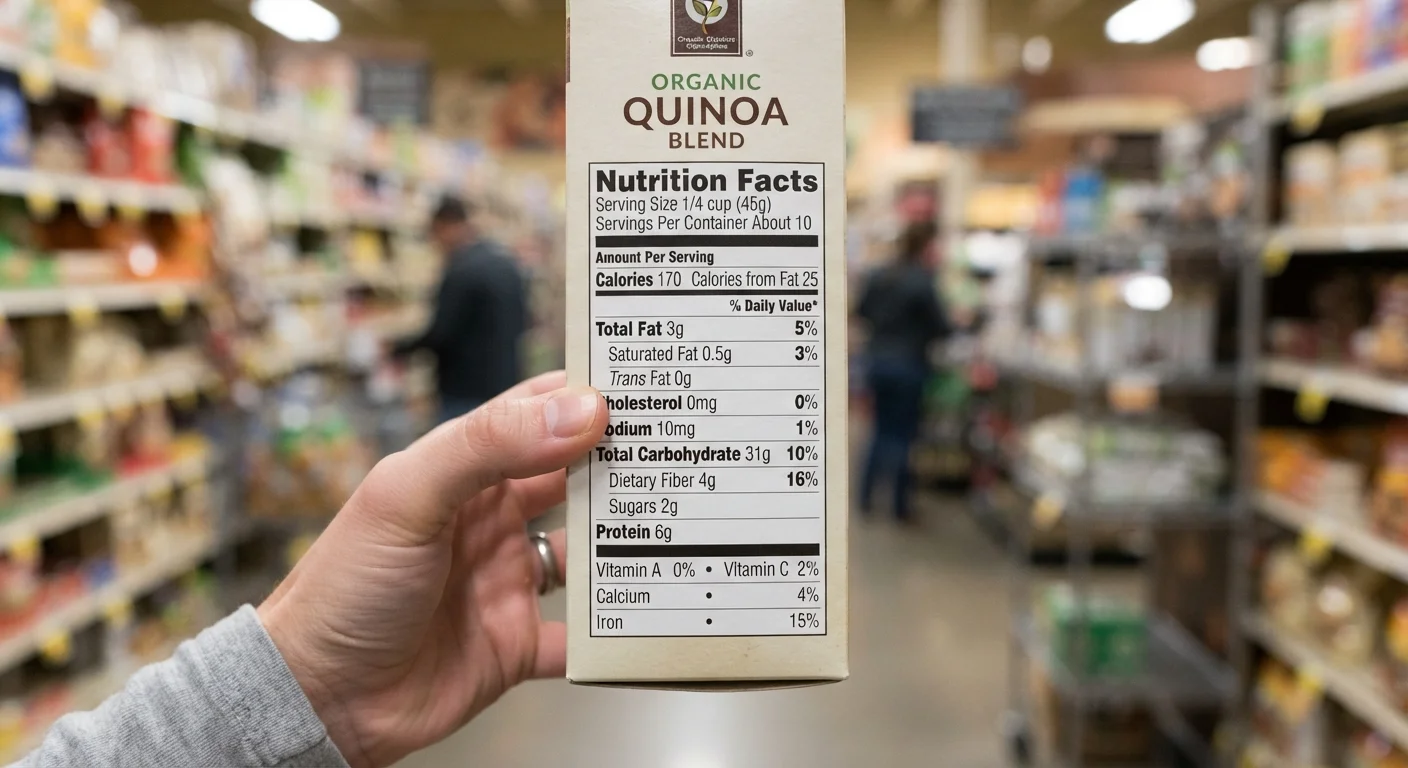
Understanding which words are regulated and which are not is fundamental to comparing products across price points. For context on how the same labeling gap appears in other consumer categories, the guide to reading human nutrition labels illustrates how differently food labels can be structured depending on regulatory framework.
Focus on the Adequacy Statement First
Before reading a single marketing claim on the front of the bag, flip to the back and find the AAFCO nutritional adequacy statement. Confirm it covers the correct life stage for your pet and note whether it's based on formulation or a feeding trial. That one sentence carries more verifiable information than any front-panel claim.
Using the Guaranteed Analysis Correctly
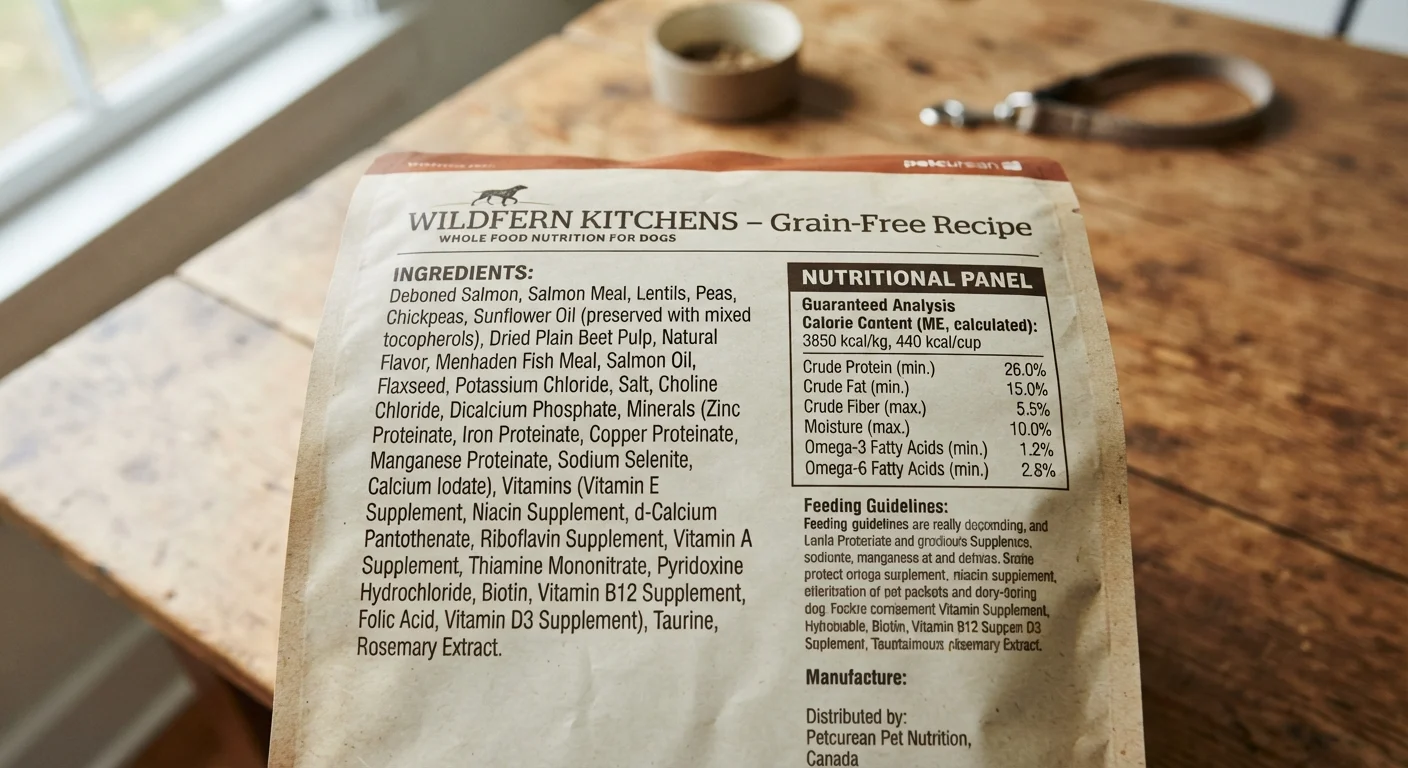
The guaranteed analysis panel lists four required figures: minimum crude protein, minimum crude fat, maximum crude fiber, and maximum moisture. Notice that two are minimums and two are maximums - actual values in any given batch may differ. The panel is a compliance tool, not a precise nutritional profile.
When comparing a wet food to a dry food, the moisture gap makes direct comparison misleading. A wet food listing 10% protein contains far more protein per calorie than it appears, because it may be 78% water. Converting both foods to a dry-matter basis - dividing the nutrient percentage by the percentage of dry matter (100 minus moisture) - gives a more honest comparison. Most manufacturers do not display this calculation, so owners must do it themselves or consult resources like the complete pet food nutrition guide for practical tools.
This article provides general educational information about pet food labeling and is not a substitute for personalized veterinary nutrition advice. Always consult your veterinarian regarding your specific pet's dietary needs.