Why Camera Specs Are Built to Impress, Not Inform
Camera specification sheets are marketing documents first and technical references second. Manufacturers lead with the biggest numbers - 200MP sensors, f/1.4 apertures, 8K video - because large figures feel like obvious wins to shoppers scanning a product page. The problem is that most of these numbers only make sense in relation to other specifications, and some are barely meaningful at all without real-world context.
Understanding which numbers matter, and why some don't, is the most reliable way to evaluate camera quality before you commit to a purchase. This article separates common misconceptions from the technical realities that actually shape the photos you take every day. For a broader look at how manufacturers routinely leave out critical context, see what product spec sheets leave out.
Myth
More megapixels always means better photo quality.
Fact
Megapixel count measures resolution only - how many pixels the sensor records - not color accuracy, dynamic range, or low-light performance.
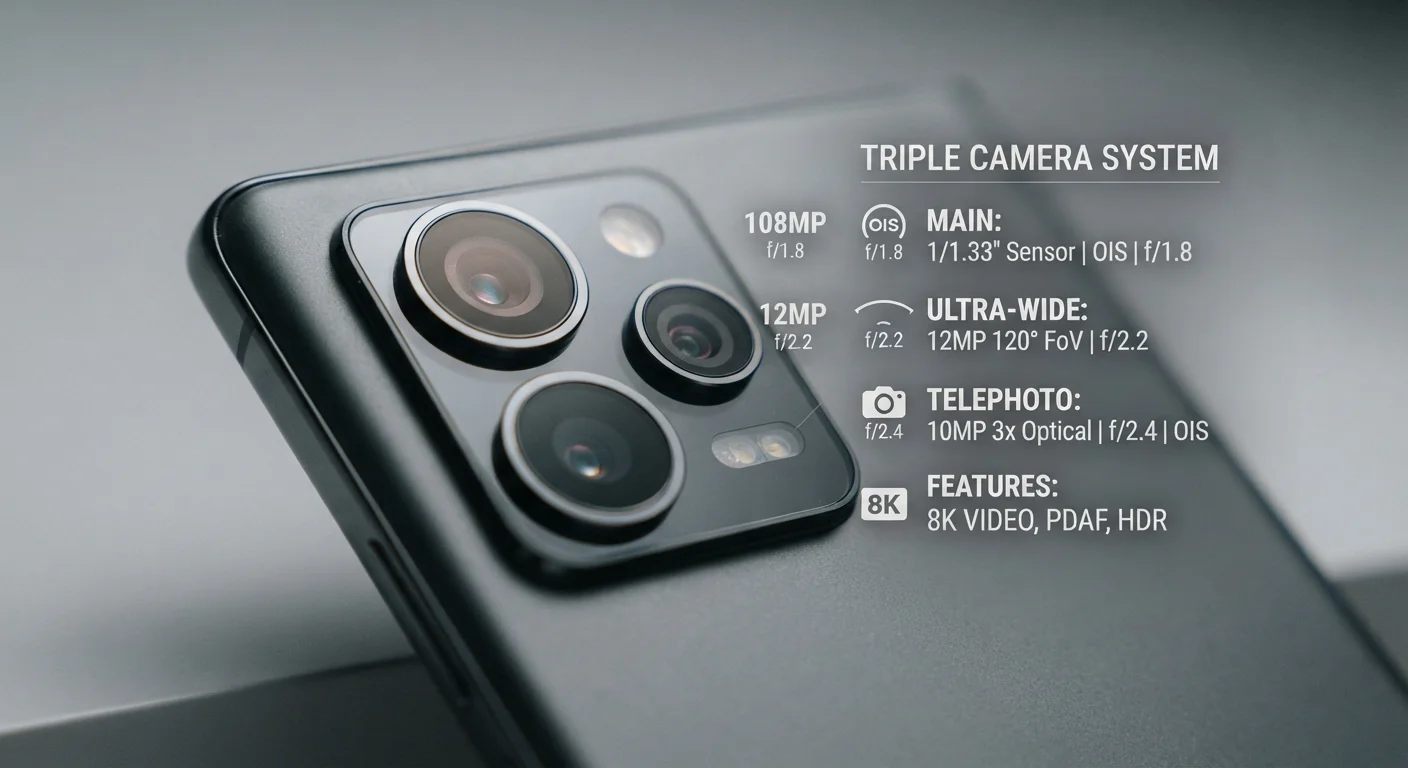
A 108MP sensor crammed onto a small image sensor must split the same physical area into far more, smaller pixels. Smaller pixels capture less light per unit, which increases digital noise in anything other than bright daylight. A 12MP camera with a larger sensor and wider aperture will routinely outperform a 108MP competitor in mixed or low-light conditions. Resolution only becomes a meaningful differentiator when you're printing very large or cropping aggressively.
Myth
A lower f-number (like f/1.8) means the camera is worse because it's a smaller number.
Fact
Aperture f-numbers work inversely: a lower f-number means a wider lens opening, which admits more light and produces shallower depth of field.
The f-number is a ratio - focal length divided by aperture diameter. Because it's a fraction, f/1.8 represents a physically larger opening than f/4.0. A wider aperture is generally advantageous in low light and for blurring backgrounds, though it also reduces the zone of sharp focus. Manufacturers sometimes list multiple apertures for multi-lens arrays; the widest aperture applies only to one specific lens (usually the main camera), not all of them.
Myth
Optical zoom numbers are directly comparable across all cameras.
Fact
Zoom multipliers are calculated from each camera's own baseline focal length, making cross-device comparisons unreliable without knowing the starting focal length.
A "5x optical zoom" on one phone may start from a 13mm equivalent wide-angle lens and reach 65mm, while another device's "5x" begins at 24mm and reaches 120mm - a substantially different telephoto reach. Always look for the actual focal length range (expressed in 35mm equivalent terms) rather than the zoom multiplier alone. "Digital zoom," which simply crops and upscales the sensor image, should not be confused with true optical zoom; it degrades image quality noticeably.
Myth
Video resolution tells you everything about video quality.
Fact
Bitrate, codec, stabilization method, and autofocus behavior affect recorded video quality at least as much as resolution.
Two devices both recording at 4K/30fps can produce footage that looks dramatically different. A camera encoding at 25 Mbps with efficient compression will retain more detail than one shooting at 15 Mbps with heavier compression artifacts. Optical image stabilization (OIS) reduces camera shake mechanically, while electronic stabilization (EIS) crops the frame digitally - both may be listed simply as "stabilization" on a spec sheet. Autofocus tracking speed and accuracy, rarely listed at all, heavily influences the usability of video in real situations.
Myth
More camera lenses on a phone always means more versatility.
Fact
Auxiliary lenses vary widely in quality; some macro or depth-sensor lenses contribute little to practical everyday photography.
A triple-camera array sounds impressive, but the third lens is sometimes a fixed-focus macro lens limited to subjects within a few centimeters, or a depth sensor that exists only to assist software portrait-mode blur rather than capture full images. What matters is the quality of the primary and ultrawide lenses - their sensor size, maximum aperture, and autofocus capability - not the total number of camera modules listed on a spec sheet.
The Specs That Actually Drive Real-World Image Quality
Once the myths are cleared away, three technical factors consistently predict real-world camera performance better than raw megapixel count: physical sensor size, maximum aperture, and the quality of the image signal processor (ISP).
~1 μm
Typical pixel size in high-MP phone sensors
Industry sensor analyses show that many 100MP+ mobile sensors use pixels around 0.7-1.0 microns in size, compared to 1.4-1.8 microns in lower-resolution primary sensors that often outperform them in low light.
f/1.4-f/2.8
Typical main camera aperture range in modern smartphones
Across mainstream smartphone categories, primary camera apertures generally fall in this range, with the widest apertures found on flagship devices designed for low-light capture.
2-4 stops
Light advantage of a larger aperture
Moving from f/2.8 to f/1.4 allows approximately two to four times more light to reach the sensor, a meaningful difference in indoor or nighttime shooting conditions.
Sensor size determines how much light the camera physically captures. Larger sensors gather more photons per exposure, which reduces digital noise in dim conditions. Manufacturers list sensor dimensions in fractions of an inch (e.g., 1/1.3") - a larger fraction indicates a bigger sensor. Aperture (the f-number) controls how wide the lens opens; an f/1.8 lens admits significantly more light than an f/2.8 lens at the same shutter speed. And the ISP - the dedicated chip that converts raw sensor data into a final image - determines how well the camera handles noise reduction, color accuracy, and dynamic range after capture.
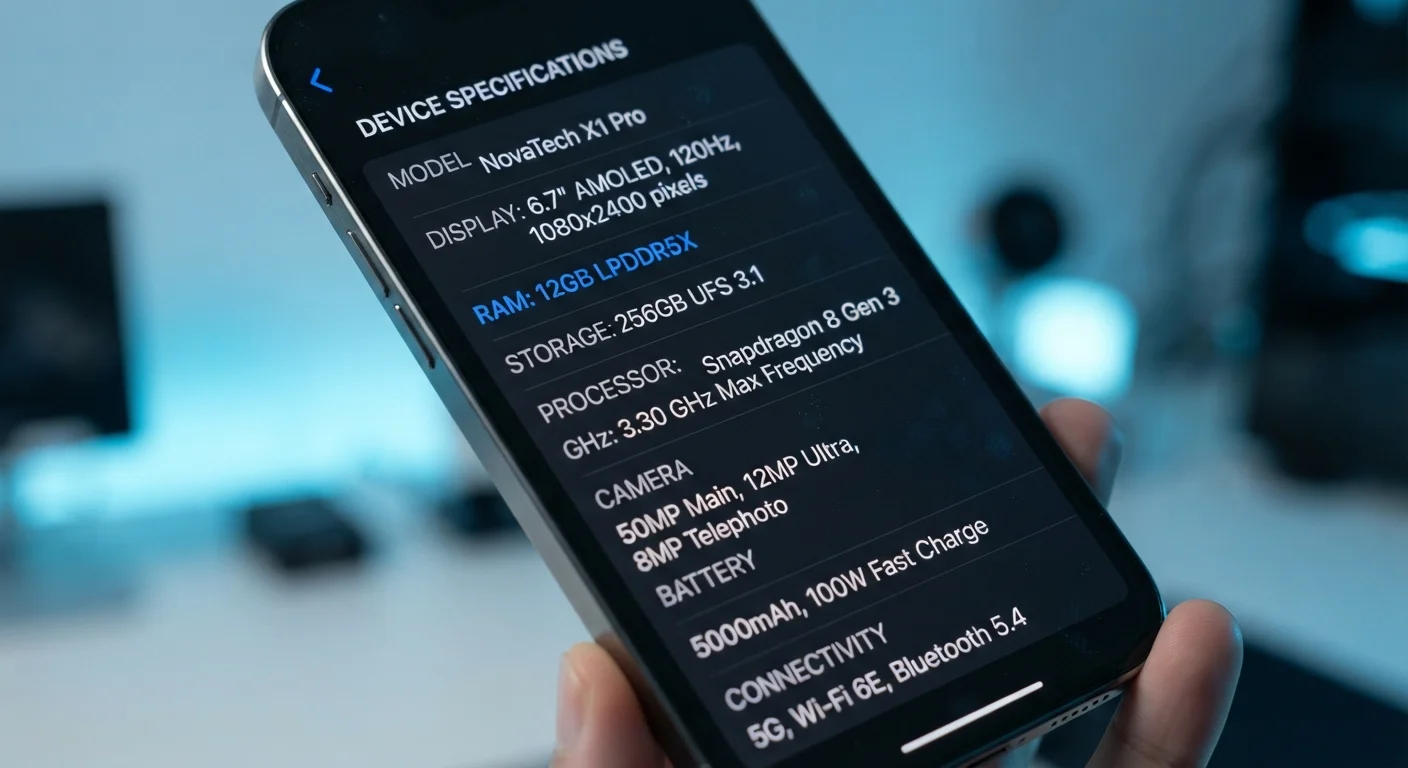
Computational photography layers on top of hardware: features like night mode, HDR merging, and portrait-mode depth mapping are software-driven and can dramatically change output quality independent of sensor resolution. This is why two phones with identical megapixel counts can produce strikingly different photographs. Similar spec-vs-reality dynamics apply across device categories - the what smartphone specs actually mean guide covers how chipsets and RAM figures compare in practice.
Sample Photos Beat Spec Sheets Every Time
Before evaluating a camera based on its specifications alone, seek out independently shot sample images taken in conditions similar to how you actually shoot - indoors, at night, with moving subjects. Spec sheets describe theoretical capabilities; real-world samples reveal how the camera, lens, sensor, and software work together. Independent photography and technology publications regularly publish controlled comparison shoots that offer far more decision-useful information than manufacturer spec pages.
When evaluating any camera - on a phone, tablet, or standalone device - prioritize sample images shot in realistic conditions over the headline spec figures. Specs set a ceiling; real-world samples show you the floor.