Why the Confusion Exists
Walk into any tire shop and you'll likely see rotation, balancing, and alignment listed side by side on the service board - sometimes even bundled together. That proximity makes it easy to assume they're interchangeable or redundant. They're not. Each one addresses a different mechanical issue, happens at a different interval, and costs a different amount. Mixing them up means either paying for something you don't need or skipping something you do.
Understanding the difference isn't just trivia. It directly affects how long your tires last and how safely your car handles. As we cover in why skipping routine maintenance costs more, small oversights compound into expensive repairs.
What Each Service Actually Does
Tire Rotation is the simplest of the three. Because front and rear tires wear at different rates - front tires carry braking and steering loads - rotating them periodically distributes that wear more evenly. Most manufacturers recommend rotation every 5,000 to 7,500 miles, which often lines up with oil changes. The service typically costs $20-$50 and takes under 30 minutes.
Wheel Balancing addresses weight imbalance in the wheel-and-tire assembly. No tire or rim is perfectly uniform, and even small variations create vibration, especially at highway speeds. A technician mounts the wheel on a spin balancer, identifies heavy spots, and adds small counterweights to compensate. You'll usually need this when new tires are installed, when you feel steering-wheel vibration, or roughly every 12,000-15,000 miles. Cost runs $15-$75 depending on how many wheels are done.
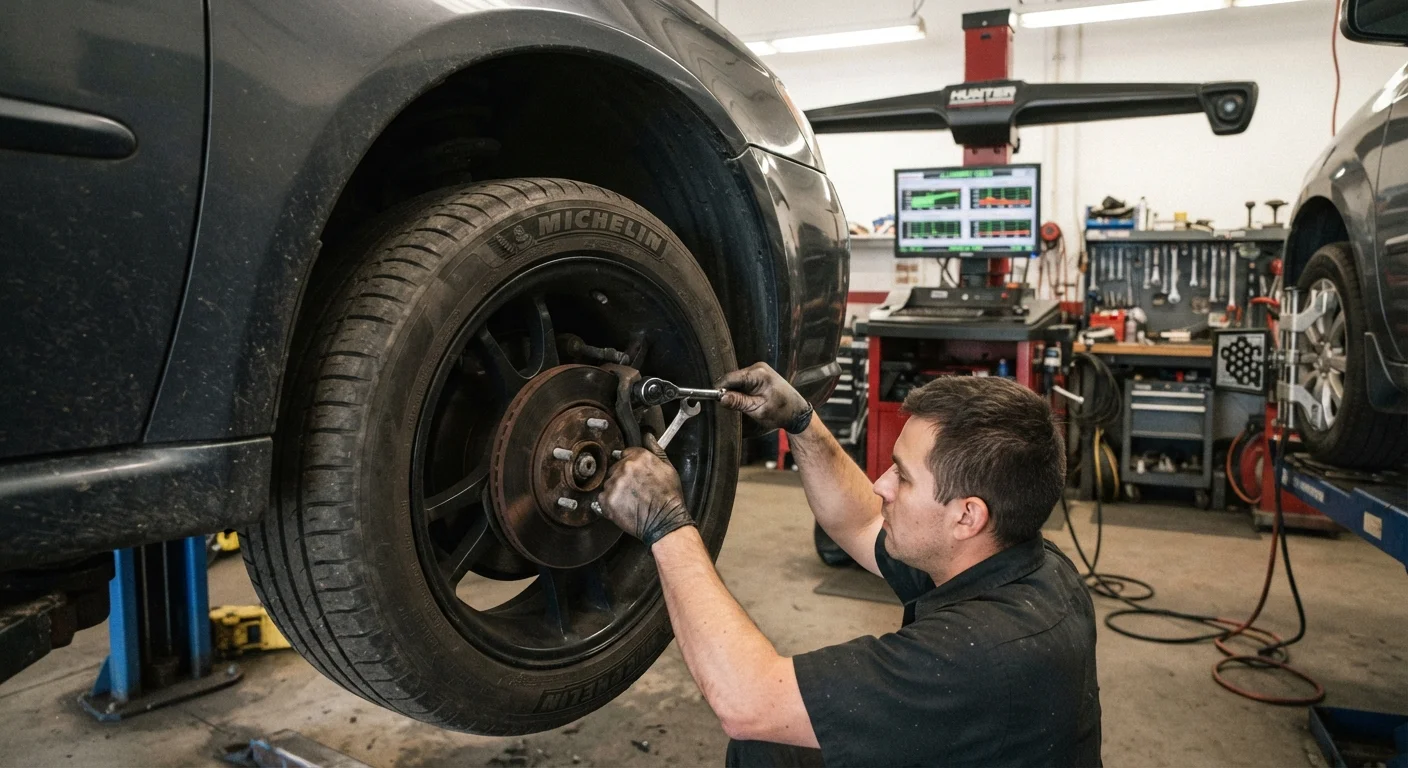
Wheel Alignment is an adjustment of your suspension angles - not the tires directly. Three angles matter most: camber (the vertical tilt of the tire), toe (whether tires point inward or outward), and caster (the angle of the steering axis). When these are off, the car pulls to one side, the steering wheel sits crooked, or tires wear unevenly in specific patterns. Alignment is measured with laser or optical equipment and corrected by adjusting suspension components. Expect to pay $75-$150 for a four-wheel alignment.
| Tire Rotation | Wheel Balancing | Wheel Alignment | |
|---|---|---|---|
| What it fixes | Uneven tread wear front-to-rear | Vibration from weight imbalance | Improper suspension angles |
| Main symptom | Uneven tread depth | Steering vibration at speed | Pulling or crooked steering |
| Typical interval | Every 5,000-7,500 miles | With new tires or every 12-15k miles | Annually or after impact/suspension work |
| Typical cost (US) | $20-$50 | $15-$75 | $75-$150 |
| Time required | 20-30 minutes | 30-45 minutes | 60-90 minutes |
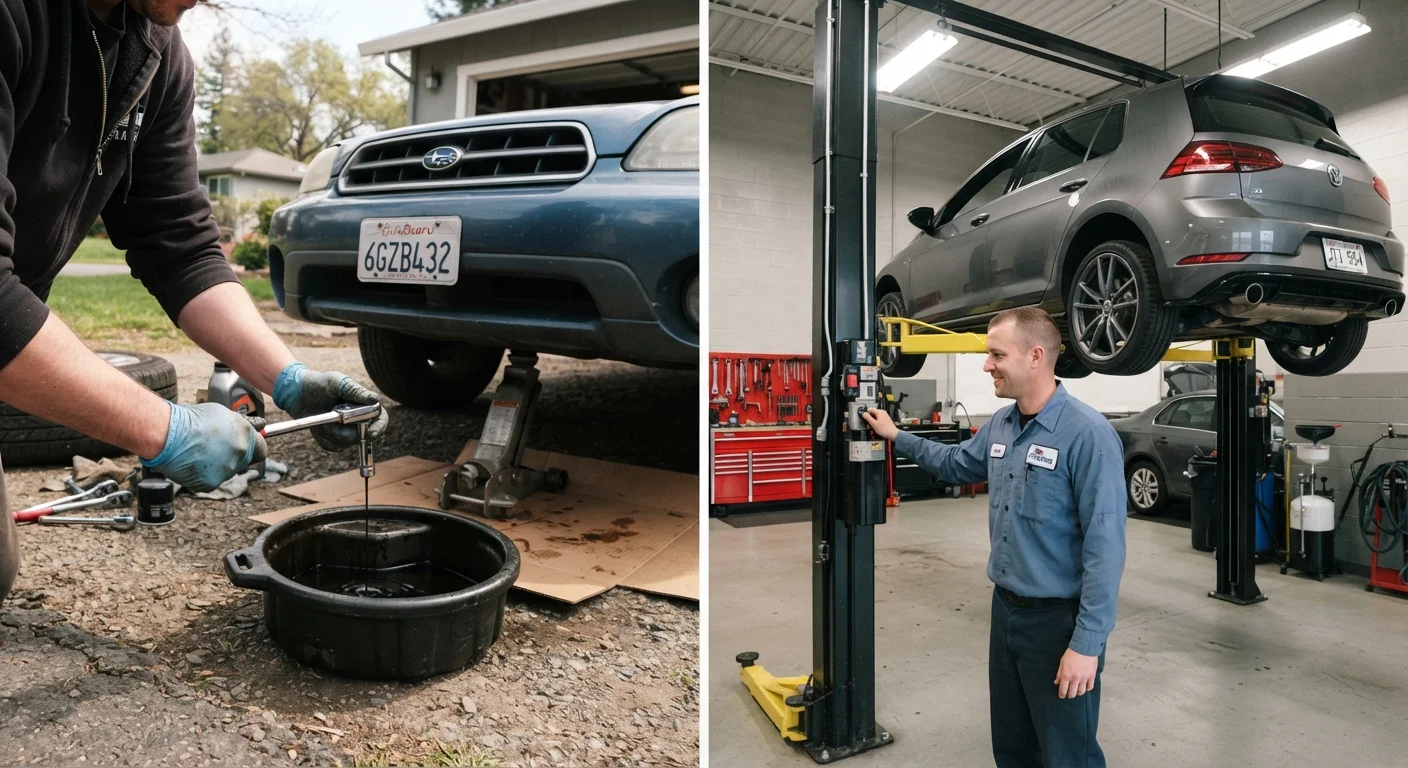
| DIY-friendly? | Possible with jack stands | Requires shop equipment | Requires shop equipment |
How to Know Which One You Need
Each problem has a distinct set of symptoms. Use these as your diagnostic starting point:
- Uneven tread depth front-to-back: You're overdue for a rotation.
- Vibration in the steering wheel at 55-70 mph: Most likely a balancing issue.
- Car drifts left or right on a straight, flat road: Points to alignment.
- Tires wearing on one edge only (inner or outer): Alignment problem, often camber.
- Tires wearing in the center or on both edges simultaneously: Typically an inflation issue, not rotation or alignment.
One important note: these symptoms can overlap, and a trained technician can spot the actual cause faster than guessing. If you're unsure whether a service is genuinely needed or just being upsold, it helps to understand what questions to ask - our guide on DIY car maintenance vs. taking it to a shop covers that conversation.
Ask for a Written Measurement, Not Just a Verdict
When getting an alignment, ask the technician to print out the before-and-after alignment readings. Reputable shops use computerized equipment that generates this report automatically. Seeing actual degree measurements - not just 'it was off' - confirms the service was performed and helps you track changes over time.
Fitting These Services Into Your Maintenance Plan
A practical approach is to treat rotation as a rhythm, balancing as an event-triggered service, and alignment as an annual or incident-triggered check. When you get new tires, always have them balanced and get an alignment check at the same time - those two services protect your new investment from day one.
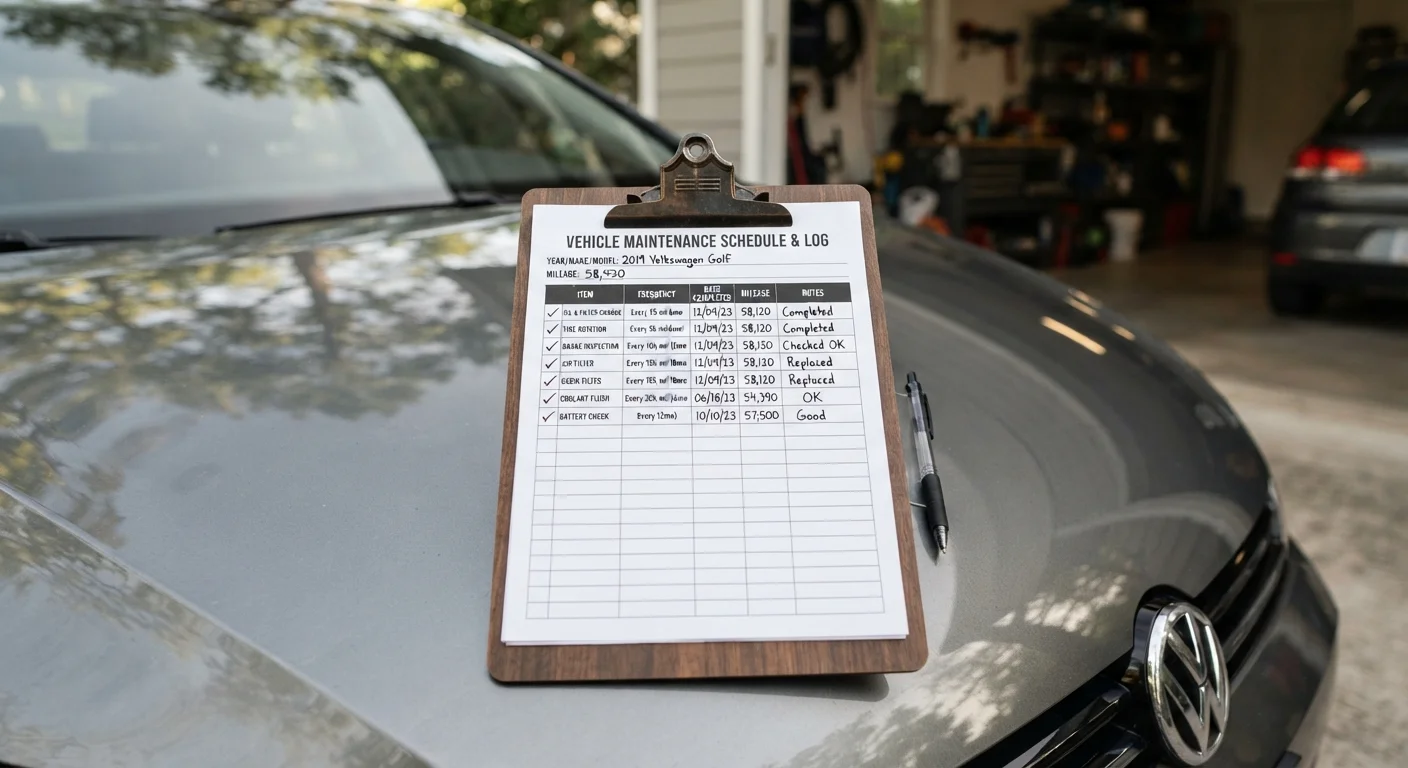
For a fuller picture of how these services fit into your car's overall maintenance timeline, see your car's maintenance schedule explained. Neglecting any of the three doesn't just shorten tire life - it can quietly affect steering response and fuel economy in ways that add up over thousands of miles. As detailed in why neglecting small car problems turns into expensive repairs, deferred maintenance rarely stays cheap.
~$125
Average cost of one replaced tire
Industry estimates suggest a single mid-range passenger tire averages $100-$150 installed, making preventive rotation a cost-effective alternative to early replacement.
~25%
Tire life lost to chronic misalignment
Automotive maintenance sources estimate that persistent alignment issues can reduce usable tire tread life by roughly 25%, accelerating replacement cycles significantly.
This article is for general informational purposes only. Service intervals and costs vary by vehicle, driving conditions, and region. Consult a qualified mechanic for guidance specific to your car.