Why the Inspection Exists - and What It Doesn't Guarantee
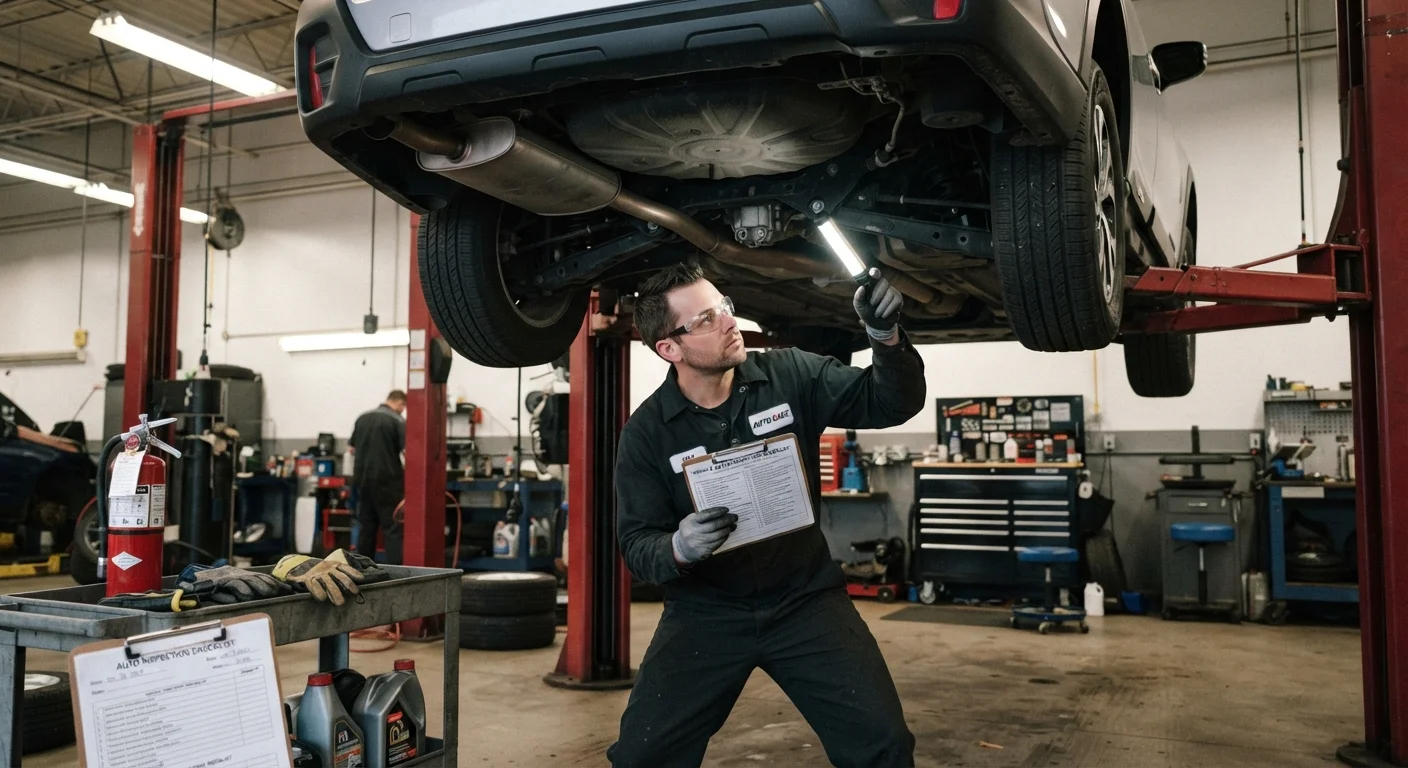
State-mandated vehicle inspections exist for one reason: to keep demonstrably unsafe vehicles off public roads. They are a minimum-safety threshold, not a comprehensive mechanical evaluation. Passing an inspection does not mean your car is in great shape - it means it cleared a standardized checklist on a specific day.
Not every state requires annual inspections. Requirements vary significantly: some states inspect every year, some every two years, some not at all. A few states combine safety and emissions testing; others run them separately. Before assuming what applies to your vehicle, verify the requirements with your state's Department of Motor Vehicles or equivalent agency.
That said, most state inspection programs follow a broadly similar structure. Knowing what inspectors are checking - and why - makes it easier to anticipate problems and avoid failing for something preventable. See our annual vehicle cost audit checklist for a broader look at how inspections fit into your total ownership picture.
| States requiring annual safety inspections | Approximately 17 states (AAMCO/NHTSA state program surveys; verify with your state DMV) |
| Minimum tire tread depth (most states) | 2/32 inch (Standard legal minimum; some states set higher thresholds) |
| Most common inspection failure reason | Brake system deficiencies (Commonly cited by state motor vehicle inspection programs) |
| OBD-II scan required | Yes, in emissions-testing states (Applies to most 1996-and-newer vehicles in combined inspection states) |
| Check engine light impact | Automatic emissions failure in most states (Active fault codes prevent OBD-II readiness confirmation) |
The Core Inspection Checklist: System by System
Most state safety inspections cover the following systems. Some states go further; few do less.
Brakes
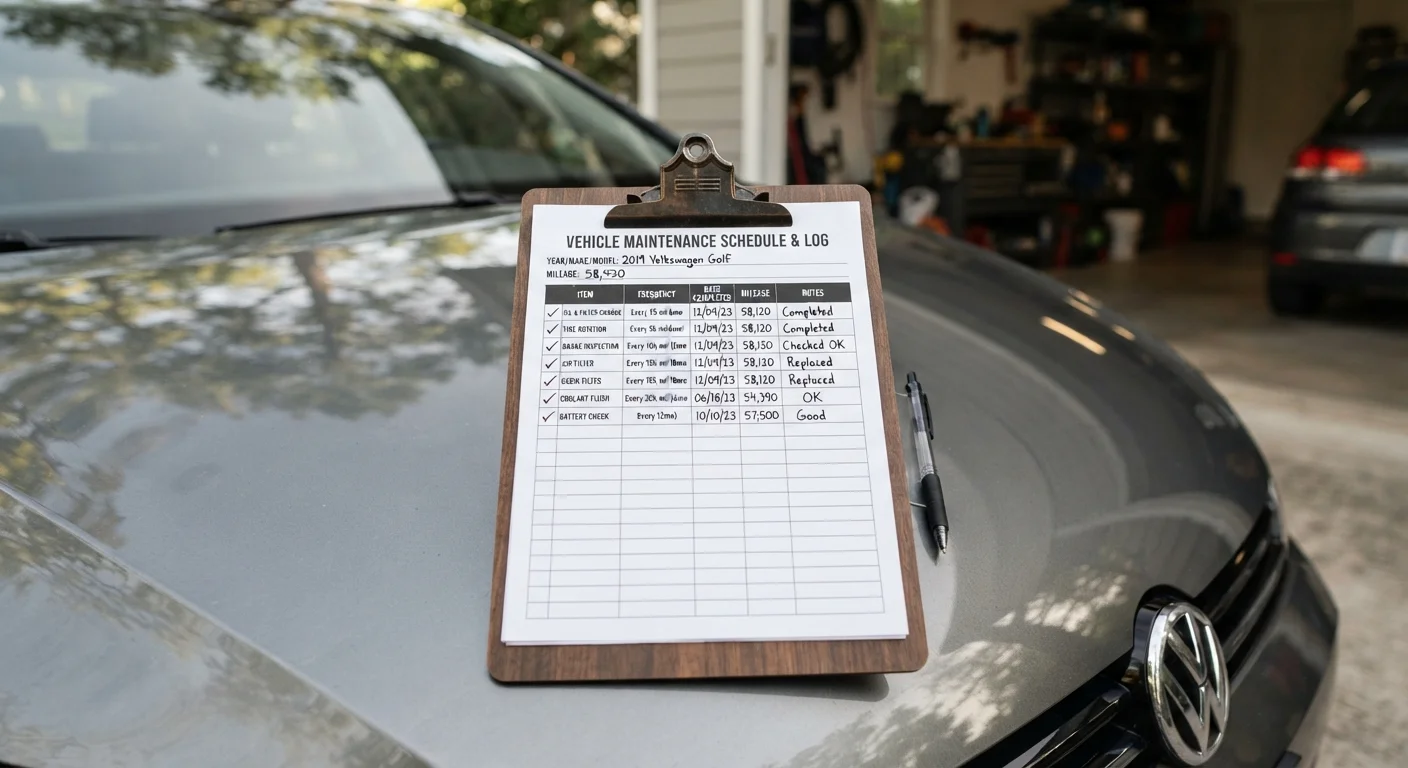
Inspectors check brake pad and shoe thickness, rotor condition, brake lines for leaks or corrosion, and whether the parking brake holds. Worn rotors or pads are among the most common inspection failures. Staying current with your maintenance schedule helps catch brake wear before inspection day.
Tires and Wheels
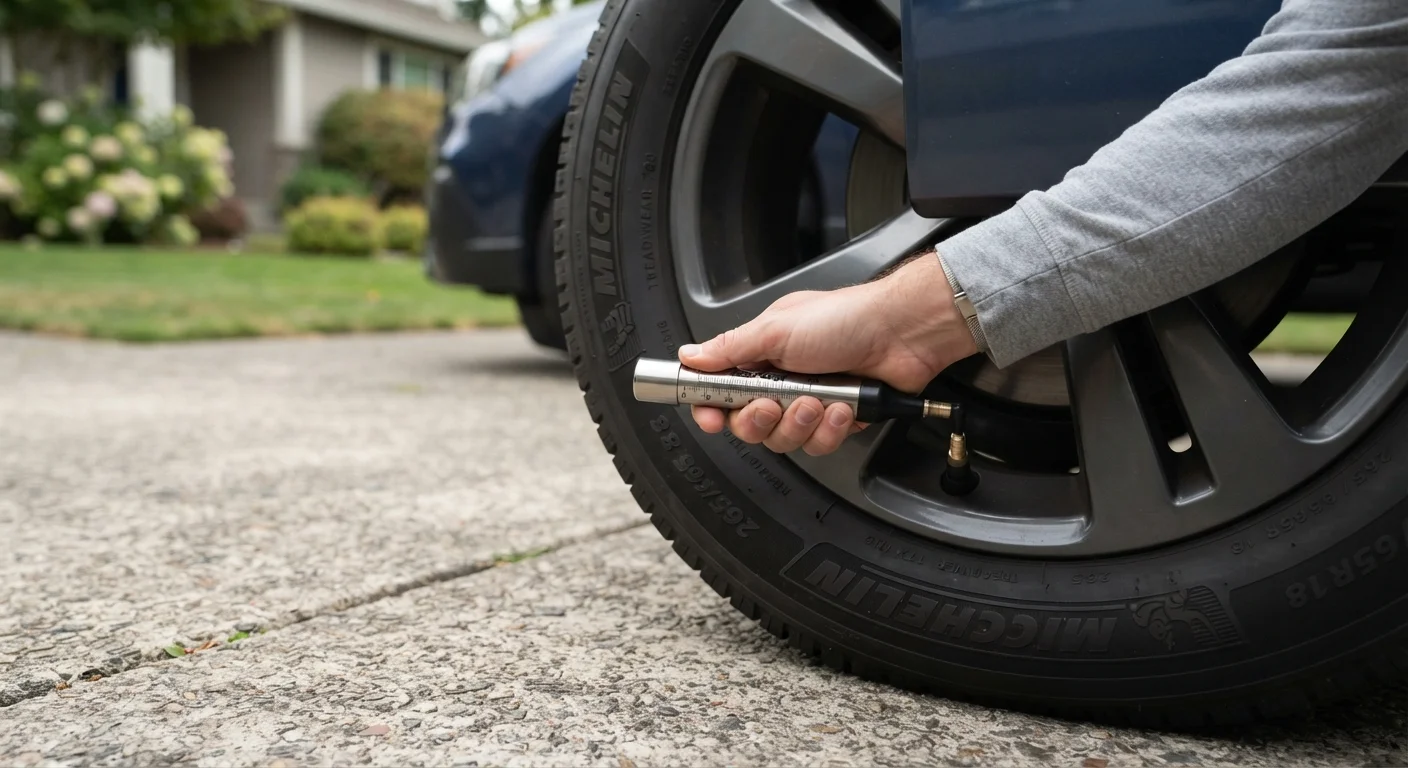
Tread depth must meet a minimum threshold - typically 2/32 of an inch in most states, though some require more. Inspectors also look for sidewall damage, uneven wear, and whether tires are properly matched. Lug nuts and wheel condition are checked as well. Knowing how to check your own tire pressure between inspections is a simple habit that extends tire life.
Lights and Electrical
All exterior lights are tested: headlights (high and low beam), taillights, brake lights, turn signals, reverse lights, and hazard flashers. A single burned-out bulb can fail an inspection - and it's one of the easiest fixes to handle yourself beforehand.
Steering and Suspension
Inspectors check for excessive play in the steering wheel, worn tie rod ends, ball joints, and shock absorbers. Suspension problems affect vehicle control and tire wear, so this section carries real safety weight.
Windshield and Visibility
The windshield must be free of cracks or chips that fall within the driver's primary sight line. Wipers are checked for condition and function. Mirrors - rearview and side - must be present and properly positioned.
Horn
It must work. This one surprises people, but a functioning horn is a legal safety requirement in every state.
Emissions (Where Required)
In states with combined inspections, a tailpipe emissions test or OBD-II (on-board diagnostics) scan is added. If your check engine light is on, the vehicle will almost certainly fail the emissions portion - even if the underlying problem seems minor.
OBD-II
On-Board Diagnostics, second generation - a standardized system built into most vehicles made after 1996 that monitors engine and emissions performance. Inspectors plug a scanner into the OBD-II port to check for stored fault codes.
Tread depth
The measurement of remaining rubber on a tire from the surface down to the wear bars. Most states require a minimum of 2/32 of an inch; below this, tires lose significant wet-road grip.
Brake rotor
The metal disc that brake pads clamp against to slow the vehicle. Rotors wear thin over time and can develop grooves or warping that reduce braking effectiveness.
Tie rod end
A steering component connecting the steering rack to the wheel hub. Worn tie rod ends create looseness in steering and can affect wheel alignment and vehicle control.
How to Avoid Common Inspection Failures
Most inspection failures are preventable with a quick self-check a week or two before your scheduled appointment. Walk around the car and test every exterior light. Check wiper blades for streaking or tearing. Look at your tires for obvious wear or sidewall damage. If your check engine light is on, get the code read - many auto parts retailers do this at no charge - so you know what you're dealing with before the inspector does.
A pre-trip walk-around habit builds exactly the kind of awareness that makes inspection failures rare. Drivers who regularly look at their vehicle catch problems early; those who don't are often surprised on inspection day.
If your vehicle fails, you typically have a set number of days to make repairs and return for a re-inspection, often at reduced or no additional cost for the recheck. Policies vary by state and inspection station, so ask upfront.
This article provides general educational information about vehicle inspection processes and is not a substitute for guidance from a qualified mechanic or your state's official motor vehicle authority. Requirements vary by state and vehicle type.